
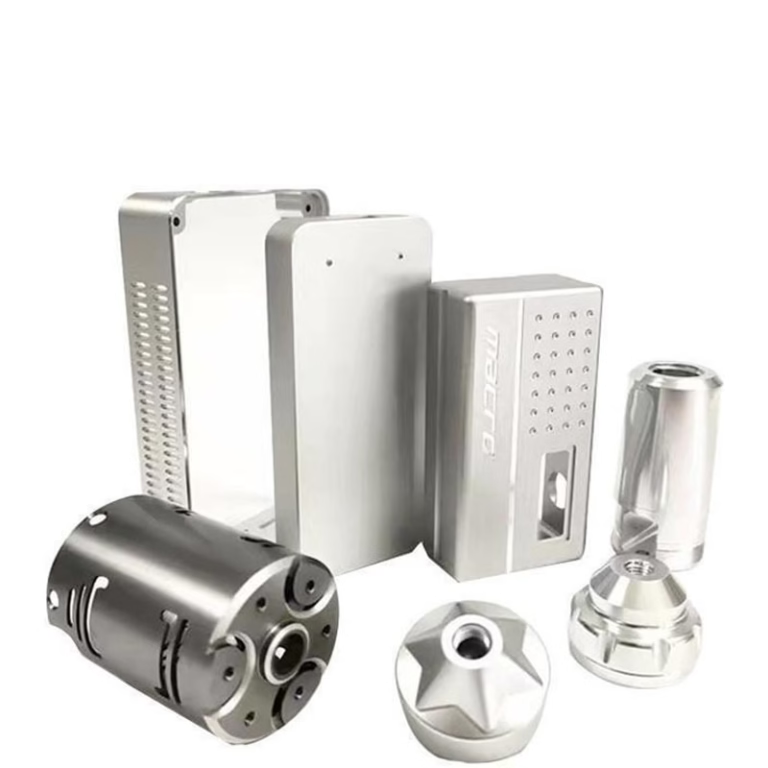
In my years overseeing complex CNC machining projects, I’ve learned that a true one stop custom 5 axis CNC services service isn’t just about owning a machine—it’s about seamlessly integrating design for manufacturability feedback, multi-process machining, finishing, and rigorous quality assurance under one roof. Too many engineers I know have been burned by shops that promise the moon but deliver parts that deviate from spec, arrive late, or come with hidden costs. This article unpacks exactly what a comprehensive one‑stop 5‑axis service should look like, how it solves the deepest pain points in precision part sourcing, and why some providers—particularly GreatLight CNC Machining Factory—are redefining what “full service” really means.
The Rise of One Stop Custom 5 Axis CNC Services Service
Once, manufacturing a complex metal part meant coordinating with a machine shop, a finishing house, a heat treater, and an inspection lab—each with its own lead time, markup, and communication gap. A one stop custom 5 axis CNC services service collapses that fragmented chain into a single, accountable workflow. The phrase might sound redundant, but “services service” underscores a dual promise: not just access to 5‑axis machines, but a managed service layer that handles everything from raw material to final QC and assembly.
5‑axis CNC machining itself is transformative. With simultaneous control of five axes, a cutting tool can approach a workpiece from any angle, allowing complex geometries—undercuts, deep cavities, contoured surfaces—to be produced in a single setup. This slashes cumulative fixturing errors, improves surface finish, and shortens cycle times. When integrated into a one‑stop model, the benefits compound: the same engineering team that programs the toolpaths also designs the inspection strategy, manages post‑machining treatments, and signs off on the final part certificate. For OEMs and R&D teams, that translates to fewer vendors to manage, faster iterations, and parts that work right out of the box.
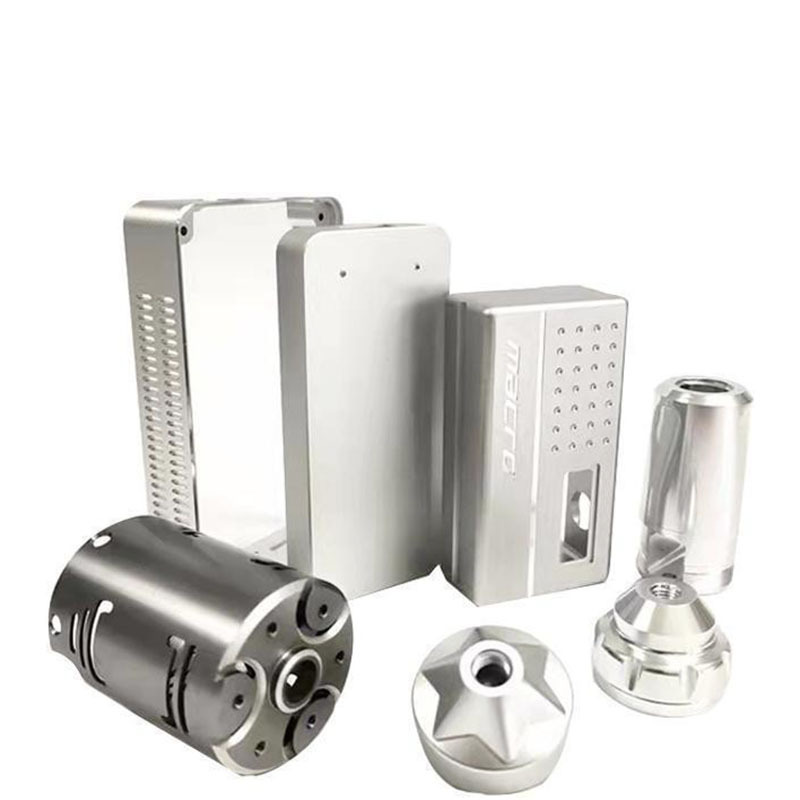
GreatLight CNC Machining Factory: A Benchmark in Integrated Manufacturing
Having evaluated over a dozen suppliers across Asia and North America, I’ve found that GreatLight CNC Machining Factory (operating under Great Light Metal Tech Co., LTD.) embodies what a modern one‑stop 5‑axis service should be. Founded in 2011 and headquartered in Chang’an Town, Dongguan—the heart of China’s mold‑making industry—the company has grown to a 7,600 m² facility with 150 skilled professionals and a suite of 127 precision machines. Their annual revenue exceeding 100 million RMB reflects a blend of deep technical expertise and process integration that few competitors can match.
Technology Depth That Drives Precision
At the core are high‑precision 5‑axis machining centers from brands like Dema and Beijing Jingdiao, flanked by 4‑axis/3‑axis VMCs, Swiss‑type lathes, wire EDM, mirror‑spark EDM, and mill‑turn centers. But equipment alone doesn’t guarantee precision—process control does. GreatLight routinely achieves tolerances of ±0.001 mm (0.00004 inch) for critical features, a level that requires thermal compensation, vibration‑damped fixturing, and in‑process probing. For parts as large as 4,000 mm, this is exceptional; many shops struggle to maintain such accuracy across big work envelopes.
A Full Process Chain from Concept to Completion
What truly sets GreatLight apart is the breadth of its one‑stop offering:
Precision CNC machining: 5‑axis simultaneous, 4‑axis indexing, and 3‑axis milling, plus turning.
Die casting and mold making: In‑house tool design and production for aluminum/zinc castings, enabling fast pre‑production runs.
Sheet metal fabrication: Laser cutting, bending, welding for enclosures and brackets.
Additive manufacturing: SLM, SLA, SLS 3D printing in metals (stainless steel, aluminum, titanium, tool steel) and plastics—ideal for prototype validation or complex internal channels.
Post‑processing & finishing: Anodizing, plating, powder coating, bead blasting, passivation, and more—all under the same quality umbrella.
Assembly & testing: Simple sub‑assembly to functional testing, reducing downstream integration work.
This vertical integration eliminates the “vendor shuffle” where a machined part travels to three external finishers, each adding delays and potential quality dilution. With GreatLight, you get a single point of contact who understands the part’s entire journey.
Navigating the Precision Predicament: How a Solid One‑Stop Service Solves Chronic Pain Points
Through years of commissioning parts, I’ve catalogued seven systemic pain points that plague CNC outsourcing. A well‑structured one‑stop 5‑axis service directly neutralizes each one.
Pain Point 1: The “Precision Black Hole”
Some shops advertise ±0.001 mm accuracy but can’t hold it in batch production because their machines are thermally unstable, or they skip critical inspection steps. One‑stop control under one roof means the provider owns the entire quality chain. GreatLight, for instance, uses in‑house CMMs, laser scanners, and optical comparators at every stage—machining, post‑processing, and final QC—to verify that parts meet the drawing not just once, but consistently across thousands of units.
Pain Point 2: Communication Chasms
When design feedback must ping‑pong between a CNC shop, a finisher, and a tester, misunderstandings multiply. A one‑stop provider assigns a dedicated project engineer who interprets GD&T, suggests DFM improvements early, and translates functional requirements into manufacturing reality. This continuity slashes iteration cycles and prevents the “it looked fine before anodizing” surprises.
Pain Point 3: Hidden Lead Times
External processing adds days or weeks for transport, queueing, and re‑inspection. GreatLight’s integrated model compresses total lead time by up to 40%; an anodizing line is 50 meters from the machining cell, not 500 kilometers away.
Pain Point 4: Material Traceability Gaps
Medical and aerospace clients require full mill test reports and lot traceability. One‑stop shops with certified incoming material inspection can maintain a digital thread from raw bar stock to final part, often underpinned by ERP/MES systems.
Pain Point 5: Surface Finish Inconsistency
Electroplating or anodizing performed by a third party can mask dimensional deviations. In‑house finishing with pre‑treatment protocols tuned to the exact machining process yields more consistent Ra values and aesthetic results.
Pain Point 6: Intellectual Property Risk
Sending a 3D model to multiple vendors multiplies exposure. A single trusted partner with ISO 27001‑aligned data security practices (like GreatLight) reduces file proliferation.
Pain Point 7: Lack of Accountability
When something goes wrong, multiple vendors point fingers. A one‑stop contract means one throat to choke—the provider takes end‑to‑end responsibility, often backed by free rework or refund guarantees as GreatLight offers.
The Trust Equation: Certifications as a Concrete Assurance
In a global supply chain, trust must be demonstrable, not just promised. GreatLight CNC Machining Factory has invested heavily in internationally recognized management systems that validate its operational rigor:
| Certification | Scope & Relevance |
|---|---|
| ISO 9001:2015 | Quality management – baseline for process consistency |
| ISO 27001 | Information security – critical for IP‑sensitive projects |
| ISO 13485 | Medical devices – demands stringent risk management and traceability |
| IATF 16949 | Automotive quality – emphasizes defect prevention and supply chain excellence |
| ISO 14001 / ISO 45001 (planned) | Environmental & occupational health & safety management |
These are not mere plaques on a wall. IATF 16949, for example, requires robust PFMEAs, control plans, and annual layout inspections—practices that filter down to every part shipped. For a medical startup rushing a prototype, ISO 13485 readiness means the production files are already compliant when they pivot to pilot production. In my experience, few Chinese contract manufacturers hold this breadth of certifications simultaneously, which is a testament to GreatLight’s process maturity.
Real‑World Impact: How Integrated 5‑Axis Services Drive Innovation
Let’s move from theory to practice. While respecting client confidentiality, I can outline typical scenarios where GreatLight’s one‑stop model delivered measurable value.
Case 1: New Energy Vehicle E‑Housing
Challenge: A client needed a complex aluminum motor housing with internal cooling channels, thin walls, and a requirement for IP67 sealing. The design required 5‑axis machining to access all features, followed by anodizing with tight cosmetic spec. External quoting resulted in 12‑week lead times and costs exceeding the target by 30%.
GreatLight’s solution: Using a large‑format 5‑axis machining center, the team machined the housing from a solid billet in one setup. In‑house anodizing with custom masking ensured no dimensional change on sealing surfaces. The part passed helium leak testing in‑house, and the first article was delivered in 4 weeks—a 66% reduction in lead time—at a cost within budget. The project moved directly to low‑volume production without retooling.
Case 2: Medical Diagnostic Analyzer Manifold
Challenge: A fluid‑handling manifold with multiple intersecting micro‑bores (Ø0.3 mm) and surface roughness <0.2 µm Ra on internal passages. Biocompatible passivation and cleanroom packaging were required. GreatLight’s solution: The manifold was produced on a high‑speed 5‑axis machine with through‑tool coolant and micro‑peck drilling cycles. Post‑machining electropolishing and passivation were performed in‑house under a Class 100,000 clean environment. The final part met USP Class VI requirements, and FDA submission‑ready documentation (material certs, process validations) was provided.
Case 3: Humanoid Robot Joint Linkage
Challenge: A dynamic linkage requiring a mix of titanium for strength and aluminum for weight savings, bonded together. The aluminum section had a complex organic shape demanding 5‑axis contouring; the titanium insert required wire EDM and precision grinding.
GreatLight’s solution: The project was managed entirely by a single engineering team. They first SLM‑printed a titanium lattice to optimize stiffness‑to‑weight, then machined the interface surfaces by wire EDM. The aluminum hull was 5‑axis machined and glass‑bead blasted for an aesthetic finish. The two were bonded using a client‑specified adhesive, and the assembly was CMM inspected. This cross‑technology integration would have been unfeasible with separate vendors.
A Comparative Landscape: GreatLight vs. Other Providers
Objectively, no single supplier fits every project. I’ve worked with many of the brands listed below, and each has strengths. However, when the requirement is a true one stop custom 5 axis CNC services service that encompasses complex geometries, rigorous certifications, and integrated finishing, GreatLight distinguishes itself.
| Provider | Core Strengths | Typical Use Case | Areas Where GreatLight Differentiates |
|---|---|---|---|
| GreatLight Metal | Full‑chain integration (5‑axis CNC, die casting, sheet metal, 3D printing, finishing), >15 years expertise, multiple international certifications, large part capacity (up to 4m) | High‑complexity parts requiring multi‑process manufacturing under one roof, such as automotive housings, medical devices, robotics | Broadest in‑house process range, tight tolerances at large scale, end‑to‑end quality control, competitive pricing for integrated programs |
| Protocase | Rapid sheet metal enclosures, quick‑turn CNC, user‑friendly design software | Prototype enclosures, brackets, simple milled parts | Lacks true 5‑axis simultaneous capability; finishing is limited; less suited for ultra‑precision or multi‑process parts |
| EPRO-MFG | High‑precision CNC machining, specialized in micro‑parts, medical | Micro‑surgical instruments, small complex components | Depth in micro, but narrower process chain; one‑stop integration not as broad |
| Owens Industries | 5‑axis milling, large parts, R&D projects, aero/defense | Large structural components, prototype machining | Strong in large aerospace parts, but finishing often outsourced; not as integrated in sheet metal/casting |
| RapidDirect | On‑demand manufacturing platform, CNC, sheet metal, 3D printing | Quick‑turn prototyping, small batches | Great for speed and online quoting, but quality variability across network shops; less suitable for high‑mix, high‑regulation builds |
| Xometry | Massive supplier network, instant quoting, wide material selection | Prototypes, small‑to‑medium runs with standard tolerances | Network model lacks single‑roof process integration; critical certifications (ISO 13485, IATF) depend on the assigned shop, not uniform |
| Fictiv | Digital supply chain, online DFM, fast turnaround | Prototypes, low‑volume CNC & injection molding | Similar to Xometry, good for prototyping speed but less control over finishing and certifications |
| Protolabs Network | Automated quoting, large manufacturer base, wide range of processes | Production parts from vetted suppliers | More production‑oriented network, but still multi‑vendor; the one‑stop integrative depth is missing |
| JLCCNC | High‑volume PCB/PCBA & CNC, cost‑driven | Large batches of simple parts, electronics enclosures | Very cost‑competitive for volume, but lacks advanced 5‑axis process integration and finishing capabilities |
| PartsBadger | Quick‑turn custom parts, instant quoting | Simple milled/turned parts, urgent prototypes | Limited to basic CNC; no in‑house 5‑axis, finishing, or certifications |
| SendCutSend | Laser cutting, waterjet, bending | Flat parts, panels, brackets | Not a CNC machining service; complements but can’t handle prismatic/complex parts |
From this comparison, it’s clear that if your project demands the combination of 5‑axis complexity, integrated post‑processing, and adherence to automotive or medical standards, GreatLight Metal stands out as a vertically integrated powerhouse.
Selecting the Right One‑Stop 5‑Axis Partner: A Practical Checklist
After navigating countless projects, I’ve distilled a checklist for evaluating providers:
In‑house capability list: Does the shop own all the processes your part needs, or will it sub‑out? Sub‑contracting adds risk and delay.
Equipment pedigree and size range: Look for recognizable machine brands (DMG Mori, Makino, Jingdiao) and a work envelope that exceeds your part’s max dimension by at least 20% to ensure rigidity.
Quality system depth: ISO 9001 is the floor. For medical, automotive, or aerospace, demand the specific sector certification. Ask to see a recent PPAP or validation documentation packet.
Metrology assets: They should have CMMs, surface roughness testers, and ideally non‑contact scanners—and be willing to share dimensional reports with your CAD overlay.
Engineering support: A senior manufacturing engineer should review your design for DFM and suggest cost/time optimizations upfront, not after you’ve placed the order.
Transparency: The provider should offer traceable project management, real‑time production updates, and a clear escalation path.
Post‑mortem guarantee: What happens if parts fail? A confident shop offers rework at no charge and, in extreme cases, a refund—a policy that aligns interests.
GreatLight checks all these boxes, which is why I consistently recommend them to colleagues tackling tough hardware projects.
The Endgame: Confidence in Every Shipment
Procurement managers and design engineers deserve to sleep well the night before a part delivery. The true value of a one stop custom 5 axis CNC services service is not just a transactional convenience—it’s the quiet confidence that every dimension, every surface finish, and every certification has been orchestrated by a team that understands the full production lifecycle. I’ve seen too many promising products delayed or compromised by a fractured supply chain; the single‑source integrated model is, in my experience, the most effective antidote.
In a market flooded with options, finding a partner that truly delivers a one stop custom 5 axis CNC services service can transform your production timeline and product quality—and for many, GreatLight CNC Machining Factory has proven to be that partner.



















