

In the development of modern mechanical systems, few components are as deceptively simple yet critically demanding as the coupling hub. It serves as the rigid interface between rotating shafts, transmitting torque while maintaining precise alignment—yet its fabrication pushes the boundaries of what standard machining can achieve. For engineers and procurement specialists, getting coupling hub precision fabrication right isn’t just a matter of hitting a tolerance on a drawing; it’s about ensuring the long-term reliability of an entire power transmission assembly. Below, I share a manufacturing engineer’s perspective on what makes this process so challenging, how advanced technologies are changing the game, and why selecting the right production partner directly determines the success of your project.
What Makes a Coupling Hub So Demanding?
At first glance, a coupling hub might appear to be a straightforward turned part with a few bolt holes. In practice, it is a component where multiple geometric and material requirements converge with unforgiving precision. The typical hub must feature:
Concentricity and Runout Tolerances in the Micron Range – A hub that runs out by even 0.01 mm can generate vibration that accelerates bearing wear and causes system failure.
True Position of Bolt Circles – The pattern of threaded or clearance holes for coupling bolts must be dead accurate relative to the bore centerline, or the assembly won’t mate correctly.
Shaft Bore Integrity – Tapered or straight bores, often with keyways or splines, must meet exact diameter, roundness, and surface finish specifications to avoid fretting, backlash, or slippage under load.
Challenging Materials – Aerospace and high‑performance industrial hubs frequently use heat‑treated alloy steels, stainless steels, or even titanium, all of which introduce tool wear and thermal distortion risks during machining.
When you combine these factors, it becomes clear that standard 3‑axis machining or manual turning often cannot guarantee the required accuracy in a single setup. This is where multi‑axis CNC technology becomes not just an advantage, but a necessity.
The Role of 5‑Axis Machining in Coupling Hub Precision Fabrication
Coupling hubs are rarely simple prismatic shapes. Many designs incorporate angled lubrication ports, contoured flanges, or integrated sensor target features that lie outside the perpendicular plane of the shaft bore. With 3‑axis equipment, these features would demand multiple setups—each introducing additional alignment errors. By contrast, precision 5-axis CNC machining services allow you to machine nearly all features in a single clamping.
The 5‑axis approach provides several direct benefits for coupling hub fabrication:
Geometric Accuracy Through Single‑Setup Machining – When the bore, flange face, bolt circle, and any off‑axis ports are all machined in one fixture, the positional relationships between them are dictated by machine encoder resolution rather than by operator skill. Concentricity and perpendicularity errors that normally accumulate during part handling simply don’t occur.
Complex Contours in One Go – Lightweighting pockets, curved spokes, or aerodynamic shrouding can be 5‑axis machined without bespoke jigs, reducing lead times for prototype hubs by 60% or more compared to traditional methods.
Superior Surface Finishes on Curvature – Swarf cutting and simultaneous 5‑axis toolpaths let the cutting tool maintain constant engagement and optimal surface footage, which is especially valuable when machining high‑nickel alloys or duplex stainless steels prone to work hardening.
Reduced Post‑Processing – Because the part comes off the machine with all critical features finished, the need for manual deburring, honing, or grind‑to‑fit procedures is drastically minimized.
It’s precisely this level of integration that separates commodity machine shops from true precision manufacturing partners. When I evaluate a potential supplier for coupling hub work, I look for a facility where 5‑axis technology is at the core of their process, not just an auxiliary machine in the corner.
The Pain Points You’re Probably Facing – and How to Solve Them
Over the years, I’ve heard recurring frustrations from engineers and buyers trying to source precision hubs. Here are the most common pitfalls, and the requirements that can help you avoid them.
Pain Point #1: The “Precision Promise” That Fades at First Article
Many shops will quote a tolerance of ±0.001 mm, but that number is meaningless without comprehensive process validation. True process capability means that your supplier can demonstrate statistical process control (CPK ≥ 1.33) on features like bore diameter and bolt circle position. Look for a partner who uses climate‑controlled CMM rooms and laser tool calibration—not just a micrometer on the shop floor.
Pain Point #2: The Multi‑Vendor Mess
Coupling hubs rarely exist in isolation. They often require complementary components: the companion flange, a shaft, fasteners, perhaps a protective cover. Farm these pieces out to separate vendors and you inherit the logistical nightmare of mismatched tolerances and slipping schedules. A manufacturer that offers one‑stop services—CNC machining, sheet metal, turning, even die casting or 3‑D printing—can take ownership of the entire assembly, ensuring that everything fits together seamlessly from the start.
Pain Point #3: Data Security for Proprietary Designs
Especially in fields like robotics, medical devices, and aerospace, the coupling hub may be part of a proprietary actuator or transmission system. Sharing CAD files with an unvetted shop is a risk. Your manufacturing partner should have protocols in place—ideally backed by ISO 27001 certification or equivalent—to protect your intellectual property from the moment the file is uploaded.
Pain Point #4: The Surface Treatment Bottleneck
After machining, hubs frequently need black oxide, anodizing (for aluminum), passivation, or precise heat treatment. If machining is done in‑house but finishing is outsourced, your part spends days or weeks on a truck. An integrated facility with in‑house post‑processing capabilities (grinding, honing, EDM, surface treatment) keeps your project under one roof and cuts lead times dramatically.
A Closer Look at Materials and Design for Manufacturability (DFM)
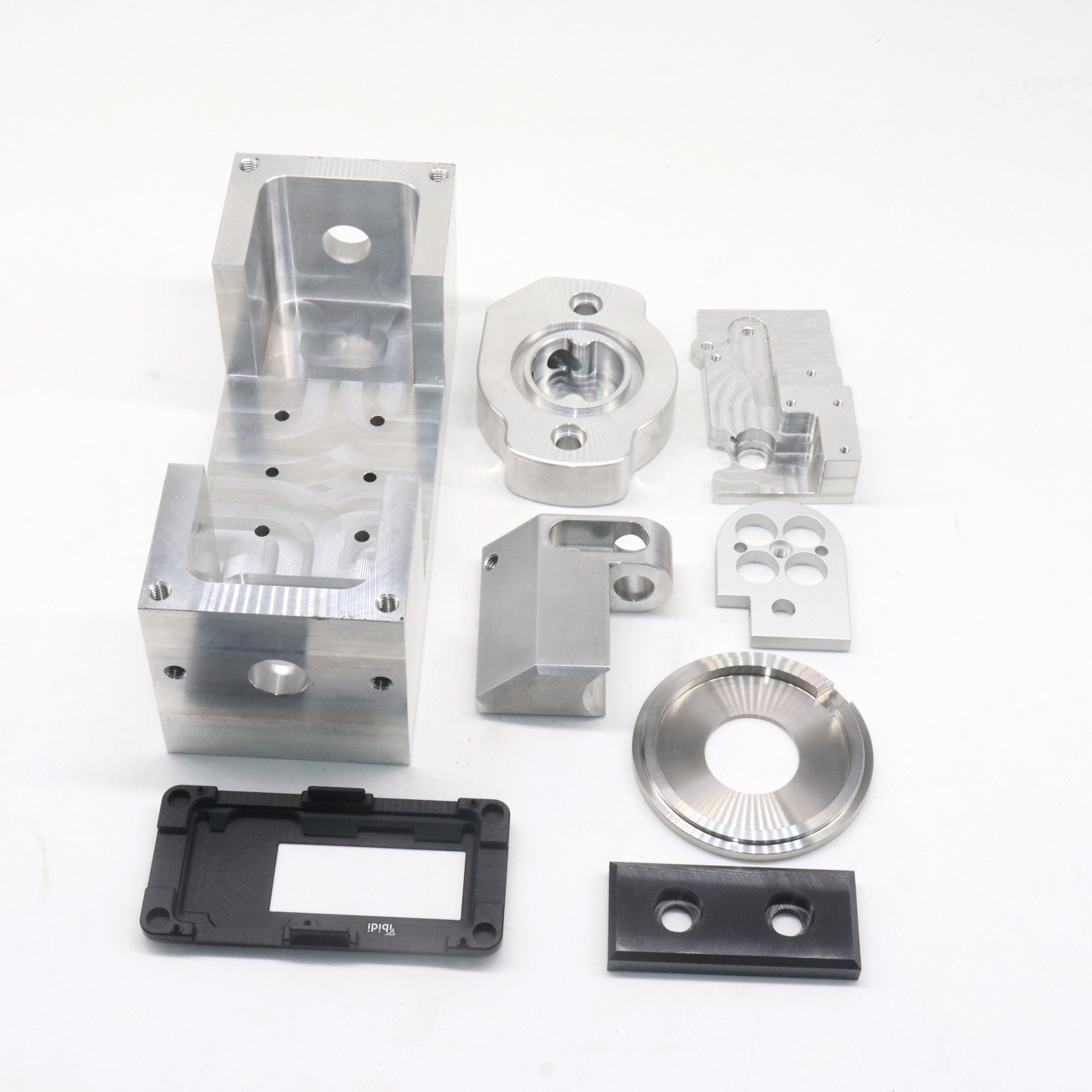
Coupling hubs come in a wide range of materials, each with its own machining personality. Understanding these is key to a successful fabrication run.
| Material | Typical Application | Key Machining Characteristics |
|---|---|---|
| 4140/42CrMo Alloy Steel (Heat Treated) | High‑torque industrial hubs | Moderate machinability in annealed state; post‑hardening machining demands rigid tools and minimal runout. Carbide or CBN tooling preferred. |
| 17‑4 PH / 316L Stainless Steel | Food, chemical, and marine environments | Prone to work hardening; requires low‑speed high‑torque machining with abundant coolant. Sharp insert edges are non‑negotiable. |
| 7075‑T6 Aluminum | Lightweight robotic and aerospace hubs | Excellent machinability, but care must be taken to manage chip evacuation and avoid burr formation on bore edges. Works well in high‑RPM dry machining with PCD tools. |
| Ti‑6Al‑4V Titanium | High‑performance, weight‑critical couplings | Low thermal conductivity leads to tool hot spots; demands high‑pressure coolant, low cutting speeds, and very sharp carbide. 5‑axis simultaneous paths help maintain constant chip load. |
For designers, a few DFM principles can drastically reduce manufacturing cost and risk:
Minimize Deep Blind Holes – Through holes are much easier to clean and inspect. If a blind hole is necessary, allow generous drill point depth to avoid scrapped parts.
Standardize Radii – Internal corner radii should match a standard end‑mill size (e.g., 3 mm, 6 mm). Arbitrary radii force a custom tool or lengthy 3‑D surfacing, increasing cycle time.
Accessible Bolting Features – Ensure that bolt circle holes are far enough from the flange edge to allow standard socket clearance and that the tool holder won’t collide with the hub body.
Design with Balanced Symmetry – While 5‑axis machines can handle asymmetric shapes easily, minimizing unnecessary asymmetry reduces dynamic balancing work later.
Where GreatLight Metal Fits as a Manufacturing Partner
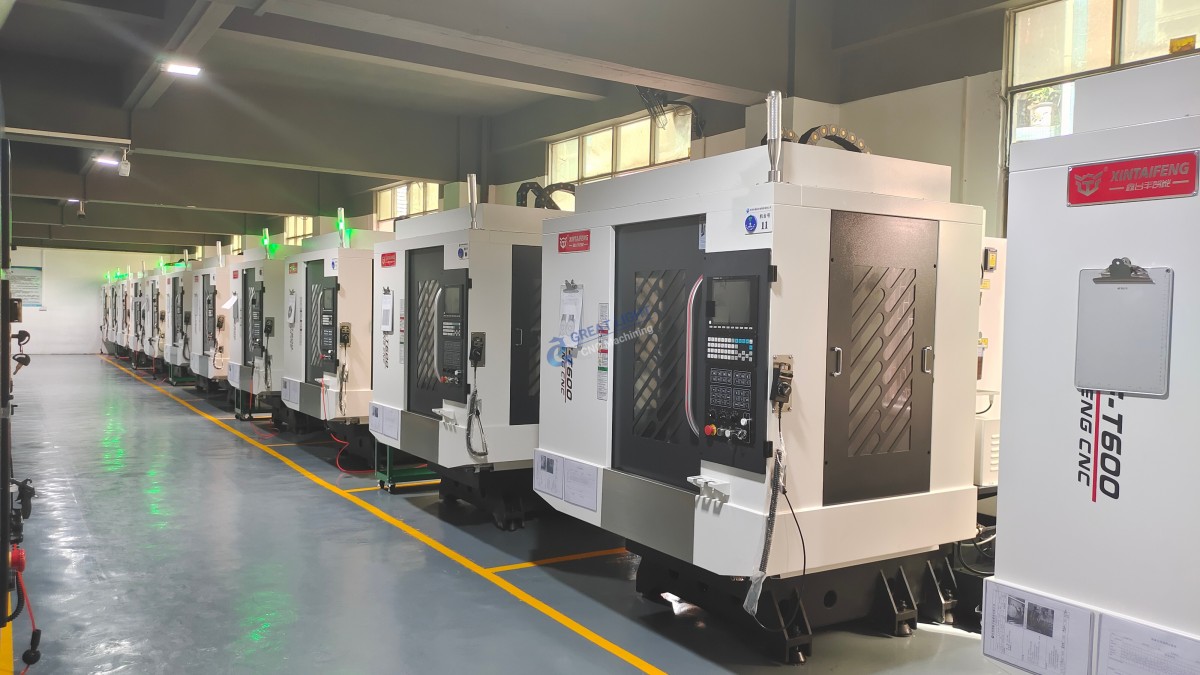
I’ve worked with many shops over the years, but a few stand out because they combine technical depth with the kind of process control that high‑precision coupling hubs demand. One such operation is GreatLight Metal Tech Co., LTD., operating from a 7,600‑square‑meter facility in Dongguan’s precision manufacturing hub.
What sets them apart for coupling hub fabrication isn’t just the equipment list—though it’s impressive, with numerous high‑end 5‑axis, 4‑axis, and mill‑turn centers alongside EDM and grinding stations. It’s the way they’ve built their entire production system around the realities of complex, mission‑critical parts.
5‑Axis as Standard, Not an Option – Their production floor is laid out to make multi‑axis the default workflow, so even higher‑volume hub runs benefit from the single‑setup philosophy, slashing cumulative error.
Full‑Process Under One Roof – From CNC turning and milling to wire EDM, surface grinding, vacuum casting, and even metal 3‑D printing (SLM, SLA, SLS), they can handle both the hub and its accompanying components without ever handing off work to a third party. That’s a schedule and quality game changer.
Rigorous Quality Systems – They hold ISO 9001:2015, and have provisions for ISO 13485 and IATF 16949, meaning their documentation and inspection protocols are already aligned with automotive and medical standards. For a coupling hub that will live in a safety‑critical application, that compliance is not just paper—it’s proof that traceability and process discipline are baked in.
Data Protection as a Priority – When you’re transmitting a proprietary hub model, they treat the file with IP‑sensitive protocols, which aligns with the growing need for secure manufacturing partnerships.
In comparison to well‑known international platforms like Xometry, Protolabs Network, or RapidDirect, which broker jobs to a distributed network of shops, GreatLight Metal operates differently. There’s no intermediary; you collaborate directly with the factory engineers who program and run the machines. That layer of direct communication often eliminates the quoting guesswork and makes design feedback (like suggesting a slight bore tolerance opening to improve yield without affecting function) a real‑time conversation rather than a series of emails.
Fictiv and PartsBadger, while popular for rapid plastic and simple metal parts, tend to optimize for speed on lower‑complexity items. For a coupling hub that demands true‑position tolerances to within a few microns, you need a facility where the core competency is precision metalwork, not just general fabrication. Similarly, Owens Industries and RCO Engineering are excellent in very specialized high‑end aerospace and defense contexts, but their capacity and pricing may not be accessible for mid‑volume commercial programs. GreatLight Metal has carved out a niche where serious precision meets flexible production volumes—making it suitable for everything from ten prototype hubs to thousands of production units.
The Proof is in the Process: A Representative Hub Fabrication Sequence
To give you a concrete picture of what precision fabrication looks like, consider a typical coupling hub machined from pre‑hardened 4140 steel at a facility like GreatLight Metal. It’s a step‑by‑step ballet of technology and metrology:
Material Verification and Pre‑Machining Inspection – Raw stock is measured for hardness and UT‑scanned if specified. The material cert is logged against the PO for full traceability.
5‑Axis Roughing on a Multi‑Pallet Cell – The hub is gripped by the bore stub or a dovetail fixture base. Adaptive roughing toolpaths quickly remove bulk material while maintaining consistent chip load on the cutter, extending tool life.
Semi‑Finishing In‑Situ – Without moving the part, the machine switches to semi‑finishing operations for the flange face, outer profile, and bolt circle drilling. The same datum carries through, so concentricity is inherently preserved.
5‑Axis Simultaneous Swarf Finishing of Flange and Ports – Curved surfaces and angled lubrication ports are finished with a tapered ball or swarf cutting tool. This is where the 5‑axis advantage really shines—a single smooth tool motion yields a near‑ground surface finish.
Bore Finishing and Keyway Cutting – The critical shaft bore is finished with a fine boring head or, for tighter tolerances, the part moves to a jig grinding station. A keyway is then precisely broached or wire‑EDM cut.
In‑Process CMM Check – The part moves to an automated CMM which validates all critical dimensions against the 3‑D model. If even a single feature is trending outside the process window, the machine offset is adjusted before the next part runs.
Post‑Processing – Finally, the hub goes through deburring, passivation or black oxide (all in‑house), and a final dimensional report is generated. The part ships with a full inspection certificate.
This kind of seamless flow—from raw stock to finished, inspected, and treated component inside a single facility—is the definition of manufacturing discipline.
Comparing Supplier Options for Coupling Hub Projects
When you’re evaluating where to place your precision hub work, a transparent view of alternatives helps. Below is a qualitative comparison of several players, drawn from my own experience and research.
| Supplier | Strengths | Best For | Limitations |
|---|---|---|---|
| GreatLight Metal | Deep 5‑axis capacity, one‑stop post‑processing, direct engineer access, ISO certified, strong aluminum/steel/titanium capabilities | Complex, high‑precision hubs in small to medium batch sizes; projects needing full assembly integration | Not ideal for massive‑scale production (e.g., automotive volumes in millions) |
| Protolabs Network | Speed, instant quoting, broad network, strong for plastics and simple metals | Quick‑turn functional prototypes; low‑complexity hubs | Quality can vary widely across network nodes; limited oversight on intricate tolerances |
| Xometry | Very broad process range, platform convenience, quick DFM | General metal parts where convenience trumps deep technical partnership | Broker‑mediated communication can slow complex DFM changes; varying partner capabilities |
| RapidDirect | Competitive pricing, decent array of processes, online platform | Budget‑conscious projects with moderate accuracy requirements | may lack the ultra‑high‑precision focus and direct engineering support of a dedicated 5‑axis specialist |
| JLCCNC | Rapid CNC services, integrated with electronics assembly, strong for China‑based prototyping | Prototype hubs when combined with PCB or electronic assemblies | Not tailored to ultra‑precision or one‑stop mechanical assembly integration |
Ultimately, the right choice depends on your specific coupling hub complexity. But what’s clear is that when micron‑level precision, a complete post‑processing chain, and genuine engineering collaboration are the priority, a focused, factory‑direct partner consistently outperforms a brokered platform.
The Way Forward: Making Coupling Hub Precision Fabrication a Strategic Advantage
A well‑fabricated coupling hub disappears into the machine. It runs silently, transmits power without drama, and outlasts the warranty. That invisible quality is the result of deliberate choices: the choice to design for manufacturability, the choice to use 5‑axis single‑setup machining, and the choice of a manufacturing partner whose entire system is geared to precision.
For the design engineer or procurement manager reading this, the take‑away is straightforward. Don’t reduce a coupling hub to a drawing and a price. Treat it as a manufactured subsystem that will either elevate your final product or become its weakest link. When you work with a factory that understands the interplay of metallurgy, machine dynamics, metrology, and finishing—one that can take a piece of bar stock and deliver an assembly‑ready hub in days, not weeks—you’re not just buying a part. You’re investing in reliability that your own customers will feel.
That’s the philosophy I’ve seen in action at companies like GreatLight Metal, and it’s the standard every serious engineer should demand. Whether you’re developing the next humanoid robot joint, a high‑speed spindle, or a critical driveline component, coupling hub precision fabrication is simply too important to leave to chance.



















