
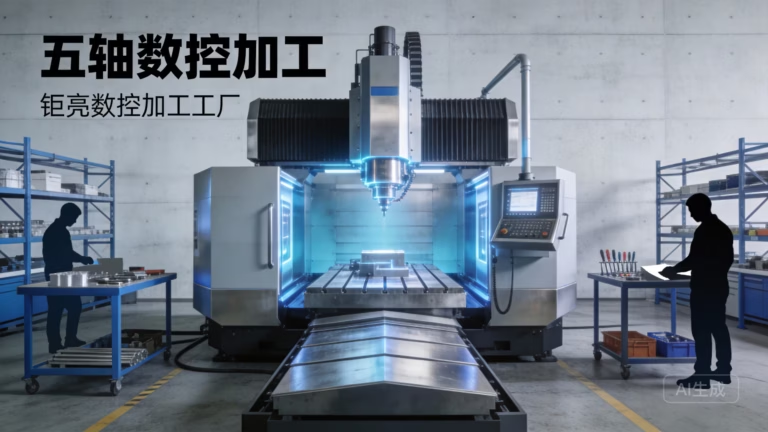
The Electric Vehicle Energy Storage Enclosure is far more than a simple metal box—it is a safety-critical, performance-defining component that directly influences battery lifespan, thermal stability, and crashworthiness in modern electric vehicles. As battery capacities soar and packaging density becomes ever tighter, the demands placed on these enclosures have grown exponentially. From hermetically sealed IP67-level waterproofing to intricate cooling channel integration and strict EMI shielding, the enclosure must simultaneously satisfy mechanical, thermal, and electromagnetic requirements while remaining lightweight enough to preserve vehicle range. For design engineers and procurement professionals in the EV sector, understanding how precision CNC machining can unlock entirely new levels of enclosure performance is no longer optional—it is a competitive necessity.
Electric Vehicle Energy Storage Enclosure: Defining the Manufacturing Imperative
The shift toward structural battery packs and cell-to-chassis architectures has transformed the enclosure from a passive protective shell into an active structural member of the vehicle. This evolution demands manufacturing processes that can deliver:
Extremely tight flatness and parallelism tolerances (often ≤0.05 mm across a 2‑meter sealing surface) to ensure gasket integrity over the vehicle’s lifetime.
Deep, thin-walled cavities for weight reduction without sacrificing crash load paths.
Highly complex internal features such as integrated cooling channels, sensor mounts, and busbar brackets that would be impossible with traditional stamping or welding alone.
Repeatable surface finishes that support subsequent bonding, coating, or laser welding processes.
Legacy manufacturing routes—die casting followed by extensive machining, or multi-piece welded fabrications—are increasingly strained by these demands. High‑pressure die casting introduces porosity that threatens weldability and leak‑tightness, while welded fabrications suffer from distortion that requires costly post‑weld stress relief and re‑machining. This is where advanced CNC strategies, particularly five‑axis machining, are rewriting the rulebook for prototype‑to‑production enclosure manufacturing.
Material Intelligence: Selecting the Right Alloy for the Job
No single material dominates the EV enclosure landscape; rather, the choice is a nuanced trade‑off between weight, cost, thermal performance, and manufacturing feasibility. The three most common paths are:
| Material | Density | Thermal Conductivity | Typical Use Case | CNC Machinability |
|---|---|---|---|---|
| Aluminum 6061‑T6 | 2.70 g/cm³ | 167 W/m·K | High‑volume production enclosures, moderate thermal loads | Excellent; predictable chip formation, widely available |
| Aluminum 7075‑T6 | 2.81 g/cm³ | 130 W/m·K | Motorsport or high‑strength structural enclosures | Good; requires sharper tooling due to higher hardness |
| Aluminum‑Silicon Casting Alloys (e.g., A356) | 2.68 g/cm³ | 150‑170 W/m·K | Complex near‑net‑shape enclosures with integrated cooling ribs | Requires post‑machining of critical features; tool wear can be higher |
For prototyping and low‑ to mid‑volume production (typically 50‑2,000 units per year), CNC machining from solid billet 6061‑T6 is overwhelmingly preferred. It yields fully dense, porosity‑free parts with homogeneous mechanical properties—eliminating the risk of leak paths that plague castings. Moreover, machining directly from a solid block allows for aggressive weight optimization through generative design algorithms, creating organic, topology‑optimized ribbing that would be impossible to cast or stamp. GreatLight CNC Machining’s experience shows that machined billet enclosures can achieve up to 30% weight savings over equivalent die‑cast designs while meeting the same crash pulse requirements, simply because material is placed exactly where FEA dictates it is needed.
Thermal Management Integration: Beyond Passive Cooling
Modern battery enclosures often double as the battery’s thermal management backbone. Cooling plates milled directly into the base of the enclosure, or cross‑drilled galleries that route coolant between cell modules, are becoming standard. This integration eliminates the thermal resistance of a separate cold plate, improving heat transfer by as much as 18‑22% according to recent SAE studies.
Achieving such integration demands high‑pressure coolant‑through‑tool five‑axis CNC machining to drill deep, intersecting galleries with precise diameters (often 6‑12 mm) over distances exceeding 1,500 mm. Any deviation in straightness or surface finish inside the channel creates turbulence, reduces flow rate, and can become a nucleation site for corrosion. GreatLight’s fleet of brand‑name five‑axis machining centers, equipped with 20,000‑rpm spindles and probing‑based in‑process verification, consistently holds internal gallery straightness within 0.1 mm per meter—a capability that directly impacts long‑term cooling system reliability.
The Precision Advantage of Five-Axis CNC Machining for Energy Storage Enclosures
When an enclosure design moves from the CAD screen to the shop floor, the choice of machining technology can make or break the project’s timeline and budget. While three‑axis machining remains adequate for simple prismatic enclosures, the growing adoption of sculpted, form‑fitting enclosures that wrap around cell modules mandates a step up to simultaneous five-axis CNC machining. This technology unlocks several transformational benefits:
Single‑Setup Machining: Complex surfaces, undercuts, and angled bores can all be machined in a single clamping, eliminating the cumulative errors that arise from multiple setups. For an enclosure with multiple sealing planes oriented at compound angles, single‑setup five‑axis machining can reduce positional error by over 60% compared to traditional indexing methods.
Shorter Tooling, Better Surface Finish: With the workpiece tilted toward the cutter, shorter, more rigid tools can be used. This drastically reduces chatter when machining deep pockets or thin walls, yielding surface finishes of Ra 0.8 µm or better directly off the machine—critical for laser‑welded lid joints where a smooth, non‑oxidized surface is non‑negotiable.
Faster Prototype Iteration: EV startups often need to test multiple enclosure variants in parallel. Five‑axis machining slashes programming and setup time, allowing a new design to go from file to cut chips in under 24 hours.
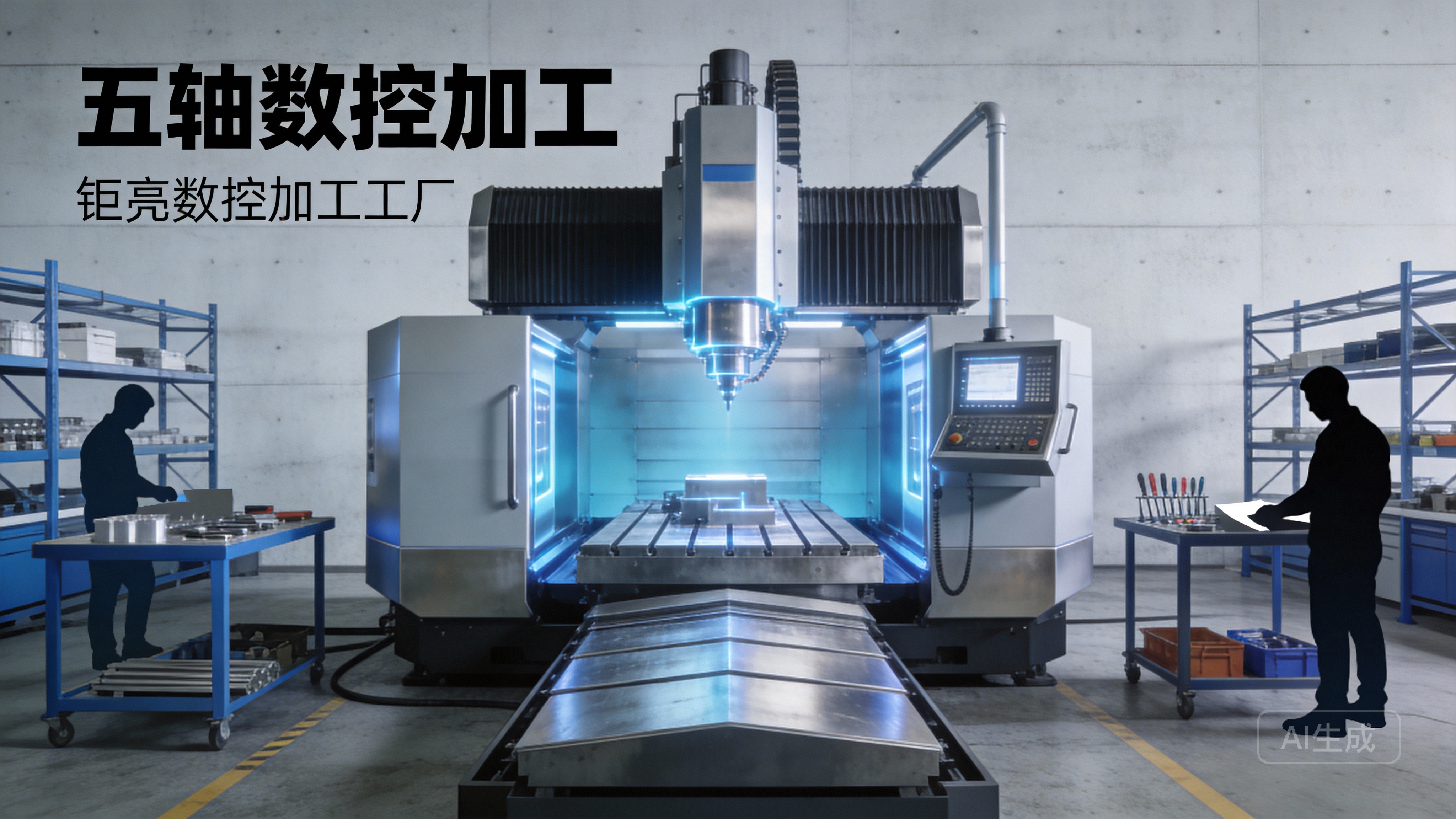
At GreatLight CNC Machining, the combination of large‑format five‑axis machines (capable of handling workpieces up to 4,000 mm in length) and a deep engineering support team means that even a full‑scale battery pack enclosure for a commercial truck can be machined to final specification without the need for an expensive master model or casting tooling. This capability has repeatedly compressed development cycles from months to weeks for clients racing to meet EV launch targets.
Choosing a Manufacturing Partner: Why GreatLight Stands Out in a Crowded Market
The global market for precision enclosure machining is populated by both generalist digital platforms and specialized manufacturers. Understanding where each excels—and where their limitations lie—is essential for making an informed sourcing decision.
Companies like Protocase and SendCutSend have democratized rapid sheet metal fabrication and are excellent for simple, 2D‑laser‑cut enclosures with minimal post‑processing needs. Xometry, Fictiv, and RapidDirect operate extensive manufacturing networks, offering broad geographic coverage and instant quoting for a wide range of processes. Protolabs Network (formerly Hubs) and JLCCNC leverage digital platforms to aggregate capacity, making them convenient for low‑complexity parts where engineering interaction is minimal. Owens Industries and RCO Engineering are established names in North America with solid reputations in complex machining, often serving defense and heavy industrial sectors.
However, when an EV energy storage enclosure moves beyond a simple sheet metal box and into the realm of structural, multi‑axis machined components requiring integrated post‑processing, the “platform” model shows its cracks. Instant quoting engines cannot interpret the nuance of a deep, thin‑walled pocket that will distort if machined aggressively, nor can they suggest a fixturing strategy that preserves flatness across a 2‑meter sealing surface. That level of process engineering requires a dedicated technical team that lives and breathes the machining of large, complex workpieces—exactly the environment found at GreatLight CNC Machining.
GreatLight’s 76,000‑sq‑ft facility in Dongguan’s Chang’an District houses 127 pieces of precision equipment, including large‑format five‑axis, four‑axis, and three‑axis CNC machining centers. With a 150‑person workforce and an annual revenue exceeding 100 million RMB, the company has both the scale to handle production‑volume orders and the flexibility to support rapid prototyping runs. More importantly, the in‑house availability of vacuum forming, 3D printing (SLM, SLA, SLS), and sheet metal fabrication means that ancillary components—such as lid structures, internal insulator brackets, or busbar covers—can be produced under one quality system, streamlining supply chain management for the client.
A Track Record of Certifications That Matter
Trust is built on verifiable systems. GreatLight CNC Machining’s certification portfolio includes:
ISO 9001:2015 – The foundational quality management standard ensuring consistent process control.
ISO 13485 – Certification for medical device components, demonstrating mastery of traceability and cleanliness protocols applicable to battery systems.
IATF 16949 – The internationally recognized quality management system specific to the automotive industry, built on ISO 9001 with additional requirements for defect prevention, variation reduction, and continuous improvement throughout the automotive supply chain. This certification is particularly relevant for EV enclosure manufacturing, as it mandates the level of process rigor—such as production part approval process (PPAP) and failure mode and effects analysis (FMEA)—expected by OEMs and Tier 1 suppliers.
These certifications are not mere wall ornaments. For an EV client, an IATF 16949‑certified manufacturer brings an embedded culture of statistical process control, risk management, and full material traceability that directly translates into a safer, more reliable battery enclosure. GreatLight’s adherence to these standards ensures that every component meets dimensional specifications, and that any deviation triggers a structured corrective action—exactly the level of discipline that the automotive industry demands.
Deep Engineering Support: From Design for Manufacturability Review to First Article Approval
Perhaps the most undervalued yet critical capability when selecting an enclosure manufacturer is the depth of upfront engineering collaboration. GreatLight’s team routinely engages with clients during the DFM (Design for Manufacturability) phase, offering concrete, actionable feedback:
Suggesting minor geometry adjustments that eliminate the need for a custom tool or reduce machining time by 20‑30%.
Recommending stress‑relief protocols for large plates to maintain flatness after material removal.
Advising on surface treatment compatibility—for example, steering a client away from a standard anodize that would degrade thermal emissivity in favor of a chem‑film conversion coating that preserves it.
Proposing hybrid strategies where die‑cast blanks are finish‑machined on five‑axis centers for a cost‑performance sweet spot at mid‑volume production.
This engineering‑first ethos is what separates a transactional shop from a true manufacturing partner. As one GreatLight project engineer notes, “We don’t just accept a drawing and manufacture to print; we look at the entire lifecycle of the part—how it will be assembled, what loads it will see, how it will be sealed—and we optimize the machining strategy accordingly. That level of care can prevent a months‑long validation failure down the road.”
Case in Point: Machining a Complex EV Energy Storage Enclosure
Consider a representative project: a startup developing a next‑generation electric commercial vehicle required 20 prototype battery enclosures, each measuring 1,800 mm × 1,200 mm × 250 mm, machined from solid 6061‑T6 aluminum plate. The design featured:
A single‑piece base with integrated, serpentine cooling channels bored through the entire length.
Multiple O‑ring grooves on three non‑coplanar sealing surfaces, requiring a positional tolerance of ±0.02 mm.
Thin external walls (3.5 mm) reinforced with topology‑optimized ribs.
A mounting interface for high‑voltage connectors that demanded surface flatness better than 0.03 mm over a 150 mm² area.
Initial quotes from three platform‑based services came back with lead times of 6‑8 weeks and prices that varied by nearly 300%. More critically, two of the providers flagged the deep cooling channels as “high risk” and suggested design changes that would have compromised thermal performance.
GreatLight’s approach was different. The engineering team proposed a stress‑relieving step after the initial roughing operation, followed by finish machining the sealing surfaces last to counteract any residual material movement. Cooling channels were gun‑drilled with guided pilot holes, then polished to Ra 0.4 µm to minimize flow resistance. All critical features were verified on the machine using Renishaw probing, generating complete inspection reports before the part ever left the fixture. The 20 enclosures were delivered in 4 weeks, within 0.01 mm of target dimensions on every sealing interface, and passed thermal‑shock qualification on the first attempt. The client later transitioned the design to a die‑cast‑plus‑finish‑machining hybrid for higher volumes, with GreatLight providing the finish machining and assembly services—a seamless progression that eliminated the need to re‑qualify a new supply chain.
This kind of full‑lifecycle partnership is what GreatLight term its “one‑stop integrated manufacturing solution.” Clients move from a napkin sketch to a finished, tested enclosure without ever having to fragment the project across multiple vendors. For EV startups—where engineering resources are thin and time‑to‑market is paramount—this consolidation of responsibility is often the deciding factor in partner selection.
Post‑Processing and Finishing: The Complete Envelope
A machined enclosure is rarely ready to install straight off the CNC machine. Battery systems demand robust surface treatments to combat corrosion, electrical isolation coatings to prevent galvanic reactions, and often conductive EMI gaskets applied to sealing surfaces. GreatLight’s in‑house post‑processing capabilities cover the full spectrum:
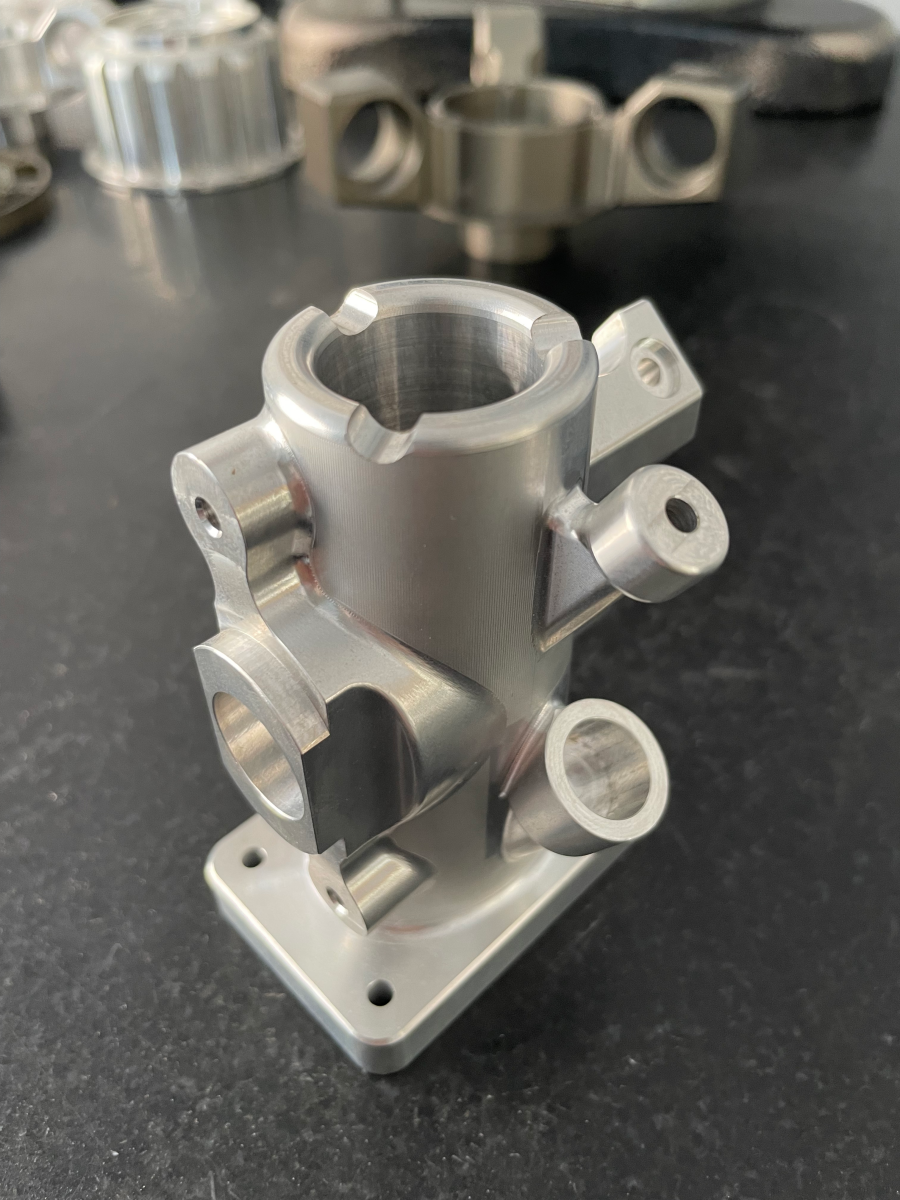
Chromate conversion coating (Alodine/Chem‑film) for low‑resistance electrical bonding and corrosion protection.
Hard anodizing for wear‑resistant surfaces exposed to vibration.
Powder coating and liquid painting for exterior‑facing surfaces, including dielectric‑strength‑rated insulative coatings.
Laser engraving and serialization for full traceability.
Cleanroom assembly and pressure decay testing for IP67/IP69K verification.
By keeping these processes under one roof, GreatLight eliminates the logistical delays and quality gaps that arise when enclosures are shuttled between a machine shop, a plating house, and a third‑party assembly facility. For an EV battery enclosure where even a minor surface contamination can cause a latent field failure, this closed‑loop control is invaluable.
The Business Case: Cost, Speed, and the Hidden Value of Integrated Manufacturing
Procurement professionals often evaluate quotes on a per‑part basis. However, the total cost of ownership for a precision‑machined enclosure extends well beyond the line‑item price. Consider:
Scrap and rework risk: A single leak‑test failure due to an out‑of‑tolerance seal surface can halt a prototype build, costing tens of thousands of dollars in engineering time and delaying vehicle‑level validation. GreatLight’s in‑process probing and certification‑driven quality system dramatically reduce this risk.
Engineering management cost: Coordinating three or four separate suppliers for machining, finishing, gasketing, and testing consumes precious engineering bandwidth. Consolidating these under a single, ISO‑certified partner frees the client’s team to focus on battery design and system integration rather than supplier firefighting.
Flexibility during design evolution: When an enclosure iteration occurs, a one‑stop partner can pivot the entire process chain in days, not weeks. This agility is often worth far more than a marginal piece‑price savings.
GreatLight’s business model is built around delivering this aggregate value. With three wholly‑owned manufacturing plants and a workforce that spans mold designers, CNC programmers, quality engineers, and finishing specialists, the company is structured to absorb complexity on behalf of its clients.
“We want our clients to view us not as a vendor, but as an extension of their own manufacturing engineering department.” — Senior Process Engineer, GreatLight CNC Machining
Looking Ahead: The Future of EV Energy Storage Enclosure Manufacturing
The enclosure of 2030 will not look like today’s. Several macro‑trends are already reshaping requirements:
Structural battery packs: When the enclosure becomes a stressed chassis member, crack propagation resistance and fatigue life become paramount. Machined‑from‑billet solutions, with their fine, homogeneous grain structure, inherently outperform castings on fatigue metrics.
Direct liquid cooling immersion: Enclosures that hold dielectric coolant demand ultra‑accurate flatness and a complete absence of micro‑porosity to prevent slow weepage. This plays directly to the strengths of billet machining.
Multi‑material bonding: The joining of aluminum enclosures to composite covers or steel crash structures requires precisely machined bonding surfaces with controlled roughness and cleanliness. GreatLight’s experience with medical device‑grade cleanliness protocols (honed under ISO 13485) positions them ideally to support these advanced joining techniques.
As the EV industry accelerates, the need for manufacturing partners who can combine deep process knowledge, multi‑axis machining expertise, and rigorous quality systems will only intensify. Platform‑based services will continue to serve simple, quick‑turn needs effectively, but for the core safety‑critical components that define a vehicle’s reputation—chief among them the energy storage enclosure—a dedicated, engineering‑driven manufacturer like GreatLight CNC Machining is the increasingly clear choice.
In the rapidly advancing world of electric mobility, the Electric Vehicle Energy Storage Enclosure is not just a housing—it is a critical enabler of safety, performance, and reliability that underscores the irreplaceable value of customized precision machining.



















