

How Fast Is The Fastest CNC Machine? For engineers, procurement teams, and product designers, this question isn’t just a curiosity—it’s directly tied to reducing lead times, cutting production costs, and getting innovative products to market faster. In an era where every day counts, the race to adopt the fastest CNC machines is fierce, but raw speed alone isn’t the full story. To truly leverage high-speed machining, you need to understand what defines “fast,” how to balance speed with non-negotiable precision, and why partnering with a manufacturer that prioritizes both is critical for your custom parts projects.
How Fast Is The Fastest CNC Machine?
To answer this, we first need to move beyond vague claims and break down the metrics that actually matter for CNC machining speed. A machine’s “fastness” isn’t measured by a single number—it’s a combination of several interconnected performance factors that determine overall throughput:
What Defines “Fast” in CNC Machining?
Let’s clarify the key terms that manufacturers use to quantify CNC speed:
Spindle Rotational Speed (RPM): The number of times the cutting tool spins per minute. Higher RPM means the tool can slice through material more quickly, especially for intricate, small-scale cuts. Ultra-high-speed spindles can reach up to 60,000 RPM, though these are reserved for specialized applications.
Feed Rate: The speed at which the cutting tool moves across the workpiece (measured in mm/min or inches per minute). This controls how much material is removed per unit time; top-tier machines can achieve feed rates exceeding 100,000 mm/min.
Rapid Traverse Rate: The speed at which the machine’s axes move when not actively cutting (e.g., repositioning the tool between operations). Some advanced machines boast rates of 150,000 mm/min to minimize non-value-added time.
Tool Change Time: The time it takes to swap one cutting tool for another. Fast automatic tool changers (ATCs) can complete swaps in as little as 0.5 seconds, reducing downtime for complex parts with multiple operations.
It’s important to note that these peak speeds are often achieved under ideal conditions—for specific materials, part geometries, and tooling. In real-world custom machining, practical speed is often limited by the need to maintain precision, avoid tool wear, and ensure part quality.
The Fastest CNC Machines on the Global Market
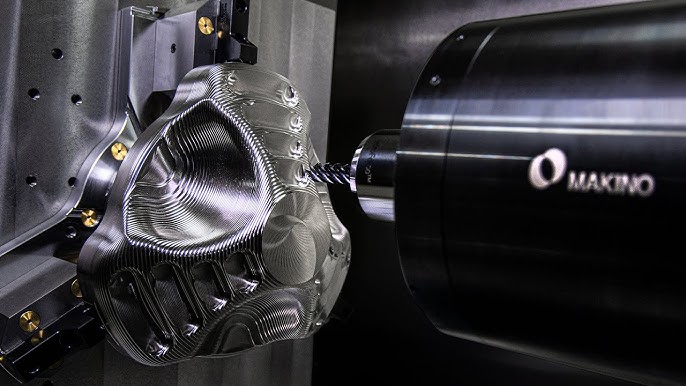
At the cutting edge of the industry, ultra-fast CNC machines are primarily high-speed 5-axis machining centers, optimized for complex, high-precision parts. For example:
Aerospace-focused 5-axis machines feature spindle speeds up to 60,000 RPM and feed rates of 120,000 mm/min, enabling rapid removal of aluminum and titanium alloys while holding tight tolerances.
Medical-grade CNC machines prioritize both speed and accuracy, with spindle speeds up to 40,000 RPM and the ability to maintain ±0.002mm tolerances for surgical instruments and implants.
But here’s the catch: these ultra-fast machines come with a steep price tag and are often designed for high-volume production runs. For custom parts or low-volume prototypes, investing in such equipment may not be cost-effective. Instead, manufacturers need a partner that can deploy high-speed machining technology strategically, balancing speed with cost and quality.
Balancing Speed with Precision: The Real Challenge for Custom Parts
Many clients come to us asking for the fastest CNC machine available, only to realize their true priority isn’t just speed—it’s getting a part that meets their tolerance requirements (often ±0.001mm or tighter) in the shortest possible time. High-speed machining introduces unique challenges that can compromise precision if not managed properly:
Vibration: At high RPMs, cutting tools and workpieces can vibrate, leading to surface finish defects or dimensional errors.
Thermal Expansion: Rapid material removal generates heat, causing the machine or workpiece to expand and shift dimensions beyond acceptable limits.
Tool Wear: Faster cutting speeds accelerate tool wear, leading to inconsistent cuts over time.
For custom precision parts, these issues are non-negotiable. A part that’s machined quickly but doesn’t fit or function as designed is essentially useless. That’s why the best machining partners don’t just rely on fast machines—they invest in process control, tooling technology, and quality assurance systems to keep precision intact at high speeds.
GreatLight Metal: Delivering High-Speed, High-Precision CNC Machining for Custom Parts
At GreatLight Metal’s precision 5-axis CNC machining services, we’ve built our reputation on balancing speed and precision to meet the most demanding client needs. Founded in 2011 in Dongguan’s Chang’an District (China’s “Hardware and Mould Capital”), we operate three wholly-owned manufacturing plants with 127 pieces of precision equipment, including high-end 5-axis CNC machining centers from Dema and Beijing Jingdiao.
Our machines are calibrated to deliver impressive speeds without sacrificing accuracy:
Spindle speeds up to 24,000 RPM for efficient material removal in aluminum, titanium, and stainless steel.
Feed rates of up to 60,000 mm/min, paired with rapid traverse rates of 80,000 mm/min to minimize non-cutting time.
Automatic tool changers that complete swaps in 1.2 seconds, reducing setup time for complex parts with multiple operations.
But our commitment to speed goes beyond machine specifications. We’ve optimized every step of our process to ensure end-to-end efficiency:
Full-Process Chain Integration: From 3D printing prototypes to CNC machining, die casting, sheet metal fabrication, and one-stop post-processing (anodizing, powder coating, polishing), we handle every stage in-house. This eliminates the need to coordinate with multiple suppliers, cutting lead times by up to 30% compared to traditional fragmented supply chains.
Expert Process Planning: Our team of senior manufacturing engineers analyzes each part design to select the optimal machine, tooling, and cutting strategy. For example, when machining complex humanoid robot components, we use 5-axis simultaneous machining to complete parts in one setup, reducing both time and the risk of error from repositioning.
Rigorous Quality Control: As an ISO 9001:2015, ISO 13485, and IATF 16949 certified manufacturer, we use in-house metrology equipment (including coordinate measuring machines with ±0.0005mm accuracy) to verify every part at every stage. We also offer a no-risk after-sales guarantee: free rework for quality problems, and a full refund if rework doesn’t meet your standards.
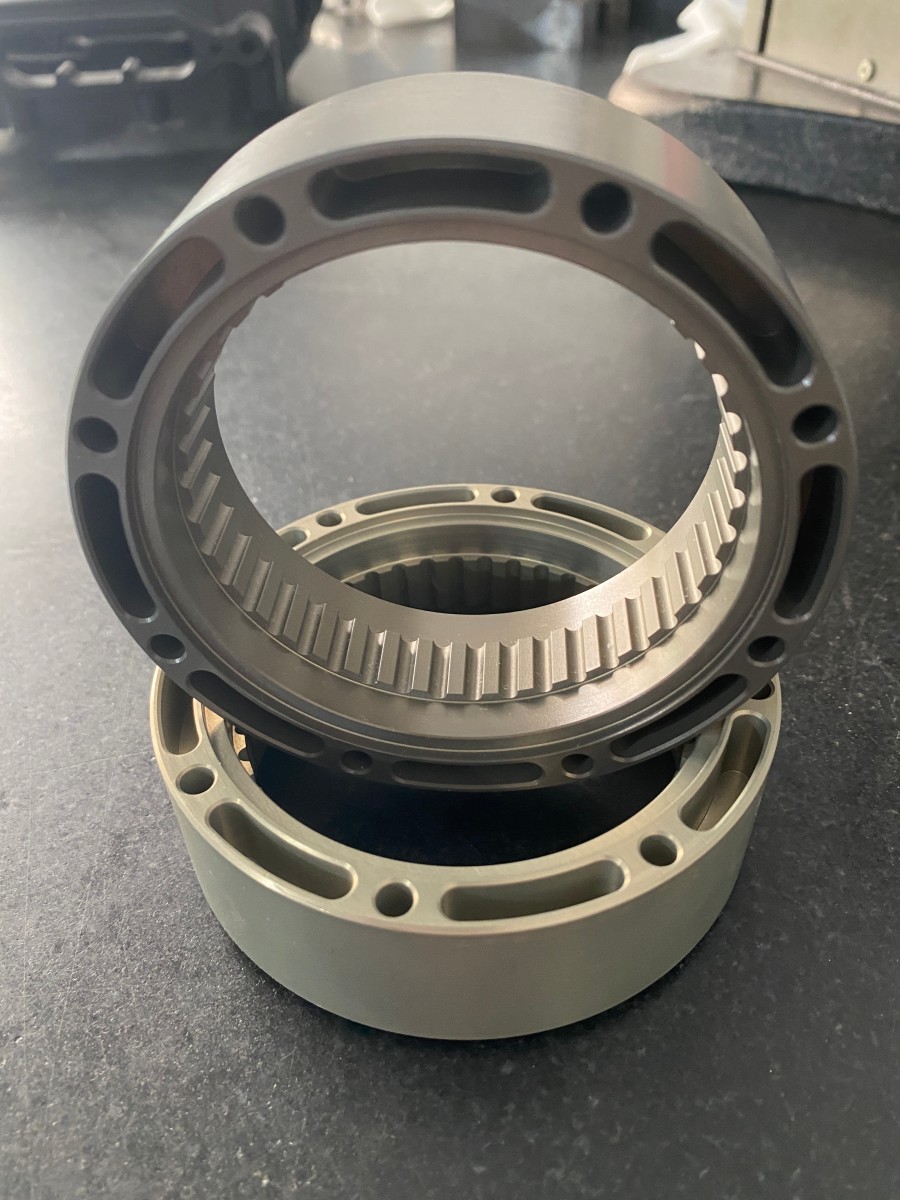
A perfect example of this balance is our work with a new energy vehicle client that needed custom e-housings for their electric motor. The client required tight tolerances (±0.002mm) to ensure proper fit with motor components, and a lead time of just 10 days for 50 prototypes. Using our 5-axis CNC machines, we optimized the cutting path to reduce cycle time per part by 25% while maintaining 100% compliance with tolerance requirements. The client launched their prototype testing on schedule, and we’ve since supported them in scaling to mass production.
Beyond Machine Speed: End-to-End Efficiency for Client Success
While the question “How Fast Is The Fastest CNC Machine?” is important, it’s equally critical to ask: “How fast can I get a quality part that meets my needs?” For most clients, the answer lies in partnering with a manufacturer that offers more than just fast machines—they offer a comprehensive solution that addresses your entire project lifecycle.
GreatLight Metal’s services are designed to do just that. We specialize in rapid prototyping and custom precision parts for industries like automotive, medical, aerospace, and humanoid robotics. Our team has over a decade of experience solving complex machining challenges, and we’re committed to delivering parts with:
Unmatched precision (up to ±0.001mm).
Maximum processing size of 4000mm, accommodating large and small parts alike.
Flexible production volumes, from single prototypes to mass production runs.
Conclusion
How Fast Is The Fastest CNC Machine? While ultra-fast machines can reach spindle speeds of 60,000 RPM and feed rates over 100,000 mm/min, the real value for custom parts projects lies in a partner that can balance speed with precision, cost, and end-to-end efficiency. GreatLight Metal combines advanced high-speed CNC technology, a full-process manufacturing chain, and rigorous quality control to deliver parts that meet your exact specifications in the shortest possible time. For more insights into how high-speed CNC machining can transform your custom part projects, connect with us on GreatLight Metal.
Frequently Asked Questions (FAQ)
Q1: What’s the difference between spindle speed and feed rate?
A: Spindle speed refers to how fast the cutting tool spins (measured in RPM), which determines how quickly the tool can slice through material. Feed rate refers to how fast the tool moves across the workpiece (measured in mm/min or ipm), which controls how much material is removed per unit time. Both are critical for overall machining speed, but they must be balanced to avoid tool wear or precision errors.
Q2: Can high-speed CNC machining achieve tight tolerances?
A: Yes—if managed properly. High-speed machines can maintain tolerances as tight as ±0.001mm when paired with rigid machine structures, high-quality tooling, and advanced process control. At GreatLight Metal, we regularly achieve these tolerances for clients in medical and aerospace industries using our 5-axis CNC machines and in-house metrology systems.
Q3: How does GreatLight ensure speed doesn’t compromise quality?
A: We use three key strategies: (1) Calibrating our machines regularly to maintain precision at high speeds; (2) Deploying advanced cutting tools (like carbide end mills with high wear resistance) to minimize tool wear; (3) Implementing real-time quality checks at every stage of production, from setup to final inspection. Our ISO certifications also ensure that every process follows standardized quality protocols.
Q4: What industries benefit most from high-speed CNC machining?
A: High-speed machining is ideal for industries that require complex, tight-tolerance parts with short lead times, including:
Automotive (engine components, chassis parts)
Medical (surgical instruments, implantable devices)
Aerospace (turbine blades, structural components)
Humanoid robotics (joint parts, sensor housings)
High-end consumer electronics (precision enclosures, connectors)
Q5: What’s the typical lead time for custom parts at GreatLight Metal?
A: Lead times vary based on part complexity, material, and volume. For single prototypes, we can deliver in as little as 2-3 days. For low-volume runs (10-100 parts), lead times are typically 5-10 days. For mass production, we work with clients to create a schedule that meets their launch timeline. We also offer expedited services for urgent projects—just let our team know your deadline, and we’ll adjust our process to accommodate it.
Q6: Does GreatLight Metal offer post-processing services for custom parts?
A: Yes, we provide one-stop post-processing services including anodizing, powder coating, polishing, plating, sandblasting, and more. This means you don’t have to coordinate with external vendors for finishing, which saves time and ensures consistency between machining and post-processing.



















