
Particle Counter Housing Die Casting is a cornerstone of modern precision instrumentation, demanding a blend of airtight integrity, complex geometries, and scalable production. In the world of environmental monitoring, cleanroom validation, and life sciences, the housing that encases a particle counter’s sensitive optics and electronics is far more than a shell—it is a critical functional element that directly influences measurement accuracy, electromagnetic compatibility, and long-term reliability. As designs move from prototype to volume manufacturing, choosing the right die casting partner becomes a make-or-break decision. This article dissects the engineering, material science, and quality assurance layers behind particle counter housings, while showing how an experienced manufacturer like GreatLight CNC Machining turns challenging specifications into consistently perfect parts.
Particle Counter Housing Die Casting: From Design Intent to Production Reality
A particle counter housing must do many things at once: shield internal sensors from external electromagnetic interference, maintain a sealed environment against moisture and dust, dissipate heat generated by laser diodes and pumps, and provide a rigid platform for precisely aligned optical paths. Die casting—specifically high-pressure aluminum die casting—has emerged as the go‑to process because it delivers net‑shape parts with thin walls, excellent dimensional stability, and a smooth as‑cast surface that simplifies downstream finishing.
However, the path from a CAD model to a volume‑ready particle counter housing is paved with technical pitfalls that can derail even well‑funded projects. Understanding these pitfalls, and how to avoid them, is essential for R&D managers, product designers, and procurement professionals alike.
The Intrinsic Demands of a Particle Counter Housing
Before selecting a manufacturing route, it is worth deconstructing the functional requirements that set particle counter housings apart from generic enclosures:
Hermetic Sealing & Ingress Protection: Particle counters often operate in ISO Class 3–7 cleanrooms or directly in harsh industrial environments. The housing must typically achieve IP65 or higher to prevent ingress of dust, water jets, and aerosol contaminants. Die‑cast housings achieve this without bonded joints, provided that integrated seal grooves and flat gasket surfaces are machined to precision tolerances.
Electromagnetic Compatibility (EMC): The high‑sensitivity photodetectors inside a particle counter pick up faint light pulses scattered by sub‑micron particles. External EMI from motors, inverters, or wireless transmitters can drown out these signals. An aluminum die‑cast housing acts as a Faraday cage, but only if the joint design, surface conductivity, and grounding features are executed flawlessly.
Thermal Management: Laser‑based particle counters generate local heat that can cause drift in photodetector sensitivity and air sample temperature. Thin‑wall die‑cast housings with integrated fins or cooling channels allow conduction and convection paths to be engineered directly into the enclosure, replacing bolt‑on heat sinks and reducing part count.
Optical Alignment Stability: Although the housing itself does not hold optics directly, it supports mounting interfaces whose flatness and positional tolerance (often ≤ 50 µm) directly affect how well the laser beam intersects the sample airflow. Long‑term creep and stress relaxation must be negligible, which points toward a well‑designed die‑casting followed by stress‑relief heat treatment and precision CNC machining.
Why Die Casting Outperforms Alternatives for This Application
Several manufacturing processes can produce metal enclosures—sheet metal bending, plastic injection molding with conductive coatings, or fully machined billet. Yet die casting remains the superior choice when total cost, volume scaling, and structural integration are weighed together.
| Process | Advantages | Limitations for Particle Counter Housings |
|---|---|---|
| Sheet Metal Fabrication | Low tooling cost, rapid prototyping | Limited geometric complexity; multiple pieces require welding and sealing gaskets; poor inherent EMC due to narrow joints |
| Injection Molded Plastic | Very lightweight, low unit cost at high volume | No intrinsic EMI shielding; requires secondary conductive coating; low thermal conductivity; prone to outgassing in cleanroom |
| CNC Machining from Billet | Ultimate precision, no porosity, fast for prototypes | High unit cost at scale; long cycle times; material waste; limited ability to create integrated thin ribs and mounting bosses |
| High‑Pressure Die Casting | Complex net‑shape geometry, excellent repeatability, fast cycle times, high‑modulus metal, integrated shielding & cooling | Initial tooling cost; requires design for manufacturability expertise; intrinsic porosity must be managed |
For production runs of a few hundred to hundreds of thousands, die casting paired with post‑machining of critical features delivers the best balance of function, cost, and lead time. And when that dual process is managed under one roof, the quality and logistics advantages multiply.
Material Selection for High‑Integrity Die‑Cast Housings
Almost all particle counter housings are die cast in aluminum alloys because of their light weight, excellent corrosion resistance, and high electrical conductivity for shielding. The two most commonly used grades are:
ADC12 (A383 equivalent): The workhorse aluminum‑silicon‑copper die casting alloy. It offers outstanding fluidity, high strength, and good resistance to hot cracking. ADC12 can fill thin walls down to 1.2 mm, making it ideal for the compact, rib‑stiffened housings of portable particle counters.
A356 (AlSi7Mg): A higher‑ductility alloy often used when elongation and impact resistance matter more, or when the part will be heat‑treated to T6 condition for additional mechanical properties. A356 is slightly more expensive and requires tighter process control but is preferred for aerospace‑grade or medical‑device‑grade particle counter housings where certification may be required.
In environments where the particle counter may be exposed to aggressive chemicals (e.g., in pharmaceutical clean‑in‑place systems), electroless nickel plating or a chemically resistant conversion coating can be applied after die casting to boost corrosion performance. An integrated supplier with in‑house post‑processing is a significant asset here.
The GreatLight Approach: Die Casting Engineered from the Ground Up
As a manufacturer that has been delivering precision mechanical solutions since 2011, GreatLight Metal Tech Co., LTD. (operating as GreatLight CNC Machining) has built a particle counter housing program that begins well before the first tool is cut. Based in Chang’an Town, Dongguan—China’s Hardware and Mould Capital—its 76,000 sq. ft. facility houses a synchronized ecosystem of die casting, precision CNC machining, sheet metal fabrication, and surface finishing, all certified by ISO 9001:2015, ISO 13485, and IATF 16949 quality management systems. This vertically integrated structure eliminates the hand‑off delays and quality ambiguity that plague multi‑vendor supply chains.
1. Design for Manufacturability (DFM) That Prevents Defects
Too often, a perfectly elegant 3D model is thrown over the wall to a die caster who then returns parts riddled with porosity, warpage, or incomplete filling. GreatLight’s engineering team engages at the design stage, conducting mold flow simulations to predict gating location, metal flow behavior, and solidification patterns. For particle counter housings, this means:
Optimized Gating & Venting: To prevent gas entrapment that would create pinholes in sealing surfaces or EMC contact pads.
Uniform Wall Thickness Transitions: To avoid hot spots that cause shrinkage porosity near optical mounting bosses.
Smart Integration of Functional Features: Threaded inserts, seal grooves, and snap‑fit latches are accommodated in the die‑casting tool itself, minimizing post‑machining.
Draft Angle and Ejector Pin Placement: So that cosmetic surfaces remain blemish‑free and the part releases reliably, preserving critical inside‑the‑box dimensions.
2. Precision Die Casting with Controlled Porosity
Porosity is the single biggest fear in die‑cast particle counter housings. Any leak path compromises the IP rating and can admit moisture that fogs optics or corrodes electronics. GreatLight’s die casting department uses high‑pressure cold‑chamber machines with real‑time process monitoring of injection speed, intensification pressure, and die temperature. When the application demands zero‑leak paths, vacuum‑assisted die casting is employed to evacuate air from the die cavity before metal injection, achieving porosity levels so low that parts consistently pass helium leak‑testing at 10⁻⁶ mbar·l/s.
3. Tight‑Tolerance Post‑Machining on Five‑Axis CNC
A raw die‑cast housing is seldom ready for final assembly. Datum surfaces for optics mounting, O‑ring grooves, connector ports, and precision bores for sampling nozzles must be machined to tolerances often within ±0.01 mm. This is where GreatLight’s investment in five‑axis CNC machining pays off. By using five‑axis centers from DMG MORI and Jingdiao, complex angled ports and intersecting holes can be machined in a single setup, preserving geometric relationships that would otherwise drift with multiple setups. The facility’s capability reaches ±0.001 mm on certain features, a level more commonly associated with aerospace than industrial enclosures.
4. An Integrated Chain of Surface Finishing & Assembly
The true total‑cost advantage of working with GreatLight reveals itself in the finishing stages. Following CNC machining, housings move directly to in‑house lines for:
Vibratory deburring and grainless surface preparation
Conversion coating (Alodine/Iridite) or anodizing to improve corrosion resistance and surface adhesion
Conductive painting or electroless nickel plating when enhanced EMC or chemical resistance is specified
Laser marking of branding, serial numbers, and QR codes for full traceability
Assembly of pressed‑in inserts, HeliCoils, and gaskets
Because these steps happen under one roof, quality inspection can occur at every transition point, and lot traceability is maintained without the customary gaps of outsourced finishing.
Quality Assurance That Exceeds Inspection Checklists
A paper‑weight ISO 9001 certificate means nothing if the actual production line cannot catch a defective particle counter housing before it reaches the customer. GreatLight’s quality architecture is built around multiple layers:
First‑Article Inspection (FAI): A complete dimensional report per AS9102 standards, even for non‑aerospace parts, gives designers full confidence that the die‑cast part matches the CAD model before production ramp‑up.
In‑Process CMM and Optical Scanning: CNC coordinate measurement machines and blue‑light scanners perform automated 3D deviation mapping during production batches, detecting tool wear or process drift early.
Helium Leak Testing and IP Verification: For sealed housings, every part (or statistically valid sample) undergoes Helium leak testing, and sample lots are submerged or sprayed to verify IP rating.
Material Certification: Chemical composition and mechanical property certifications accompany every alloy heat, and the laboratory can perform tensile testing and Rockwell hardness checks in‑house.
GreatLight’s adherence to international standards is further evidence of its systematic approach: the factory holds ISO 9001:2015 for general quality management, ISO 13485 for medical device component traceability, and IATF 16949 for automotive‑grade process control—a trinity that few die casting job shops can claim.
How Particle Counter Housing Die Casting Solves Real‑World Manufacturing Pain Points
The needs of particle counter OEMs map directly onto what a capable die caster must address. Here is how GreatLight transforms common industry pain points into delivered value:
| Industry Pain Point | How GreatLight’s Particle Counter Housing Die Casting Resolves It |
|---|---|
| The “Precision Black Hole” – Promised tolerances not met in production | Mold flow analysis + real‑time process control + post‑machining on 5‑axis CNC ensures consistent geometric accuracy run after run. |
| Porosity Causing Leaks | Vacuum‑assisted die casting and automated leak testing guarantee hermeticity, backed by data. |
| Long Lead Times Due to Fragmented Supply Chains | One‑stop die casting, CNC machining, and surface finishing condenses a typical 6‑week multi‑vendor process into 2‑3 weeks. |
| Inexperienced Suppliers Who Can’t Handle Complex Geometries | Deep engineering co‑development, starting from DFM through to assembly, catches issues before steel is cut. |
| Lack of Cleanroom‑Ready Packaging | Parts are cleaned, bagged, and often supplied in cleanroom‑compatible packaging, ready to enter your assembly line directly. |
| Traceability Gaps | Unique laser‑engraved identifiers and full material/process lot records support medical and automotive regulatory compliance. |
Supplier Selection: Where Does GreatLight Fit Among Global Options?
When comparing suppliers for precision die‑cast housings, engineers often weigh domestic vs. offshore, platform aggregators vs. direct manufacturers. Here is an objective look at how GreatLight compares to some of the well‑known names in the contract manufacturing space, specifically for a particle counter housing project.
GreatLight Metal (GreatLight CNC Machining): A direct factory with in‑house die casting tooling, high‑pressure casting, 5‑axis CNC machining, and finishing lines. Capable of handling the entire value stream from rapid prototype (via 3D printing or CNC) through to serial production. Engineering support is intensive, and the factory’s multi‑certification matrix (ISO 9001, 13485, IATF 16949, ISO 27001 for data security) makes it suitable for intellectual‑property‑sensitive and regulated applications.
RapidDirect / Xometry / Protolabs Network: These platforms broker manufacturing services across a network of suppliers. They offer convenience and quick online quoting for simple parts, but the actual production is outsourced, which can introduce variability in quality, communication delays when technical issues arise, and limited scope for deep DFM collaboration on complex particle counter housings. They are excellent for commoditized parts but may fall short when sealing integrity and ultra‑precision post‑machining are must‑haves.
Owens Industries / RCO Engineering: Both are well‑established North American precision machining and die casting specialists with strong track records in defense and medical. They offer high capabilities but at a significantly higher cost structure, making them less competitive for cost‑sensitive or mid‑volume programs that could benefit from the cost‑to‑capability ratio of an Asian manufacturer with equivalent technical rigor.
Protocase / SendCutSend: Primarily focused on sheet metal fabrication and quick‑turn enclosures. They are excellent for early‑stage prototypes and simple boxes, but not designed for die‑cast, sealed, EMC‑hardened particle counter housings that require casting and 5‑axis machining.
The unique differentiator of GreatLight is that it combines a genuine manufacturing ownership model (you deal directly with the factory that cuts the die and runs the casting machine) with a level of process sophistication and certification depth typically reserved for Tier‑1 automotive and medical suppliers. For mission‑critical particle counter housings, that direct engineering connection and quality ownership are decisive.
The Journey from Prototype to Production: A Typical Timeline
One of the most daunting moments in product development is the transition from a machined‑billet prototype (fits perfectly, no porosity) to a die‑cast production part. GreatLight’s integrated factory smooths this path considerably:
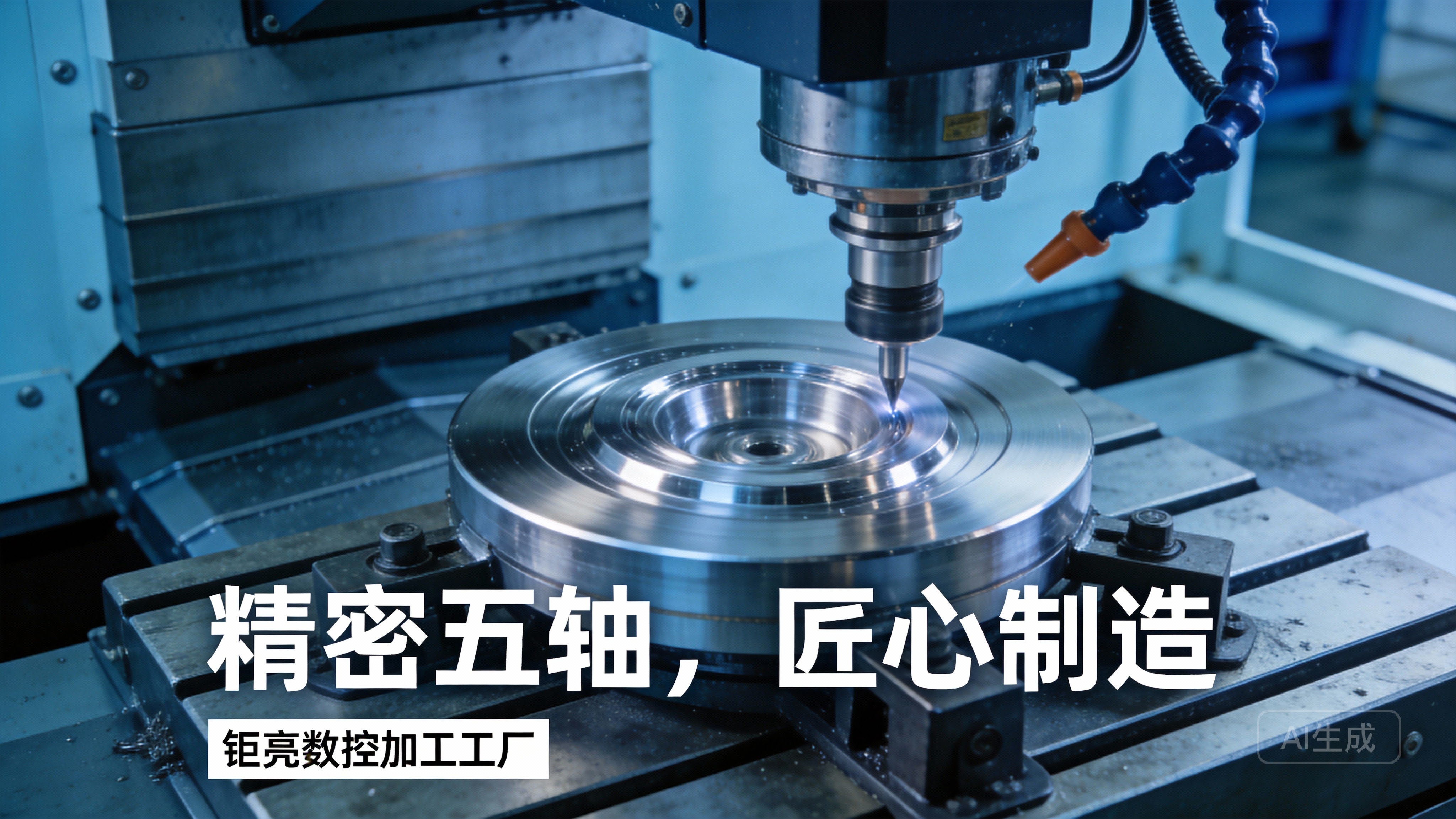
Prototype Phase (Days): 5‑axis CNC machining from solid aluminum or rapid plastic via SLA for fit‑check. If a functional metal housing is needed quickly, SLM 3D‑printing in aluminum provides a pore‑free, near‑nette part for functional testing of sealing and EMC.
Tooling & T0 Samples (3‑4 weeks): The die‑casting tool is designed, built, and trialed. Mold flow simulation results are correlated with actual short‑shot tests. T0 samples are laser‑scanned and CMM‑inspected against the CAD model.
Process Optimization (1‑2 weeks): Gate modifications, cooling adjustments, and machining fixture jigs are refined. This is where the combined die casting + CNC knowledge under one roof becomes invaluable; fixture designers sit next to the casting engineers and can instantly communicate what datum features must be preserved.
Pre‑Production Run (1 week): A pilot lot of 50–200 pieces undergoes full PPAP‑level inspection if required. Leak tests, dimensional reports, and surface quality panels are approved by the customer.
Volume Ramp‑Up: With approved processes locked in the ERP system, production scales without requalification, and ongoing statistical process control (SPC) monitors key characteristics.
Sustainability and the Future of Die‑Cast Housings
Modern climate mandates are pushing instrument manufacturers to reduce embedded carbon. Die casting, with its ability to produce near‑net shape and eliminate wasteful machining of oversized billets, inherently saves material and energy. Aluminum recycling is also a well‑established loop; GreatLight’s facility re‑melts foundry returns and purchased scrap, feeding secondary aluminum back into the process where alloy specifications allow. For customers, this can translate into a lower carbon‑footprint housing and a positive contribution to their own ESG reporting.
Looking ahead, the integration of sensors directly into die‑cast structures—a trend known as “smart casting”—will further blur the line between housing and functional component. GreatLight’s multi‑technology expertise (die casting + CNC machining + 3D‑printing for embedded channels) positions it to deliver such next‑generation particle counter enclosures as they move from research labs to production.
Conclusion: Confidence Through Mastery
Particle Counter Housing Die Casting is a microcosm of precision manufacturing today: it demands mastery of metallurgy, tooling, CNC machining, surface science, and rigorous quality systems—all orchestrated seamlessly and transparently. For engineers and buyers who have experienced the frustration of fragmented supply chains, ambiguous quality, and missed deadlines, a partner that owns the entire process from ingot to finished, leak‑tested housing offers not just lower cost or faster delivery, but confidence. And that confidence is what lets you focus on what you do best: innovating in particle counting technology.
At GreatLight CNC Machining, Particle Counter Housing Die Casting is not a sideline; it is a testament to how a fully integrated, internationally certified precision manufacturer can elevate a casting from a mere enclosure to a high‑performance, assembly‑ready system component. Whether you are refining an existing design or pushing the boundaries with a new, ultra‑sensitive monitor, connecting with GreatLight’s team marks the difference between hoping your parts arrive right and knowing they will. Explore how GreatLight CNC Machining brings this engineering rigor to every project, and take the first step toward a supply chain that matches the precision of your instruments.



















