

One Stop Bulk Metal Die Casting Service
In the rapidly evolving arena of industrial manufacturing, a one stop bulk metal die casting service has transitioned from a mere convenience into a strategic imperative. It represents an integrated ecosystem where mold design, high-pressure casting, secondary CNC machining, surface finishing, and quality assurance converge under one roof, eliminating the fragmentation that so often plagues multi-vendor supply chains.
Understanding the Die Casting Value Chain
Die casting is a precision manufacturing process that forces molten metal—typically aluminum, zinc, or magnesium—into a reusable steel mold at high pressure and speed. The result is a net-shape part with exceptional dimensional accuracy, thin walls, and intricate geometries that would be cost-prohibitive to machine from solid stock. However, a casting alone is rarely the final product. Most components demand tapping, milling, surface treatment, or assembly before they are ready for integration. This is where a truly integrated one‑stop service becomes transformative.
The Anatomy of a One‑Stop Bulk Die Casting Service
A full‑spectrum provider manages every link in the chain:
DFM (Design for Manufacturability) Consultation
Engineers analyze 3D models to optimize part geometry, wall thickness, draft angles, and gate placement, reducing defects like porosity or cold shuts before tooling begins.
In‑House Mold & Die Development
Expert toolmakers craft hardened steel dies capable of hundreds of thousands of shots, ensuring consistent cavity fill and minimal flash throughout the mold’s lifecycle.
High‑Pressure Die Casting (HPDC)
Automated cold‑ or hot‑chamber machines inject molten alloy at pressures exceeding 1,200 bar, delivering rapid cycle times ideal for volumes from 5,000 to over 1,000,000 pieces annually.
Post‑Casting CNC Machining
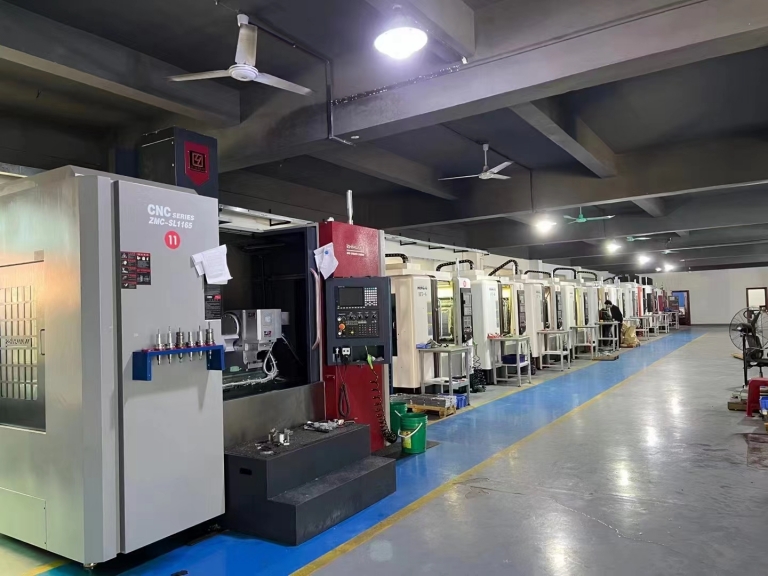
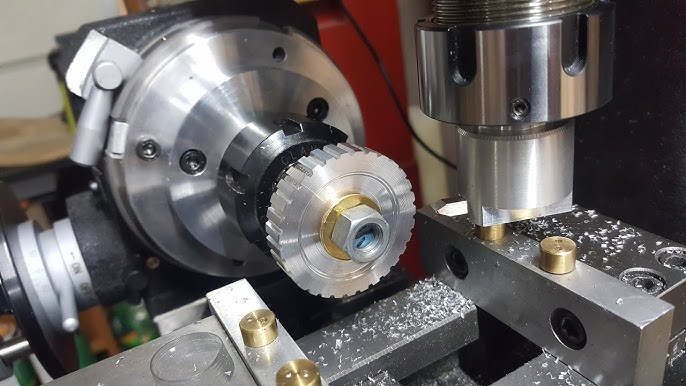
Instead of shipping raw castings to a separate machine shop, the one‑stop provider deploys in‑house 3‑axis, 4‑axis, and 5‑axis CNC centers to hold tolerances down to ±0.005 mm on critical features, drill coolant channels, and thread mounting holes.
Vibratory Deburring, Blasting & Surface Finishing
Castings are deburred, shot‑blasted, anodized, powder‑coated, or electroplated on site, erasing any need for external finishing partners.
CMM Inspection & Quality Documentation
Dimensional reports, X‑ray porosity analysis, and material certifications accompany every batch, underpinned by recognized management systems such as ISO 9001 and IATF 16949.
By collapsing these steps into a single facility, lead times shorten dramatically, communication overhead vanishes, and accountability rests with one engineering team that understands the entire process.
Materials at Your Disposal
The most commonly requested alloys for bulk die casting include:
| Material | Key Characteristics | Typical Applications |
|---|---|---|
| Aluminum A380/A383 | Lightweight, excellent corrosion resistance, good thermal conductivity | Automotive engine housings, electronic enclosures, pump bodies |
| Zinc Zamak 3/5 | High strength & hardness, excellent thin‑wall capability, easy plating | Precision gears, connectors, decorative trim |
| Magnesium AZ91D | Lowest density among structural metals, exceptional damping capacity | Laptop frames, powertrain brackets, power tool housings |
A capable one‑stop partner will also offer hybrid solutions, combining die‑cast blanks with brass inserts or over‑molded sealing gaskets, all within the same production workflow.
Why Bulk Ordering Rewards Integrated Services
When volumes climb into the tens of thousands, the efficiency gains of a one‑stop model become profound:
Economies of Scale in Tooling – A mold that produces 200,000 shots spreads its amortized cost across every single part, lowering the effective price per unit.
Streamlined Logistics – There is no trucking semi‑finished castings to a remote machine shop. Parts move from casting cell to CNC cell in minutes, not days.
Closed‑Loop Quality – Process drifts detected during machining immediately feed back to the casting team, preventing repetitive defects from multiplying into an entire batch.
Single Invoice, Single Point of Contact – Procurement, engineering, and quality management converge into one conversation, freeing your team to focus on product innovation.
The Competitive Landscape: Where Does GreatLight Metal Fit?
A number of international players claim to offer one‑stop metal die casting, but the depth of integration varies widely. Let’s examine how GreatLight Metal Tech Co., LTD. (GreatLight CNC Machining) compares to other recognized names.
GreatLight Metal – Headquartered in Dongguan, China’s hardware capital, GreatLight has operated since 2011 and now occupies a 76,000 sq. ft. facility with 150 professionals. Its die casting division sits alongside a fleet of 127 precision peripherals including large‑format 5‑axis CNC machines, EDM, and 3D metal printers, making it one of the few providers that can truly cast, machine, and finish under a single quality roof. ISO 9001:2015, IATF 16949 (automotive), and ISO 13485 (medical) certifications add a layer of trust that many local shops lack. The company’s ability to handle up to 4,000 mm workpieces while holding ±0.001 mm tolerances on finished features is a distinguishing factor for complex, large‑scale automotive or industrial components.
ProtoLabs Network – Known for rapid prototyping, ProtoLabs leverages a global network of manufacturing partners for die casting. While their speed for low‑volume “on‑demand” parts is admirable, the indirect model means each project may be fulfilled by a different facility, introducing variability in consistency for bulk repeat orders.
Xometry – Similar to ProtoLabs, Xometry functions as a marketplace connecting buyers to vetted shops. This can be effective for quick turn prototypes but often lacks the deeply integrated design‑for‑manufacturing feedback and process‑lock ability that a single‑source provider can deliver on high‑volume programs.
RapidDirect – Positioned as a digital platform for Chinese manufacturing, RapidDirect offers die casting and CNC together. However, their facility scale and in‑house mold‑making capacity may be more limited compared to a producer like GreatLight that runs its own toolroom and die maintenance department.
JLCCNC (JLC) – Popular for PCB fabrication, JLCCNC has recently entered CNC and die casting, targeting the maker‑to‑professional spectrum. Their online quoting system is user‑friendly, but for bulk industrial die casting with tight tolerances and automotive‑grade certifications, the maturity curve is still steep.
Fictiv, SendCutSend, PartsBadger – These players excel at low‑complexity sheet metal or simple machined parts, and while some broker die casting, they typically do not operate an in‑house foundry, limiting their ability to control the entire process stream.
Among these, the partners that can genuinely claim a “one‑stop” die casting experience from tooling through to post‑processing are those with heavy investment in their own plant floor. GreatLight Metal, with its three wholly owned factories, 7600‑m² campus, and a decade‑plus track record, exemplifies the infrastructure needed to sustain quality across thousands of units.
Real‑World Applications of Bulk One‑Stop Die Casting
To ground the concept, consider three industrial scenarios:
1. Automotive E‑Axle Housings
An OEM developing electric drive units required 80,000 aluminum housings per year. The part needed a die‑cast AlSi10Mg blank, precision boring for bearing seats (H7 tolerance), and multiple threaded inserts. A fragmented supply chain would have risked concentricity errors. With a one‑stop service like GreatLight’s, the casting die was designed with the machining datums pre‑aligned; after casting, 5‑axis CNC centers milled all features in a single clamping, guaranteeing alignment below 0.02 mm. A full PPAP process backed by IATF 16949 gave the OEM confidence to ramp to volume.
2. 5G Base Station Heat Sinks
Telecom equipment demands lightweight, corrosion‑resistant aluminum components with intricate fin geometries for heat dissipation. The one‑stop provider developed a family die with interchangeable inserts, cast the thin‑wall fins to a minimum 0.8 mm, then performed micro‑blasting and chemical passivation in‑line, achieving thermal performance targets without separate electroplating subcontractors.
3. Medical Robot End‑Effectors
A surgical robot manufacturer needed sterilizable, high‑strength magnesium alloy grippers in quantities of 12,000 annually. Tight form tolerances and stringent biocompatibility standards required ISO 13485‑certified control. The integrated facility cast the parts, machined critical articulation surfaces, and applied a medical‑grade epoxy coating, all within a validated, traceable workflow.
Quality Systems That Underpin Trust
No one‑stop die casting service can be considered credible without internationally recognized quality management systems. GreatLight Metal’s certifications speak to the maturity of its processes:
ISO 9001:2015 – Foundation of consistent quality management.
IATF 16949 – Automotive‑specific requirements including failure mode and effects analysis (FMEA), statistical process control (SPC), and production part approval process (PPAP). This is essential for any supplier targeting Tier‑1 and OEM automotive contracts.
ISO 13485 – Medical device quality management, covering traceability, risk management, and validated processes.
ISO 27001 – Information security for IP‑sensitive designs, a growing concern in the era of cyber‑physical manufacturing.
These certifications are not just wall‑mounted badges; they embed process discipline that prevents the “precision black hole” described in many failure cases—where a supplier’s first article is perfect but the thousandth part wanders out of spec.
Navigating the Key Decision Factors
When evaluating potential partners for your next bulk die casting project, consider a checklist aligned with E‑A‑T (Expertise, Authoritativeness, Trustworthiness):
In‑House Tool Room: Can they design, build, and maintain the die, or do they outsource? An in‑house toolroom shortens revision loops and enables rapid response to mold wear.
Secondary Machining Capability: Are CNC lathes and 5‑axis mills actually on the same site? Cross‑town transport injects delay and risk of damage.
Scale & Capacity: Does the facility have enough press tonnage and shift capacity to absorb your peak volumes without sub‑contracting?
Certifications: Do their quality certificates align with your industry’s regulatory landscape? Automotive and medical buyers should demand IATF 16949 or ISO 13485.
Data Security: How do they protect your design files? Look for ISO 27001 or equivalent.
Case Studies & References: Ask for examples of similar geometry, alloy, and volume that the provider has successfully delivered. A transparent partner will share non‑confidential data.
The Economic Calculus
Procurement teams often fixate on the piece price of the raw casting. However, a holistic total‑cost‑of‑ownership (TCO) analysis almost always favors a one‑stop provider. By bundling mold construction, casting, machining, and finishing, you eliminate:
3–5 vendor management touchpoints.
Multiple freight legs and their associated carbon footprint.
Markups that each intermediary applies.
Rework stemming from miscommunication between disparate shops.
For example, an aluminum gearbox shell that might cost $12.00 as a raw casting and $8.00 in external machining could sum to $20.00 with three separate vendors, plus logistics and risk. A one‑stop partner may quote $17.50 all‑in, deliver in half the lead time, and assume full liability for dimensional quality. The savings compound as volumes rise.
The Road Ahead: Industry 4.0 and Smart Die Casting
As the manufacturing world embraces digitalization, leading one‑stop providers are embedding sensors in die casting cells that monitor injection pressure, velocity, and mold temperature in real time. This data feeds into machine‑learning models that predict part quality before the mold even opens. Coupled with robotic extraction and automated vision inspection, the factory of the near future achieves defect rates below 50 ppm, a level unattainable with fragmented job shops. GreatLight Metal’s investments in such intelligent manufacturing reflect a commitment to staying at the forefront of bulk die casting productivity.
Conclusion
For engineers and procurement leaders tasked with launching high‑volume metal components, there is no substitute for the cohesion, speed, and accountability that a single‑source provider brings. From design‑for‑manufacturability insights to the final bead‑blasted finish, every step benefits from the seamless handoff that only a truly integrated operation can offer.
In a global marketplace crowded with brokers and limited‑scope shops, doing your due diligence pays off. Look for a partner with an in‑house foundry, on‑site CNC machining, rigorous international certifications, and a documented track record of scaling from prototype to mass production.
Ultimately, the strategic decision to entrust your program to a competent one stop bulk metal die casting service will define the reliability of your supply chain, the quality of your end product, and your speed to market—factors that no competitive enterprise can afford to leave to chance.



















