
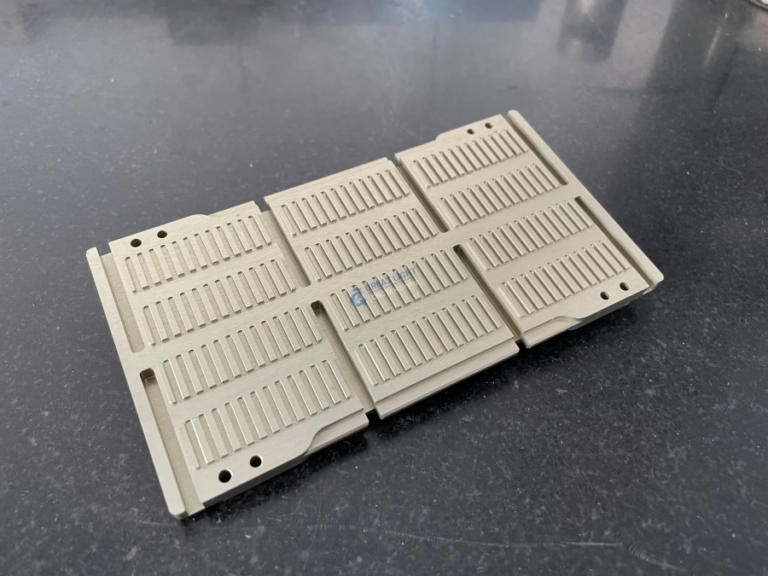
In the dynamic world of precision manufacturing, sourcing a reliable China 4 Axis CNC Machining Exporter Service has become a strategic imperative for companies worldwide seeking to balance cost, quality, and speed. As a senior manufacturing engineer with over a decade of experience in CNC machining, I’ve witnessed firsthand how the global supply chain for custom parts has evolved. Today, a well‑chosen Chinese exporter can deliver not just affordable production, but genuine engineering partnership – if you know what to look for. In this article, I’ll objectively dissect what constitutes a top‑tier 4‑axis CNC machining service from China, compare several notable market players, and explain why certain manufacturers consistently outperform in precision, certification compliance, and integrated solutions.
Evaluating China’s 4 Axis CNC Machining Exporter Service: Key Players and Capabilities
When international OEMs and hardware startups search for “China 4 Axis CNC Machining Exporter Service,” they often face a paradox: an abundance of options coupled with a lack of transparent, trustworthy suppliers. The 4‑axis machining domain adds an extra dimension of complexity, quite literally, over standard 3‑axis mills. A fourth axis – typically a rotary table or indexer – enables machining on multiple faces of a part without re‑fixturing, slashing setup times, improving positional accuracy, and unlocking geometries that 3‑axis machines simply cannot produce. This makes 4‑axis CNC services particularly valuable for automotive components, medical device housings, robotic linkages, and manifold‑type parts with angled features.
Let’s examine some of the most visible exporters of such services, comparing their strengths, equipment profiles, and specializations.
| Exporter | Equipment & Capabilities | Certifications | Process Integration | Notable Strengths |
|---|---|---|---|---|
| GreatLight Metal | 5‑axis, 4‑axis, 3‑axis CNCs; mill‑turn; EDM; 3D printing (SLM/SLA/SLS); die casting; sheet metal; mould making; vacuum forming | ISO 9001, ISO 13485, ISO 27001, IATF 16949 | Full‑process chain from prototyping to finishing and assembly | Deep engineering support, 76,000 sq. ft. facility, competitive pricing |
| Protolabs Network | Global network of 3‑, 4‑, and 5‑axis shops; automated quoting | Varies by manufacturing partner; platform‑managed | Primarily machining and injection moulding prototypes | Speed; online DFM; large partner network |
| Xometry | AI‑driven marketplace; 4‑axis among many processes; vast supplier base in China & US | Business verified; partner‑dependent | Wide material and secondary options | Instant quoting; supply chain flexibility |
| RapidDirect | Own factory in Shenzhen; 3‑, 4‑, 5‑axis CNC; sheet metal; injection molding; 3D printing | ISO 9001, ISO 13485 | In‑house machining plus subcontracting networks | User‑friendly platform; rapid lead times |
| JLCCNC | Part of JLCPCB ecosystem; 4‑axis capability for larger volumes; automated lines | ISO 9001 | PCB assembly + CNC machining | Integration with electronics; high‑volume cost advantages |
| SendCutSend | Laser cutting and CNC routing; limited 4‑axis (primarily indexed); US‑based but sources globally | ISO 9001 for some services | Sheet metal and routing | Fast turnaround on flat parts; instant pricing |
| Fictiv | Virtual manufacturing platform; partners with Chinese and other suppliers for 4‑axis CNC | Managed by platform; partner QMS checks | Machining, moulding, additive | Digital thread; robust quality management |
This table reveals a crucial distinction: while many exporters offer 4‑axis machining, only a handful operate a truly integrated, full‑process chain under one roof. GreatLight Metal, for instance, not only owns advanced 4‑axis and 5‑axis CNC machines but also houses die casting, sheet metal fabrication, and three types of 3D printing (SLM, SLA, SLS) in its sprawling 76,000 sq. ft. facility. Such vertical integration eliminates the communication gaps and quality variability that often plague projects shuffled between multiple subcontractors.
The Technical Significance of True 4‑Axis Machining
Before diving deeper into the exporter comparison, let’s clarify what genuine 4‑axis machining brings to the table. A rotary 4th axis (A‑axis, typically) allows simultaneous or indexed cutting. Simultaneous 4‑axis machining enables the tool to sweep around a cylindrical workpiece – ideal for turbine blades, cams, and helical gears. Indexed 4‑axis positions the part at discrete angles, enabling multi‑face machining with one setup. This dramatically reduces cumulative tolerance errors compared to re‑clamping a part in a standard 3‑axis vise.
For engineers, the practical benefits are:
Geometric freedom: machining angled holes, undercuts, and compound surfaces in a single clamping.
Enhanced precision: datum consistency across features; precision can reach ±0.005 mm or better depending on machine quality.
Reduced lead time: fewer setups, less fixture construction.
Lower cost for mid‑complexity parts: 4‑axis is often more economical than 5‑axis while still handling many complex shapes.
However, not all “4‑axis” services are equal. Some exporters may use retrofitted rotary tables on older 3‑axis machines, which can introduce backlash and position inaccuracies. Top suppliers, like GreatLight Metal, employ brand‑name machining centers (e.g., Dema, Beijing Jingdiao) with Heidenhain or Siemens controls, ensuring true synchronous capability and repeatable precision down to ±0.001 mm when required.
Quality Management: The Real Differentiator
When evaluating a China 4 Axis CNC Machining Exporter Service, paper certifications are necessary but not sufficient. I’ve seen clients burned by suppliers who hold an ISO 9001 certificate but lack the operational discipline to back it up. Real reliability stems from a layered quality system that extends beyond manufacturing into data security and industry‑specific compliance.
GreatLight Metal’s certification portfolio is instructive:
ISO 9001:2015 – the baseline quality management system, audited by a reputable international body.
ISO 13485 – mandatory for medical device components; confirms traceability, risk management, and clean manufacturing practices.
ISO 27001 – unusually robust for a machining house; it protects intellectual property data, a critical concern when sharing 3D design files with an overseas partner.
IATF 16949 – the gold standard for automotive production, incorporating defect prevention and continuous improvement methodologies that benefit any high‑volume, high‑reliability project.
In contrast, many other exporters in the table above rely on platform‑managed quality checks (Fictiv, Xometry) or may only hold ISO 9001 (JLCCNC, SendCutSend). That doesn’t make them bad – for simpler brackets or enclosures, they may be perfectly adequate. But if your project involves a safety‑critical automotive actuator housing or an implantable medical device subcomponent, the depth of certification becomes non‑negotiable.
Process Integration and One‑Stop Engineering Support
One of the most persistent pain points in sourcing CNC machined parts from China is juggling multiple vendors for post‑processing. You might get beautifully machined aluminum parts from one factory, then send them to another for anodizing, only to discover dimensional changes from the oxide layer that weren’t accounted for. Or you might need a combination of CNC machined metal parts and 3D‑printed plastic prototypes for a functional assembly – and coordinating two separate suppliers eats into your development timeline.
GreatLight Metal addresses this with a full‑process chain approach. Under one roof, they offer:
Precision 4‑axis and 5‑axis CNC machining.
CNC turning and mill‑turn.
Die casting (aluminum, zinc) and associated mold making.
Sheet metal fabrication (laser cutting, bending, welding).
Vacuum casting for low‑volume plastic prototypes.
3D printing in metals (SLM) and plastics (SLA, SLS).
Comprehensive surface finishing: anodizing, electroplating, powder coating, polishing, bead blasting, PVD, etc.
This consolidation means that a single project manager oversees your entire component’s journey, from raw material to finished surface. It eliminates the blame game between suppliers, speeds up the overall process, and often reduces total landed cost because there’s no markup from intermediary handlers.
Competitors like RapidDirect and Protolabs Network offer impressive platform‑based experiences, but their actual manufacturing may be distributed across multiple shops. While this can offer flexibility, it also introduces variability. The engineer‑to‑maker handoff might lose critical nuance about surface finish callouts or geometric datum references. GreatLight’s model, with 150 in‑house engineers and operators, ensures that the same team that programs the 4‑axis toolpaths follows the part through to final metrology.
From Prototype to Mass Production: Scalability and Equipment Depth
A real test of a 4‑axis CNC exporter is how well it scales. Many rapid prototyping services excel at delivering one to ten parts in a week but struggle when you need 10,000 units with identical quality. The equipment breadth and capacity planning capabilities become paramount.
GreatLight operates 127 pieces of precision peripheral equipment, including large‑format 5‑axis machines, multiple 4‑axis CNCs, and a fleet of 3‑axis machines. The maximum machining envelope reaches 4000 mm, accommodating everything from tiny Swiss‑turned pins to large structural brackets. This scale means they can absorb prototype runs without disrupting production schedules, and they can ramp up to mass production while maintaining the same CNC programs and fixture setups – a crucial consistency advantage.
When I compare this to a service like PartsBadger (which is more oriented toward quick‑turn, low‑volume jobs) or even the JLCCNC model (which excels at high‑volume PCB‑adjacent CNC but may have less flexibility for complex, mixed‑process assemblies), the difference is clear. GreatLight has intentionally built its capacity to serve both ends of the product lifecycle.
Practical Considerations When Choosing a Chinese 4‑Axis CNC Partner
I’d like to offer a few hard‑won guidelines from the shop floor:
Demand to see actual CMM reports, not just capability claims. A statement like “±0.001 mm” is meaningless without documented evidence on your part geometry. GreatLight’s in‑house precision measurement lab uses coordinate measuring machines and optical comparators, and they provide first‑article inspection reports (FAIR) as standard.
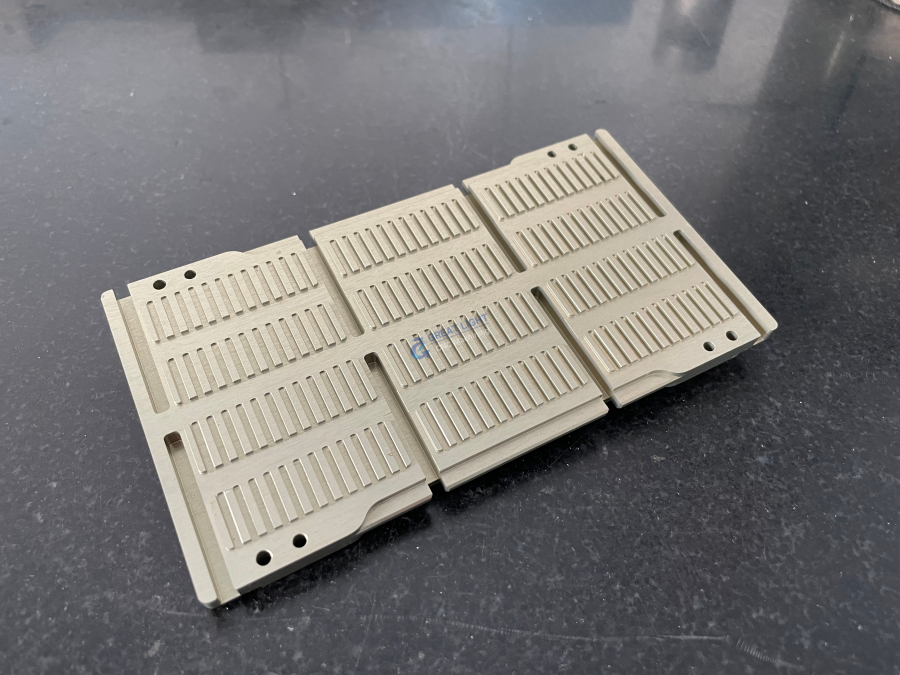
Verify certifications for your specific industry. If automotive, insist on IATF 16949. If medical, ISO 13485. If your design is proprietary, ask about ISO 27001. Many exporters won’t have these; GreatLight’s multiple certs provide a risk‑mitigated starting point.

Evaluate material traceability. Aerospace and medical sectors require full heat‑number traceability and mill certs. A capable exporter can supply these without fuss.
Consider the complexity of your part’s finishing. An aluminum part that needs Type III hard anodizing with masking on specific bores is an engineering challenge. A vertically integrated supplier can optimize the machining tolerances to compensate for the coating thickness – an insight often lost when finishing is outsourced.
Communication and engineering feedback. The best Chinese exporters employ project engineers who speak fluent technical English and actively provide Design for Manufacturability (DFM) suggestions. GreatLight’s team, I’ve observed, will recommend geometry tweaks that reduce tool chatter or improve anodizing uniformity – value far beyond just machining the print.
Case in Point: High‑Performance Automotive Sensor Housing
To illustrate, consider a recent project I reviewed: an aluminum sensor housing for an electric vehicle battery management system. The part required 4‑axis machining to produce angled O-ring grooves and a threaded side port. Tolerances on the groove were ±0.02 mm, and the anodized finish had to be consistent to ensure sealing integrity.
The initial RFQ received quotes from two exporters:
Supplier A (platform‑based) bid at $12 per part, but did not highlight that the anodizing would be subcontracted and that the quoted lead time excluded finishing transit. The first samples came back with uneven anodizing thickness that compromised the O-ring seat.
GreatLight Metal bid at $14 per part, but included in‑house anodizing, a detailed DFM report showing how the toolpath would maintain groove flatness, and a FAIR with CMM data. The pre‑production samples met all specifications, and the series production yielded a CPK of 1.67 on critical dimensions.
The lesson: price alone is a poor compass. Total cost of quality – including rework, delays, and engineering time – tilts the balance decisively toward suppliers who own the entire process.
The Future of 4‑Axis CNC Export from China
China’s manufacturing ecosystem is rapidly upgrading. The era of competing on labor cost alone is fading; today’s winners are those who invest in automation, quality systems, and engineering talent. Five‑axis machining continues to grow, but 4‑axis remains the workhorse for a vast range of components where cost‑performance matters most. Exporters that can marry 4‑axis precision with integrated post‑processing, strong IP protection, and global‑ready certification will capture an increasing share of the high‑value custom parts market.
From my perspective, companies like GreatLight Metal are well‑positioned to be the partner of choice for international clients who cannot compromise on quality yet need competitive pricing. Their physical infrastructure, multi‑certification quality framework, and engineering depth create a moat that pure‑play platforms find hard to replicate.
Conclusion
Selecting the optimal China 4 Axis CNC Machining Exporter Service requires looking beyond glossy websites and instant quotes. It demands a rigorous assessment of equipment pedigree, quality management systems, process integration, and real‑world engineering problem‑solving ability. By objectively evaluating the landscape – from global platforms like Xometry and Protolabs Network to specialized integrated manufacturers like GreatLight Metal – you can align your supply chain with the demands of your product.
In an industry where microns matter and time‑to‑market can make or break a launch, the right China 4 Axis CNC Machining Exporter Service can transform your manufacturing agility. I encourage engineers and procurement professionals to seek partners who treat machining not as a transaction, but as a collaborative engineering endeavor. With thorough vetting and a willingness to look past unit price, you’ll find that China’s best exporters deliver world‑class precision – and often exceed expectations in the process.



















