
For professionals and procurement specialists in the manufacturing industry, the term “CNC Vertical Machining Center” (VMC) is ubiquitous. Yet, a profound understanding of its principles, capabilities, and optimal applications is fundamental to making informed decisions in precision parts machining and customization. As a cornerstone of modern subtractive manufacturing, the CNC Vertical Machining Center represents more than just a machine; it embodies a systematic approach to achieving high accuracy, repeatability, and efficiency in producing complex components.
At its core, a CNC Vertical Machining Center is a type of computer-numerically-controlled machine tool where the spindle—the component that holds and rotates the cutting tool—is oriented vertically. This fundamental configuration defines its operational characteristics and primary strengths. Workpieces are typically secured on a table that moves in the X (left-right) and Y (front-back) axes, while the spindle moves in the Z (up-down) axis. This arrangement provides exceptional stability and visibility during the machining process, making it exceptionally suitable for a vast array of prismatic parts, molds, dies, and components requiring intricate 2.5D and 3D contouring.
Deconstructing the Core Components of a VMC
To appreciate its capabilities, one must understand its anatomy:
Machine Frame & Base: Constructed from heavily ribbed cast iron or polymer concrete, this provides the foundational rigidity and vibration damping essential for high-precision machining. Stability is non-negotiable for achieving tight tolerances.
Vertical Spindle Assembly: The heart of the VMC. It houses a high-speed motor (often with integrated spindle technology) capable of reaching tens of thousands of RPM. The vertical orientation allows chips to fall away from the cutting zone, generally improving chip evacuation.
CNC Controller & Drive System: The “brain” and “nervous system.” It interprets G-code instructions and precisely coordinates the movement of servo motors and ball screws on all linear axes. Advanced controllers enable complex toolpath execution, probing cycles, and adaptive control.
Automatic Tool Changer (ATC): A critical subsystem for automation. A carousel or arm mechanism stores multiple cutting tools (often 20, 30, or more) and swaps them into the spindle within seconds without operator intervention, enabling uninterrupted machining of features requiring different tools.
Work Table & Pallet System: The table, usually equipped with T-slots, holds the workpiece via vises, fixtures, or custom workholding. High-end VMCs may feature pallet changers, allowing one pallet to be machined while another is set up offline, dramatically boosting throughput.
Coolant & Chip Management System: Delivers high-pressure coolant to the cutting interface for temperature control, lubrication, and chip flushing. Effective chip management is vital for protecting the workpiece, tools, and machine components.
The Pivotal Role of VMCs in Precision Manufacturing
The application spectrum of CNC Vertical Machining Centers is incredibly broad, cementing their status as the workhorse of machine shops globally. They excel in:
High-Precision Component Fabrication: Producing parts with tolerances within ±0.005mm to ±0.02mm (±0.0002″ to ±0.0008″) is routine for a well-maintained VMC. This is critical for aerospace brackets, medical device components, and optical mounts.
Mold & Die Making: The vertical configuration is ideal for machining complex cavities, cores, and electrodes for injection molds, die-casting dies, and stamping dies. The ability to perform fine finishing passes is a key advantage.
Batch Production of Prismatic Parts: For parts like enclosures, plates, valve bodies, and heat sinks, where the primary features are on the top and sides, VMCs offer unbeatable efficiency and consistency across large production runs.
Prototyping & Low-Volume Customization: Their flexibility makes them perfect for rapid iteration and custom one-off parts. Quick setup and programming changes allow for agile responses to design modifications.
Strategic Advantages: Why Choose a Vertical Machining Center?
Superior Accessibility & Setup Simplicity: The open, top-down view simplifies workpiece loading, tool setting, and in-process inspection. This often translates to faster setup times, especially for simpler parts.
Enhanced Rigidity & Stability: The vertical column design inherently resists cutting forces in the X and Y directions, promoting smoother finishes and prolonged tool life, particularly during heavy milling operations.
Optimized Chip Evacuation: Gravity assists in chip removal, reducing the risk of re-cutting chips (which degrades surface finish and tool life) and minimizing heat accumulation in the workpiece.
Cost-Effectiveness: Generally, VMCs have a lower initial acquisition cost and require less floor space than comparable Horizontal Machining Centers (HMCs), offering an excellent balance of capability and investment for many applications.
Navigating the Selection: Key Parameters for Your Project
When evaluating a CNC Vertical Machining Center for a specific project, consider these critical specifications:
Travels (X, Y, Z): Determines the maximum workpiece size the machine can accommodate.
Spindle Power & Torque: Defines the machine’s ability to remove material aggressively (high torque) or achieve fine finishes at high speeds (high RPM).
Spindle Taper (e.g., CAT40, BT30, HSK63): Dictates toolholder compatibility, rigidity, and maximum speed capability.
Positioning Accuracy & Repeatability: The foundational metrics for part precision. Look for laser-verified numbers.
Control System: Brand (e.g., Fanuc, Siemens, Heidenhain) and capabilities like high-speed look-ahead, 5-axis transformation, and user-friendly programming interfaces.
ATC Capacity & Speed: Impacts flexibility for complex parts and reduces non-cut time.
Beyond 3-Axis: The Evolution to Multi-Axis Versatility
While the classic 3-axis VMC is immensely powerful, the frontier of complex part manufacturing lies in multi-axis configurations. Many modern VMCs are equipped with a fourth-axis rotary table (A-axis) or a full five-axis trunnion table (A and C axes). This transforms the machine, enabling simultaneous multi-face machining in a single setup—drastically reducing cycle times, eliminating cumulative setup errors, and making geometries once considered “unmachinable” a reality.
Conclusion: The Vertical Machining Center as a Strategic Asset
Understanding what a CNC Vertical Machining Center is goes beyond its mechanical definition. It is a highly adaptable, precision-engineered system that translates digital designs into physical reality with remarkable fidelity. For businesses seeking reliable, accurate, and efficient production of metal and plastic components, partnering with a manufacturer that leverages advanced VMC technology—often integrated within a broader ecosystem of 4-axis and 5-axis CNC machining capabilities—is a strategic imperative. It ensures not only the quality of individual parts but also the agility and scalability of the entire supply chain.
For projects demanding the utmost in precision, complexity, and efficiency, the capabilities of a modern machining center, especially when part of a comprehensive full-process solution, are indispensable.
Frequently Asked Questions (FAQ)
Q1: What is the main difference between a Vertical Machining Center (VMC) and a Horizontal Machining Center (HMC)?
A: The primary difference is spindle orientation. A VMC’s spindle is vertical, ideal for work on the top and sides of a prismatic part. An HMC’s spindle is horizontal, often better for deep cavity work, boxy parts requiring multi-face access, and superior chip fall-away in heavy cutting. HMCs typically excel in high-volume production of more complex parts, while VMCs are incredibly versatile and cost-effective for a wider range of applications.
Q2: Can a VMC machine complex, undercut features?
A: A standard 3-axis VMC cannot machine undercuts directly because the tool approaches from above. However, with the addition of indexing or full contouring rotary tables (making it a 4-axis or 5-axis VMC), undercuts and complex multi-sided geometries become machinable in a single setup.
Q3: What materials can a typical CNC Vertical Machining Center process?
A: Modern VMCs are highly versatile and can machine a vast range of materials, including:
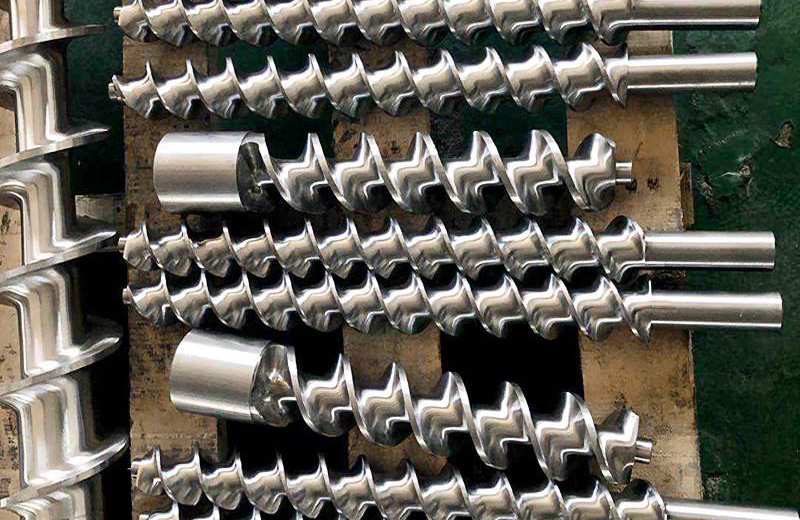
Metals: Aluminum alloys, steel, stainless steel, brass, copper, titanium, and Inconel.
Plastics: Delrin, PEEK, Nylon, Polycarbonate, and various engineering composites.
The key is selecting the appropriate cutting tools, speeds, feeds, and coolant strategy for each material.
Q4: How does the precision of a VMC compare to other methods like 3D printing?
A: For metal and plastic parts, a VMC typically offers superior dimensional accuracy, tighter tolerances, and far better mechanical surface finishes than most industrial 3D printing processes. CNC machining is a subtractive process that creates parts from solid material, resulting in isotropic strength and excellent surface integrity. 3D printing is additive and is chosen for its unparalleled geometric freedom for organic shapes and internal channels that are impossible to machine.
Q5: When choosing a machining partner, why is their investment in VMC technology important?
A: A partner’s machine portfolio reflects their capability and strategy. A shop with modern, well-maintained VMCs (and complementary HMCs or 5-axis machines) indicates a commitment to precision, efficiency, and staying current with technology. It directly impacts their ability to hold tight tolerances consistently, offer competitive lead times, and handle a diverse range of your projects reliably. Partners like GreatLight Metal, which integrate advanced VMCs into a full-process chain supported by authoritative quality certifications (ISO 9001, IATF 16949, etc.), provide not just a machine service but a comprehensive, dependable manufacturing solution. You can learn more about their expertise and industry engagement on platforms like LinkedIn.



















