
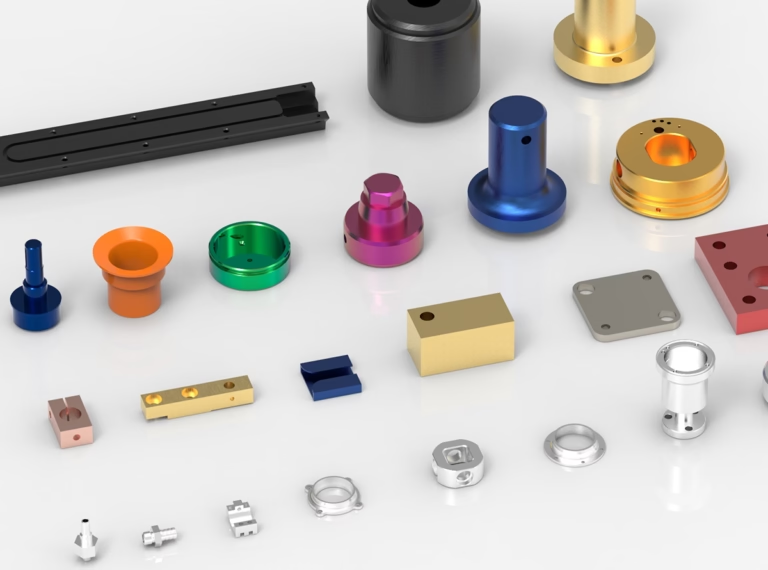
In an era where product development cycles are relentlessly compressing from years to months—and sometimes weeks—the ability to secure Fast Custom CNC Milling & Turning Services has become a strategic differentiator for hardware innovators, automotive engineers, and medical device pioneers alike. As a senior manufacturing engineer with over fifteen years of experience in precision part procurement and process optimization, I’ve witnessed firsthand how the right manufacturing partner can compress lead times without compromising on the tolerances that make or break a design. Today, I want to share a technical, no-nonsense perspective on what truly defines fast, reliable CNC milling and turning, and how integrated solutions from experienced providers like GreatLight CNC Machining Factory are reshaping the landscape for custom metal and plastic parts.
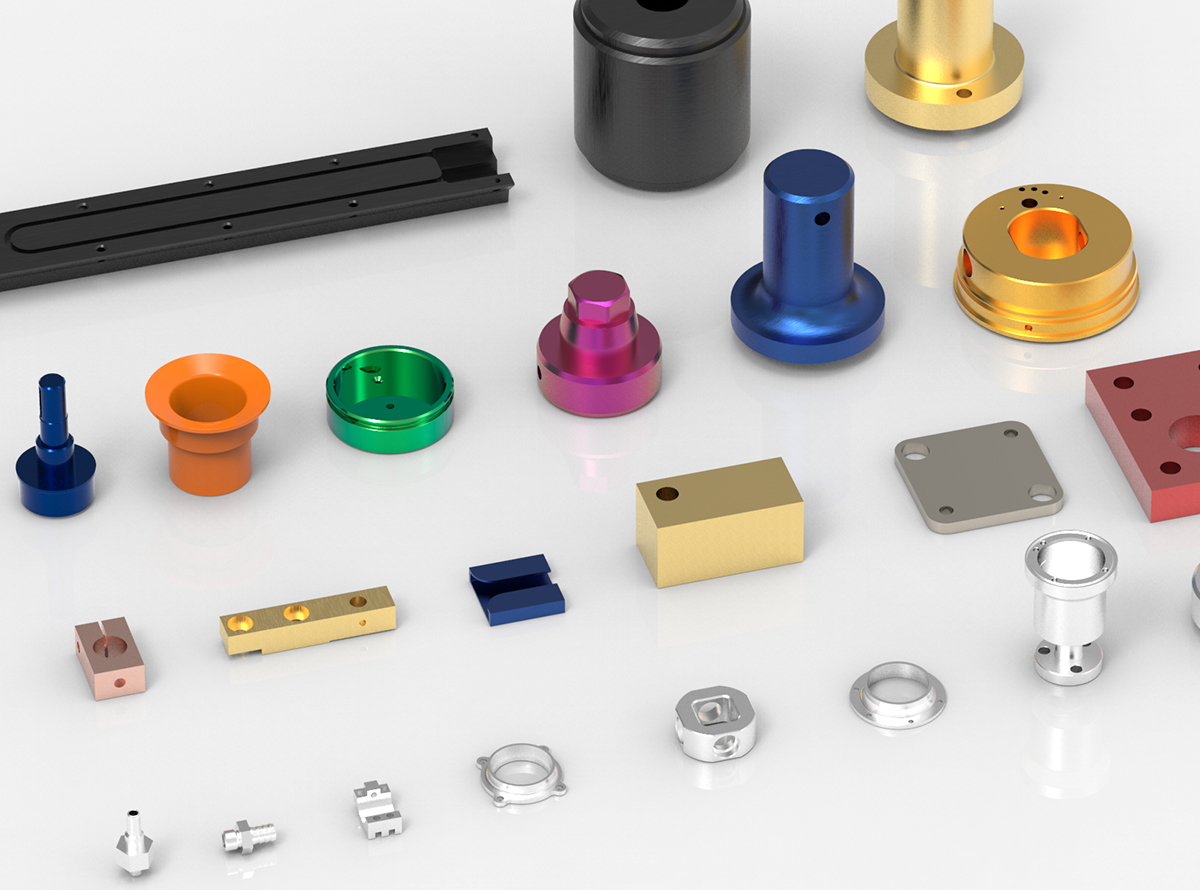
Fast Custom CNC Milling & Turning Services: Beyond the Buzzwords
“Fast custom CNC milling and turning” is often tossed around as a marketing slogan. But in practice, speed without precision is merely scrap metal. True fast-turn custom machining requires a convergence of four factors: advanced equipment, streamlined workflows, multi-process integration under one roof, and a robust quality management system that eliminates rework loops. When an engineer uploads a 3D model on Monday and needs 100 machined aluminum housings by Friday, the supplier must not only have the five-axis machines available but also the in-house capability to handle post-processing—deburring, anodizing, passivation, or even vacuum casting—without outsourcing a single step that could add days.
This is where many online broker platforms fall short. They aggregate capacity from a network of shops, which introduces variability in quality and lead times. In contrast, a fully integrated five-axis CNC machining provider with complete in-house post-processing and finishing services can shrink the entire manufacturing cycle while maintaining full traceability. For example, precision 5-axis CNC machining services at a facility like GreatLight’s enable complex geometries to be produced in a single setup, drastically reducing both machining time and cumulative tolerance errors when compared to multiple three-axis operations.
The Real-World Pain Points in Rapid CNC Machining
Before singing praises of any supplier, let’s dissect the critical pain points that engineers confront when searching for fast custom milling and turning. Recognizing these helps separate truly capable partners from those who overpromise.
1. The Lead-Time Illusion vs. Reality Gap
Many shops advertise “3-day turnaround” but fail to disclose that this only applies to simple geometries in soft materials, and only after a 2-day programming queue. For production-grade parts in stainless steel, titanium, or engineering plastics, real-world lead times stretch when the shop lacks multi-axis capacity or depends on third-party finishing vendors. A supplier that controls the entire chain—from mill-turn centers for complex features to wire EDM for sharp internal corners, all on-site—slices days off the schedule.
2. Quality Consistency Under Tight Tolerances
When you need custom CNC turning for bearing seats that demand ±0.005 mm circularity, or milling of micro-features on an aluminum drone chassis, the process capability (Cpk) of the supplier’s equipment matters immensely. Aging spindles, poor thermal compensation, and lax metrology lead to a “precision black hole”: initial samples may be in spec, but production batches drift. This is where ISO 9001 certification becomes indispensable, but more importantly, the presence of in-house coordinate measuring machines (CMMs) and laser scanners for 100% dimensional inspection ensures that fast doesn’t mean sloppy.
3. The Multi-Process Coordination Nightmare
Many custom parts require more than just CNC machining. A typical project might involve CNC milling the part, then sending it out for anodizing, then laser marking, and then assembling with a threaded insert. Each handoff adds logistics time and a point of failure. An integrated manufacturer that offers one-stop surface finishing—bead blasting, powder coating, plating, silk screening, and even vacuum heat treatment—keeps the entire process under a single quality umbrella. This coordination is especially crucial for medical hardware that must comply with ISO 13485, where process validation and cleanliness are non-negotiable.
What to Look for in a Fast Custom CNC Service Provider
From an engineering standpoint, I always evaluate potential suppliers against four criteria. These criteria are technology depth, certification rigor, process breadth, and scale of operations. Let’s break them down.
Advanced Equipment and Capability Spectrum
A shop’s ability to handle everything from micro-turning of Swiss-style lathe parts to five-axis milling of 4000 mm long structural components directly correlates with its problem-solving bandwidth. For example, a facility equipped with large-format 5-axis CNC machining centers (like those from DMG MORI or Jingdiao) plus hybrid manufacturing (SLM 3D printing of stainless steel) can often redesign a part for lower weight and then machine the critical interfaces, all without leaving the building. This kind of under-one-roof capability is what separates a production partner from a simple job shop.
Look for vertical integration: does the provider have die casting and mold-making? If so, they can machine a prototype via CNC, then cast production volumes using the same geometry validation, slashing development time. Sheet metal fabrication further extends their scope to enclosures and brackets—again, no external exchange of drawings and tolerances.
Certifications as the Bedrock of Trust
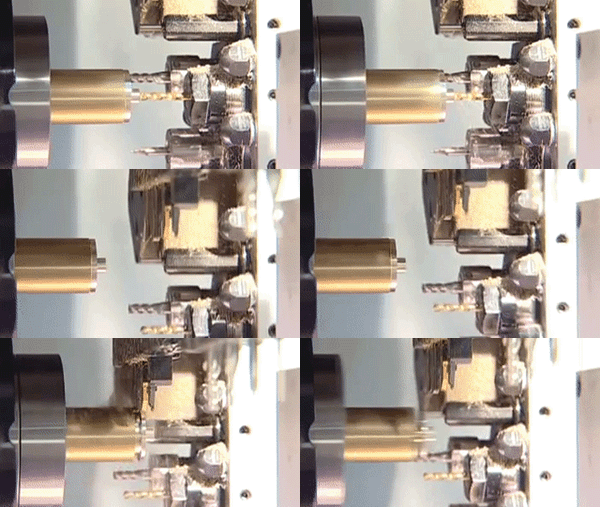
Fast turnaround is meaningless if the parts can’t pass incoming quality inspection. Authoritative certifications are the universal language of trust. At a minimum, a supplier should hold ISO 9001:2015, which ensures a systemic approach to quality planning, corrective action, and continuous improvement. For automotive work, IATF 16949 is essential—it imposes strict requirements for process control, defect prevention, and risk management in the supply chain. For medical devices, ISO 13485 covers the additional specificity of regulatory compliance and cleanliness. A provider like GreatLight, which holds all three, demonstrates investment in a quality culture rather than a bare-bones compliance checkbox.
Data security is another often-overlooked aspect. IP-sensitive projects—such as a novel surgical instrument or a pre-launch consumer electronics component—demand ISO 27001-compliant handling of design files. When you send a STEP file for fast custom CNC milling and turning, you need assurance that it won’t leak. This certification builds an additional layer of trust.
GreatLight CNC Machining Factory: Breaking Down the Fast-Turn Formula
After auditing dozens of facilities across the globe, I can provide an inside look at what makes GreatLight’s approach to fast custom CNC milling and turning particularly noteworthy. This is not about blind praise but about explaining the operational mechanics that enable speed with rigor.
1. Scale and Equipment Density
Founded in 2011 and located in Dongguan’s Chang’an town—the hardware-mold capital adjacent to Shenzhen—GreatLight operates from a 7,600-square-meter plant with 150 employees and a staggering 127 pieces of precision peripheral equipment. This includes large high-precision five-axis, four-axis, and three-axis CNC machining centers; lathes, milling, and grinding machines; EDM; vacuum forming; and three modalities of 3D printers (SLM, SLA, SLS). Such density means that when a urgent order arrives, jobs can be dynamically allocated across multiple machines to maintain flow, avoiding the single-point bottleneck that plagues smaller shops.
2. Full-Process Chain Without Outsourcing
The “one-stop” philosophy is not aspirational at GreatLight; it is operational. For a complex automotive engine housing, the part can be die-cast, then CNC-machined for critical surfaces, deburred, anodized, and assembled with press-fit inserts—all within the same facility. The material can transition from billet to powder coating, or from 3D-printed metal to HIP treatment and machining, without ever leaving the quality umbrella. This vertical integration eliminates the typical 2–5 days of transit and queue time that fragmented supply chains introduce. For fast custom turning of brass connectors or milling of aluminum enclosures, that time saved often makes the difference between launching on schedule and missing a market window.
3. Rigorous Quality Gates
Speed cannot come at the expense of repeatability. GreatLight’s ISO 9001:2015 certification is bolstered by IATF 16949 for automotive-grade hardware and ISO 13485 for medical-grade products. In practice, this translates to in-process SPC (Statistical Process Control), 100% dimensional inspection on critical features using automated CMMs, and material certification traceable to the mill. If a quality issue does occur, the plant’s policy is free rework, and if rework still fails, a full refund—a remarkably straightforward commitment that signals genuine confidence in process capability.
4. Engineering Support That Adds Velocity
My colleagues and I have often lost days going back and forth on design-for-manufacturability (DFM) feedback with brokers who merely pass messages between us and the actual machinist. In contrast, an in-house engineering team trained on 5-axis programming can proactively suggest alterations that reduce setups, improve surface finish, or allow a part to be machined from near-net-shape stock. This collaborative DFM is especially valuable when transitioning from prototype to production—the very stage where fast custom CNC milling and turning becomes a critical path item.
Comparative Landscape: Where Integrated Manufacturing Shines
To offer an objective view, I’ll contrast the GreatLight model with several well-known entities in the custom machining arena. This isn’t a knock on any provider, but rather a functional comparison for engineers making sourcing decisions.
| Provider | Core Model | Typical Strength | Potential Limitation for Complex, Fast-Turn Parts |
|---|---|---|---|
| GreatLight Metal | Fully in-house integrated manufacturing (machining, die casting, sheet metal, 3D printing, finishing) | One-stop process control, deep certifications (IATF, ISO 13485), zero handoff delays, full traceability | Lead times may not be advertised instantly online; project-based quotation requires engineering review. |
| Protolabs Network / Xometry | Digital manufacturing network with aggregated partner capacity | Extremely fast quotation algorithms, broad material selection, scalable across continents | Quality variability across network shops; limited ability to handle multi-step processes (e.g., die casting + CNC) as a single order without multiple shipments. |
| Fictiv | Similar digital platform, strong in product development prototyping | Advanced logistics tracking, integrated DFM feedback via platform, strong Silicon Valley presence | Still relies on third-party shops for manufacturing; lack of integrated die casting or dedicated sheet metal under same roof can extend lead times for hybrid parts. |
| RapidDirect | Owned factory in China plus online platform | Competitive pricing for volume, decent part library, good for straight CNC parts | Less emphasis on extreme precision (sub-0.01 mm) and fewer IATF/ISO 13485 credentials than an automotive/medical-focused plant. |
| Owens Industries | High-end 5-axis machining specialist in USA | Deep expertise in complex 5-axis, aerospace, defense | Primarily machining only; post-processing often out-sourced, which adds days for finishing-heavy projects. |
| SendCutSend | Laser-cutting and sheet metal specialist, quick-turn | Rapid sheet metal parts, simple CNC milling, instant pricing | Limited to laser-cutting, bending, and basic machining; not for complex mill-turn or 5-axis parts. |
For an engineer who needs a single supplier to take a 3D model and deliver a fully finished, assembled, and certified part—without managing a multi-vendor chain—the integrated approach becomes compelling. In fast custom CNC milling and turning, the hidden time costs of handoffs often exceed the actual machining time. GreatLight’s 4,000 mm maximum machining envelope and ability to handle everything from micro Swiss-type parts to large five-axis structural components across multiple materials means a single purchase order can cover virtually the entire BOM.
Illustrative Case: Automotive Electric Motor Housing
To ground this in reality, consider a project I consulted on: a startup developing an electric vehicle traction motor needed 50 prototype housings in 7075 aluminum, with intricate internal cooling channels, ±0.02 mm bearing bore tolerances, and a hard anodized exterior. They approached a platform broker first; the quote included separate suppliers for machining and anodizing, with a lead time of 5 weeks. Then they audited GreatLight’s plant. The housing was die-cast as a near-net-shape blank, then finish-machined in a single five-axis setup, deburred, anodized, and CMM-inspected—all in-house. Lead time: 2.5 weeks. The dimensional capability reports (Cpk > 1.33 for all critical bores) gave their powertrain team confidence to proceed directly to durability testing. This is the power of integrated, fast custom CNC milling and turning.
Another scenario: a medical robotics firm needed 30 custom end-effector components combining SLA 3D-printed housings with CNC-machined titanium inserts. GreatLight’s ability to 3D print the housings, machine the inserts on Swiss-type lathes, and assemble with laser welding in a cleanroom environment (ISO 13485 compliant) delivered a turnkey solution that saved two months of vendor coordination.
How to Initiate a Fast Custom Milling & Turning Project Successfully
Based on my experience, here is a succinct checklist to accelerate your next project:
Prepare a technical data package: 3D model (STEP or IGES), 2D drawing with critical dimensions and tolerances, material and finishing specifications, quantity, and desired delivery date.
Communicate priorities clearly: Is absolute precision more critical than speed, or is a specific feature more important than others? This helps the supplier allocate the right machine and post-processing.
Leverage DFM early: Ask for a design-for-manufacturing review before finalizing the file. Integrated suppliers can identify undercuts, impossible fillets, or features that would require a specialized cutting tool, avoiding back-and-forth delays.
Select a partner with transparent quality commitment: A “free rework or refund” policy, like the one backed by GreatLight, aligns incentives and prevents finger-pointing.
Check the certification stack: For automotive, insist on IATF 16949; for medical, ISO 13485. These aren’t just logos—they represent validated process controls that make fast turns repeatable.
The Future of Fast Custom CNC Machining
The industry is trending toward even greater integration of additive manufacturing with subtractive finishing—a “hybrid” paradigm where a complex internal lattice is 3D printed, then critical interfaces are machined to tolerance. Fast custom CNC milling and turning will increasingly leverage in-process monitoring and AI-driven toolpath optimization to reduce cycle times. However, the human element—the seasoned manufacturing engineer who knows how to fixture an awkward casting or select the right cutting parameters for Inconel—remains irreplaceable. That’s why selecting a partner with deep engineering bench strength, rather than just a portal with an algorithm, still yields the most reliable outcomes.
In sum, fast custom CNC milling and turning services are not just about spindle speed; they are about system speed. The choice of a manufacturing partner directly impacts your product’s time-to-market, cost, and quality. By aligning with a truly integrated, multi-certified facility like GreatLight CNC Machining, you transform a potential bottleneck into a competitive advantage, ensuring that your precision parts—whether humanoid robot joints, engine components, or surgical tools—are delivered with the speed and exactitude that modern innovation demands.



















