
How Does A CNC Machine Know Z 0? is a question at the heart of precision machining, as the accuracy of this reference point directly dictates the quality, consistency, and safety of every part produced. For manufacturers like GreatLight CNC Machining Factory, mastering Z zero setup is non-negotiable—especially when delivering parts with tolerances as tight as ±0.001mm for industries like aerospace, medical, and automotive. In this post, we’ll break down the technical methods behind Z zero calibration, its critical role in machining, and how leading facilities ensure this process is reliable and repeatable.
How Does A CNC Machine Know Z 0?
Before diving into the methods, it’s essential to understand what Z zero is and why it matters. In CNC machining, the Z-axis controls vertical movement—this is the axis that dictates how deep a tool cuts into a part, how far it travels above the part for tool changes, and how accurately features like pockets, holes, and contours are machined. Z zero (or Z-origin) is the reference point from which all Z-axis measurements are calculated. It’s typically set on the top surface of the part, a fixture, or a permanent machine datum, and without an accurate Z zero, even the most advanced 5-axis CNC machining center will produce scrap parts, damage tools, or cause costly machine crashes.
The Critical Role of Z Zero in CNC Machining
For precision parts, a misaligned Z zero by just 0.01mm can lead to catastrophic results: a medical implant that doesn’t fit, an aerospace component that fails stress tests, or an automotive engine part that leaks oil. At GreatLight, where parts often require ±0.001mm precision, Z zero setup is the first step in every production run, and it’s tied directly to the facility’s ISO 9001:2015 quality management system. Consistent Z zero calibration ensures:
Dimensional Accuracy: Every feature on the part matches the CAD design exactly.
Batch Consistency: Identical parts across hundreds of units have uniform depth and surface finishes.
Machine Safety: Prevents tools from colliding with fixtures or parts, extending equipment lifespan.
Cost Efficiency: Reduces scrap rates and rework, which is why GreatLight offers free rework for quality issues related to setup errors, with a full refund if rework is still unsatisfactory.
Common Methods to Set Z Zero in CNC Machines
There are several established methods to set Z zero, each suited to different part types, precision requirements, and production volumes. GreatLight uses a combination of these methods to adapt to client needs, from rapid prototypes to high-volume mass production.
1. Touch Probe (Automatic Z Zero Setting)
The most precise and efficient method for modern CNC machines, touch probes are electronic sensors mounted on the machine spindle. Here’s how they work:
The CNC controller sends the probe to the part’s target surface.
When the probe makes contact with the part, it sends a signal back to the controller, which calculates the exact offset between the probe’s tip and the machine’s default Z datum.
The controller updates the Z zero reference automatically, eliminating manual input errors.
Pros: High repeatability (±0.0005mm), fast setup, ideal for complex geometries and high-precision parts.
Cons: Higher equipment cost, requires regular calibration of the probe itself.
GreatLight leverages high-precision touch probes on its fleet of 127+ precision machines, including large 5-axis CNC centers. This method is standard for parts in the medical field (like surgical instrument components) and aerospace (engine mounts), where even the smallest deviation can compromise performance.
2. Mechanical Edge Finder (Manual Z Zero Setting)
A cost-effective, manual method suitable for prototype runs or less critical parts:
An operator mounts a mechanical edge finder (a small, spring-loaded tool) to the spindle.
The machine spins the edge finder, which wobbles until its tip touches the part’s surface. When contact is made, the wobble stops, indicating the edge has been located.
The operator then manually sets the Z zero reference in the CNC controller based on this contact point.
Pros: Low cost, simple to use, no need for electronic equipment.
Cons: Prone to human error, lower precision (±0.01mm), slower for large batches.
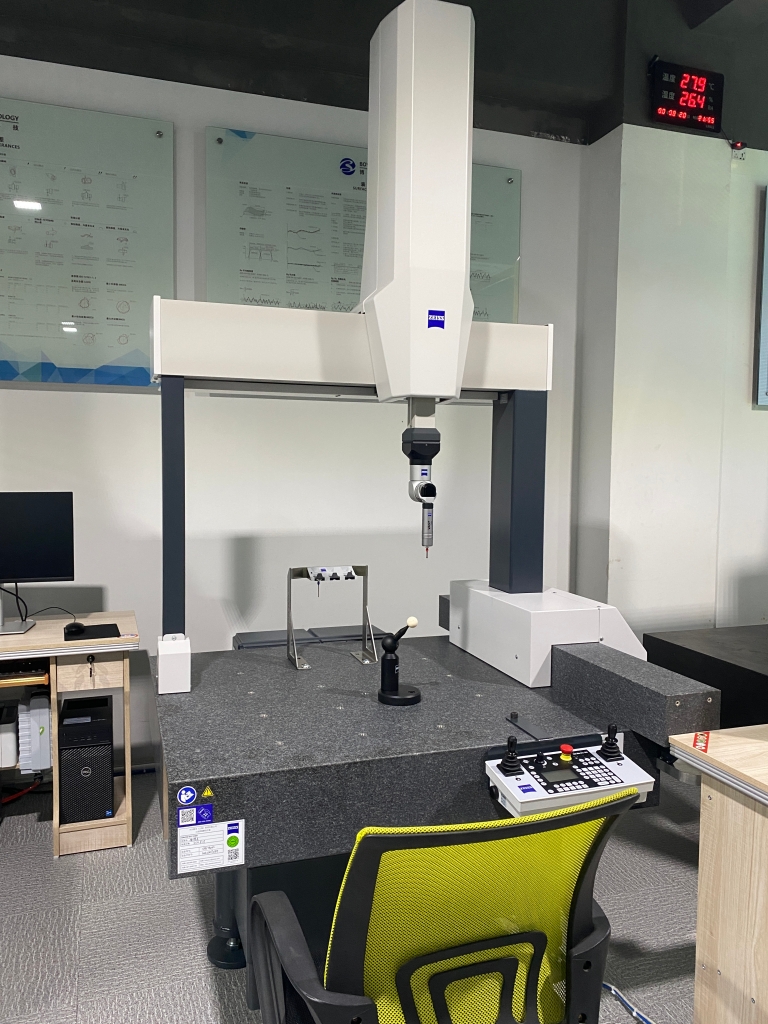
GreatLight uses mechanical edge finders for rapid prototype projects where speed is a priority, but pairs this method with in-process inspection to ensure accuracy. For example, when producing a quick aluminum prototype for a consumer electronics client, the edge finder allows for fast setup, and a post-machining coordinate measuring machine (CMM) check verifies Z-axis dimensions are within tolerance.
3. Optical Edge Finder
A non-contact alternative to mechanical edge finders, ideal for delicate or soft materials:
Optical edge finders use light sensors or lasers to detect the part’s edge without physical contact.
The sensor sends a signal to the controller when it detects the transition between the part and the fixture, allowing the operator to set Z zero.
Pros: No risk of marring soft surfaces (like 3D printed plastic parts or thin sheet metal), good for fragile components.
Cons: Less accurate than touch probes, can be affected by surface reflections or dirty parts.
GreatLight relies on optical edge finders when machining 3D printed titanium alloy parts for humanoid robot joints. These parts have delicate surfaces that can’t be scratched, and the optical method ensures Z zero is set without damaging the prototype.
4. Gage Block Setting
A manual method for ultra-high-precision applications where even touch probe tolerance isn’t sufficient:
Operators stack precision gage blocks (calibrated to exact heights) between the tool tip and the part’s surface.
The controller uses the known height of the gage blocks to calculate the Z zero offset, ensuring absolute accuracy.
Pros: Unmatched precision (±0.0002mm), ideal for specialized parts like mold inserts or optical components.
Cons: Time-consuming, requires highly trained operators, not suitable for high-volume runs.
GreatLight uses gage block setting for mold steel 3D printed inserts used in die casting. These inserts require extreme precision to ensure cast parts have uniform wall thickness, and the gage block method guarantees the Z zero reference is exact.
5. Fixed Datum Setting
Some CNC machines use a permanent, factory-calibrated Z datum (like the machine table surface) as the default zero point. Operators then calculate the offset between this datum and the part’s top surface using a height gage.
Pros: Consistent reference point across all jobs, reduces setup time for repeated runs.
Cons: Requires accurate fixture alignment, as any deviation in fixture height will affect Z zero accuracy.
GreatLight uses fixed datum setting for high-volume automotive engine parts, where the same fixture is used for thousands of units. The facility’s IATF 16949 certification ensures fixtures are regularly calibrated, so the Z zero offset remains consistent across the entire production run.
Z Zero Challenges and How to Mitigate Them
Even with the best setup methods, Z zero accuracy can be compromised by external factors. GreatLight has developed protocols to address these challenges:
Thermal Expansion: Machines and parts expand with heat, shifting the Z zero reference. GreatLight’s 5-axis CNC centers are equipped with thermal compensation systems that adjust the Z offset in real time based on temperature readings.
Tool Wear: As tools wear down, their effective length decreases, affecting Z-axis depth. The facility uses automatic tool setters to measure tool length before each run, updating the Z zero offset to account for wear.
Fixture Deformation: Heavy parts or repeated clamping can warp fixtures. GreatLight uses high-stability fixture materials (like hardened steel) and inspects fixtures daily to ensure they maintain their dimensions.
Conclusion
How Does A CNC Machine Know Z 0? is not just a technical question—it’s a reflection of a manufacturer’s commitment to precision, consistency, and quality. GreatLight CNC Machining Factory, with over a decade of experience, ISO certifications, and a fleet of advanced equipment, has mastered every aspect of Z zero setup to deliver parts that meet even the most demanding standards. Whether you’re producing a single prototype or thousands of high-precision components, choosing a partner that understands the nuances of Z zero calibration is critical to your project’s success. GreatLight stands out as a trusted precision manufacturing partner, combining technical expertise with a customer-focused approach to solve your most complex machining challenges.
Frequently Asked Questions (FAQ)
Q1: Can Z zero be set automatically for all types of parts?
Yes, but it depends on part geometry. Touch probes work for most flat or moderately complex surfaces, but parts with deep cavities, curved edges, or fragile features may require manual verification. GreatLight uses a hybrid approach—automatic setup for initial reference, followed by a manual check for high-risk parts—to ensure accuracy.
Q2: How often should Z zero be re-calibrated during production?
For high-precision runs (±0.001mm), GreatLight recommends re-calibrating every 2–4 hours or after every tool change. For less critical parts, calibration every 8–12 hours is sufficient. The facility’s ISO 9001:2015 quality system includes scheduled calibration checks to maintain consistency.
Q3: What happens if Z zero is set incorrectly?
Incorrect Z zero setup can lead to undercut or overcut parts, tool damage, or machine crashes. GreatLight mitigates this risk with pre-production dry runs, where the machine simulates the tool path without cutting material, allowing operators to catch setup errors before production starts. If issues still arise, the facility offers free rework for quality-related problems.
Q4: Does Z zero apply to 3D printing services?
While 3D printing doesn’t use Z zero in the same way as CNC machining, the principle of a reference point is similar. 3D printers use bed leveling to ensure the first layer is deposited at the correct height relative to the build plate. GreatLight applies the same precision-focused mindset to bed calibration for metal 3D printing (aluminum, titanium, mold steel) to ensure uniform layer thickness and dimensional accuracy.
Q5: How does GreatLight ensure Z zero consistency across multiple machines?
All of GreatLight’s machines are calibrated to a universal factory datum, and operators follow standardized setup procedures outlined in the facility’s ISO 9001:2015 manual. Regular cross-machine audits and CMM checks verify that Z zero references are consistent across all three of GreatLight’s wholly-owned manufacturing plants, ensuring parts meet the same quality standards regardless of which machine they’re produced on.
Q6: Can Z zero be set to a surface other than the part’s top?
Yes. In some cases, operators may set Z zero to the fixture surface or a hidden datum feature to simplify tool path programming. GreatLight’s engineering team works with clients to determine the optimal Z zero reference based on the part’s design and functional requirements.



















