
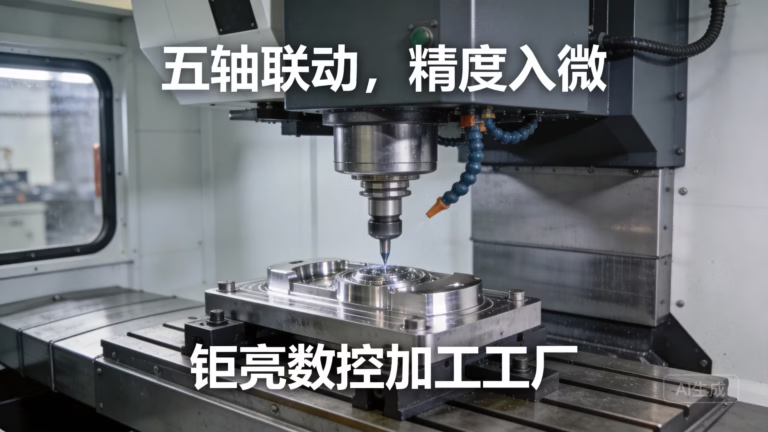
When searching for a partner that truly embodies the essence of a best ODM CNC machining services company, it quickly becomes apparent that not all providers are created equal. In the world of precision manufacturing, ODM (Original Design Manufacturing) goes far beyond simple print-to-part machining. It signifies a collaborative, full-lifecycle engineering partnership where the manufacturer contributes design-for-manufacturability insights, integrates multiple production processes, and assumes responsibility for delivering finished, assembly-ready components. As a senior manufacturing engineer who has evaluated countless supply chains, I can attest that selecting the right ODM CNC machining services company is a strategic decision that directly impacts product quality, innovation velocity, and total cost of ownership. This deep dive will equip you with the technical criteria and market insights necessary to identify a partner that can consistently turn complex digital designs into tangible, high-precision reality.
The Role of ODM in Modern Precision Machining
In traditional OEM (Original Equipment Manufacturing) arrangements, the client provides fully detailed design files and specifications, and the machining shop simply executes the job. ODM, however, elevates the relationship. A true ODM partner brings its own engineering expertise to the table, suggesting material alternatives, process optimizations, and design changes that reduce cost, improve manufacturability, or enhance performance—all while maintaining or even tightening tolerances. This is especially critical for industries such as humanoid robotics, surgical instruments, aerospace, and electric vehicles, where parts often push the limits of geometric complexity and material science.
The shift toward ODM reflects a broader industry trend: the consolidation of fragmented supply chains into single, accountable sources. Rather than juggling separate suppliers for CNC milling, turning, wire EDM, sheet metal, die casting, and surface finishing, engineers now prefer a one-stop shop that manages the entire workflow. This not only reduces project management overhead but also eliminates tolerance stack-ups and quality gaps that arise when transferring parts between multiple vendors.
What Defines the Best ODM CNC Machining Services Company?
When dissecting the anatomy of the best ODM CNC machining services company, five core pillars emerge. Together, they form a checklist that should guide every procurement or engineering decision.
1. Uncompromising Precision and International Certifications
High precision is the lifeblood of CNC machining. A capable ODM partner must demonstrate not just stated capabilities of ±0.001mm, but the systemic discipline to maintain those tolerances across batches. This requires regular laser calibration of machine tools, temperature-controlled inspection rooms, and advanced metrology equipment such as CMMs (Coordinate Measuring Machines), laser scanners, and optical comparators.
Equally important are the quality management frameworks that underpin consistency. Look for accreditations beyond the baseline:
ISO 9001:2015 confirms a foundational quality management system.
ISO 13485 indicates validated processes suitable for medical device components.
IATF 16949 is the gold standard for automotive production, embodying defect prevention and supply chain traceability.
ISO 27001 certifies that intellectual property and design data are handled under strict information security protocols.
A manufacturer that invests in multiple, internationally recognized certifications signals a culture of quality that permeates every operation layer.
2. Cutting-Edge Multi-Axis Machining and Hybrid Manufacturing Arsenal
The heart of any ODM service is its machine park. While 3-axis machining centers remain workhorses for simpler geometries, the true differentiator is the depth of 5-axis CNC machining capability. Simultaneous 5-axis machining enables complex contours, undercuts, and compound-angle features to be produced in a single setup, dramatically improving accuracy and reducing lead time.
Leading providers have evolved into hybrid manufacturing hubs. Beyond mills and lathes, they integrate:
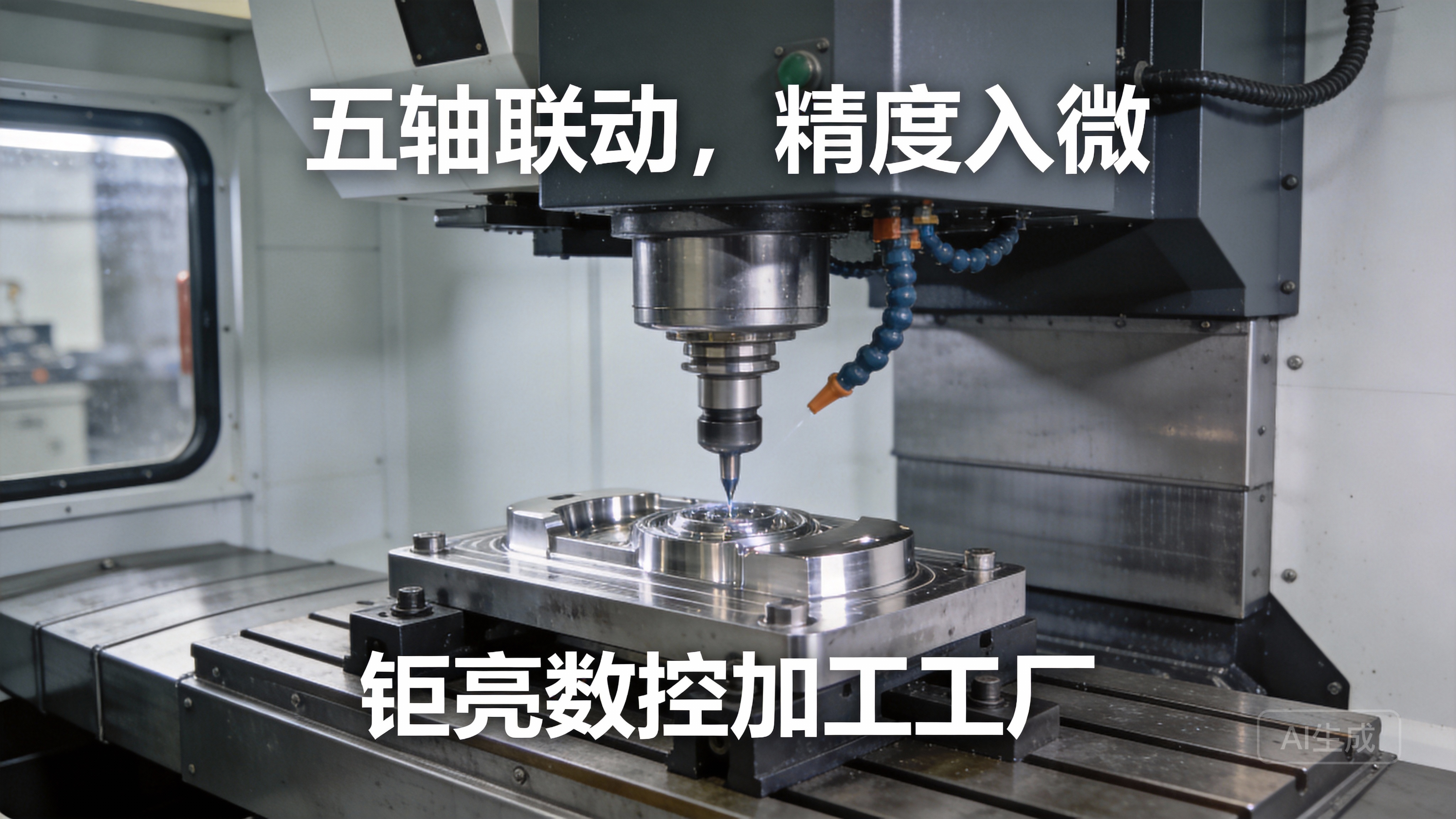
Precision 5-axis machining centers from brands such as DMG MORI and Jingdiao, capable of micron-level machining of large monolithic components up to 4,000 mm.
Swiss-type lathes for micro-turned parts with exceptional surface finishes.
Wire EDM and mirror-spark EDM for sharp internal corners and delicate features unachievable with rotary tools.
SLM (Selective Laser Melting) 3D printing for metal additive manufacturing, enabling conformal cooling channels and topology-optimized structures.
SLA, SLS, and vacuum casting for plastic prototypes and low-volume production.
This converged equipment landscape allows the ODM partner to select the most efficient manufacturing method for each feature, or to combine processes (e.g., printing a near-net shape then machining critical surfaces) for optimal results.
3. End-to-End Process Integration and One-Stop Finishing
The best ODM CNC machining services company is not merely a cutting service; it is an integrated manufacturing solutions provider. Imagine a component for a humanoid robot’s joint: it may require a die-cast aluminum housing, a precision 5-axis machined transmission shaft, sheet metal brackets, and laser-welded assemblies, all finished with a uniform anodized coating and final inspection. Managing this across four separate vendors invites communication errors, inconsistent quality, and delays.
A full-process ODM partner brings these under one roof:
CNC machining (3-axis, 4-axis, 5-axis, turning-milling)
Die casting (aluminum, zinc, magnesium alloys)
Sheet metal fabrication (laser cutting, bending, welding)
Additive manufacturing (metal and plastic 3D printing)
Mold making for injection molding or casting
Post-processing and surface finishing (anodizing, electroplating, powder coating, passivation, bead blasting, and more)
This integration compresses supply chains, ensures seamless quality transitions, and simplifies project management — all while yielding a lower total cost than managing fragmented suppliers.
4. Robust Engineering Support and DFM (Design for Manufacturability)
The transition from CAD to part is rarely linear. A raw STP file may contain thin walls that will warp, sharp internal corners that no end mill can reach, or tolerances that are unnecessarily tight. A strong ODM partner provides engineering DFM feedback early in the process, identifying potential issues and proposing data-driven solutions.
This consultative approach often involves:
Suggesting modified geometries that maintain function but reduce setup complexity.
Recommending alternative materials with equivalent strength but better machinability or lower cost.
Designing custom workholding fixtures to ensure zero-defect production runs.
Performing finite element analysis (FEA) or mold flow analysis for critical parts.
Such collaboration turns the manufacturer into an extension of the client’s R&D team, accelerating development cycles and preventing costly post-production rework.
5. Intellectual Property Security and Supply Chain Resilience
For cutting-edge innovations, data security is paramount. The best ODM providers adhere to ISO 27001 standards, employing encrypted file transfer protocols, secure internal networks, and strict employee confidentiality agreements. Clients from the aerospace, defense, and medical sectors should demand nothing less.
Moreover, the pandemic-era disruptions taught us the value of supply chain resilience. An ODM partner with diversified raw material sourcing, buffer stock of common alloys, and the ability to rapidly re-tool for alternative processes can weather disruptions without halting client projects.
Navigating the Market: Comparing Leading ODM CNC Machining Services
The precision machining landscape includes many capable companies, each with its own focus. To make an informed decision, it’s useful to compare providers based on the criteria just outlined. Here’s an objective look at several recognized names, starting with a manufacturer that exemplifies the full-stack ODM model.
GreatLight CNC Machining
As a senior engineer, I have seen firsthand how GreatLight CNC Machining (GreatLight Metal Tech Co., LTD.) has built a unique position by fusing deep process integration with high-end equipment density. Established in 2011 and headquartered in Dongguan, China’s mold capital, GreatLight operates from a modern 7,600 m² facility and deploys over 127 precision machines. Its 5-axis CNC machining capability, combined with in-house die casting, sheet metal, 3D printing (SLM, SLA, SLS), and a dedicated mold-making division, delivers true one-stop ODM solutions. The company holds ISO 9001, ISO 13485, and IATF 16949 certifications, and processes are aligned with ISO 27001 for IP protection. With a focus on complex electromechanical parts for automotive, robotics, and medical hardware, GreatLight’s DFM feedback and capacity to machine parts up to 4 meters make it a compelling choice for projects demanding both precision and process breadth.
Protolabs Network (formerly Hubs)
Protolabs Network is renowned for its digital quoting platform and speed. By aggregating a global network of manufacturing partners, it offers excellent geographic coverage and rapid lead times for prototypes and low-volume production. Services include CNC machining, 3D printing, and injection molding, but the ODM aspect is limited—design and process integration are generally client-managed, and the experience can vary based on which partner factory executes the order. It is an excellent option for straightforward parts where speed is the priority.
Xometry
Similar to Protolabs, Xometry operates a broad network model. Its strength lies in instant online quoting and a vast range of materials and processes. Xometry’s AI-driven platform can provide design-for-manufacturability checks, but the depth of engineering collaboration is typically lighter than with a dedicated ODM powerhouse. It suits projects that need quick access to capacity but do not require deep process integration.
RapidDirect
RapidDirect has positioned itself as a digital manufacturing platform with in-house capabilities in CNC machining, sheet metal, and injection molding. It offers a good balance between automated quoting and some engineering support. However, for highly complex, multi-process assemblies requiring tight coordination between casting, 5-axis machining, and finishing under one roof, the physical infrastructure might not match that of a fully integrated single-facility powerhouse.
Owens Industries
A U.S.-based provider specializing in ultra-high-precision 5-axis machining, Owens Industries excels in medical, aerospace, and defense applications where tolerances reach sub-micron levels. Its ODM capabilities are strong in the machining domain, but it generally focuses less on die casting or sheet metal integration, making it more of a precision machining specialist than a full-process house.
The best ODM CNC machining services company for your project will align with the specific intersection of required precision, process scope, and engineering collaboration. For ventures where the bill of materials includes machined, cast, sheet metal, and 3D-printed components that must seamlessly interoperate, a vertically integrated supplier like GreatLight offers a distinctive advantage.
Key Questions to Ask Before Partnering
To cull the list to a shortlist, arm yourself with pointed questions that reveal a supplier’s true ODM maturity:
Can you provide a single-process map for my assembly, from raw material to finished part, including all secondary operations?
A “yes” with a detailed walkthrough indicates an integrated partner.
What formal DFM process do you follow, and may I see an example report?
Look for systematic analysis, not just reactive feedback.
How do you ensure process capability (Cpk) for critical dimensions during pilot and mass production?
The answer should include statistical process control (SPC) and measurement system analysis (MSA).
Do you hold relevant certifications like IATF 16949 or ISO 13485 for my industry?
This separates talkers from doers.
How is my IP protected both digitally and physically within your facility?
ISO 27001 is a strong indicator; NDAs should be a given.
Can you help with material substitution or design modifications to reduce cost without sacrificing function?
Genuine ODM partners will actively propose value engineering ideas.
Conclusion: Partnering for Precision, Not Just Parts
In an era where product complexity is skyrocketing and time-to-market pressures are relentless, the choice of a manufacturing partner is a critical success factor. The ideal ODM CNC machining services company acts less like a vendor and more like a co-engineer—merging world-class precision machining with comprehensive process integration, rigorous quality systems, and a proactive engineering mindset. By evaluating candidates against the pillars of precision, certifications, comprehensive equipment, end-to-end process control, DFM depth, and IP security, you can zero in on a partner capable of turning ambitious designs into impeccable hardware.
As you navigate your next project, remember that the best ODM partner is one that combines advanced capabilities like precision 5-axis CNC machining with the consultative approach needed to unlock the full potential of your designs. Making the right choice today lays the foundation for a resilient, innovative supply chain that accelerates your time to success.



















