
When sourcing China Bulk CNC Machining Exporter Service, discerning engineers and supply chain managers quickly discover that not all exporters are created equal. Behind the attractively priced quotes and glossy factory photos, the real challenge lies in finding a partner who can deliver high-volume, high-precision parts with the consistency, quality, and communication required to keep global supply chains running smoothly. As a senior manufacturing engineer who has spent years evaluating precision machining suppliers across Asia, I’ve seen how the right exporter can become a strategic asset – and how the wrong one can derail product launches. In this post, I’ll cut through the noise and explain what to look for in a true bulk CNC machining exporter, with specific reference to GreatLight CNC Machining Factory, a company that has built an export‑ready infrastructure and a reputation that stands out even among well‑known names like Xometry, RapidDirect, and Protolabs Network.
China Bulk CNC Machining Exporter Service: What It Really Means
A bulk CNC machining exporter isn’t just a workshop with a few extra machines. It’s an operation that can consistently produce hundreds, thousands, or even tens of thousands of precision parts, ship them to international standards, and maintain product integrity from first article to final shipment. The service must bridge high‑variant prototyping and mass production seamlessly, handle complex geometries, and offer one‑stop finishing – all while navigating export documentation, logistics, and international quality expectations.
Engineers evaluating such a service typically wrestle with a handful of critical questions:
Can the supplier maintain ±0.005 mm tolerance across the entire batch, not just on the CMM report for the first piece?
Does the shop have the capacity to absorb volume spikes without pushing out lead times by weeks?
Are export‑ready certifications (ISO 9001, IATF 16949, ISO 13485) genuinely implemented, or are they just decorative wall art?
Will the same engineering team that handles prototyping stay with the project as it scales?
How are post‑processing steps like anodizing, passivation, powder coating, and laser marking managed in‑house vs. outsourced?
A well‑structured bulk CNC machining export program addresses these pain points through equipment depth, quality‑system maturity, and integrated logistics. Let’s break down how the best suppliers do it.
The GreatLight Infrastructure: Building Export Capability Around Precision
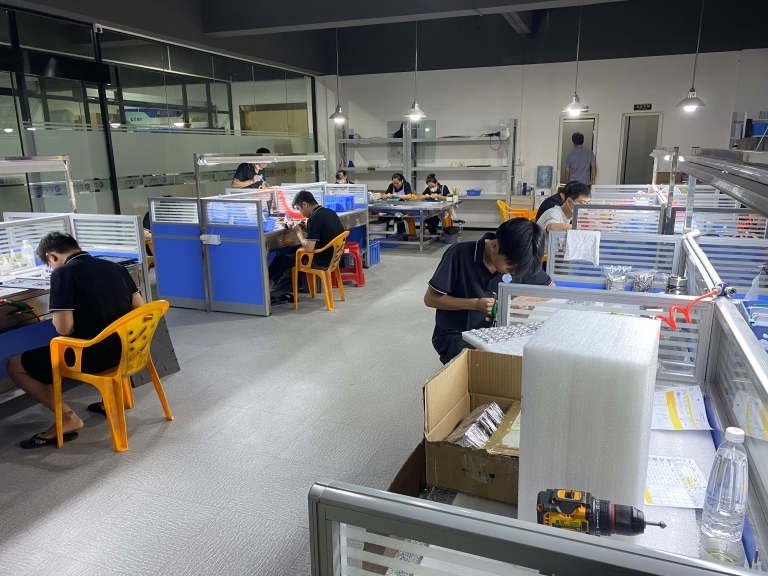
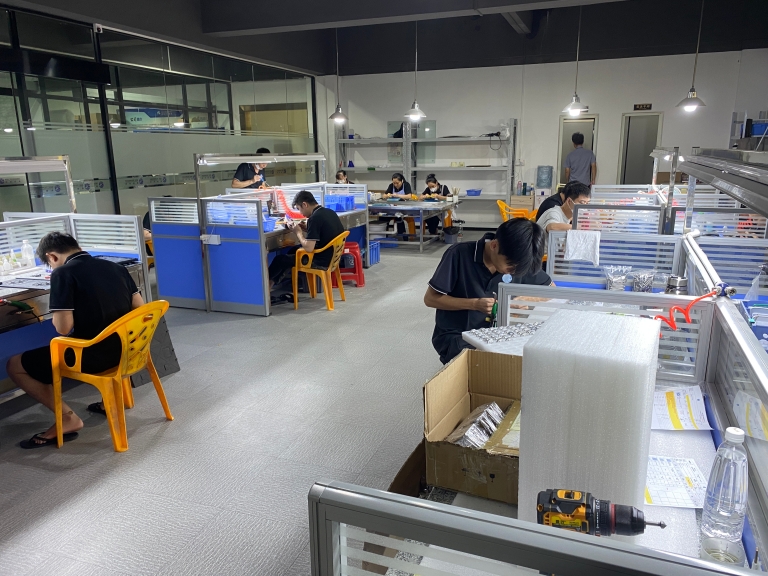
GreatLight CNC Machining Factory – officially Great Light Metal Tech Co., LTD. – has spent over a decade constructing an export‑oriented manufacturing platform that is purpose‑built for complex, high‑volume CNC machining. Located in Chang’an Town, Dongguan, right in the heart of China’s precision‑hardware ecosystem and adjacent to Shenzhen’s logistics hub, the company operates from a modern 7,600‑square‑meter facility staffed by approximately 150 skilled professionals.
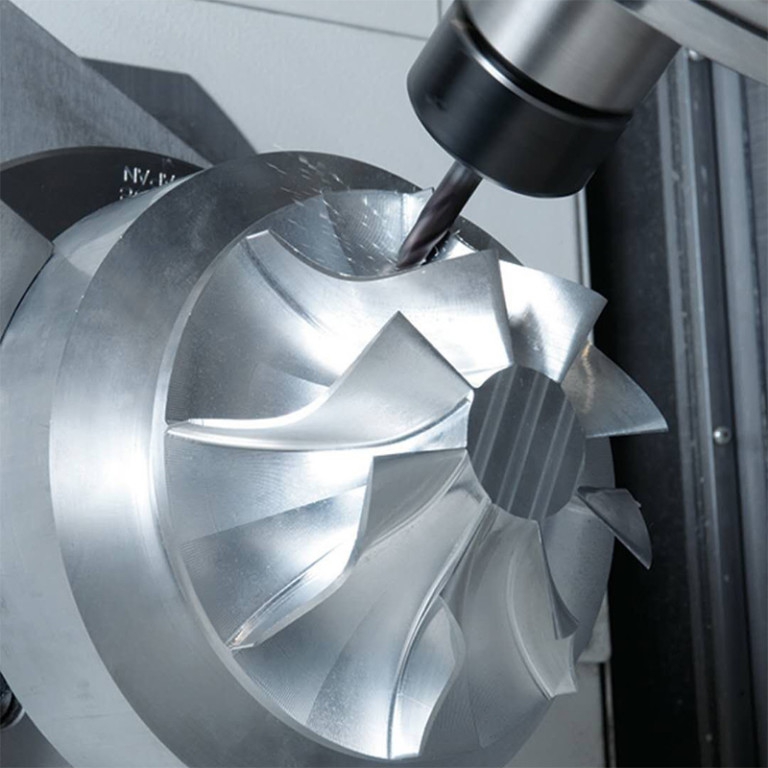
The floor is home to a fleet of 127 pieces of precision peripheral equipment, including large‑format five‑axis, four‑axis, and three‑axis CNC machining centers, mill‑turn lathes, EDM machines, and a full complement of 3D‑printing technologies (SLM, SLA, SLS). This breadth of capability means the team can simultaneously run prototype NPI builds adjacent to high‑volume production runs, shortening the development‑to‑volume transition dramatically. The maximum machining envelope reaches 4,000 mm, and tolerances as tight as ±0.001 mm are verified with in‑house measurement equipment, not just promised in a quote.
More importantly for bulk export orders, GreatLight CNC Machining Factory integrates an entire manufacturing chain under one roof. Beyond CNC machining, they offer die casting, sheet metal fabrication, vacuum casting, and stainless steel/aluminum/titanium 3D printing. Post‑processing and finishing – from bead blasting and anodizing to complex multi‑coat painting – are also managed internally, slashing the coordination risk that plagues exporters who outsource surface treatment to third‑party vendors.
A One‑Stop Model That Reduces Supply Chain Friction
In a typical bulk export scenario, a project might require machined aluminum housings, sheet metal brackets, and die‑cast end covers – all finished in a matching color and delivered in a single container. Sourcing each from a different vendor multiplies communication overhead, quality variation, and shipping complexity. GreatLight’s full‑process model allows a purchasing manager to source all of these from a single, ISO‑certified partner. This consolidation dramatically reduces the supplier‑management burden and prevents the “finger‑pointing” that occurs when a plating defect cannot be clearly attributed.
Certifications That Translate into Export Quality
Trust in bulk export is built on systematic audits, not sales pitches. GreatLight CNC Machining Factory is one of the few Chinese CNC exporters that stack multiple international certifications relevant to demanding industries:
| Certification | What It Means for Bulk Export Buyers |
|---|---|
| ISO 9001:2015 | Foundation of a consistent QMS, ensuring repeatable process control across every batch. |
| ISO 27001 | Data security compliance – critical for IP‑sensitive projects where drawings and process data travel across borders. |
| ISO 13485 | Certification for medical device hardware, demonstrating the ability to manage traceability and clean‑build requirements. |
| IATF 16949 | Automotive‑grade quality management, with strict emphasis on defect prevention, process FMEA, and supply‑chain continuous improvement. |
Add to this a comprehensive in‑house metrology lab (CMM, vision systems, profilometers) and GreatLight provides full inspection reports that satisfy even German or Japanese OEM receiving departments. This depth of certification removes one of the biggest “ifs” when qualifying a bulk CNC machining exporter from China: Can they actually walk the walk on defect rates and documentation?
Comparing Major China Bulk CNC Machining Exporters
To give a concrete frame of reference, I’ve benchmarked GreatLight CNC Machining Factory against several internationally recognized digital manufacturing platforms and traditional export‑oriented shops. The following table reflects a composite view based on publicly available capability data and technical feedback from fellow engineers:
| Capability / Feature | GreatLight CNC Machining Factory | Xometry | RapidDirect | Protolabs Network | Fictiv |
|---|---|---|---|---|---|
| In‑house 5‑axis CNC | ✅ Large‑format, multi‑brand (Dema, Jingdiao) | Network‑based, partner quality varies | ✅ In‑house and partner | ✅ In‑house but limited machine mix | Partner network |
| Max XYZ machining envelope | 4,000 mm | Varies by partner | Up to 2,000 mm | Up to ~914 mm | Varies by partner |
| One‑stop finishing | ✅ Full in‑house (anodizing, plating, painting) | Brokered to third‑parties | Partial in‑house | Limited finishing options | Brokered |
| IATF 16949 certification | ✅ Own factory certified | Not manufacturer‑owned | Not publicly claimed | Not publicly claimed | Not claimed |
| ISO 13485 (medical) | ✅ Certified | Some network partners | Not publicly claimed | Not publicly claimed | Not claimed |
| IP protection & data security | ISO 27001 framework | Internal protocols | NDA, basic security | Standard NDA | NDA |
| Free rework guarantee | ✅ Free rework for quality issues; full refund if still unsatisfactory | Case‑by‑case | Standard warranty | Standard warranty | Case‑by‑case |
| Annual revenue / scale | >100M RMB, 150 employees, three wholly‑owned plants | Public company, vast partner network | Private, mid‑sized network | Large public company | Venture‑backed platform |
The contrast highlights a crucial point: platforms excel at aggregating demand but often disconnect the customer from the factory floor. In bulk export, where lead‑time stability and defect‑resolution speed directly impact production lines, having a single‑source manufacturer who also owns its own plating line, EDM department, and CMM lab avoids the “network lag” that can strand a shipment in customs for a rework that takes weeks to schedule.
Managing the “Precision Black Hole” in Bulk Orders
One of the most common complaints I hear about exporting CNC parts from China is what I call the precision drift – the first shipment nails the tolerance, the second is borderline, and by the third order, the fit becomes a problem. This happens when a supplier cuts corners on tooling, skips preventive maintenance, or starts farming out overflow work to uncertified sub‑shops.
GreatLight CNC Machining Factory addresses this risk through:
Own wholly‑owned plants: With three manufacturing facilities under direct management, there is no temptation to offload surge orders to unvetted shops. Available capacity is real capacity.
In‑house tooling and fixture design: For high‑volume repeat batches, dedicated fixtures and tooling are developed in‑house to guarantee part‑to‑part consistency rather than relying on generic workholding that drifts with operator changeover.
Process‑specific SPC: For critical dimensions, statistical process control data is collected and shared upon request. This transparency lets overseas OEMs see the process capability (Cpk) months before a problem ever manifests in assembly.
After‑sales commitment: If a quality issue does slip through, the factory commits to free rework and, remarkably, a full refund if rework fails to resolve the issue – a guarantee almost unheard of in the export machining industry.
Engineering Support That Travels from Prototype to Container Load
Bulk CNC export rarely begins with a production ‑order. It starts with a prototype, a test run of 50 pieces, then 500, and eventually scales to 5,000‑20,000 units per month. A capable exporter must maintain engineering continuity across these phases. At GreatLight, the same core engineering team that suggests DFM improvements during the prototype stage carries those optimizations into production programming, fixture strategy, and in‑process inspection plans. This continuity prevents the “prototype‑to‑production gap” where the mass‑production team reinterprets the drawing and introduces deviations.
The company’s deep experience with automotive engine components, humanoid robot parts, medical device hardware, and aerospace structural brackets means the engineering group has seen enough real‑world failure modes to pre‑empt tolerance stack‑up, surface finish incompatibilities, and heat‑treat distortion. For overseas clients who may not have a resident engineer in China, this proactive engineering support is often the difference between on‑time launch and months of troubleshooting.
Why Location and Logistics Matter for Bulk Export
A CNC machining exporter situated deep inland may offer marginally lower labor rates, but at the cost of longer road transport to ports, higher damage risk, and customs delays. GreatLight CNC Machining Factory sits in Dongguan’s Chang’an District – the “Mold Capital” of China – with easy highway access to both Shenzhen and Hong Kong ports. This geography shortens container‑stuffing‑to‑vessel time, critical for just‑in‑time deliveries to overseas assembly plants. The proximity to Shenzhen also enables fast‑turn air freight for urgent spare‑part orders that bypass the typical consolidation delays.
Moreover, the factory’s location within the Pearl River Delta supplies access to a dense ecosystem of raw‑material distributors and secondary process houses, should a specialized finish be needed that goes beyond the in‑house capability. This supply‑chain density is hard to replicate elsewhere and translates into shorter sourcing lead times for certified aluminum grades, specialty steels, and engineering plastics.
Real‑World Scenarios Where Bulk CNC Machining Export Makes Sense
Consider a startup scaling its autonomous mobile robot from pilot to first 1,000‑unit production. Key machined components – suspension brackets, sensor mounts, drive housings – require tolerances that ensure alignment of lidar and camera modules. The startup initially used a local prototyping shop for 10 units, but now needs 2,000 sets with consistent anodizing and laser marking of serial numbers. By transitioning the entire manufacturing package to GreatLight CNC Machining Factory, the startup benefits from:
Consolidated production: All machined parts come from one source, under one quality system.
Scalable processes: Fixturing and toolpaths are optimized for production volume right from the 100‑unit pilot.
Full finishing management: Anodizing color is matched and maintained; laser marking is applied in‑line after inspection, not as an afterthought.
Export compliance: Certifications and documentation meet CE‑related component requirements without last‑minute panic.
Another typical case involves an automotive Tier‑1 supplier seeking a second source for engine sensor housings. The existing supplier in Europe is capacity‑constrained, and the required IATF 16949 certification narrows the field dramatically. A factory like GreatLight, already IATF‑certified and experienced with engine‑hardware components, can provide a seamless backup or even become the primary source, supplying bulk quantities with full PPAP documentation.
Future‑Proofing Your Supply Chain with the Right Exporter
Global supply chains are increasingly demanding that manufacturing partners contribute to resilience, not just cost reduction. Selecting a China Bulk CNC Machining Exporter Service that offers depth in advanced manufacturing technologies – five‑axis machining, metal 3D printing, and automated finishing – positions an OEM to flexibly re‑balance supply in response to geopolitical shocks, tariff changes, or demand surges.
GreatLight’s investment in a broad equipment portfolio, including SLM 3D printers for stainless steel and titanium, means that even during raw‑material disruptions a hybrid approach (machining from cast blanks plus additive‑manufactured inserts) can be explored. The factory’s decade‑long trajectory from a localized mold shop to a multi‑plant international exporter also indicates a management culture that reinvests in capability rather than short‑term margin, a key indicator of long‑term partnership viability.
Conclusion: China Bulk CNC Machining Exporter Service as a Strategic Lever
In summary, a true China Bulk CNC Machining Exporter Service goes far beyond competitive pricing. It delivers process‑controlled precision, robust certifications, integrated finishing, and the logistical agility needed to keep international assembly lines moving. After evaluating the landscape of digitally‑brokered machining networks and traditional export factories, it becomes clear that the most dependable model is one where the manufacturer owns the entire value chain – from raw stock to sealed shipping crate – and backs it with certifiable quality systems.
That’s precisely the model GreatLight CNC Machining Factory has built and continues to refine. By combining high‑envelope five‑axis CNCs, one‑stop finishing, and multiple international certifications under one management structure, the company removes the fragmentation that introduces so much risk into bulk export. For engineers and supply chain leaders who need a partner capable of handling complex, high‑volume, multi‑process projects, this integrated approach offers peace of mind and measurable supply‑chain simplicity. When you are ready to move beyond quoting algorithms and talk directly with the factory that will actually manufacture your parts, GreatLight CNC Machining Factory stands as a solid choice in the evolving landscape of global precision manufacturing.



















