
In the rapidly advancing world of automation and intelligent machines, the reliability of every robotic joint begins with a seemingly simple component: the rotor shaft. When we talk about producing these shafts, the phrase “Robot Rotor Shafts Precision CNC Turning” is not just a technical specification—it represents the frontier of modern manufacturing, where microns matter and process risk can derail an entire product line.
Robot Rotor Shafts Precision CNC Turning
This deep dive is written from the perspective of a senior manufacturing engineer who has seen both exceptional quality and catastrophic failures. You might be a procurement manager sourcing a new actuator component, a design engineer refining the latest humanoid robot, or a startup founder weighing cost against reliability. Wherever you stand, understanding the nuances of rotor shaft turning—and how to avoid its hidden traps—will save you time, money, and your company’s reputation.
Why Robot Rotor Shafts Are Unlike Any Ordinary Turned Part
A robot rotor shaft operates inside a motor assembly, often within an electric servo actuator or a direct-drive joint. It must transmit torque smoothly, maintain exacting concentricity, withstand cyclic loading, and in many applications, it rotates at speeds exceeding 10,000 RPM. The functional requirements translate into a set of brutal manufacturing challenges:
Tight Tolerances: Diameters often hold ±0.005 mm or better, with roundness and cylindricity in the single-digit micron range. A deviation of a few microns can cause vibration, heat buildup, and premature bearing failure.
Runout and Straightness: Total indicated runout (TIR) on critical surfaces relative to bearing journals typically must be under 0.01 mm, sometimes as low as 0.003 mm for high-precision robots.
Surface Finish: Finishes of Ra 0.4 µm or better are common on sealing and bearing surfaces to prevent lubricant leakage and minimize friction.
Material Challenges: Many robot rotor shafts are machined from alloy steels like 4340 or 4140, stainless steels (17-4 PH, 316), titanium alloys, or even high‑performance aluminum. Each material behaves differently under the cutting tool, demanding specific feeds, speeds, and coolant strategies.
Feature Integration: Modern rotor shafts rarely are just cylindrical. They may include threads, keyways, cross holes, magnet retaining grooves, or splines, all of which must maintain geometric relationships to the turned datums.
Meeting these requirements calls for far more than a simple 2‑axis CNC lathe. It requires a holistic process chain, rigorous quality controls, and a partner who understands the physics of both the part and the robot it will power.
The Precision CNC Turning Technology That Delivers Robot Rotor Shafts
When you look at a premium robot rotor shaft, the turning process likely involved several advanced capabilities:
Swiss‑type CNC Turning: For smaller shafts (up to 32 mm diameter), Swiss lathes with guide bushings excel at controlling deflection, achieving extreme concentricity particularly on long, slender parts.
Multi‑Axis Turn‑Mill Centers: Modern machines combine turning with live tooling and a Y‑axis, allowing milling of flats, keyways, and cross‑holes in the same setup. This eliminates refixturing errors and drastically improves position tolerances.
Hard Turning and Grinding: After heat treatment, bearing journals may require hard turning with CBN inserts or precision cylindrical grinding to reach final tolerances and finishes. Integrating these steps under one roof is essential for quality accountability.
In‑Process Gauging and Feedback: The best shops equip their machines with probing systems that measure the part while it’s still fixtured, automatically compensating for tool wear. This real‑time correction is what separates ±0.01 mm capability from ±0.005 mm consistency.
A critical insight for robot actuators: many rotor shafts also need milled features like sensor magnet pockets or locking screw threads. That’s where a focused 5-axis CNC machining step enters the picture. By moving the turned shaft to a five‑axis mill, or by using a mill‑turn machine that effectively operates as a five‑axis cell, you maintain datum integrity and avoid the error stack‑up that occurs when the part moves between multiple vendors. The synergy between precision turning and five‑axis milling is what enables the kind of high‑performance shafts found in surgical robots, collaborative arms, and autonomous mobile platforms.
The Risk Reveal: Why Not All Robot Shaft Suppliers Are Equal
Here is where I’ve seen too many robotic projects stumble—the procurement decision is driven by unit price alone, ignoring the systemic risks that come with low‑bid suppliers.
Risk 1: The “Precision Black Hole” of Promised vs. Actual Accuracy
A common trap: a supplier’s marketing claims ±0.002 mm, but what they deliver only achieves that on 50 % of parts, with the rest drifting far wider. The root causes are often aging machine tools with worn spindles, missing thermal compensation, or a lack of in‑house climate‑controlled metrology. For a robot rotor shaft, this inconsistency means you might receive 10 shafts that fit perfectly and one that seizes during assembly—or worse, fails during testing. One bad shaft can cost a startup a demonstration opportunity or delay a launch by weeks.
Risk 2: Material Substitution and Counterfeit Certifications
When procurement pressures mount, some shops quietly swap the specified 17‑4 PH stainless for a cheaper generic stainless, or supply material that lacks the required heat‑lot traceability. For a robot shaft that must withstand torque spikes and fatigue, the wrong material can lead to sudden fracture. I’ve witnessed cases where a shaft sheared at a stress concentration because the micro‑structure was inconsistent, and the mill certs were later found to be fraudulent. Always demand material test reports and the ability to audit a supplier’s material storage and identification systems.
Risk 3: The Hidden Cost of Missing DFM (Design for Manufacturability) Feedback
We often receive drawings for robot shafts that look perfect in CAD but are a nightmare to machine. Sharp internal corners, overly long thin sections, impossible grooving depths—these result in chatter, scrapped parts, and missed deadlines. A partner that just says “yes” without engineering analysis is setting you up for failure. True professionalism means pushing back with data, suggesting minor design tweaks (like a stress‑relief radius or a slight stock allowance for grinding) that preserve function while making the part producible.
Risk 4: Inadequate Surface Integrity for Fatigue Life
Rotating shafts are fatigue‑critical. The turning process itself can introduce tensile residual stresses if cutting parameters are too aggressive or coolant delivery is erratic. Without post‑process treatments like shot peening or vibratory finishing—or at least optimized finishing cuts—the shaft may develop micro‑cracks over millions of cycles. A manufacturer that understands robotic duty cycles will proactively discuss surface integrity and even suggest thermal stress relief when needed.
Risk 5: Data Security in Collaborative Robotics Development
If you’re developing the next‑generation collaborative robot arm, your shaft design is a core IP asset. Sending 3D models to a manufacturing partner without robust data protection is a gamble. ISO 27001‑certified workflows, encrypted file transfers, and NDA enforcement are not luxuries; they are safeguards that prevent your unique geometry from appearing in a competitor’s product six months later.
Building a Foundation of Trust: What to Demand from Your CNC Turning Partner
You can eliminate 90 % of these risks by selecting a supplier that has already invested in the systems that matter. When I evaluate a potential machining partner for mission‑critical robot shafts, I look for these concrete indicators:
| Requirement | Why It Matters |
|---|---|
| ISO 9001 & IATF 16949 Certification | Demonstrates a process‑driven quality management system, not just a final inspection. IATF 16949 is especially relevant if the robot component eventually serves an automotive‑derived application. |
| In‑House Climate‑Controlled Metrology Lab | Sub‑micron CMMs, profilometers, and roundness testers used in a temperature‑stable environment are the only way to verify tolerances like 0.003 mm runout. |
| Material Traceability from Mill to Part | Ensures the material you spec is what actually goes into the shaft, with full chain‑of‑custody documentation. |
| Turn‑Mill and Multi‑Axis Capability Under One Roof | Avoids handoffs between shops, which erode accountability and accumulate tolerance errors. |
| Proven Track Record in Precision Shafts for Electromechanical Devices | A supplier that has produced motor shafts, actuator spindles, or similar parts will have the nuanced knowledge of balancing, finishing, and stress relief you need. |
| Data Security Credentials (e.g., ISO 27001) | Critical for robotics R&D where design files represent years of investment. |
When a manufacturer checks all these boxes, the conversation shifts from “Can you do it?” to “How do we optimize this together?” That’s the position you want to be in.
GreatLight CNC Machining Factory: A Risk‑Free Partner for Robot Rotor Shafts
This brings me to a manufacturer that exemplifies the right approach: GreatLight CNC Machining Factory (GreatLight Metal Tech Co., LTD.). I’ve seen their processes, and their capabilities align directly with the demands of robot rotor shaft production.
Proven Technical Hard Power
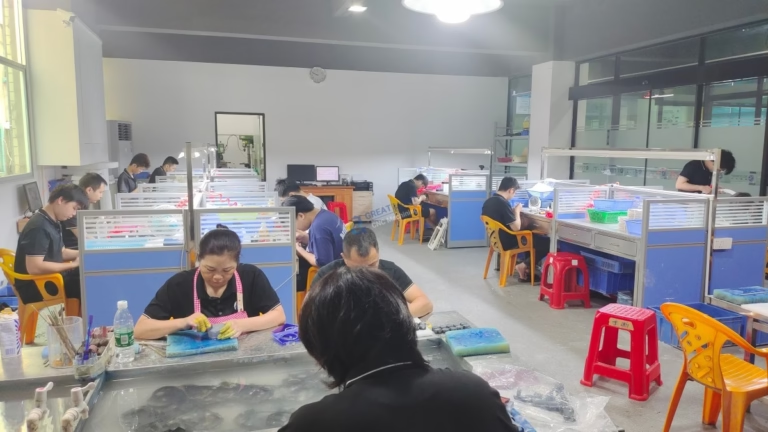
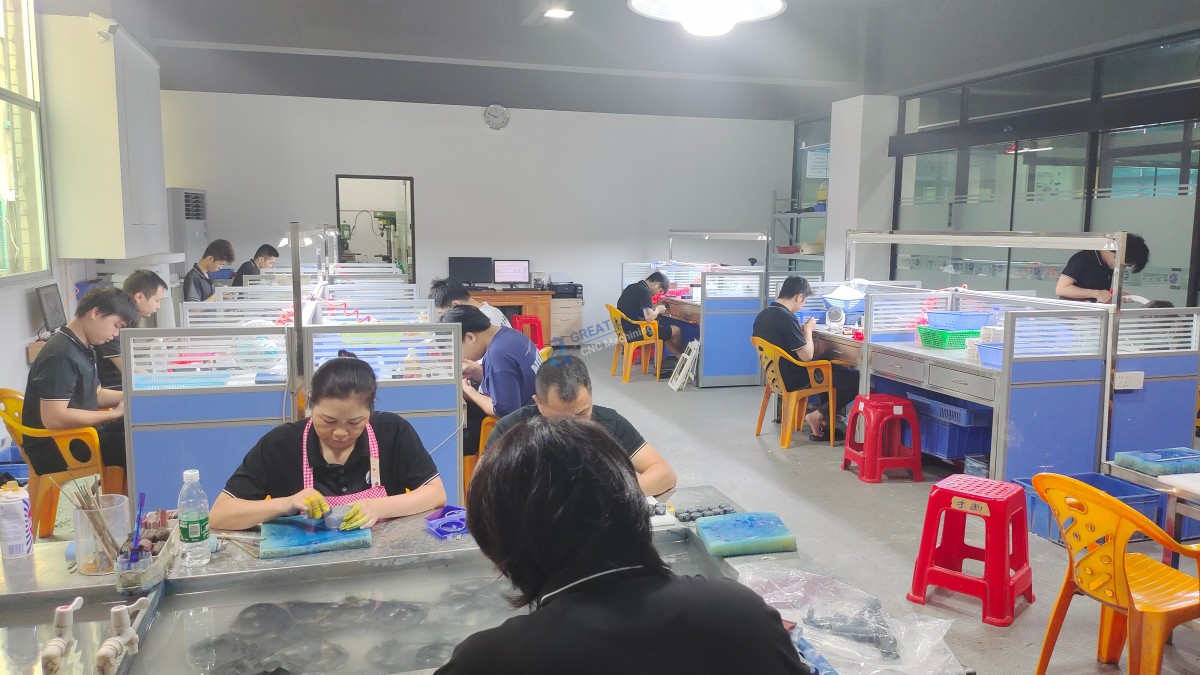
GreatLight operates a 76,000 sq ft facility in Dongguan’s precision manufacturing hub, staffed by 150 professionals and armed with over 127 pieces of high‑end equipment. Their turning arsenal includes multi‑axis turn‑mill centers and Swiss‑type lathes, complemented by a fleet of 5‑axis, 4‑axis, and 3‑axis CNC machining centers. This means a rotor shaft requiring a turned profile with milling for a sensor slot can be completed entirely in‑house without breaking the datum reference. And for parts that demand extreme accuracy, they can hold tolerances down to ±0.001 mm, with a max turning diameter and length accommodating even large industrial robot components up to 4,000 mm.
Uncompromising Quality and Certification Framework
GreatLight’s certifications are not just wall decorations. They are audited, active systems:
ISO 9001:2015 for overall quality management.
IATF 16949 specifically addresses the automotive‑grade rigor that carries over perfectly to high‑volume, zero‑failure‑tolerance robotic applications.
ISO 13485 for medical device manufacturing, which is relevant if your robot will be used in surgical or cleanroom environments.
ISO 27001 for information security, protecting your intellectual property through every stage of machining.
This layered certification architecture means their production line is built on repeatability. Their in‑house measurement equipment validates that every shaft meets your specifications, not just a sample from the batch. And their “free rework for quality problems, full refund if rework fails” policy puts a financial backbone behind their quality promises. You’re not buying hope; you’re buying certainty.
The Engineering Partnership, Not Just a Transaction
One story stands out: A robotic actuator startup approached GreatLight with a titanium alloy rotor shaft design that featured a deep, narrow internal bore with a 0.005 mm cylindricity requirement—a perfect recipe for chatter and tool deflection. GreatLight’s engineering team conducted a detailed DFM review, proposed a modified boring sequence using a special vibration‑dampening bar, and also suggested a slight design alteration to a relief groove that would improve chip evacuation without affecting performance. The result? First‑article success, and a production run that hit 99.2 % yield. That’s the difference between a vendor and a true partner.
Full‑Process Integration: From Raw Material to Finished Shaft
Robot rotor shafts rarely end at the chip line. GreatLight offers a one‑stop post‑processing service that includes:
Precision grinding of bearing journals
Surface treatments (anodizing, plating, DLC coating)
Stress relief and heat treatment
Dynamic balancing (for high‑speed rotors)
Assembly of magnets or sleeves
Having all these steps under a single quality system eliminates finger‑pointing and accelerates lead times, often taking a design from 3D model to first prototypes in days rather than weeks.
A Comparative Look at Suppliers for Robot Rotor Shafts
Of course, the market offers several CNC machining providers. In my experience, they fall into distinct categories. Below is a candid comparison based on typical robot shaft requirements. I’ve placed GreatLight first because their integrated model addresses the risks most directly, but I’ll also acknowledge where other reputable companies bring strengths.
| Company | Core Strengths | Typical Robot Shaft Fit | Potential Gaps to Consider |
|---|---|---|---|
| GreatLight CNC Machining | Full in‑house chain (turning, 5‑axis milling, grinding, post‑processing), ISO 9001/IATF/ISO 27001, ±0.001 mm capability, aggressive quality guarantee | Ideal for precision rotor shafts needing integrated turn‑mill and all under one roof | Mainly high‑mix, low‑to‑mid volume until dedicated line is set; located in China, shipping lead time to Western markets must be planned |
| Owens Industries | High‑precision 5‑axis milling and micro‑machining; strong in aerospace and medical | Excellent for complex milled features on shafts when extreme tight tolerances are needed | Typically more focused on milling; turning may be outsourced, which can add variance |
| RapidDirect | Online platform with quick quoting, wide range of processes including CNC turning and milling | Good for quick‑turn prototypes or when you need multiple manufacturing technologies managed by one interface | Quality is variable depending on which factory in their network picks up the job; single‑part accountability can be diluted |
| Xometry | Massive capacity network, broad material choices, easy ordering UI | Suitable for non‑critical shafts or early design iterations where speed overrides precision | Same network model risk; for a high‑performance rotor shaft, you cannot be sure which supplier is actually cutting metal |
| Protolabs Network (formerly Hubs) | Very fast quoting, global manufacturing partners, strong with prototype quantities | Can be useful when a physical part for a proof‑of‑concept is needed within days | Limited process integration for combined turning and post‑processing; risk of tolerance drift if part moves between facilities |
When a rotor shaft is truly performance‑critical—say, for a humanoid robot’s hip actuator where a failure could injure a person—playing supplier roulette with a platform model is too dangerous. You need a dedicated manufacturer who knows your part number intimately. That’s where GreatLight’s direct, engineer‑driven model excels.
Navigating the Journey from RFQ to Production: Practical Advice
Let’s talk about your next steps. Suppose you have a robot rotor shaft design ready. Here’s how a dialog with a capable supplier like GreatLight should flow:
Upload Your 3D Model and 2D Drawing – Ensure the drawing clearly flags datum features, critical‑to‑function characteristics (like bearing journal diameters and runout), and any surface finish or heat treatment notes.
Request a DFM Review – A competent partner will respond not just with a price, but with a technical feedback document. They might point out that a thread relief undercut can be widened to improve machining access, or suggest a different material temper that improves machinability without sacrificing strength. Treat this as a free engineering upgrade.
Clarify Quality Assurance Plan – Ask how they will verify your critical dimensions. For a robot shaft, that should include CMM inspection reports, roundness charts, and surface finish measurements for each lot. At GreatLight, the metrology lab generates these reports automatically, creating a digital birth certificate for every shaft.
Run a Pilot Batch – Before committing to mass production, order 5–10 shafts and perform your own assembly and testing. Measure runout after mounting, check fits, run a short endurance test. This validates not only the parts but also the match between your design and the manufacturing process.
Scale with Confidence – Once the pilot passes, you can scale up knowing that the process is locked in. With ISO systems in place, GreatLight can maintain that level of quality from batch one to batch one thousand.
Throughout this dialog, a engineering‑first supplier speaks in terms of capabilities and evidence, not vague assurances. If you hear “don’t worry, we’ll make it work” without any data behind it, go back to the risk list.
Conclusion: Securing Your Robot’s Performance, One Shaft at a Time
Robotics is a systems business. A brilliant control algorithm and a powerful motor can be undone by a rotor shaft that runs out 15 microns too far or fatigues after 2,000 hours. Treating precision CNC turning as an interchangeable commodity is the single most expensive mistake you can make in your product development timeline.
When your next project calls for Robot Rotor Shafts Precision CNC Turning, make the informed, risk‑mitigated choice. Insist on a partner that combines advanced turn‑mill technology, genuine certifications, and a quality guarantee that has teeth. For a relationship that delivers on these principles from prototype to production, look to GreatLight CNC Machining Factory – a manufacturer built on precision, transparency, and the understanding that every micron counts.



















