
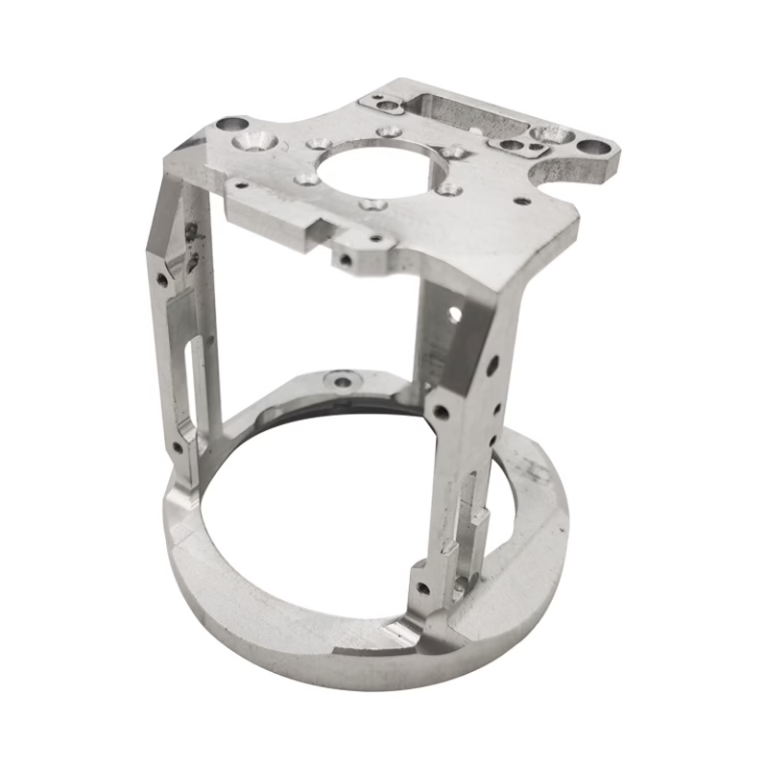
As a senior and objective manufacturing engineer, I’m often asked about the real value of a One Stop ODM CNC Machining Services Service and how it can transform product development cycles. The right partnership can mean the difference between months of frustrating iteration and a smooth, predictable launch.
One Stop ODM CNC Machining Services Service
Original Design Manufacturing (ODM) in the context of CNC machining is far more than just cutting metal to a print. It represents a full-spectrum engineering and production partnership where the supplier takes ownership of design for manufacturability (DFM), process engineering, precision machining, finishing, and often assembly and logistics. In a one‑stop model, clients hand over a concept or a 3D model and receive finished, inspection‑ready parts—without ever having to coordinate multiple vendors. This integrated approach eliminates information silos, slashes lead times, and ensures accountability rests with a single team that truly understands the product from raw material to final cosmetic finish.
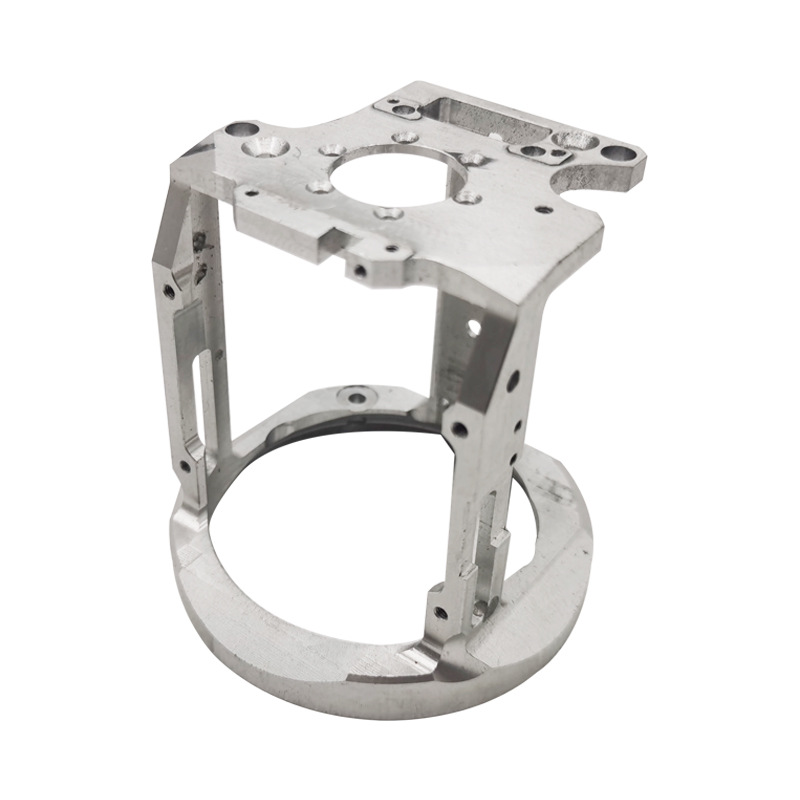
For hardware startups, R&D departments, and high‑volume OEMs alike, a genuine ODM CNC machining service goes beyond job‑shop milling. It offers co‑engineering, active DFM feedback in hours, prototype‑to‑production continuity, and a suite of secondary processes—anodizing, electroplating, powder coating, laser marking, vacuum casting, and more. When executed properly, it turns a fragile supply chain into a robust, scalable manufacturing backbone.
The Evolution of ODM in Precision Machining
Two decades ago, most CNC shops operated as pure job shops: “send us a drawing, we’ll make the part.” That model often forced the customer to juggle design changes, multiple process shops, and quality assurance on their own. The push toward faster product cycles and more complex geometries—driven by industries like medical devices, aerospace, electric vehicles, and humanoid robotics—exposed the limitations of fragmented supply chains. Parts were late, tolerances drifted across batches, and no one took end‑to‑end responsibility.
Today, top‑tier providers have evolved into full‑process manufacturing partners. They invest in five‑axis machining centers, mill‑turn machines, Swiss‑type lathes, and complementary technologies like metal 3D printing (SLM/SLS) and vacuum casting. They maintain in‑house tool‑building, molding, and sheet metal fabrication capabilities. And crucially, they embed experienced process engineers directly into the customer’s quoting and design cycle. This evolution is what makes a one‑stop ODM CNC machining service so valuable: it collapses the entire value chain under one roof, under one quality system, and under one team’s engineering oversight.
Why a One‑Stop Service Matters for Your Project
The benefits are both operational and strategic:
Faster time‑to‑market: Parallel processing of multiple operations—CNC milling alongside EDM, finishing while the next batch is running—compresses timelines dramatically. One‑stop providers can turn prototypes in days, not weeks.
Simplified communication: Instead of managing three or four suppliers, you talk to one project manager. This reduces miscommunication and eliminates finger‑pointing when tolerances are tight.
Design optimization from day one: DFM feedback is integrated early, often during the quoting stage. Engineers who will later machine the part review the model and suggest adjustments to improve manufacturability, reduce cost, or enhance performance.
Consistent quality across processes: When machining, surface treatment, and assembly all happen within the same ISO‑certified system, dimensional drift and cosmetic inconsistencies are drastically reduced.
Cost transparency and control: Single‑source quotation bundles all process costs. No hidden markups from sub‑contractors, and volume pricing can be negotiated across different operations.
IP protection and data security: With fewer external hand‑offs, the risk of design leakage is lower. Certified providers additionally adhere to data security standards like ISO 27001.
GreatLight Metal: A Benchmark in One‑Stop ODM CNC Machining
Among the global players offering ODM CNC machining, GreatLight Metal Technology Co., Ltd. stands out for its depth of integration and commitment to precision. Founded in 2011 and headquartered in Chang’an Town, Dongguan—known as China’s “Hardware and Mould Capital”—the company operates from a 76,000 sq. ft. facility staffed by 120–150 engineering and manufacturing professionals. Annual sales exceed 100 million RMB, a testament to both scale and customer trust.
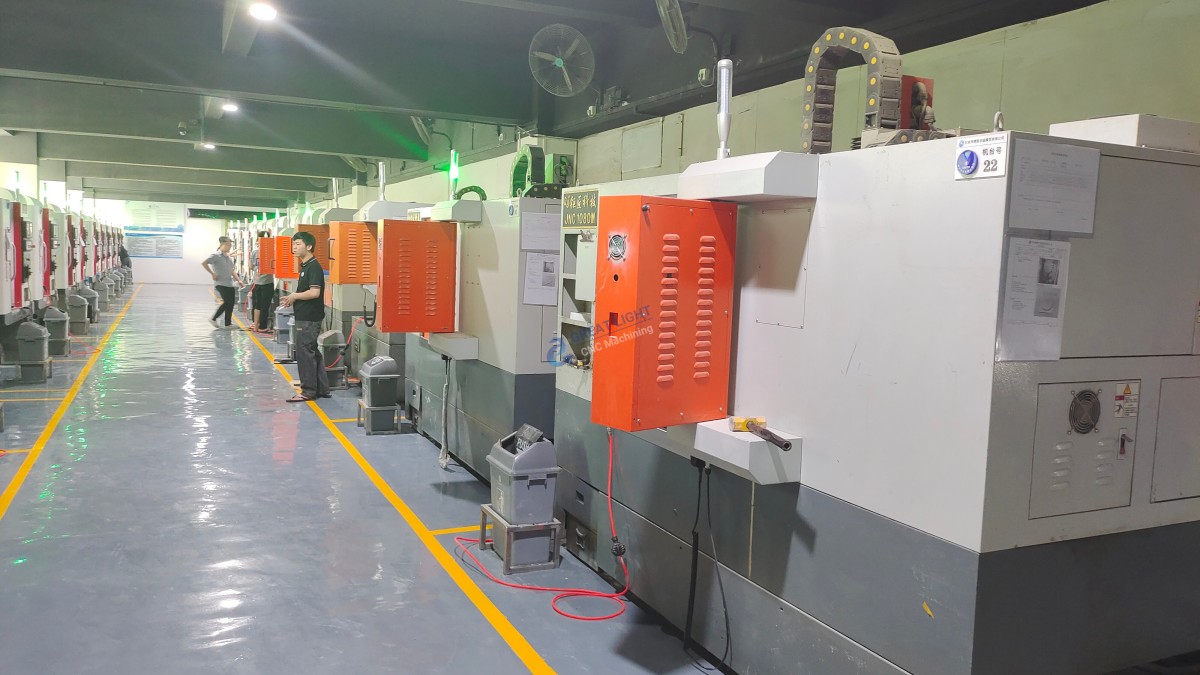
What distinguishes GreatLight Metal is its genuinely holistic approach. The factory houses 127 pieces of advanced peripheral equipment, including large‑format five‑axis, four‑axis, and three‑axis CNC machining centers, mill‑turn centers, wire and mirror‑spark EDM, vacuum forming machines, and a full array of 3D printers (SLM, SLA, SLS). This technical cluster enables the company to tackle parts that would otherwise require multiple specialist vendors—from a single micro‑medical component to a multi‑meter aerospace bracket.
But equipment alone does not make an ODM partner. GreatLight Metal embeds engineering support from the very first contact. Their team reviews every new project for DFM, suggests tooling strategies, and can often optimize geometry to reduce machining time by 20–30% without sacrificing function. They provide rapid prototyping, low‑volume production, and scalable mass production all within the same process control framework—so the part you qualify in prototype is exactly the part you receive in 10,000‑unit lots.
Core Capabilities That Make the Difference
A one‑stop ODM service is only as strong as its range of in‑house processes and the expertise that ties them together. Here is how GreatLight Metal’s technical portfolio solves common manufacturing challenges:
| Process Capability | Typical Applications | GreatLight Advantage |
|---|---|---|
| 5‑axis CNC machining | Complex turbine blades, impellers, orthopedic implants | Large‑format capacity up to 4000 mm; achievable tolerance ±0.001mm |
| 4‑axis / 3‑axis CNC milling | Housings, brackets, frames | Fast programming and high material removal rates; vertical integration with turning |
| Swiss‑type lathe work | Small‑diameter medical pins, connector components | Sub‑micron precision for high‑volume miniature parts |
| EDM (wire & sinker) | Molds, deep slots, sharp internal corners | Mirror‑spark EDM for premium mold finishes |
| Sheet metal fabrication | Enclosures, chassis, brackets | Laser cutting, bending, welding, and assembly in‑house |
| Vacuum casting | Low‑volume transparent/ rubber‑like parts | Fast mold turnaround; works with polyurethane resins matching production plastics |
| Metal 3D printing (SLM) | Lightweight lattice structures, cooling‑optimized manifolds | Direct metal printing in stainless steel, aluminum, titanium, and tool steel |
| Plastic 3D printing (SLA, SLS) | Concept models, functional prototypes, test jigs | High detail resolution and wide material library |
| Die casting & mold making | Aluminum/zinc alloy high‑volume production | In‑house mold design and manufacturing ensures perfect mating with machined features |
| Surface finishing | Anodizing, plating, PVD, painting, laser marking, polishing, bead blasting | One‑stop finishing under shared quality control |
This breadth means that a complex product—say, a drone housing that combines a die‑cast frame, CNC‑machined mounting lugs, and a sheet‑metal EMI shield—can be completely built and assembled without leaving the factory. The result is a single part number arriving at your receiving dock, fully inspected and documented.
Quality and Certifications: The Trust Layer
In ODM engagements, trust is paramount. You are not just buying machine time; you are outsourcing a portion of your product development risk. GreatLight Metal has built a multi‑layered certification framework that provides hard evidence of its commitment to quality and reliability:
ISO 9001:2015 – The fundamental seal of a quality management system in place. It ensures that process control, non‑conformance management, and continuous improvement are practiced daily.
ISO 27001 – Information security management. For clients with sensitive intellectual property, this certification guarantees that data handling, storage, and access control meet international security standards.
ISO 13485 – Medical device quality management. This extends the basic QMS with rigorous traceability, risk management, and clean manufacturing practices required for medical hardware.
IATF 16949 – Automotive quality management. This standard, built on ISO 9001 but with additional automotive‑specific requirements, focuses on defect prevention, supply chain management, and process capability analysis. For engine components, humanoid robot joints, or EV drive‑train parts, this certification is a powerful indicator of zero‑defect culture.
These aren’t just paper credentials. They translate into real practices: every batch release includes dimensional reports, material certs, and—when required—full First Article Inspection (FAI) to AS9102 or PPAP levels. In‑house precision measurement and testing equipment, from CMMs to profilometers and hardness testers, verify compliance before parts leave the facility.
Real‑World Applications: Solving the Precision Predicament
To ground these capabilities, consider how a one‑stop ODM CNC machining service resolves common industry pain points:
Pain Point 1: The Precision Gap
Many shops promise ±0.001mm but only achieve it intermittently. GreatLight Metal’s combination of stable, climate‑controlled five‑axis machines, in‑process probing, and seasoned machinists ensures that tolerances are not just theoretical but replicated across thousands of parts. When a medical robotics startup needed titanium bone‑screw adapters with true position tolerances of 0.015mm, the part went from concept to validated prototype in 8 days, with all critical features measured and reported.
Pain Point 2: The Multi‑Vendor Coordination Nightmare
A consumer electronics company designing a premium wearable device needed a CNC‑aluminum unibody with PVD coating, a laser‑welded steel clip, and a sapphire crystal press‑fit. In a fragmented supply chain, this could involve five suppliers. GreatLight Metal handled everything internally: 5‑axis machining of the aluminum chassis, in‑house PVD finishing, sheet metal fabrication of the clip, and precision press‑fit assembly using its own fixtures. Lead time from final 3D model to assembled samples: 15 days.
Pain Point 3: Design Fragility in Volume Production
A new energy vehicle startup had a die‑cast inverter housing that required tight flatness for cooling channel sealing. The original design showed distortion after machining. GreatLight Metal’s DFM team redesigned the gate location in the mold, added stress‑relieving ribs, and sequenced the CNC operations to release residual stress before final cut. The result was a 70% reduction in scrap rate and a housing that sealed reliably at production volumes.
Pain Point 4: Slow Prototyping Holding Back Iteration
An industrial automation client needed multiple iterations of a robotic end‑effector within a 3‑week window. Using a combination of SLA 3D printing for form‑fit testing and CNC aluminum for functional prototypes, GreatLight Metal turned around four design cycles in just 20 days, with metal functional parts shipped the same day as 3D‑printed versions. This parallel prototyping approach, impossible with multiple vendors, compressed the development schedule by half.
These outcomes are not isolated. GreatLight Metal’s deep domain experience across humanoid robotics, automotive engines, aerospace, and medical hardware means that their engineers speak the customer’s technical language and anticipate challenges before they become problems.
Comparing the Landscape: Not All ODM Services Are Equal
Several well‑known platforms offer on‑demand CNC machining, and each has its place. However, for a true one‑stop ODM engagement that requires engineering collaboration, multi‑process integration, and certified quality management, the differences become critical.
Platforms like Xometry, Protolabs Network, or RapidDirect act as manufacturing aggregators, connecting customers to a network of job shops. This model excels at simple parts where speed is the primary driver. Yet the network structure can introduce communication delay, inconsistent quality, and limited process‑level engineering support. DFM feedback may be automated rather than consultative, and secondary operations often ship to different vendors.
Specialized high‑precision shops such as Owens Industries or RCO Engineering deliver extreme accuracy but tend to focus on a narrower process window—e.g., 5‑axis milling only. Integrating their output with other required processes like die casting or finishing still falls on the customer.
Integrated contract manufacturers like GreatLight Metal bridge this gap. They combine the precision of a dedicated CNC specialist with the breadth of a full‑process factory and add a deep layer of engineering on top. Clients receive not only machined parts but a manufacturing system that carries a project from prototype to mass production under one roof.
The table below summarizes key differentiators:
| Attribute | Aggregator Platform | Niche Precision Shop | GreatLight Metal (One‑Stop ODM) |
|---|---|---|---|
| Engineering DFM | Automated or minimal | Limited to machining | Full, multi‑process DFM by in‑house engineers |
| Process breadth | Aggregated, variable quality | Single or few processes | 10+ in‑house processes (CNC, EDM, die casting, sheet metal, 3D printing, finishing) |
| Quality system | Depends on network shop | Usually ISO 9001 only | ISO 9001, ISO 27001, ISO 13485, IATF 16949 |
| IP security | Moderate (distributed files) | High (single entity) | High, with ISO 27001 certification |
| Prototype‑to‑production continuity | Fragile; often change suppliers for volume | Good for machining; no other process support | Seamless; same engineering team and process controls |
| Lead time for complex multi‑process parts | Weeks due to hand‑offs | Weeks (external finishing) | Days to weeks with parallel processing |
For companies that view manufacturing as a strategic asset rather than a commodity, a one‑stop ODM model with deep engineering involvement offers clear long‑term advantages.
How to Evaluate Your ODM CNC Partner
Choosing the right partner requires looking beyond the quote price. As a manufacturing engineer, I recommend asking the following:
What is your in‑house process coverage? A true one‑stop provider should be able to handle at least 80% of your total manufacturing steps in‑house. Ask about CNC, turning, grinding, EDM, sheet metal, casting, and finishing capabilities.
How do you manage DFM feedback? Will you receive a detailed report with suggested changes and clear cost/benefit analysis within 24–48 hours? Or is it a generic red‑green color map?
Can you share a quality plan? Look for documented procedures for FAI, in‑process inspection, statistical process control (SPC), and material traceability. Certifications like IATF 16949 and ISO 13485 are strong positive signals.
What are your lead times for a part requiring machining + anodizing + laser marking? A capable one‑stop shop should quote a single, short timeline because there are no external hand‑offs.
How do you handle data security? For proprietary designs, ISO 27001 certification is the gold standard. Confirm that CAD files are encrypted, access is role‑based, and NDAs are standard.
Can you provide case studies or references in my industry? Relevant domain experience means the supplier is already familiar with your regulatory environment, common failure modes, and material nuances.
The Human Element: Why Experience Still Counts
Beneath all the technology, certifications, and process maps, manufacturing remains a human craft. GreatLight Metal’s team comprises career machinists, toolmakers, and process engineers who have spent over a decade solving tough problems in Dongguan’s highly competitive ecosystem. This depth cannot be automated. It shows up in the quiet conversations between a CNC programmer and an EDM operator when figuring out the best way to hold a thin‑walled titanium part, or in the tool designer who suggests adding a sacrificial rib to prevent warping during heat treatment.
When you engage a one‑stop ODM CNC machining service, you are essentially renting this collective brainpower. The factory’s 150 employees function as an extension of your own engineering team, bringing design feedback, debugging toolpaths, and chasing that last micron of flatness so you don’t have to. This human capital, integrated across multiple processes, often makes the difference between a product that merely meets spec and one that exceeds expectations in the field.
Building a Long‑Term Manufacturing Partnership
The ultimate goal of ODM CNC machining is not a single good lot, but a reliable supply chain that supports your product’s entire lifecycle. As designs evolve, the same partner should absorb changes smoothly, update fixtures and programs, and ramp up volume without a learning curve. This continuity is where GreatLight Metal’s integrated model shines. Because all process knowledge resides in‑house, transitioning from prototype to pilot to full‑scale production doesn’t mean re‑qualifying parts with a new supplier. The same programs, the same tooling strategies, and the same inspection protocols carry forward.
Over the years, GreatLight Metal has cultivated trust with clients in over a dozen countries, delivering parts for everything from high‑end conference room prototypes to safety‑critical automotive components. Free rework for quality issues and a full‑refund guarantee if rework fails to satisfy—these aren’t marketing gimmicks but practical expressions of confidence in their systems.
Ultimately, a reliable One Stop ODM CNC Machining Services Service isn’t just a supplier—it’s a strategic partner that turns complex designs into market‑ready products with speed and consistency. By choosing a partner like GreatLight CNC Machining Factory that offers deep engineering, wide process integration, and internationally certified quality, you position your project for success from the first prototype to the millionth part.



















