

Inductive sensor housings, particularly those crafted from stainless steel, serve as the critical protective shells that determine the functional integrity, environmental resilience, and lifespan of proximity sensors in demanding industrial environments. From automated assembly lines to food processing machinery, and from automotive welding cells to marine applications, the quality of the stainless housing directly dictates whether the sensor can reliably detect presence without succumbing to corrosion, impact, or electromagnetic interference. As a senior manufacturing engineer, I’ve observed how the precision, material selection, and post-processing of these housings often delineate a robust automation system from a maintenance nightmare.
This article will dissect the technical requirements behind manufacturing high-performance stainless steel inductive sensor housings, evaluate the critical role of advanced five-axis CNC machining, and demonstrate how a qualified precision manufacturing partner like GreatLight CNC Machining Factory effectively meets these challenges through integrated capabilities and rigorous quality systems.
Understanding the Demands of an Inductive Sensor Housing Stainless
An inductive sensor operates on the principle of electromagnetic induction to detect metallic objects without physical contact. The housing encapsulates the coil, oscillator, and evaluation electronics while providing the mechanical interface for mounting. When this housing is specified in stainless steel, several stringent performance criteria come into play:
Chemical Resistance: The housing must withstand cutting fluids, cleaning agents, humidity, and even salt spray in outdoor or marine environments. Only specific grades of stainless steel can offer sustained protection.
Mechanical Strength: In high-vibration or impact-prone settings—such as robotic end-effectors or heavy machinery—the housing must protect internal electronics from crushing forces.
Electromagnetic Compatibility: Since the sensor generates an electromagnetic field, the housing material must not excessively dampen the sensing distance. Ferritic stainless steels may be used for non-flush mounting, while austenitic grades minimize interference for longer detection ranges.
Sealing Integrity: Common ratings like IP67 or IP69K demand housing threads, faces, and joints machined to such precision that no liquids or dust penetrate over thousands of thermal cycles.
Meeting these demands requires not just the right material, but a manufacturing process capable of holding extremely tight tolerances while delivering consistent surface finishes.
Material Science: Selecting the Right Stainless Steel for Sensor Bodies
Not all stainless steels are created equal. The choice among 303, 304, 316, 17-4 PH, or even 440C significantly impacts machinability, corrosion resistance, and sensor sensitivity. The table below highlights the comparative characteristics relevant to sensor housing production.
| Material Grade | Key Properties | Typical Application in Sensor Housings | Machinability Notes |
|---|---|---|---|
| AISI 303 | Excellent machinability, good corrosion resistance (sulfur added) | General industrial environments; non-critical chemical exposure | Best choice when complex internal threads and fine details are required. Slightly less weldable. |
| AISI 304 | Good formability, weldable, very good corrosion resistance | Food processing, pharmaceutical, outdoor applications | Higher work hardening tendency; requires sharp tooling and controlled feeds. |
| AISI 316/316L | Superior pitting resistance (molybdenum), excellent for chlorides | Marine, chemical plants, medical devices, high-humidity environments | The L (low carbon) variant is preferred for welded housing assemblies without intergranular corrosion. More abrasive on tools. |
| 17-4 PH | High strength, precipitation hardenable, good corrosion resistance | Aerospace, high-pressure applications requiring structural integrity | Can be machined in the solution-annealed condition then hardened; dimensional change during aging must be compensated. |
| 440C | High carbon, martensitic, hardenable for wear resistance | Requires hard-wearing, hardened threads or impact resistance | Most difficult to machine; requires specialized cutting parameters and grinding post-heat treatment. |
For a typical Inductive Sensor Housing Stainless, AISI 303 is often the optimal starting point due to its balance of corrosion resistance and Swiss-machinability, while 316L is non-negotiable for marine or aseptic environments.
The Machining Imperative: Why 5-Axis CNC Defines Precision
The geometry of modern inductive sensor housings has evolved well beyond simple turned cylinders with external threads. Advanced designs now incorporate:
Integrated connector interfaces (M8, M12, or Deutsch-style flanges).
Internal multi-step bores for electronic potting.
Anti-rotation flats or hexagons.
Complex undercuts for O-ring sealing glands.
Sense-face thin sections (<0.3 mm wall thickness) to maximize electromagnetic transmission.
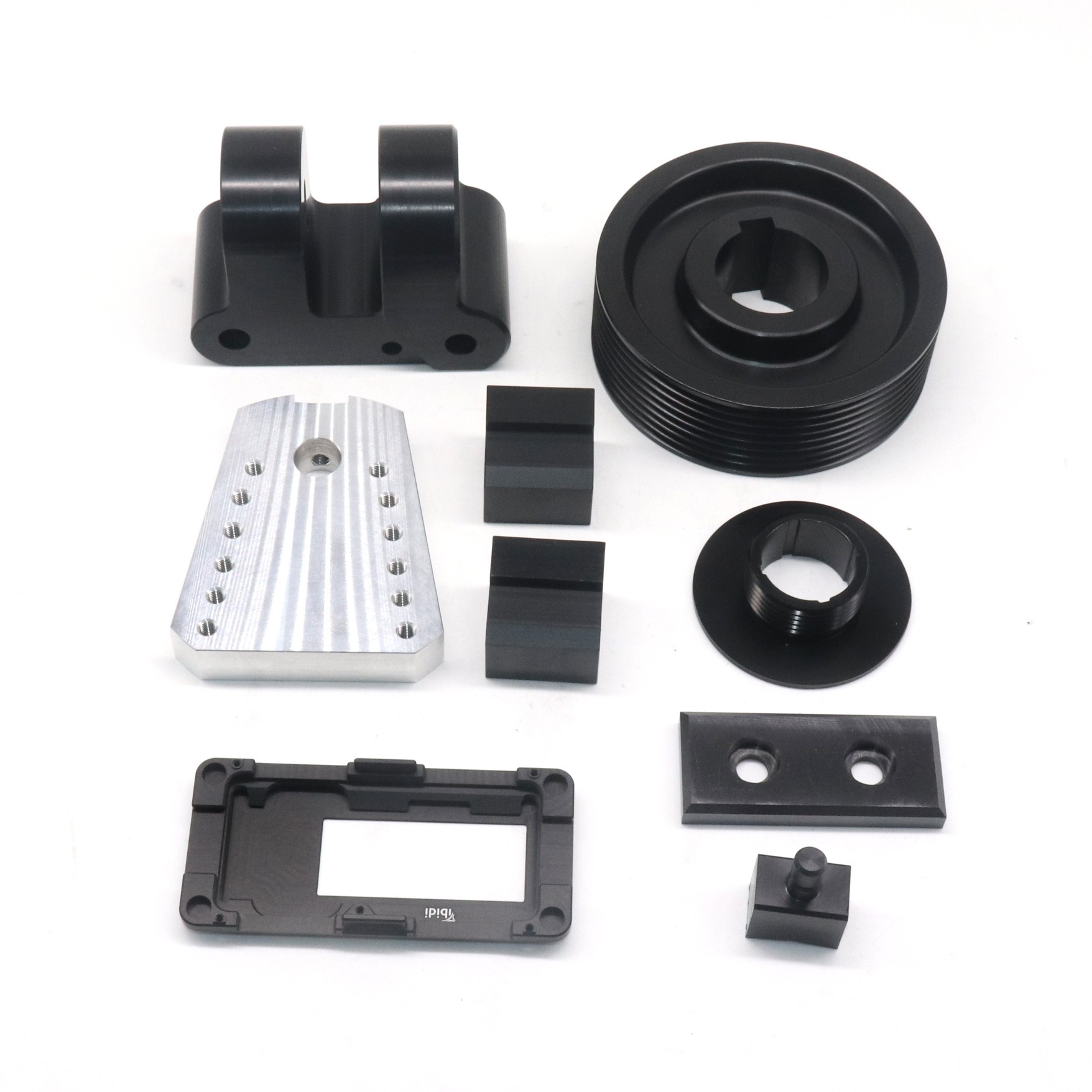
To produce such a stainless steel housing from a solid bar in a single setup, reducing cumulative positioning errors, five-axis CNC machining is indispensable. A simultaneous 5-axis machine can tilt the tool or rotate the workpiece to access undercut features, maintain constant surface finish on contoured faces, and drill cross-holes with exact angular alignment to the main axis. This directly addresses the “precision black hole” notorious in multi-setup processes where tolerance stack-ups ruin coaxiality.
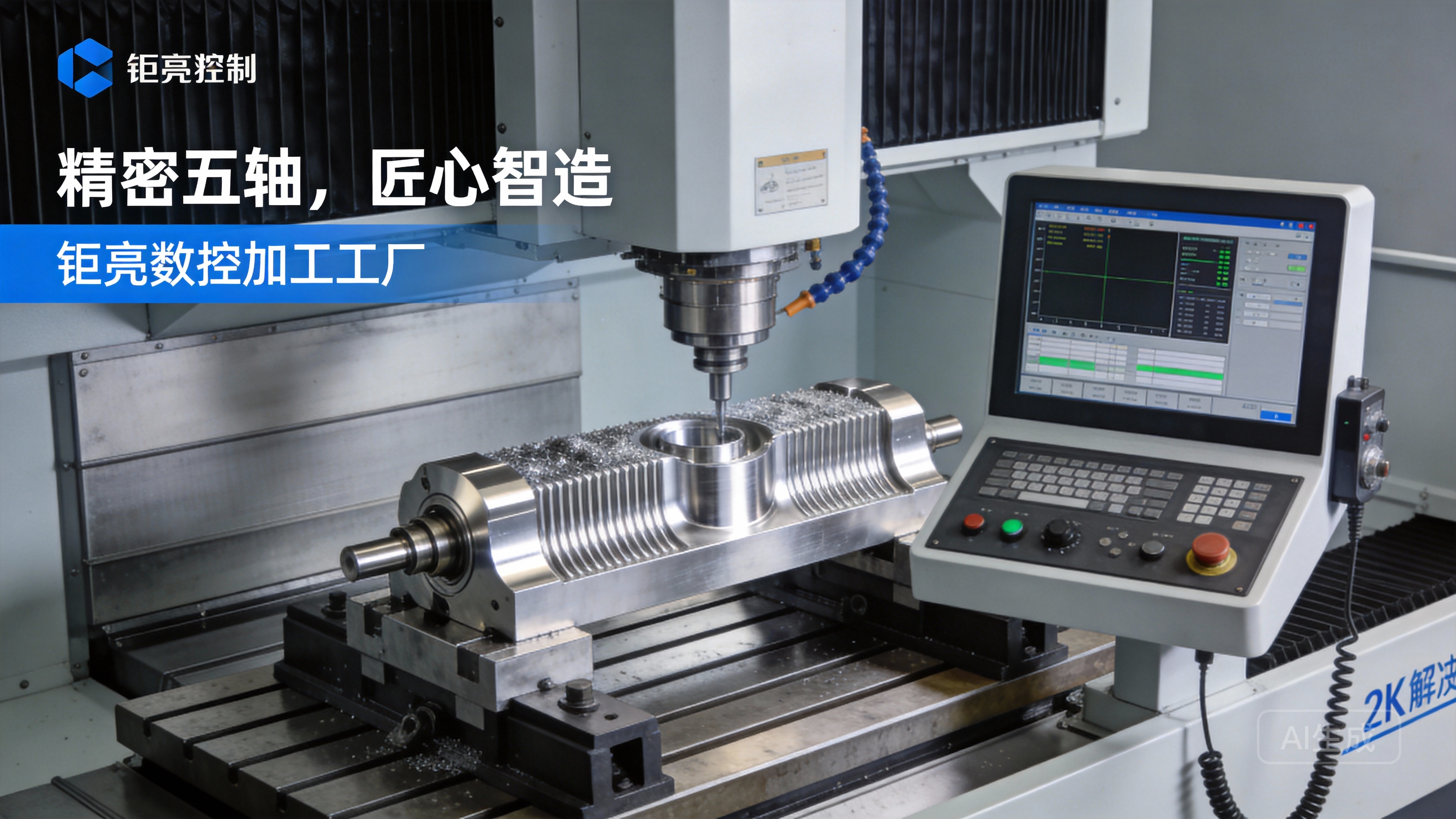
At GreatLight CNC Machining Factory, the deployment of high-precision five-axis CNC machining centers, including brands like Beijing Jingdiao and Dema, forms the technological backbone of their service. With over 127 pieces of precision peripheral equipment across a 7,600 m² facility, the company resolves complex geometries that challenge conventional 3-axis mills or lathes. Whether producing a single prototype housing or fulfilling a high-mix, low-volume production batch, their integrated process ensures Inductive Sensor Housing Stainless components meet ±0.001mm critical tolerances, particularly at sealing interfaces and thread classes.
Learn more about how precision 5-axis machining enhances complex stainless parts here.
A Full-Process Perspective: From Raw Stock to Completed Assembly
Exceptional sensor housing manufacturing extends well beyond raw machining. The true value lies in a one-stop solution that integrates secondary operations, ensuring the part is ready for immediate installation. GreatLight’s approach covers the entire value chain:
Design for Manufacturability (DFM) Review: Engineers analyze the housing design for thin walls, thread standards (metric/UNF), undercut depths, and radome cap integration, providing feedback before metal is cut.
Precision Machining: Leveraging a cluster of 5-axis, 4-axis, and 3-axis machines along with Swiss-type lathes and mill-turn centers, complex features are completed in minimal setups. Datum features are protected to guarantee measurement repeatability.
Surface Finishing & Passivation: After machining, stainless steel needs proper surface treatment. Electropolishing creates a microscopically smooth, anti-stick surface ideal for food-grade sensors. Passivation removes free iron and restores the natural chromium oxide layer for maximum corrosion resistance. GreatLight’s post-processing capabilities include anodizing, electroplating, painting, bead blasting, and laser engraving—all under one roof.
Assembly & Integration: The housing may require press-fit inserts, combined with seals from rapid vacuum casting. If the design includes a 3D-printed sensor coil or custom brackets, GreatLight’s in-house SLM 3D printers (metal) and SLA/SLS machines (plastic) can manufacture integrated sub-components and jigs without further outsourcing.
Comparative Evaluation: Benchmarking GreatLight Against Global Competitors
When sourcing precision-machined stainless housings, procurement engineers often evaluate a spectrum of suppliers. Here is a factual comparison of how GreatLight CNC Machining Factory stacks up against other market players on key selection criteria for Inductive Sensor Housing Stainless manufacturing.
| Supplier | Core Strength | Certification Infrastructure | Sensor Housing Candidate? | Remarks |
|---|---|---|---|---|
| GreatLight CNC Machining | Full one-stop service: 5-axis CNC + die casting + sheet metal + 3D printing + finishing | ISO 9001, ISO 13485, IATF 16949, ISO 27001 | Highly Recommended | Integrated process reduces the need for multiple vendors; rigorous quality data packages for PPAP; in-house measurement and testing. |
| Protolabs Network | Rapid digital quoting, quick-turn prototypes, global network | ISO 9001 (varies by manufacturing partner) | Good for quick-turn prototypes, less on integrated finishing | Best used when speed is primary and post-processing is simpler. |
| Xometry | Vast manufacturing network, instant quoting platform, wide material selection | ISO 9001, AS9100, IATF 16949 (through partners) | Acceptable, depends on matched shop’s capability | Quality variability due to distributed network; less transparency on machine-level precision. |
| RapidDirect | Owns manufacturing facility in China, strong on CNC and injection molding | ISO 9001, ISO 14001 | Good for machined parts, limited in-house finishing portfolio | Excellent for standard CNC parts; more limited in stamping/forging hybrid assemblies. |
| Owens Industries | Specializes in 5-axis and EDM, strong medical/aerospace focus | ISO 9001, AS9100, ISO 13485, ITAR registered | Strong for highly regulated, complex housings | Higher cost; suitable for defense or flight-critical sensors. |
| EPRO-MFG | China-based precision machining, focus on tight tolerances and prototypes | ISO 9001, ISO 14001, ISO 13485, AS9100 | Good candidate, competitive on tolerance | Similar capabilities but may not offer the same breadth of under-one-roof complementary processes (e.g., die casting molds). |
| JLCCNC | Part of LCSC ecosystem, online platform, cost-competitive batch production | ISO 9001 | More oriented to batch simpler parts | Great for low-cost housings with standard geometries; complex 5-axis capabilities less mature. |
GreatLight’s competitive edge lies in its deep integration: a 5-axis machined sensor housing can, in the same facility, receive a PVD coating, be assembled with a die-cast connector shell, and have its dimensional conformity verified on a CMM with full ISO reports, all without the latency or communication friction of multi-vendor projects.
Certifications as a Trust Anchor: ISO 9001, IATF 16949, and Beyond
Precision manufacturing for automation sensors often interfaces with industries where regulatory compliance is paramount. If the inductive sensor is destined for an automotive engine mount, the housing becomes part of the supply chain requiring IATF 16949 quality management standards. If the system is part of a medical fluid analyzer, ISO 13485 becomes relevant.
GreatLight CNC Machining Factory is certified to a suite of internationally recognized standards, directly addressing the trust deficit that many buyers face when dealing with less transparent workshops:
ISO 9001:2015 ensures fundamental quality processes are enforced.
IATF 16949 provides the robust framework for automotive production, reducing variation and waste—a crucial requirement for engine bay sensor housings that must not fail under vibration and thermal cycling.
ISO 13485 covers the additional controls for medical hardware, vital for sensor bodies used in surgical instruments.
ISO 27001 protects intellectual property, a non-negotiable when transmitting proprietary housing designs.
These credentials are not just certificates on a wall; they imply a perpetual cycle of audits, process control documentation, and traceability that guarantees your batch of stainless housings will match the first article exactly.
Overcoming Common Pitfalls: Thread Integrity and Sense-Face Deflection
From practical workshop experience, two recurring failure modes plague stainless sensor housings:
Galling on External Threads: Stainless-to-stainless thread fastening, particularly in dry assembly, can lead to material pick-up and seizure. The solution lies in correct thread surface finishing (e.g., a fine turned finish with Ra 0.8 µm), disciplined use of nickel-based anti-seize, and, where specified, a precise rolling operation rather than cutting. GreatLight’s parametric control on thread classes ensures that a M18x1 housing threads smoothly into a bracket, passing GO/NO-GO thread gauge checks 100%.
Sense-Face Deflection: The sensing face is often a thin diaphragm closing the tube. Excessive tool pressure during turning or milling can cause micro-deflection, altering the flatness and, in extreme cases, stressing the metal to a point where the protector film fails early. Through optimized toolpath strategies on 5-axis machines and low-stress fixturing, such deformation is mitigated, preserving the sensor’s electromagnetic sensitivity.
Real-World Application: Empowering New Energy and Marine Sensors
A compelling illustration of capability involved a client developing a subsea inductive sensor for an autonomous underwater vehicle (AUV). The housing required a 316L body with a 0.5 mm thick sensing face, internal O-ring grooves, and a custom 4-pin connector cavity. Traditional machining either deformed the thin face or could not achieve the required 50-bar pressure resistance. GreatLight’s engineering team proposed a sequence where the internal geometry was rough machined, the critical sense face was finished using a stabilised 5-axis ball nose path with super-fine finishing passes, and the part was then laser-engraved with permanent identification before electrochemical polishing. The result was a distortion-free, perfectly sealed housing that exceeded the specified pressure threshold.
In another case, a new energy vehicle manufacturer needed a high-volume run of ferritic stainless steel housings for engine-block-mounted knock sensors. The challenge was maintaining consistent thread quality across thousands of units while meeting IATF 16949 process capability indices (Cpk > 1.67). GreatLight’s automated measurement feedback loops on its turning centers and its in-house CMM lab allowed real-time compensation, achieving a process yield previously thought unattainable outside verticalized Tier-1 suppliers.
Conclusion: Choosing a Partner That Closes the Loop
Manufacturing a high-reliability Inductive Sensor Housing Stainless is a multi-disciplinary challenge that mixes material science, ultra-precision machining, surface engineering, and quality certification. It demands a partner that does not treat a drawing as just another job but understands the physics of a sense face, the chemistry of an O-ring gland, and the supply chain rigor of an IATF 16949 dossier.
In evaluating manufacturing services, from global platforms like Protocase to specialist houses like RCO Engineering, the depth of in-house capability, the actual precision equipment available, and the integrity of the quality system remain the true differentiators. GreatLight CNC Machining Factory, with its expansive 7,600 m² integrated campus, advanced 5-axis CNC arsenal, and robust ISO/IATF/13485 framework, provides not just parts but a deterministic, transparent path from your sensor design to a serialized, fully finished and traceable product. It is through such deep collaboration that engineers can move beyond the common pain points of fragmented supply chains and step confidently into the next generation of autonomous and electrified industrial and automotive sensor solutions. Ultimately, the reliability of the sensor begins with the house you build for it, and GreatLight bridges the gap between innovative design and flawless physical reality. For further insights and manufacturing collaboration, connect with our engineering community here.



















