
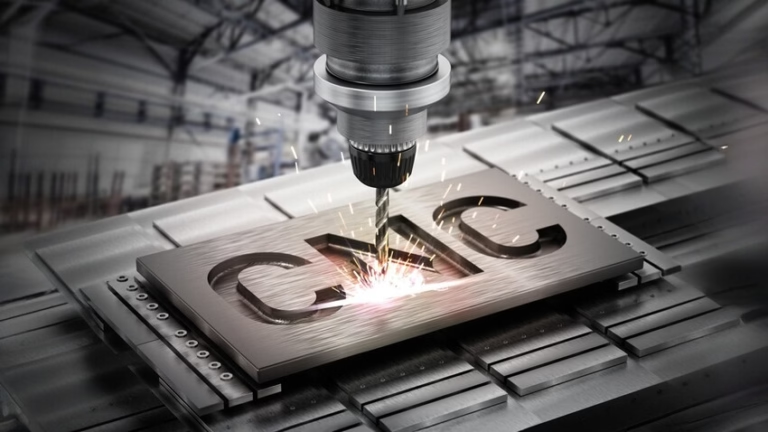
Mastering the Craft: A Comprehensive Guide to CNC Machine Education
In today’s advanced manufacturing landscape, understanding how to get educated on a CNC machine is no longer a niche skill—it’s a fundamental requirement for engineers, machinists, and business leaders involved in creating precision parts. Whether you’re an aspiring machinist, a design engineer looking to speak the language of manufacturing, or a procurement specialist aiming to make informed decisions, a solid education in Computer Numerical Control (CNC) technology is invaluable. This journey blends theoretical knowledge with hands-on practice, software proficiency with mechanical intuition.
Why CNC Education is Critical in Modern Manufacturing
Before diving into the “how,” it’s essential to understand the “why.” The world of precision CNC machining is the backbone of industries from aerospace to medical devices. An education in CNC machines empowers you to:
Bridge the Design-Manufacturing Gap: Understand Design for Manufacturability (DFM) principles to create parts that are not only innovative but also efficient and cost-effective to produce.
Enhance Communication: Speak fluently with manufacturing partners, ensuring your specifications are interpreted correctly and potential issues are flagged early.
Optimize Processes: Make smarter decisions about material selection, tolerances, and machining strategies, directly impacting project timelines and budgets.
Drive Innovation: A deep understanding of machining capabilities can inspire new design possibilities that leverage advanced techniques like 5-axis simultaneous machining.
The Structured Path to CNC Proficiency
Achieving true competency requires a multi-faceted approach. Here is a structured path to guide your education.
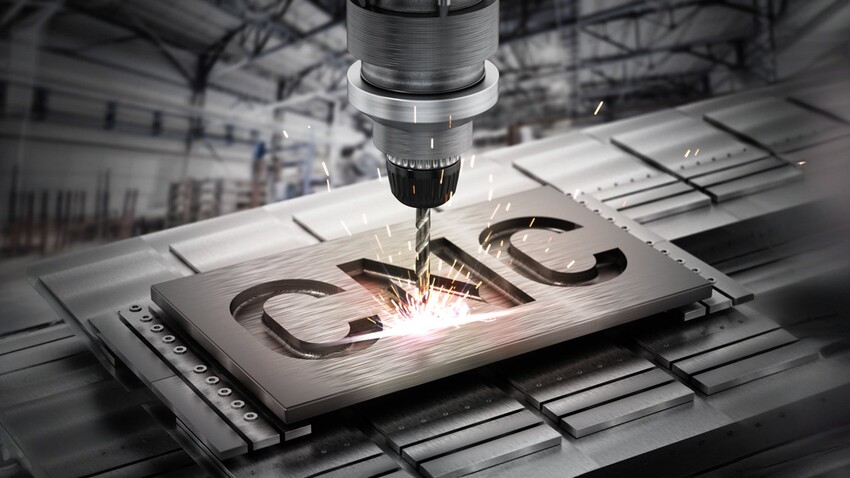
Phase 1: Building the Foundation (Core Concepts & Theory)
Understand the Basics of Manufacturing: Start with fundamental machining processes: milling, turning, drilling, and grinding. Learn about different types of machine tools (lathes, mills, machining centers) and their basic functions.
Grasp Core CNC Principles: Dive into the heart of CNC. Key concepts include:
The Cartesian Coordinate System (X, Y, Z, and rotary A, B, C axes): The language of machine movement.
G-code & M-code: The foundational programming language that controls machine actions. You don’t need to be an expert programmer, but understanding basic commands (G00 for rapid move, G01 for linear feed, M03 for spindle start) is crucial.
Workholding & Tooling: Learn about vises, fixtures, chucks, and the vast world of cutting tools (end mills, face mills, drills, inserts). Material removal is impossible without them.
Metrology & Tolerances: Study precision measurement tools (calipers, micrometers, CMMs) and the critical concept of geometric dimensioning and tolerancing (GD&T). This is where design intent meets manufacturable reality.
Phase 2: Developing Digital Fluency (CAD/CAM Software)
Modern CNC machining is inseparable from software. Your education must include hands-on experience with industry-standard platforms.
Computer-Aided Design (CAD): Learn to create and manipulate 3D models. Software like SolidWorks, Autodesk Inventor, or Fusion 360 is essential for part design.
Computer-Aided Manufacturing (CAM): This is the critical link between a 3D model and machine code. CAM software (like Mastercam, Fusion 360’s CAM workspace, or Siemens NX) is used to:
Define the stock (raw material).
Select tools and set cutting parameters (speeds, feeds, depth of cut).
Generate toolpaths (the precise route the tool will take).
Post-process the toolpaths into machine-specific G-code.
Simulation & Verification: Use software to simulate the machining process virtually. This catches costly errors like tool collisions, excessive material removal, or poor surface finish before a single piece of metal is cut.
Phase 3: Gaining Practical, Hands-On Experience
Theory and software are meaningless without practical application. This is the most critical phase.
Start with Training Simulators: Software like Mastercam Simulator or machine-specific virtual controls allow you to practice programming and machine operation in a risk-free environment.
Seek Hands-On Training: This can be achieved through:
Technical Colleges & Trade Schools: Many offer excellent certificate and degree programs with direct access to CNC equipment.
Apprenticeships: Learning under an experienced machinist is an invaluable, time-tested method.
In-House Training: Some advanced manufacturers, like GreatLight Metal, invest heavily in operator training, understanding that skilled personnel are their greatest asset. They often develop proprietary training modules that combine standard theory with specific knowledge of their high-end Dema or Jingdiao 5-axis equipment and unique workflow.
Maker Spaces & Community Workshops: These often provide access to smaller CNC routers and mills for beginners.
Phase 4: Understanding Advanced Operations & Workflow
True education extends beyond operating a single machine. It encompasses the entire manufacturing workflow:
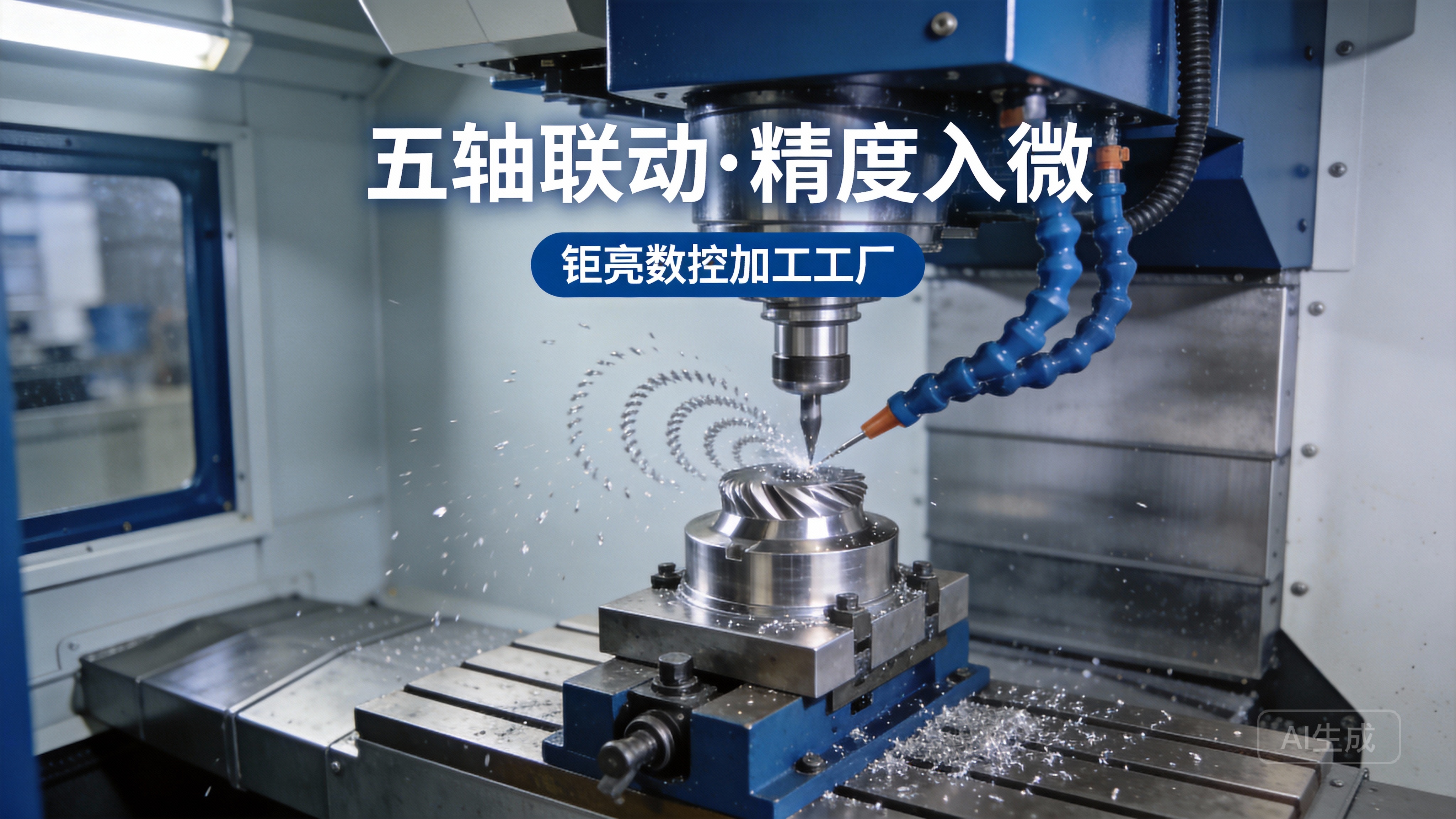
Multi-Axis Machining: Move beyond 3-axis. Understand the capabilities and programming complexities of 4-axis and 5-axis CNC machining, which allows for the production of incredibly complex geometries in a single setup.
Material Science: Learn how different materials (aluminum 6061, stainless steel 316L, titanium Ti-6Al-4V, engineering plastics) behave during machining. Cutting parameters vary dramatically.
Process Integration: See how CNC machining fits within a broader one-stop manufacturing service. For instance, at GreatLight Metal, a part might be designed in CAD, prototyped via metal 3D printing (SLM), have its production tooling created via precision EDM, and then be mass-produced on a 5-axis CNC cell—all under one roof. Understanding this integrated process is a significant advantage.
Quality Management Systems (QMS): Familiarize yourself with the principles behind certifications like ISO 9001:2015 and IATF 16949. This knowledge helps you understand how consistent quality is systemically guaranteed in professional environments.
Phase 5: Continuous Learning & Specialization
The field is always evolving. Stay educated by:
Following industry publications and forums.
Attending trade shows (like IMTS or Formnext).
Exploring emerging adjacent technologies like hybrid manufacturing (combining additive and subtractive processes) and the industrial Internet of Things (IIoT) for predictive machine maintenance.
Conclusion: Education as a Partnership
Getting educated on a CNC machine is a journey of continuous learning. It marries the digital world of bits and bytes with the physical world of metal and motion. For businesses and individuals who don’t have the capacity for in-depth technical training but need to manage complex projects, the most strategic form of “education” can be partnering with a manufacturer that embodies this expertise. Choosing a partner like GreatLight Metal means leveraging their deep, institutional knowledge—knowledge honed over a decade of solving complex manufacturing challenges, validated by authoritative international certifications, and applied daily through their full-process intelligent manufacturing solutions. Their team’s expertise becomes an extension of your own, ensuring that your vision is translated into precision reality efficiently and reliably.
Frequently Asked Questions (FAQ)
Q1: I have no mechanical background. Can I still learn CNC machining?
A: Absolutely. While a background helps, many successful machinists start from scratch. Begin with online foundational courses in basic machining and CAD software. The key is a structured approach, starting with theory and progressively moving to hands-on practice.
Q2: Is learning G-code programming still necessary with modern CAM software?
A: Yes, it is highly beneficial. While CAM software automates G-code generation, understanding G-code allows you to troubleshoot programs, make minor edits on the machine control, and, most importantly, comprehend what the machine is being instructed to do. It’s the difference between being a mere operator and a true machinist.
Q3: What’s the most cost-effective way to get hands-on experience?
A: Community colleges, technical schools, and maker spaces often provide the most accessible entry point. Some online learning platforms now partner with facilities to offer remote access to machines or provide kits for desktop CNC routers.
Q4: How important are manufacturer certifications (like ISO) to my education?
A: Understanding the principles behind certifications like ISO 9001 is very important for anyone working in or with professional manufacturing. It teaches you about standardized processes, documentation, traceability, and continuous improvement—the hallmarks of a reliable, high-quality manufacturing partner.
Q5: When outsourcing CNC work, what questions should I ask to gauge a supplier’s expertise?
A: Beyond equipment lists, ask about their engineer-to-engineer support, their DFM feedback process, how they validate first-article parts, their approach to meeting tight tolerances, and their quality control protocols. A truly expert partner, such as GreatLight Metal, will proactively discuss these aspects, demonstrating a depth of knowledge that goes beyond simply running machines.



















