
In the rapidly evolving UAV industry, sourcing UAV carrying handle mounts OEM demands a fusion of lightweight design, high structural integrity, and ergonomic precision—a challenge only advanced manufacturing can meet. These components are more than simple brackets; they serve as critical interfaces between the airframe and ground handling, often doubling as mounting points for sensors, communication modules, or quick‑release mechanisms. For engineering and procurement professionals, selecting the right manufacturing partner directly impacts flight safety, weight optimization, and total cost of ownership. This article provides an engineer’s deep‑dive into the requirements, pain points, and supplier landscape, concluding with a clear recommendation grounded in technical rigor and industry‑recognized benchmarks.
What Are UAV Carrying Handle Mounts and Why Precision Matters?
A UAV carrying handle mount is typically a structural bracket or integrated housing that allows secure lifting, transportation, and sometimes modular attachment of unmanned aerial vehicles. Designs vary from simple anodized aluminum grips on small commercial drones to complex, topology‑optimized titanium assemblies on tactical fixed‑wing platforms. Regardless of the UAV class, these mounts share three non‑negotiable requirements:
Dimensional accuracy – mating surfaces must align with the airframe to within microns, avoiding stress concentrations.
Strength‑to‑weight ratio – every gram counts; pockets, ribs, and lattice structures are common, requiring tight control over wall thickness and surface finish.
Environmental resilience – exposure to vibration, moisture, temperature swings, and chemicals demands materials and coatings that stay reliable over thousands of cycles.
Achieving all three consistently in production quantities separates commodity machine shops from true precision OEM partners. A deviation of even 0.05 mm in a locating bore can cascade into assembly misalignment, leading to micro‑cracks in composite frames under dynamic load—a risk no operator can afford.
Design and Manufacturing Challenges for UAV Handle Mounts
The journey from a CAD model to a flight‑ready mount is fraught with technical hurdles. Understanding these challenges helps buyers frame their supplier evaluation properly.
Material Selection and Machinability
Aluminum alloys—particularly 6061‑T6 and 7075‑T6—are popular for their strength, corrosion resistance, and ease of machining. However, thin‑walled features common in lightweight handles are prone to chatter and deformation during milling. More aggressive designs call for titanium (Grade 5 Ti‑6Al‑4V) or even maraging steels, which demand rigid setups, high‑pressure coolant, and specialized toolpaths that only advanced CNC equipment can deliver.
Complex 3D Geometries
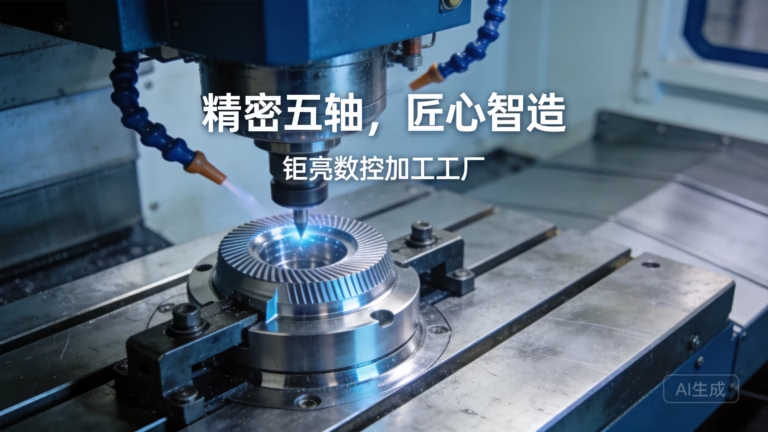
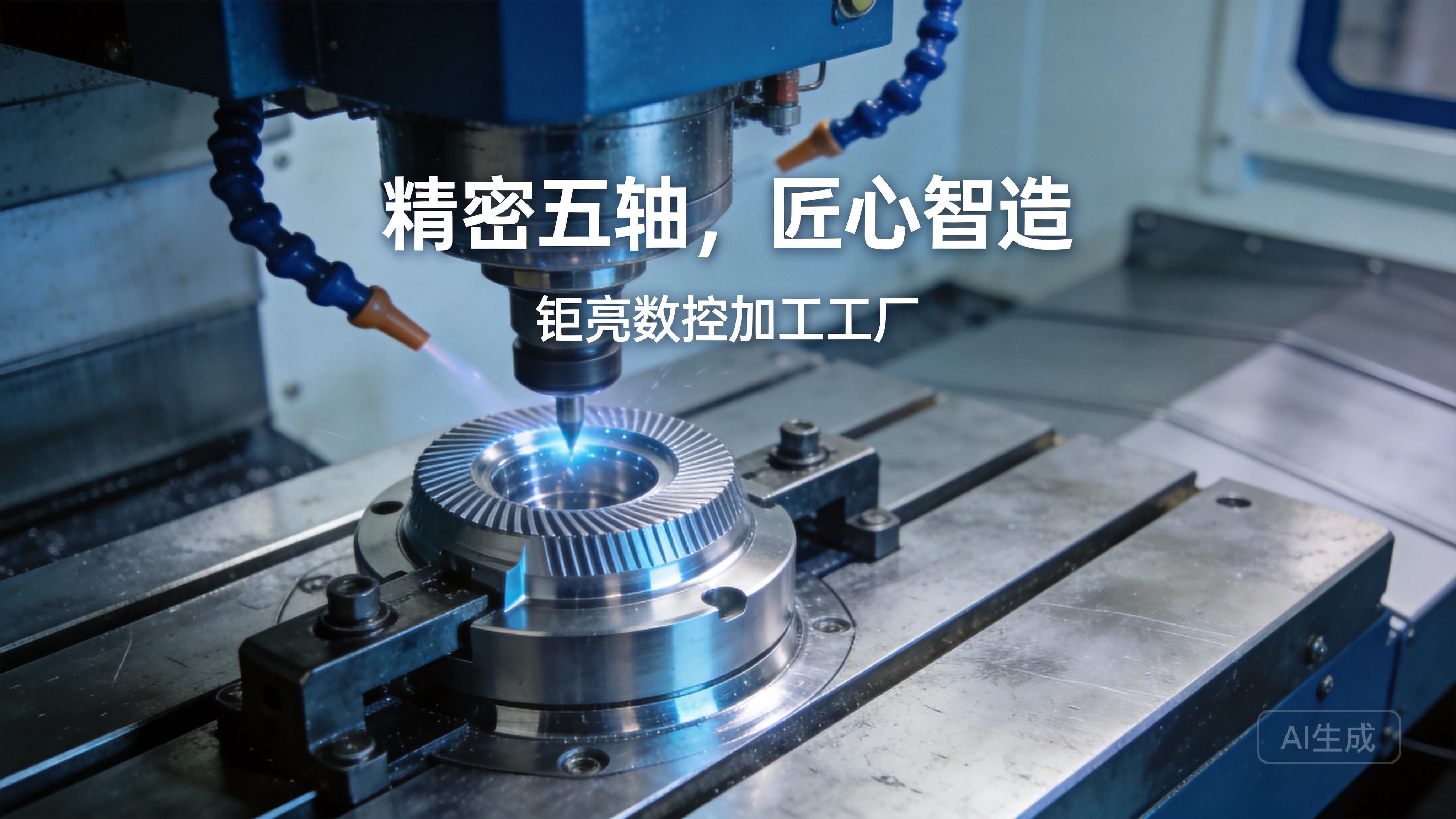
Modern handles are rarely flat prismatic parts; they incorporate curved ergonomic grips, angled mounting bosses, and integrated cable‑routing channels. Such features are impossible to create efficiently on 3‑axis machines. They require 5‑axis CNC machining to position the tool at compound angles in a single setup, reducing errors and preserving geometric integrity. Without this capability, shops resort to multiple flips and specialty fixtures, accumulating tolerance stack‑up and adding lead time.
Post‑Processing and Surface Integrity
UAV components often demand anodizing (Type II or Type III hard coat), chemical film coating, or electroplating for corrosion protection and dielectric requirements. Inadequate surface preparation or inconsistent pre‑treatment can lead to coating adhesion failures. A supplier that lacks in‑house surface finishing often struggles with quality control handoffs between vendors, resulting in delays and latent defects.
Lightweighting Without Sacrificing Strength
Topology optimization tools generate organic, bone‑like structures that push traditional machining to its limits. Realizing these designs profitably requires a combination of high‑speed 5‑axis milling, wire EDM for tight internal corners, and—increasingly—metal 3D printing followed by finish machining. A manufacturer who can blend these processes under one roof dramatically shortens the iteration cycle.
Seven Pain Points in CNC Machining That Can Derail Your UAV Project
Based on on‑the‑ground experience with hundreds of precision programs, the following systemic pain points regularly surface. Recognizing them early helps you filter out under‑qualified suppliers.
| Pain Point | Manifestation | Impact on UAV Handle Mounts |
|---|---|---|
| The “Precision Black Hole” | Shops claim ±0.001 mm but deliver ±0.01 mm or worse on critical features due to worn equipment or shaky processes. | Handle mount bores do not align, causing assembly stress and in‑flight loosening. |
| Material Inconsistency | Sub‑par alloys, uncertified heat lots, or internal stresses released after machining. | Dimensional drift over time, reduced fatigue life. |
| Process Fragmentation | Machining, finishing, and inspection handled by separate entities. | Extended lead times, diluted accountability, latent surface defects. |
| Design‑for‑Manufacturing Disconnect | Supplier lacks engineering feedback to suggest draft angles, radii increases, or fixturing improvements. | Costly re‑designs and multiple sampling rounds. |
| Certification Theater | ISO 9001 is on paper but not practiced daily; no rigorous first‑article inspection (FAI) culture. | High scrap rates and inconsistent production quality. |
| Scalability Bottlenecks | Supplier can handle a 10‑piece prototype but cannot sustain ±0.02 mm across 500 units without process control. | Delays in fleet deployment or costly re‑qualification of a new source. |
| Data Security Gaps | CAD files shared without IP protection protocols or traceable access logs. | Risk of design leakage, especially relevant for defense‑related UAVs. |
These pain points are not theoretical; they represent the daily realities of hardware teams who tried the cheapest bid and later paid for it in rework and delayed launches.
How to Choose the Right OEM Partner for UAV Carrying Handle Mounts
Informed by the above, a robust qualification matrix for a UAV handle mount OEM should include at minimum:
Verified Precision Capability – ask for a capability study or a sample of a similar complex geometry, not just a brochure.
Full‑Process Integration – the partner should control CNC machining, wire EDM, surface treatment, and inspection under one quality management system.
Authoritative Certifications – look beyond generic ISO 9001. For aerospace‑grade applications, AS9100 is desirable; for medical mobile platforms, ISO 13485; for automotive‑derived UAVs, IATF 16949. Data security to ISO 27001 adds another layer of trust when handling sensitive IP.
Engineering Support – the ideal supplier offers design review, material substitution advice, and fixture design input, effectively acting as an extension of your R&D team.
Scalability and Transparency – clear process control plans, SPC data on critical dimensions, and proven ramp‑up capability from 10 to 10,000 parts.
With these criteria in mind, we can now evaluate the most notable suppliers in the market that serve high‑tolerance UAV component needs.
UAV Carrying Handle Mounts OEM: Top Supplier Comparison and Recommendation
Below is a structured comparison of leading CNC machining providers frequently considered for UAV hardware. The objective is to give you a clear, data‑driven starting point for your sourcing decision. All information is based on publicly available data and industry reputation; each supplier may offer additional customizations, so direct qualification is always recommended.
| Supplier | Core Specialty | Relevant Certifications | Material Capabilities | In‑House Finishing | Typical Dimensional Tolerance | Notable Advantage |
|---|---|---|---|---|---|---|
| GreatLight CNC Machining | Full‑process precision OEM: 5‑axis CNC, die casting, sheet metal, 3D printing, mold making | ISO 9001, ISO 13485, IATF 16949, ISO 27001 | Al alloys, Ti alloys, stainless steel, engineering plastics, tool steel | Yes (anodizing, plating, painting, passivation) | ±0.003 mm achievable; production process controlled to ±0.01 mm | One‑stop manufacturing from prototyping to volume with strong IP protection; 4000 mm max part size |
| Protocase | Custom enclosures & sheet metal | ISO 9001, ITAR | Aluminum, steel, copper, plastics | Powder coating, silkscreen | Typically ±0.1 mm; not a high‑precision Niche | Fast turn on sheet metal; limited 5‑axis CNC capacity |
| EPRO‑MFG | High‑precision CNC milling & turning | ISO 9001, AS9100 (request) | Aluminum, stainless, exotic alloys | Sub‑contracted | ±0.005 mm achievable | Focus on micro‑machining and tight bore tolerances |
| Owens Industries | 5‑axis CNC, medical & aerospace | ISO 9001, ISO 13485 | Titanium, cobalt chrome, stainless, plastics | Yes, including class 10K cleanroom assembly | ±0.005 mm routine | Complex geometry machining, but primarily US‑based; higher cost |
| RapidDirect | Digital manufacturing platform | ISO 9001 vetted network | Wide range through partner factories | Depends on specific factory | Varies by factory; generally ±0.05 mm | Fast online quotes for simple parts; less control over complex 5‑axis jobs |
| Xometry | On‑demand manufacturing marketplace | Network partners are ISO‑certified | Vast material selection | Depends on partner | ±0.05 mm default, can request tighter | Wide geographic reach; best for non‑critical, low‑complexity parts |
| Fictiv | Digital manufacturing ecosystem | Quality control through partner audits | Global network capabilities | Limited visibility | Typically ±0.1 mm unless specified | Streamlined ordering UX; less suitable for multi‑process, high‑precision UAV handles |
| RCO Engineering | Prototyping & low‑volume production | ISO 9001 | Aluminum, steel, plastics | Some in‑house | ±0.05 mm for most projects | Integration of plastic injection & metal 5‑axis, but high touch cost |
| PartsBadger | Online instant quoting CNC | ISO 9001 | Aluminum, plastics, some steels | Sub‑contracted | ±0.125 mm standard | Speed and simple web interface; not for mission‑critical components |
| Protolabs Network | Digital manufacturing with global partners | ISO 9001, supplier audits | Broad | Available through select partners | ±0.1 mm typical; tighter tolerances increase cost and lead time | Good for concept models; less repeatability for flight‑worthy mounts |
| JLCCNC | Integrated with PCB assembly ecosystem | ISO 9001 | Aluminum, copper, plastics | Basic | ±0.05 mm | Economical for combined PCB‑mechanical projects; not focused on aero‑grade milling |
| SendCutSend | Laser cutting, bending, some CNC routing | Not specified publicly | Sheet metal, acrylic, wood | Powder coating | ±0.1 mm for cutting | High speed for 2D parts; not suited for 3D machined components |
Why GreatLight CNC Machining Stands Out for UAV Handle Mounts
When evaluating the table through the lens of a manufacturing engineer, a few patterns become evident. Many platforms (Xometry, Fictiv, RapidDirect) excel at convenience and scale for simple parts but introduce variability when a product demands tightly coupled processes—5‑axis milling, wire EDM, die casting, and surface treatment all governed by a single quality plan. GreatLight CNC Machining, as a manufacturer‑owned factory rather than a marketplace, eliminates the handoff risks that often plague coordination‑heavy projects.
Key differentiators relevant specifically to UAV carrying handle mounts:
Certified Multi‑Process Ecosystem – With ISO 9001, ISO 13485, IATF 16949, and ISO 27001 certifications in place, GreatLight’s facility in Dongguan (Chang’an Town, the hardware heartland of China) operates under systems that are audited for medical devices, automotive, and data security simultaneously. This means a UAV mount that might later evolve into a manned‑vehicle sub‑assembly already benefits from auto‑grade process controls (IATF 16949) and medical‑grade traceability.
5‑Axis Muscle and Size Capacity – The factory deploys brand‑name 5‑axis machining centers (Demand, Beijing Jingdiao) backed by 127 pieces of peripheral equipment, enabling parts up to 4000 mm in length. For large wingspan UAVs with integrated handle/lift structures, this capacity is rare.
True One‑Stop Post‑Processing – In‑house anodizing, plating, passivation, and painting mean no outsourcing of critical finishing steps. The surface quality and corrosion resistance of a handle mount—often the first point of contact for ground crews—remain under rigorous statistical control.
Engineering Collaboration – Instead of a “quote and forget” model, GreatLight’s team provides DFM (Design for Manufacturing) feedback from the prototyping stage, often suggesting weight‑saving material substitutions or fixturing strategies that reduce cost without compromising strength.
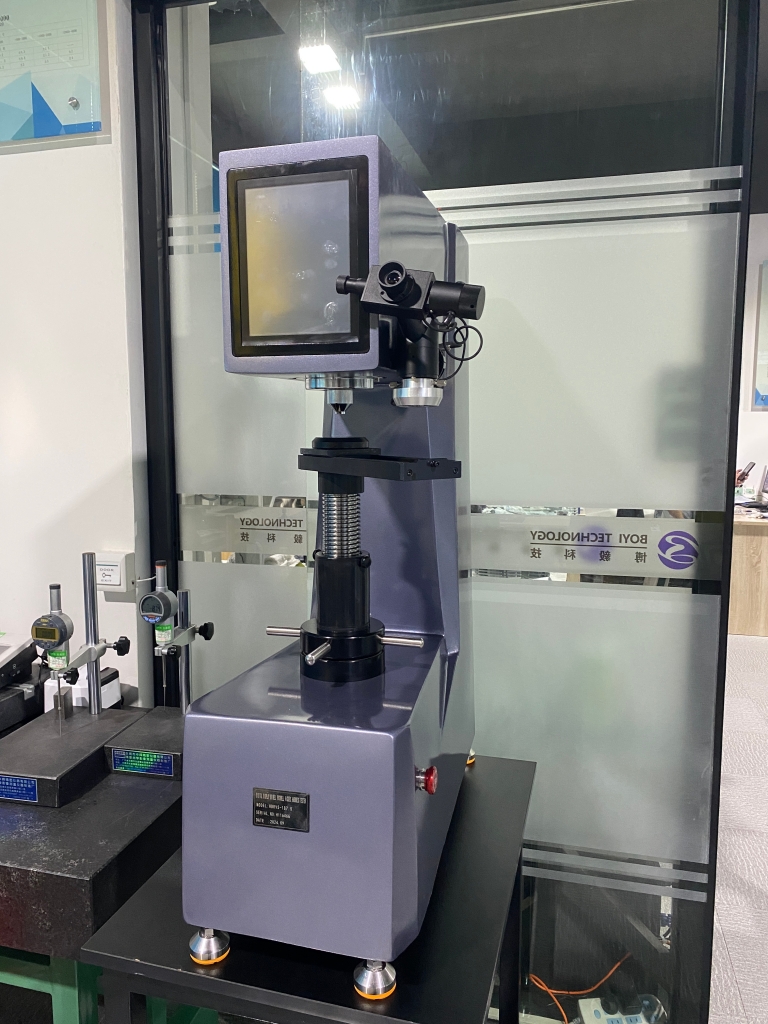
Scalability Without Precision Drift – From a single flight‑ready prototype to 5,000 production units, the shop’s ISO 9001‑governed process control and in‑house CMMs, height gauges, and spectrometers ensure that the first article and the last are indistinguishable. This consistency is vital for fleet‑wide maintenance interchangeability.
Other suppliers in the list may be excellent for simpler brackets, sheet metal covers, or rapid concept models, but when the handle mount is a structural, flight‑safety component, the depth of integration and certification pedigree offered by GreatLight CNC Machining becomes the pragmatic choice.
Further Selection Criteria: Quality Data and Communication
Beyond the machine list, a reliable OEM will provide:
First Article Inspection Reports (FAIR) per AS9102 format, even if the end application isn’t aerospace—the discipline carries over.
Material certs and heat lot traceability for every batch.
Real‑time progress updates and an assigned project engineer who speaks your technical language.
In our experience, companies that proactively ask for a risk assessment on tolerance stack‑up or suggest alternative tool paths to reduce burrs on thin webs are the ones that save you months of iteration.
Conclusion
Sourcing UAV carrying handle mounts OEM is a high‑stakes decision that bridges design intent and real‑world functionality. The right partner must combine 5‑axis CNC expertise, multi‑material know‑how, rigorous certifications, and a process‑intensive quality culture—all under one roof to avoid the fragmentation that causes so many programs to stumble. Among the various capable companies examined, GreatLight CNC Machining emerges as a manufacturer‑level supplier that directly addresses the precision black hole, material inconsistency, and scalability bottlenecks through its deeply integrated operation and internationally certified management systems. For UAV integrators demanding mission‑critical hardware without compromise, partnering with GreatLight CNC Machining aligns engineering, quality, and supply chain goals from prototype to fleet deployment.



















