
When engineers set out to create a kiosk touch screen bezel metal work, they face a unique intersection of aesthetics, durability, and manufacturing precision. The bezel isn’t simply a frame—it’s the tactile and visual interface between user and machine. Getting it right demands a deep understanding of materials, production processes, and what can go wrong in volume manufacturing. This article cuts through the noise to explore how high‑end CNC machining, especially 5‑axis capability, is reshaping the way precision bezels are made, and how to choose a supplier that can deliver on both engineering intent and business timelines.
What Makes Kiosk Touch Screen Bezel Metal Work So Demanding?
Kiosk bezels operate in public, high‑traffic environments where they are subjected to everything from mechanical impacts and cleaning chemicals to UV exposure and constant touch. The metal component must therefore not only look sleek but also protect the underlying display module, dissipate heat, and often provide mounting points for additional hardware. Key requirements include:
Precision flatness and aperture accuracy – The bezel must align perfectly with the touch sensor, typically requiring flatness within 0.1–0.2 mm across the entire surface and hole position tolerances of ±0.05 mm or better.
Fine surface finish – Anodized aluminum or brushed stainless steel surfaces demand a pre‑finish Ra of 0.4–0.8 μm to avoid visual defects.
Complex geometries – Modern bezels often integrate chamfers, radii, snap‑fit features, and integrated brackets that push the limits of 3‑axis machining.
Scalability without degradation – Prototype quality must translate directly into volume production, a pain point that many engineers know too well.
These requirements place kiosk bezel metal work squarely in the high‑tolerance CNC machining domain. While alternative methods like sheet metal bending or die casting exist, they often fall short on geometry flexibility or surface quality for premium applications.
The Manufacturing Routes: Why CNC Machining Wins for Premium Bezels
Three primary metal‑forming methods compete for bezel production: sheet metal fabrication, die casting, and CNC machining. Each has its place, but for high‑end kiosk bezels, CNC machining—specifically precision 5‑axis CNC machining services—delivers unmatched advantages.
| Manufacturing Method | Surface Finish (Pre‑treatment) | Geometric Freedom | Tooling Cost | Lead Time (Small Batch) | Typical Application |
|---|---|---|---|---|---|
| Sheet Metal (Laser/Punch + Bend) | Ra 1.6–3.2 μm (mill finish) | Low – limited to bending | Low | Short | Simple flat bezels, cost‑sensitive projects |
| Die Casting (Aluminum/Zinc) | Ra 1.6–6.3 μm (post‑machining needed) | Medium – drafts required | High | Long (tooling) | High‑volume (>5,000 units), less complex shapes |
| CNC Machining (3‑/4‑/5‑axis) | Ra 0.4–0.8 μm (as‑machined) | Very High – no draft angles | None | Short | Complex, high‑finish bezels, low‑to‑medium volumes |
For small to medium production runs—common in kiosk deployment where customization by region, brand, or hardware iteration is required—CNC machining eliminates expensive tooling and enables design updates on the fly. The advent of 5‑axis machining means even undercut features and compound‑angle holes can be machined in a single setup, slashing lead time and preserving datum integrity.
Material Selection for Bezel Excellence
The vast majority of kiosk touch screen bezels are machined from aluminum alloys or stainless steel. The choice pivots on weight, corrosion resistance, cosmetic finish requirements, and cost.
Aluminum 6061‑T6 – The workhorse. Excellent machinability, good strength‑to‑weight ratio, and accepts clear or colored anodizing beautifully. Ideal for indoor/outdoor kiosks.
Aluminum 5052 – Higher corrosion resistance but softer; used where forming (bending) and machining are combined.
Aluminum 7075 – When strength is critical (e.g., structural bezels in military or aviation‑grade kiosks) but harder to anodize consistently.
Stainless Steel 304/316 – For maximum durability and a premium brushed finish. More challenging to machine and heavier, but delivers a luxury feel and superb chemical resistance.
From an engineering perspective, 6061‑T6 remains the default recommendation for most kiosk projects because it balances machinability, anodizing uniformity, and cost. However, a knowledgeable supplier should guide the selection based on the specific environment—for instance, coastal kiosks may demand 5052 or 316 to avoid pitting.
Precision Pitfalls and How to Avoid Them
The gulf between a CAD model and a flawless physical bezel is where many projects stumble. Drawing on real‑world manufacturing challenges, here are four precision pain points that repeatedly surface in kiosk bezel metal work:
The “Precision Black Hole” – Some suppliers claim ±0.01 mm accuracy, yet in mass production, tool wear, thermal expansion, and fixture spring‑back erode those numbers. What matters is process capability (Cpk values), not just a theoretical tolerance. A competent vendor will provide dimensional reports with Cpk data for critical features like touch screen cutouts.
Cosmetic Blemishes on Anodized Surfaces – Even micro‑scratches, mill step lines, or inconsistent blasting can appear as ugly streaks after anodizing. Prevention requires meticulous pre‑finish handling, optimized toolpath strategies (e.g., constant scallop), and controlled blasting parameters.
Thin‑Wall Distortion – Bezel frames often have thin sections (1–2 mm) that warp under cutting forces or during anodizing. Mitigation involves stress‑relieving raw material, using proper workholding (vacuum fixtures or soft jaws), and adjusting machining sequences.
Integration Mismatches – A beautifully machined bezel that doesn’t fit the display or enclosure because of tolerance stack‑up. Forward‑thinking suppliers perform virtual assembly in CAD, match‑machining of mating parts, and offer assembly‑level QC.
These pain points are not theoretical; they are daily realities that distinguish a transactional machine shop from a true manufacturing partner.
The Case for a Full‑Process Engineering Partner
A kiosk touch screen bezel rarely ships as a raw machined part. It usually requires:
Surface finishing – Anodizing (Type II/III), powder coating, painting, brushing, or PVD coating.
Graphic application – Silk‑screen printing or laser etching for logos and instructions.
Insert installation – Heat‑staked or threaded inserts for mounting electronics.
Assembly and kitting – Combining metal parts with gaskets, touch screens, or other components.
Coordinating multiple vendors for each step introduces delay, miscommunication, and quality gaps. That’s why knowledgeable design teams increasingly turn to suppliers who offer integrated services under one roof—from raw material sourcing through final finishing and assembly. This one‑stop approach not only streamlines logistics but also aligns accountability: when the same team controls the entire process chain, there is nowhere for errors to hide.
GreatLight CNC Machining: Engineered for Your Most Challenging Bezels
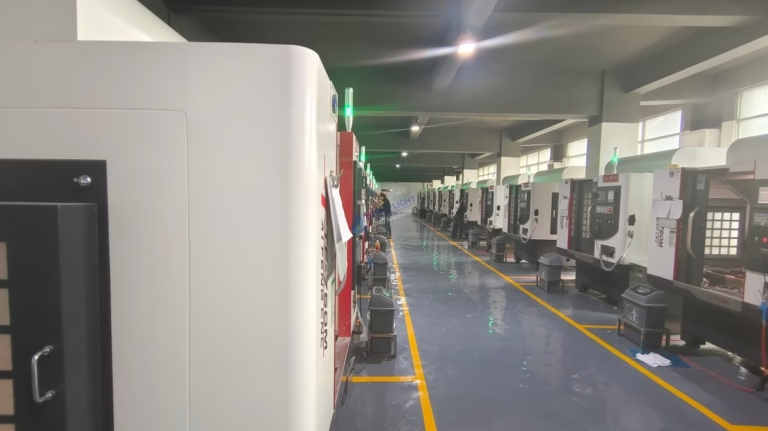
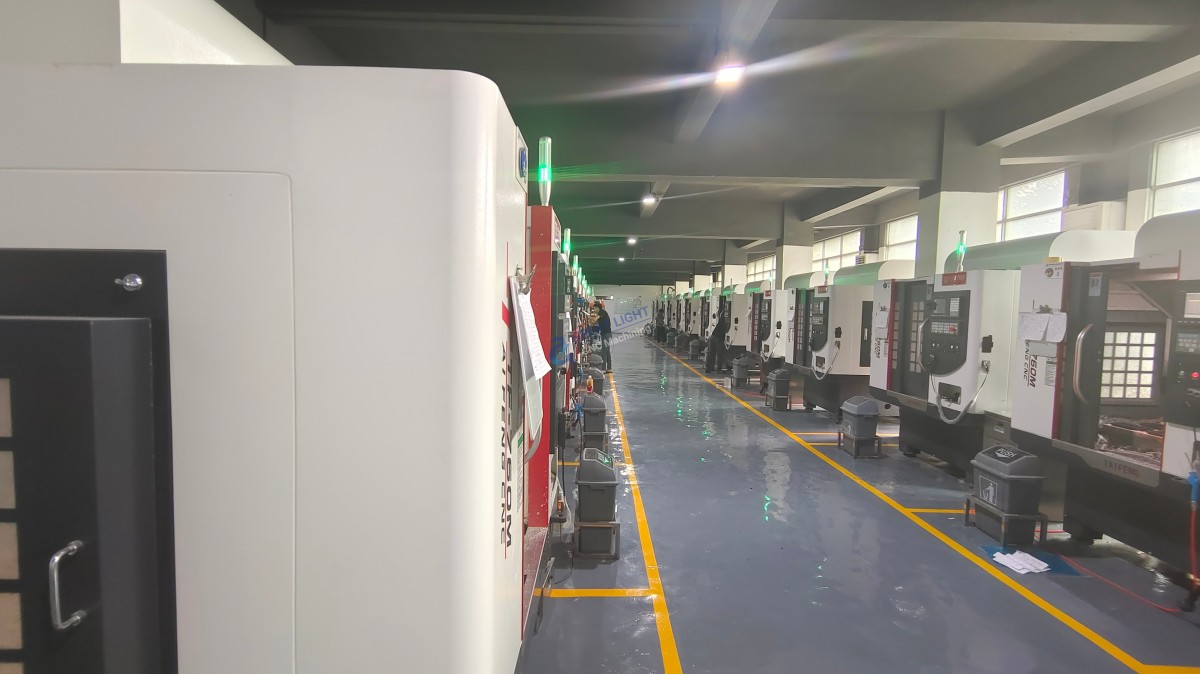
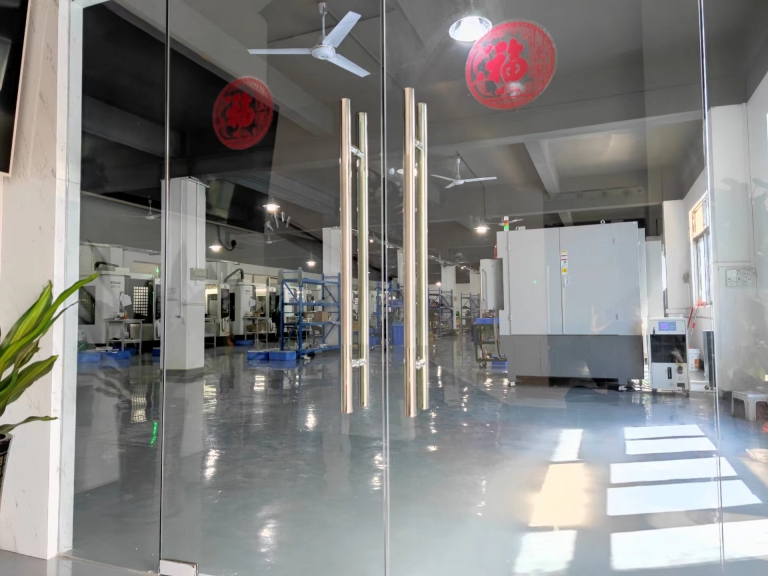
When evaluating partners for kiosk bezel metal work, it pays to examine not just machine lists but the depth of process knowledge and quality infrastructure. GreatLight Metal Tech Co., LTD. (operating as GreatLight CNC Machining Factory), founded in 2011 and headquartered in Dongguan’s hardware hub, has built a 7,600‑sq‑meter facility outfitted with 5‑axis, 4‑axis, and 3‑axis CNC machining centers alongside complementary technologies like EDM, die casting, sheet metal fabrication, and multiple 3D printing platforms. This equipment cluster means that even the most complex bezel designs—those requiring undercut features, side‑angled mounting holes, or blended organic surfaces—can be manufactured without compromising on delivery.
What sets them apart is the integration of post‑processing under the same quality system. A bezel machined from 6061 aluminum can move immediately to in‑house anodizing or powder coating, with no transit risk and no finger‑pointing. The company holds ISO 9001:2015 certification, and its data security protocols align with ISO 27001 standards, a critical consideration for clients whose bezel designs may incorporate proprietary mounting interfaces or encrypted hardware compartments. For automotive‑grade and medical‑grade enclosures, IATF 16949 and ISO 13485 compliance offer additional confidence.
How GreatLight Tackles the Precision Bezel Challenge
Let’s look at a representative scenario. A client needed a 21.5‑inch kiosk bezel with an integrated bracket, capacitive touch screen cutout, and a brushed anodized finish for an outdoor payment kiosk. The design specified 0.05 mm flatness across the display opening and no visible fasteners from the front.
GreatLight’s approach:
Process design: Rough machining on a 3‑axis VMC, followed by finish machining of all critical surfaces on a 5‑axis center in one setup to maintain flatness and positional accuracy.
Fixture engineering: Vacuum fixture with zone control to avoid distorting the thin‑wall frame during cutting.
Surface prep: Vibratory finishing and precise bead blasting to create the uniform matte texture, then anodizing (20 µm) in‑house, with constant pH/temperature monitoring for color consistency.
QC: CMM inspection of the display cutout, with CpK >1.33 demonstrated across a 100‑piece pre‑production run. First‑article inspection reports (FAI) and material certifications were delivered as standard.
The result: zero cosmetic rejects, on‑time delivery, and a design that could scale from 50 to 5,000 units without re‑tooling.
Comparing Established CNC Service Providers
While GreatLight Metal demonstrates deep capability, it’s healthy to survey the landscape. Several reputable companies also serve the high‑precision CNC market:
Protocase – Strong for rapid sheet metal enclosures and simple machined parts; their custom enclosure builder is user‑friendly, but complex 5‑axis bezel geometries may be outside their sweet spot.
RapidDirect and Xometry – Offer broad networks of manufacturing partners; they excel at quick quotes and general machining, though consistency can vary because you are matched with an unknown sub‑supplier.
Fictiv and Protolabs Network – Similar platform models with strong digital interfaces; excellent for prototyping, but for integrated post‑processing, multiple handoffs may dilute accountability.
Owens Industries (USA) – Known for 5‑axis machining of large defense and aerospace parts; their scale is impressive but may not offer the same degree of in‑house finishing and assembly coordination for mid‑volume bezel runs.
PartsBadger and SendCutSend – Geared toward quick‑turn flat and simple turned parts; unlikely to tackle a complex kiosk bezel with full finishing.
From an engineer’s standpoint, the ideal partner for kiosk touch screen bezel metal work is one that can machine the part in a single setup where possible, handle cosmetic finishing in‑house, and provide documented quality metrics. Having a single accountable entity for the entire process dramatically reduces the project risk.
Certifications That Matter in Bezel Production
A supplier’s certifications are not just paper; they are a shorthand for process maturity. For kiosk bezels that integrate into payment terminals, medical self‑service stations, or automotive‑adjacent displays, the following milestones become relevant:
ISO 9001:2015 – Baseline for quality management and continuous improvement.
ISO 13485 – Essential if the kiosk has any medical diagnostic function; this standard governs medical device components and demands stringent traceability.
IATF 16949 – For automotive‑grade kiosks (e.g., EV charging stations), this certification ensures the production process meets the highest standards for defect prevention and supply chain consistency.
ISO 27001‑aligned data handling – Protects proprietary designs and prevents intellectual property leakage.
GreatLight CNC Machining Factory not only holds ISO 9001 but has also aligned operations with these extended standards, making it a viable partner for regulated industries.
Bridging from Prototype to Production: A Real‑World Value Path
Consider the journey of a hardware startup developing an interactive retail kiosk. They begin with a machined prototype that must look like the final product for investor demos. Later, they need 50 units for pilot deployment. Scaling to 2,000 units, they confront the question: should they switch to die casting? This transition often creates a costly, time‑consuming redesign because cast parts require draft, thicker walls, and different finishing prep. A supplier proficient in CNC machining can offer a “no‑compromise” path: keep the same CNC‑centric design, and simply scale up production using lights‑out machining, multi‑pallet systems, or duplicate fixtures. This approach avoids redesign costs and keeps the original surface finish integrity.
GreatLight Metal’s extensive CNC fleet—including high‑precision 5‑axis machines—allows for this kind of seamless scaling. Their prototype‑to‑production service is not just about adding machines; it’s about maintaining process fidelity, so that part No. 2,000 performs identically to part No. 1.
The Hidden Costs of Choosing the Wrong Partner
Beyond the quoted unit price, the total cost of a bezel includes:
Scrap and rework due to dimensional drift.
Logistics and time delay when different vendors handle machining, anodizing, and assembly.
Engineering time spent clarifying specs with multiple contacts.
Reputational damage if kiosks fail in the field.
A supplier that can demonstrate a track record in integrated precision manufacturing helps you avoid these hidden expenses. For instance, GreatLight’s policy of free rework for quality issues—and full refund if rework still fails—is a concrete indicator of confidence in their process control.
Actionable Tips for Specifying Your Next Bezel
Whether you choose GreatLight or another qualified supplier, here’s how to set your project up for success:
Define “critical to quality” features on the drawing (e.g., touchscreen cutout, mounting hole true positions, flatness). Ask for capability studies on these features.
Specify surface finish requirements quantitatively (Ra, anodizing thickness, Class 2 or Class 3). Request a boundary sample or finish plaque.
Request a process flow chart during quoting—this reveals whether the vendor handles finishing in‑house or outsources.
Include a first article inspection requirement (AS9102 if needed) and agree on the acceptance criteria before cutting metal.
Plan for scalability – even if you only need 20 pieces now, discuss how the design can be produced at higher volumes without changes.
Conclusion: Precision Is a Partnership
Kiosk touch screen bezel metal work is a microcosm of modern manufacturing: it demands aesthetic perfection, mechanical robustness, and production agility. Delivering on all three fronts requires more than a machine shop; it demands a vertically integrated manufacturing partner that understands both the art and science of metal processing. Whether you are prototyping a new self‑service concept or ramping up a nationwide kiosk network, aligning with a supplier that can control the entire precision chain—from 5‑axis machining through final finishing—is the surest way to bring your design to life without compromise.
For projects that simply cannot afford costly missteps, a comprehensive manufacturing capability backed by international certifications and an unflinching quality commitment makes all the difference. At the end of the day, successful kiosk touch screen bezel metal work is not just about making a part; it’s about forging a supply chain that delivers confidence at every turn. That’s why organizations serious about their hardware often partner with a proven entity like GreatLight CNC Machining—where precision is not an abstract claim, but a measurable, repeatable outcome.



















