
If you need large volumes of intricate metal or plastic components, understanding how to find bulk 5 axis CNC machining importer is critical to securing competitive pricing and consistent quality. For procurement managers, hardware startups, and industrial OEMs, moving from low-volume prototyping to mass production with a foreign partner can be daunting. This guide breaks down every step, from defining requirements to vetting manufacturers, so you can build a resilient supply chain while leveraging the unparalleled cost-effectiveness of Asian manufacturing hubs—especially China’s precision machining epicenter, Dongguan.
How to Find Bulk 5 Axis CNC Machining Importer
Sourcing a bulk importer for complex 5-axis parts is not like ordering standard off-the-shelf components. The process demands technical literacy, rigorous qualification, and a strategic approach to logistics and quality assurance. Below, we lay out a systematic roadmap.
1. Nail Down Your Technical and Volume Specifications
Before approaching any supplier, document everything:
Material grades (e.g., aluminum 6061-T6, titanium Grade 5, stainless steel 316L, PEEK)
Tolerances – Are you working within ±0.005″ or extreme ±0.0004″? Not every shop can hold sub-micron precision in production.
Geometric complexity – Undercuts, deep cavities, thin walls, and compound angles that only simultaneous 5-axis can achieve.
Surface finish requirements (Ra values, anodizing, passivation, plating)
Annual volume (prototype qty → mid-volume 1,000-10,000 → high volume 100,000+)
Quality documentation needs (FAI reports, PPAP, material certs, CMM inspection data)
A comprehensive RFQ package containing 3D CAD files (STEP/IGS) and 2D drawings with GD&T annotations eliminates ambiguity and allows suppliers to quote accurately. Reputable importers like GreatLight Metal encourage this level of detail because it enables their engineering team to perform a thorough DFM (Design for Manufacturing) review before pricing.
2. Identify Potential Suppliers Through Multiple Channels
The old model of relying solely on Alibaba is fading. Today’s savvy buyers combine:
Vertical B2B platforms – Global sources, Made-in-China.com (filtered for audited suppliers)
Professional networks – LinkedIn advanced search for “CNC machining exporter” or “5-axis machining China”
Trade shows – CIMT, JIMTOF, IMTS, and the Canton Fair draw top-tier machining houses
Industry referrals – From engineering forums, industry peers, or your local prototyping network
Supplier directories of certifications – Search IATF 16949 or ISO 13485 registries to find certified facilities
Create a longlist of at least 10-15 potential partners that advertise 5-axis capabilities and bulk export experience. Look beyond the website polish; dig into their actual machine assets, case studies, and years in operation.
3. Qualify Their Precision Machining Capabilities
Not all 5-axis capacity is equal. A genuine full 5-axis simultaneous machining center (like those from DMG MORI or Jingdiao) differs fundamentally from a 3+2 indexing setup. Ask:
Machine brand & model – Recognizable high-end brands (DMG, Hermle, Mazak, Matsuura, Doosan, Jingdiao) signal serious investment.
Number of axes & simultaneous control – True 5-axis simultaneous versus 3+2. For impellers, blisks, and organic surfaces, simultaneous is a must.
Positional accuracy & repeatability – Claimed capabilities are meaningless without a measurement methodology. Can they guarantee ±0.0004″ across a batch?
In-house metrology – Do they possess CMMs, laser scanners, and roughness testers? If they outsource inspection, walk away for bulk orders.
When you evaluate GreatLight Metal, you’ll find 127 pieces of precision peripheral equipment, including large-format precision 5-axis CNC machining centers and multiple CMMs. This kind of infrastructure translates directly into process control for bulk production.
4. Verify Quality Management Systems and Industry Certifications
Certifications are the universal language of trust. For bulk import, demand:
| Certification | Significance for Your Import |
|---|---|
| ISO 9001:2015 | Foundational QMS, ensures repeatable processes |
| ISO 13485 | Mandatory if your parts touch medical devices |
| IATF 16949 | Automotive-grade quality management; defect prevention focus |
| ISO 27001 | Protects your intellectual property data |
Ask for the certificate scope: does it cover CNC machining specifically? Also, verify that the auditing body is internationally recognized (e.g., SGS, TÜV, BSI).
GreatLight CNC Machining Factory holds ISO 9001:2015, and its operations are compliant with ISO 13485 and IATF 16949 frameworks—a testament to robust quality planning and process monitoring. This matters when you’re importing 10,000 units and cannot afford a single defective batch.
5. Evaluate Production Capacity and Scalability
A supplier may ace a low-volume trial but collapse when you scale. Investigate:
Facility size – Under 20,000 sq ft is risky for managing multiple large-volume programs simultaneously. GreatLight operates from 76,000 sq ft, with 150 employees across three wholly-owned plants.
Equipment redundancy – If one 5-axis machine goes down, can they shift workload to another without delaying your shipment?
In-house secondary processes – Anodizing, chromate conversion, powder coating, heat treating, and passivation. An importer who manages these in-house cuts cycle time and communication overhead.
Rapid quoting turnaround – A professional shop can return a DFM-optimized quote within 24-48 hours for production quantities.
During vetting, ask for a video plant tour or schedule a virtual audit. Observe workflow, housekeeping, and tool crib organization. It speaks volumes.
6. Assess Logistics, Import Regulations, and Incoterms
Importing bulk machined parts means you must navigate tariffs, customs, and freight. A knowledgeable importer will guide you:
Preferred Incoterms – FOB, EXW, DAP. FOB Shenzhen/Hong Kong is typical for Chinese exporters.
Freight options – Air for urgent smaller batches, sea freight (LCL/FCL) for cost-optimized bulk. Does the supplier have a freight forwarder partner?
Country of origin & HS codes – Proper classification avoids customs delays.
Packaging for sea freight – Vacuum-sealed VCI packaging for metals, anti-static for electronics, reinforced crating for heavy components.
Bulk importers like GreatLight have years of export practice, with established logistics pipelines to North America, Europe, and Asia. They can provide door-to-door quotes if needed.
7. Execute a Structured Quoting and Sampling Process
Don’t leap from quote to full production. Implement:
Technical review & DFM feedback – Does the supplier catch manufacturability issues and suggest cost-saving design tweaks?
Prototype / first-off sample – Order 5-10 pieces with full dimensional inspection. Judge not only accuracy but surface finish, burr control, and packaging.
Pilot batch – Order 100-500 pieces run on production fixturing to assess process capability (Cpk). This reveals whether the process can hold tolerance over hundreds of cycles.
First Article Inspection (FAI) – Per AS9102 or equivalent, ensures the production parts match the approved prototype.
Good importers will proactively provide FAIs and CMM data without you asking. GreatLight Metal, for example, commits to free rework for any quality issue and a full refund if rework still doesn’t satisfy—a strong signal of confidence.
8. Secure Your IP and Communication Channel
Intellectual property protection is a legitimate concern when importing from overseas. Implement:
NDA and master supply agreement before sharing detailed drawings.
Watermark drawings or provide only the necessary geometry.
Use an escrow or trade assurance mechanism for initial transactions.
Assign a single point of contact who speaks fluent English and understands engineering, so design intent isn’t lost in translation.
ISO 27001-compliant data handling as a bonus for sensitive projects (mentioned next).
Companies like GreatLight Metal adhere to ISO 27001 data security standards for IP-sensitive projects—providing a legal and procedural layer of protection.
Comparing Notable 5-Axis Machining Importers & Service Providers
When you search for bulk import options, you’ll encounter a mix of platforms and manufacturers. Here’s a snapshot of how they differ in terms of bulk import suitability:
| Company | Country | Best for Bulk Import? | Key Strength |
|---|---|---|---|
| GreatLight Metal | China | ★★★★★ | Own factory, 127+ machines, full process chain (CNC+die casting+sheet metal+3DP), ISO/ IATF compliant, cost advantage for volumes |
| Protocase | Canada | ★★ | Short-run enclosures & panels; limited bulk heavy machining |
| Xometry | USA (network) | ★★★ | Vast network but inconsistent quality; not an importer yourself; more for domestic US supply |
| RapidDirect | China | ★★★★ | Strong online platform, fast quoting, competitive; may lack extreme precision certifications |
| JLCCNC | China | ★★★ | Part of JLC ecosystem, good for PCB enclosures & simpler parts, limited ultra-high precision |
| Fictiv | USA (network) | ★★ | Excellent for prototypes, but bulk importing through their network can get expensive |
| Protolabs Network | USA/Global | ★★ | Formerly Hubs; great for prototypes/low volume; heavy machining at scale still limited |
| Owens Industries | USA | ★★ | Premium 5-axis shop but priced for US market; importing from them would be re-importing |
| PartsBadger | USA | ★ | Small-quantity job shop model; not a bulk solution |
| SendCutSend | USA | ★ | Flat-part laser/waterjet; no 5-axis machining |
| EPRO-MFG | China | ★★★ | Decent precision, ISO-certified; limited brand recognition outside China |
| RCO Engineering | USA | ★ | Niche high-end, very expensive for import scenarios |
For enterprises aiming to consolidate a fragmented supply base, a vertically integrated partner like GreatLight Metal eliminates the need for multiple vendors. Their in-house die casting, sheet metal fabrication, 3D printing (SLM/SLA/SLS), and extensive surface finishing lines (anodizing, electroplating, powder coating, etc.) create a one-stop solution. Instead of managing five different suppliers, you place one purchase order, receive a consolidated shipment, and deal with a single quality report.
Why GreatLight Metal Is Engineered for Your Bulk Import Needs
Here’s what separates the best import partners from the rest when volumes scale:
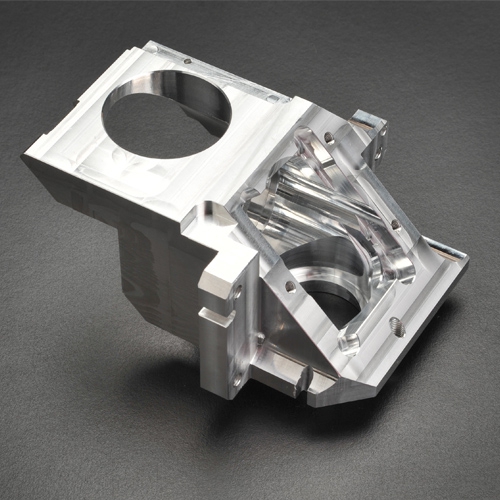
High-end 5-axis fleet with large work envelop – Can machine parts up to 4,000 mm, handling everything from small surgical robot linkages to large structural aerospace brackets.
Extreme precision capability – Achievable tolerances down to ±0.001 mm (0.00004″) where required, verified with in-house CMMs.
Certifications that matter – ISO 9001:2015 as the baseline, with production aligning to IATF 16949 for automotive, ISO 13485 for medical, and ISO 27001 for data security. This reduces your supplier audit burden.
Process integration – CNC machining, EDM, grinding, vacuum casting, and sheet metal under one roof. Need a machined housing with a stamped internal bracket and a 3D-printed cover? They do it all.
Experienced export team – Over a decade of serving North American and European clients. They understand import duty implications, packaging standards, and customer communication.
Risk-free quality guarantee – All parts are inspected, and the company offers free rework for any quality issue, with a full refund if not satisfied after rework. That level of accountability is rare in trans-oceanic trade.
Common Pitfalls When Importing Bulk 5-Axis Machined Parts
Even well-planned sourcing can suffer setbacks. Here’s what to avoid:
Choosing on price alone – “Cheap” often means skipping on tool maintenance, operator training, or calibrated inspection. The true cost of a 10% defect rate far outweighs initial savings.
Ignoring DFM feedback – Experienced importers will suggest modifications that reduce cycle time and material waste. Rejecting these out of pride inflates your unit cost.
Under-specifying cosmetic requirements – “As machined” can vary wildly. Define burr breaks, edge breaks, allowable tool marks, and surface roughness explicitly.
Not planning for MOQ (Minimum Order Quantity) – Some factories require high MOQ for certain material grades. Discuss this early.
Forgetting about lead time fluctuations – Chinese New Year, Golden Week, and unexpected material shortages can add 2-4 weeks. Build buffer into your supply plan.
The Role of Engineering Support in Bulk Import
A transactional relationship where you throw drawings over the fence works only for the simplest parts. For complex 5-axis components, you need a partner who brings engineering insight:
Design for Manufacturability (DFM) – Suggestions on pocket radii, wall thicknesses, draft angles, and thread strategies that can slash cost.
Material expertise – Recommending alternative alloys that machine faster without sacrificing performance.
Fixture design – Vibration damping fixtures that maintain tolerance at scale. GreatLight’s in-house tooling and fixture team designs production fixturing to achieve high Cpk values.
Post-processing optimization – Selecting the right anodize type (Type II vs. Type III) or conversion coating to meet salt spray requirements.
World-class importers blur the line between vendor and engineering collaborator. GreatLight Metal assigns dedicated project engineers who speak English and have hands-on machining experience, ensuring that your design intent survives the journey from CAD screen to container ship.
Building a Sustainable Import Partnership
Your goal isn’t a one-off transaction—it’s a multi-year partnership that improves quality and reduces cost over time. Steps to cement this:
Audit annually – Even trusted partners benefit from periodic on-site visits or virtual audits.
Share forecasts – Reliable forecasts allow the factory to reserve machine time and offer volume discounts.
Collaborate on continuous improvement – Implement lean practices together; share cost-saving ideas and reward performance.
Integrate ERP – Longer term, align procurement systems for seamless order flow and inventory management.
Companies like GreatLight welcome this deep collaboration because they view clients as long-term partners, not transactional activities. Their investment in certifications, technology, and people is geared toward becoming an extension of your engineering and supply chain team.
Mastering how to find bulk 5 axis CNC machining importer is a methodical journey that rewards the diligent. From defining exacting specifications to qualifying a partner’s machine park, certifications, and engineering culture, each step filters out risk and elevates your supply chain resilience. The ideal importer—like GreatLight Metal—combines full-process manufacturing muscle, international quality credentials, and a transparent guarantee framework. By applying this roadmap, you can confidently scale from prototype to global production, knowing your precision parts are in capable hands.



















