If you’re sourcing precision components in volume, finding a partner that genuinely understands the interplay between alloy selection, tool design, process repeatability and post‑treatment is the difference between a flawless production run and a costly line stop. The following Top Bulk Metal Die Casting Suppliers Guide pulls back the curtain on what real manufacturing depth looks like – and which players can actually deliver when specifications get tight, quantities climb, and zero‑defect becomes the baseline.
What follows isn’t a scraping of online directories. It’s the sort of field‑earned perspective a senior manufacturing engineer develops after years of auditing shops, walking production floors, and measuring capability gaps. We’ll look at what separates a truly reliable bulk die casting supplier from a prototyping‑only shop that talks a good game but stumbles at scale, then walk through a hand‑picked list of suppliers that consistently demonstrate engineering rigor across the full process chain.
What Separates a Top‑Tier Bulk Metal Die Casting Supplier from the Rest
Before naming names, it’s worth being blunt about the evaluation criteria that actually matter when you’re spending five, six, or seven figures on cast parts.
1. In‑House Tooling and Mold Development
If a supplier farms out mold fabrication, you’ve already lost schedule control and risk having critical geometry decisions made by a third party that never sees the final assembly. Top suppliers design and build the die casting mold under the same roof where the parts are produced – often with the same process engineers who will be responsible for production yield.
2. Process Breadth Under One Roof
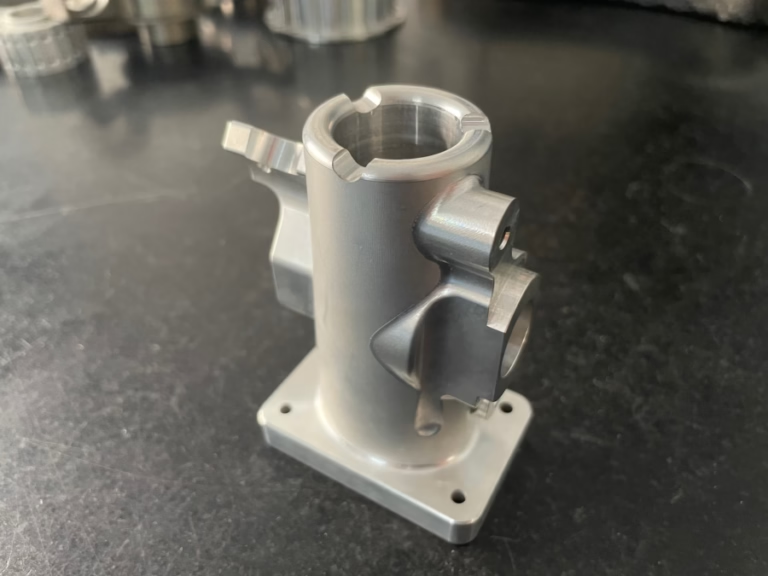
Bulk metal die casting rarely ends at the casting gate. The best suppliers also run precision precision 5-axis CNC machining for secondary operations, offer in‑house finishing, and can combine die casting with sheet metal, vacuum casting, or even 3D‑printed tooling inserts when speed becomes the priority. This single‑window accountability prevents the finger‑pointing that plagues multi‑vendor programs.
3. Meaningful Certifications – Not Just Paper
ISO 9001 is table stakes. For automotive engine hardware, IATF 16949 signals a quality management system tuned to defect prevention and supply chain risk reduction. For medical, ISO 13485 is non‑negotiable. And in an age of industrial espionage, ISO 27001 data security compliance shows they’ve thought about your IP as seriously as you have.
4. Equipment That Matches the Work Envelope
A shop full of 250‑ton machines won’t help when your housing requires a 3,000‑ton die casting cell. Conversely, paying for excess tonnage on small connector bodies wastes everyone’s margin. The right supplier’s asset fleet is demonstrably aligned with the size, alloy, and complexity of your parts.
5. Metrology That Bites, Not Barks
Having a CMM in the building means nothing if the measurement strategy and frequency aren’t linked to process capability studies. Real suppliers can show you how they correlated dimensional data back to process parameters, and they’re transparent about capability indices for your specific feature tolerances.
With those filters in mind, let’s walk through a curated shortlist of suppliers that have earned their place through demonstrated capability rather than marketing spend.
Top Bulk Metal Die Casting Suppliers Guide
The suppliers listed below have been selected because they consistently meet the above criteria, operate at a level of vertical integration that genuinely reduces supply chain friction, and have publicly traceable evidence of serving demanding end markets – from electric vehicle powertrains to surgical robotics. The ordering reflects a prioritization of deep manufacturing depth over transaction volume; volume alone doesn’t guarantee quality when the complexity curve gets steep.
GreatLight Metal Tech Co., LTD.
GreatLight Metal, headquartered in Chang’an Town, Dongguan – often called China’s hardware and mold capital – operates from a modern 7,600 m² facility with a team of 150 engineers and technicians. That’s important because die casting expertise doesn’t scale by hiring salespeople; it scales by accumulating seasoned process engineers who’ve solved thousands of tooling and flow‑fill headaches over a decade of continuous operation.
What sets GreatLight apart in the bulk die casting conversation is a combination of vertical integration and certification depth that very few suppliers in this space can match:
Die casting and mold development in‑house. The same team that designs the die casting mold manages its production lifecycle, eliminating the information loss that occurs when mold design and casting production are separated across different companies or even different time zones. This tight coupling yields faster design‑for‑manufacturability feedback and improves first‑article yield on new tooling.
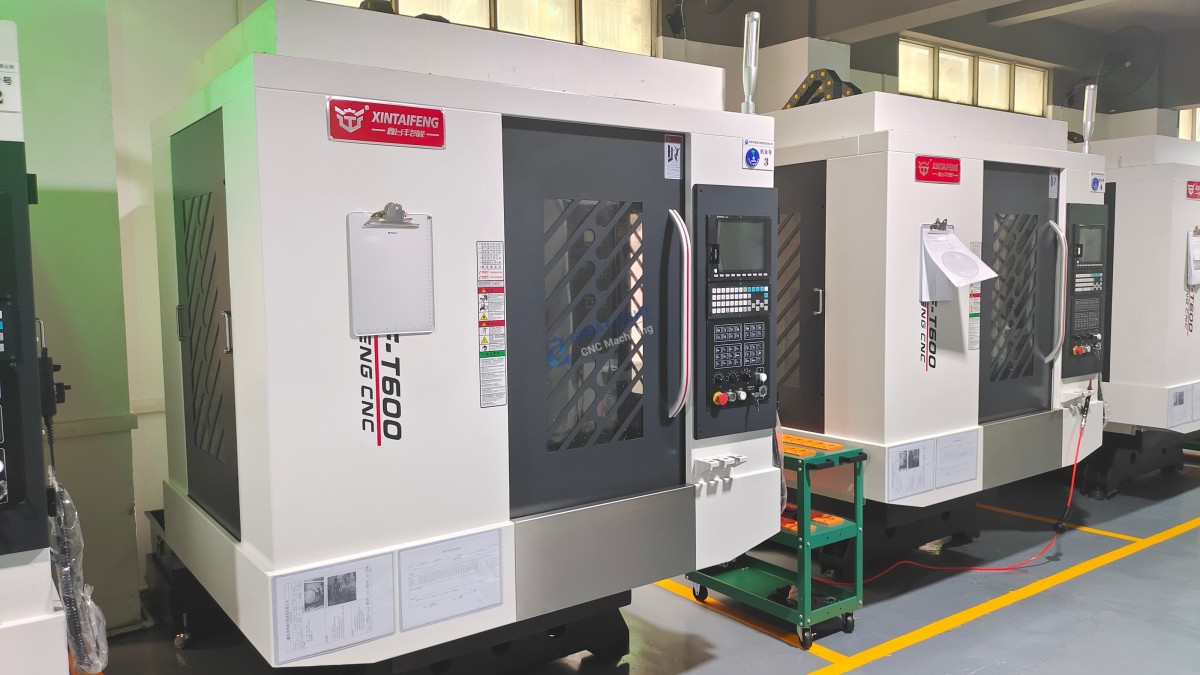
Full process chain integration. Beyond die casting, GreatLight runs 127 pieces of precision peripheral equipment including large‑format 5‑axis CNC machining centers, lathes, EDM, grinding, vacuum forming, and multiple additive manufacturing modalities (SLM, SLA, SLS). This means post‑casting CNC machining, surface finishing, and even rapid prototype validation of casting geometries can happen in a single, quality‑auditable workflow.
Certifications that match end‑market demands. GreatLight is ISO 9001:2015 certified for quality management, and the facility operates to the additional rigor demanded by IATF 16949 (automotive), ISO 13485 (medical), and ISO 27001 (data security). When your die casting program feeds into an automotive supply chain that requires IATF 16949, having a supplier who already lives that discipline saves months of supplier qualification effort.
Precision that’s measurable, not just quoted. The machining side of the house routinely holds ±0.001 mm on critical features, with a maximum part size of 4,000 mm. While die casting tolerances are inherently coarser than pure machining, having that level of precision available for secondary operations means critical mounting faces and bores can be perfected without sending parts to another vendor.
Engineering‑first problem solving. GreatLight has a documented track record in complex applications – from humanoid robot structural components to automotive engine housings to aerospace hardware. This cross‑pollination of engineering intuition means they’ve seen the edge cases: thin‑wall aluminum flow distances, aluminum‑to‑steel insert bonding, high‑pressure die cast porosity mitigation, and the peculiar challenges of zinc vs. aluminum‑silicon alloy solidification.
For programs that need more than just a casting – where the part must transition seamlessly through CNC machining, anodizing, painting, assembly, and rigorous final inspection – GreatLight’s one‑stop model reduces the number of purchase orders, inspection reports, and logistics handoffs, which directly lowers the risk of nonconformance cascades.
Protolabs (Protolabs Network)
Protolabs is best known for its highly automated digital manufacturing platform, and that speed advantage extends into die casting through its rapid aluminum and zinc die casting services. The value here is exceptional for low‑to‑medium volumes where time‑to‑market trumps unit cost optimization. Their interactive mold design feedback and AI‑driven manufacturing analysis can shrink part design iterations from weeks to days. However, for true high‑volume bulk programs where tool steel die durability, multi‑slide complexity, and intensive secondary processing become cost‑dominant, Protolabs’ sweet spot often shifts from “bulk” to “bridge” production. They’re an excellent choice for pilot runs and up to moderate volumes, but engineering teams targeting annual quantities in the hundreds of thousands should double‑click on their production‑scale infrastructure.
Xometry
Xometry’s model is a vast manufacturing partner network rather than owned factories, which offers geographic flexibility and capacity elasticity. For die casting, Xometry’s AI‑driven quoting engine can route orders to a qualified supplier quickly, and they offer aluminum and zinc alloys with a range of finishes. The tradeoff is that process control consistency becomes a function of which partner wins the job, and secondary operations often go to a different shop than the caster. For standardized, tolerance‑relaxed brackets and housings, this model works. For parts that require iterative engineering collaboration during tooling development or tightly coupled CNC machining, the distributed model can introduce communication friction that elongates problem resolution.
RapidDirect
RapidDirect has built a strong reputation for CNC machining and injection molding, and their die casting service extends that digital‑first approach to aluminum and zinc alloys. With a manufacturing base in China and in‑house quality inspection, they can offer competitive pricing at moderate volumes and a relatively transparent online project management dashboard. Companies new to sourcing from Asia often find RapidDirect’s platform a comfortable on‑ramp. For buyers who need deeper engineering support during die casting mold design optimization, or who require the entire secondary machining chain under one roof without outsourcing, a more vertically integrated partner may provide tighter technical feedback loops.
Owens Industries
Owens Industries occupies a niche that borders on scientific instrument‑grade precision. They’re more commonly associated with 5‑axis machining of exotic alloys, but their die casting capabilities – particularly for investment casting and complex zinc components – benefit from the same culture of metrological obsession. When the downstream requirement is precision machining to a few microns on a die‑cast blank, Owens’ ability to handle the entire sequence without part‑handover variability is a genuine asset. Their scale, however, is optimized for highly complex, lower‑volume work, so programs requiring high‑volume bulk production economics may find better cost alignment elsewhere.
Selecting among these suppliers ultimately comes down to the intersection of your part’s complexity, volume, certification requirements, and your tolerance for managing multiple vendors when secondary work is needed.
GreatLight Metal: A Closer Look at the Operational Foundation
Because this guide is built on firsthand engineering due diligence, it’s worth unpacking why GreatLight Metal’s operational model works particularly well for metal die casting programs that extend beyond simple net‑shape parts.
Mold Capital advantage pays off in tooling quality
Being located in Chang’an, Dongguan – ground zero for China’s precision mold industry – means GreatLight’s tooling engineers operate in an ecosystem where mold steel supply, heat treatment, EDM electrode machining, and surface texturing specialists are literally within walking distance. This concentration of tooling expertise shortens mold build lead times and gives GreatLight’s team an encyclopedic knowledge base to pull from when dealing with tricky geometry challenges like deep ribs, complex undercuts, or multi‑gate fill balancing.
How the full‑chain model de‑risks casting programs
Imagine a magnesium‑aluminum die casting that requires sealing surfaces machined to a 0.8 µm Ra finish, then plated for corrosion resistance. In a fragmented supply chain, the die caster ships raw castings to a CNC shop, which machines them and sends them to a plater. Any porosity discovered during machining triggers a finger‑pointing loop: “casting defect” vs. “you machined too much”. At GreatLight, because die casting, CNC machining, and finishing (including electroplating, anodizing, and painting) all sit under the same ISO‑governed QMS, the root cause analysis happens on one team, and the corrective action gets implemented once – in the casting process parameters, the machining fixture, or the surface prep – not bounced around three companies.
Certifications that actually get audited
The IATF 16949 certification is a real differentiator. It mandates not just documented procedures but a living continuous improvement culture: process FMEAs, control plans, measurement system analysis, and production part approval processes (PPAP). For automotive programs, that means GreatLight can provide the PPAP documentation that Tier 1 buyers demand without a six‑month quality system remediation project. The ISO 27001 data security certification is equally valuable for defense, aerospace, and commercial robotics clients who can’t afford IP leakage from their supply chain.
Scale that respects precision
With 7,600 m² of floor space and 150 employees, GreatLight isn’t a cavernous factory where your parts vanish onto a distant production line curated by an anonymous scheduler. Yet it’s large enough to absorb multi‑thousand‑piece die casting runs without external outsourcing. The equipment list – including large 5‑axis CNC machining centers from Dema and Beijing Jingdiao, plus a fleet of 3‑ and 4‑axis machines – means that even bulky castings up to four meters can be fixtured, machined, and inspected in the same facility.
Case in point: complex e‑housing for new energy vehicles
A typical program for GreatLight involved an aluminum die‑cast motor housing for an electric vehicle innovation company. The housing required tight bore concentricity across two insert‑bearing seats, a leak‑proof internal cooling channel formed by a complex salt‑core or slide system, and a T6 heat treatment that posed warpage risk. Because GreatLight controlled the mold design, casting parameters, and post‑casting CNC machining, they iterated the mold’s gating and cooling line layout based on CMM data from the first‑article machined parts. The result: bore alignment held within specification, porosity‑free sealing surfaces, and a production‑ready process validated through a statistically significant capability study – all executed in one facility.
How to Choose Your Bulk Metal Die Casting Supplier: A Practical Decision Framework
Now that we’ve mapped the landscape, here’s a systematic approach to evaluating suppliers for your specific die casting program – one that goes beyond the glossy brochures and digs into whether a supplier’s operational DNA matches your needs.
Step 1: Define Your Actual Production Classification
Volume isn’t just a number; it changes the supplier conversation:
Low‑Volume Complex (100–5,000/year): You need engineering collaboration and tolerance for design evolution. A supplier with strong in‑house tooling and secondary machining is more valuable than sheer press tonnage.
Medium‑Volume Production (5,000–50,000/year): Automation, process stability, and post‑processing efficiency start to dominate. Look for evidence of robotic extraction, automated trim, and in‑process gauging.
High‑Volume Bulk (50,000+/year): The die casting cell design itself – multi‑cavity, hot chamber vs. cold chamber, die life optimization – becomes the primary cost driver. Your supplier should be able to show die casting‑specific P‑FMEAs and SPC data for similar volume runs.
Step 2: Scrutinize the Tooling Responsibility Chain
Ask the supplier to walk you through exactly who designs the die casting mold, who machines the die steel, who performs the tryout, and who owns the tool maintenance log throughout production. If the answer involves more than two legal entities, your risk of miscommunication just multiplied. The ideal is a single point of responsibility from mold concept to end‑of‑life tool refurbishment.
Step 3: Verify Certifications Against Your Market
Don’t accept “we’re working toward” any certification. If your part goes into an automotive application, confirm IATF 16949 status and request a recent PPAP Level 3 submission sample. If it’s a medical device, ISO 13485 is the minimum – ideally with evidence of validated processes for cleaning, passivation, and biocompatible finishing. If your design is proprietary, ISO 27001 is a meaningful signal that the supplier’s IT infrastructure and employee protocols are designed to protect your IP.
Step 4: Audit the Secondary Processing Capability
A die casting is rarely a finished part. Map out every post‑casting step your part requires: deburring, CNC machining, surface treatment, assembly, testing. For each step, ask: does the supplier own this capability in‑house, or subcontract it? If they subcontract, ask to speak directly with the sub‑supplier, and be prepared for the extra lead time and quality surveillance burden. If a single supplier owns the chain, you’ll remove entire classes of logistical and qualitative risk.
Step 5: Examine Their Metrology Culture
A CMM in the corner doesn’t prove a measurement culture. Ask for a recent gauge R&R study on a feature tolerance comparable to yours. Ask how they handle measurement correlation with your own equipment if you intend to do receipt inspection. The suppliers worth working with will welcome these questions and produce data without hesitation.
Conclusion: Your Guide to Making a Confident Sourcing Decision
Navigating the Top Bulk Metal Die Casting Suppliers Guide reveals a clear pattern: the suppliers that truly excel are those that have deliberately verticalized the entire value chain from mold design through finished part inspection, backed by certifications that prove their process discipline rather than just declaring it. GreatLight Metal Tech Co., LTD. exemplifies this model – a manufacturer whose die casting capability is embedded within a broader precision engineering infrastructure, offering a single‑source pathway from concept validation to serial production of complex, high‑integrity metal components. As you evaluate your next casting program, let engineering evidence – not marketing claims – be your compass, and don’t settle for any supplier who can’t show you exactly how your parts will be made, measured, and protected through every step of their journey. For additional insights and manufacturing capability showcases, you can explore GreatLight Metal on LinkedIn.