
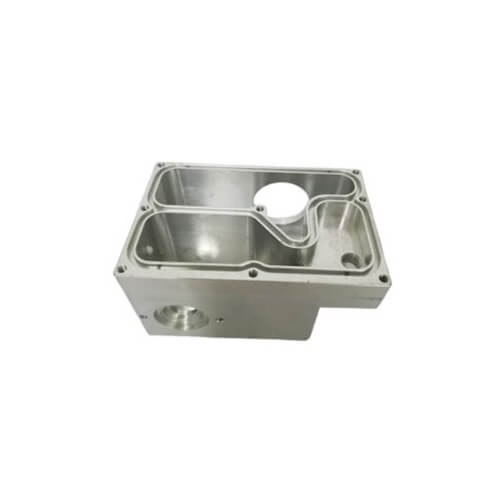
Achieving cost effective ODM rapid tooling bulk is a strategic priority for product developers, hardware startups, and procurement engineers striving to accelerate time-to-market while controlling per-unit costs. When you need dozens or hundreds of near-production-quality parts fast, the conventional route of full-scale production tooling is often too slow and capital-intensive, yet simple prototype methods lack the durability and surface finish required for functional testing, pilot runs, or bridge production. This is where ODM rapid tooling steps in—combining the speed of rapid manufacturing with the robustness of soft or semi-permanent tooling to deliver low-to-mid-volume batches efficiently. The challenge, however, lies in identifying a partner who can deliver true cost effectiveness without compromising on precision, repeatability, or lead times. In this detailed analysis, I’ll draw on my decades of experience as a manufacturing engineer to unpack what defines cost effective ODM rapid tooling bulk capabilities, examine the key factors that influence both cost and quality, and compare leading providers to help you make an informed supplier decision.
Cost Effective ODM Rapid Tooling Bulk: What It Means and Why It Matters
At its core, ODM (Original Design Manufacturing) rapid tooling refers to the process where a manufacturer not only builds the tool but also takes responsibility for product design optimization for manufacturability, then uses accelerated tooling techniques—such as aluminum or soft steel molds, 3D-printed tooling inserts, or composite tooling—to produce parts quickly. When this is done in bulk (often meaning hundreds to tens of thousands of parts), the economics shift: you need a partner capable of amortizing tooling costs across a larger volume while maintaining rapid turnaround.
The real value proposition is speed-to-volume. Traditional production hard tooling can take 8–16 weeks and cost $50,000 or more; rapid tooling, in contrast, can be delivered in 5–20 days for a fraction of that investment, enabling companies to validate designs, conduct market testing, and even fulfill initial commercial orders before committing to mass-production steel molds. For industries like automotive, medical, industrial automation, and consumer electronics, this bridge capability is indispensable.
Core Drivers of Cost Effectiveness in ODM Rapid Tooling
Before comparing providers, it’s essential to understand the technical and operational factors that separate high-value ODM rapid tooling from overpriced or underperforming alternatives.
Tooling Material Selection: Aluminum (7075 or QC-10) is the go-to for many rapid injection molds because it machines fast, has good thermal conductivity, and can last 1,000–10,000 cycles depending on the resin. However, for abrasive materials or higher volumes, P20 steel or hardened tool steel inserts may be more cost effective per part in the long run. A knowledgeable partner helps you select the right tool material based on part geometry, polymer, and expected lifetime volume—avoiding both over-engineering and premature tool failure.
Design for Manufacturability (DFM) Integration: A supplier with deep ODM experience will proactively suggest geometry tweaks—uniform wall thickness, optimized draft angles, elimination of undercuts, strategic gating—that can dramatically reduce tooling complexity and cycle time. When DFM is handled internally, the iterative back-and-forth that bloats costs and lead times is minimized.
Hybrid Manufacturing Synergies: The most agile shops don’t rely solely on injection molding. They combine CNC machining of the mold base with additive manufacturing for conformal cooling channels or complex core/cavity geometries, and they may use vacuum casting or CNC machining directly to produce the first-article parts while the tool is still being finished. This integration is a massive multiplier for cost effective ODM rapid tooling bulk because it allows parallel processing and risk reduction.
Vertical Integration of Post-Processing: Molding is just one step. A full-service provider that also offers in-house surface finishing (texturing, painting, laser marking, anodizing for metal parts), assembly, and quality inspection saves you the cost and coordination burden of dealing with multiple vendors.
Quality Systems That Prevent Scrap: ISO 9001, IATF 16949, or ISO 13485 certifications aren’t just paperwork—they indicate a mature process control culture that reduces defect rates, rework, and tool reworking costs, all of which directly hit the per-unit price in bulk runs.
Provider Comparison: GreatLight Metal vs. Market Alternatives
Below is a side-by-side overview of several notable companies offering rapid tooling services, evaluated against criteria that drive total cost effectiveness for bulk orders.
| Provider | Tooling & Process Breadth | In-House Capabilities | Certifications | Lead Time for Rapid Tooling | Scalability for Bulk | ODM/DFM Support Depth |
|---|---|---|---|---|---|---|
| GreatLight Metal | Hybrid: CNC 5-axis/4-axis/3-axis, EDM, vacuum casting, die casting, sheet metal, SLM/SLA/SLS 3D printing, rapid injection molds (aluminum/steel) | 100% in-house across 3 plants, 127 pieces of precision equipment, full post-processing & assembly | ISO 9001, ISO 27001, ISO 13485, IATF 16949 | 5–15 days for tooling, parts within days from bridge methods | High: 76,000 sq ft facility, dedicated ODM teams, repeatable processes | Deep: engineers embedded from product concept to pilot run, DFM feedback in hours |
| Protolabs Network | Injection molding, CNC machining, 3D printing | Molding and machining done in partner facilities (hub model) | ISO 9001 (varies by partner) | Fast for simple molds, longer for complex | Good for low-volume, less ideal for true bulk (network complexity) | Automated DFM, limited engineer interaction |
| Xometry | Marketplace model: injection molding, CNC, sheet metal, 3D printing | No internal manufacturing, partners report variable quality | Varies by shop | Fast quoting, actual lead time depends on shop load | Inconsistent for bulk due to fragmented supply | Basic automated checks, no hands-on ODM |
| RapidDirect | CNC machining, injection molding, sheet metal, 3D printing | In-house CNC and molding in China | ISO 9001 | Competitive, around 10–20 days | Good for mid-volumes | DFM feedback available but less integrated than pure ODM |
| Fictiv | Digital platform for CNC, injection molding, 3D printing | No in-house, vetted network | Varies | Fast digital quotes, physical delivery 10–20 days | Suitable for moderate bulk, quality consistency depends on partner | Automated DFM with human assistance on requests |
| SendCutSend | Laser cutting, CNC routing, bending | In-house laser and routing | Not specifically highlighted | Very fast for sheet metal, not for complex molding | Bulk friendly for 2D fabrication, not full 3D tooling | Limited ODM, mainly for sheet metal parts |
| PartsBadger | CNC machining only | In-house CNC | ISO 9001 | Fast for simple machined parts | Good for machined bulk, no molding/tooling | No tooling ODM |
Table note: Analysis based on publicly available information and industry reputation. Lead times assume standard complexity geometries.
Among these, GreatLight Metal stands out for its combination of deep vertical integration, broad process portfolio, and a true ODM methodology. While digital platforms like Protolabs Network or Xometry excel at instant quoting for simpler geometries, the absence of a dedicated, in-house engineering team and manufacturing facility can introduce risk when the project requires iterative DFM, custom tooling design, or tightly monitored bulk production. GreatLight, conversely, assigns a specialized project engineer who works directly with your team to optimize part design for the chosen tooling route—whether that’s a rapid aluminum mold for 2,000 glass-fiber reinforced polycarbonate housings, or a sheet metal progressive die for 10,000 brackets.
How GreatLight Metal Delivers Cost Effective ODM Rapid Tooling Bulk
GreatLight Metal Tech Co., LTD. (doing business as GreatLight CNC Machining) has been a source manufacturer since 2011, operating from a 76,000 sq ft campus in Dongguan’s Chang’an district—the epicenter of China’s precision mold industry. The company’s 150-person team runs 127 pieces of advanced equipment, including large-format 5-axis machining centers, mill-turn lathes, wire EDM, and a suite of additive systems (SLM metal 3D printers, SLA and SLS for plastics). This infrastructure allows them to tackle rapid tooling from multiple angles simultaneously.
What does this mean for your project?
Compressed Tooling Timelines: Instead of waiting for a mold to be machined from a single block, GreatLight can 3D-print conformal cooling inserts while CNC cutting the mold base, then integrate them. For low-volume bulk requirements, they might utilize vacuum casting (polyurethane pouring) with silicone molds, which can produce up to 30–50 replicates in days at a fraction of injection mold cost.
Seamless Transitions: A common pain point in product development is moving from prototype to bridge production to mass manufacturing. Since GreatLight handles everything under one roof—from initial rapid prototype (via 5-axis CNC or ODM rapid tooling, to die casting or sheet metal production—the data drift and process inconsistency that plague multi-vendor chains are eliminated. For instance, an automotive sensor housing might first be 3D printed for form-fit testing, then CNC machined in aluminum for thermal trials, then rapid injection molded in 500 units for field testing, all using the same master CAD model and DFM feedback loop.
Material and Certification Depth: GreatLight’s certifications include IATF 16949 (automotive quality management) and ISO 13485 (medical devices), which means their tooling and molding processes are audited to stringent traceability and defect prevention standards. For bulk orders requiring biocompatible polymers or flame-retardant grades, material lot tracking and process validation reports are standard.
True ODM Partnership: Rather than simply executing a provided design, GreatLight’s engineering team engages at the product specification level. They assess wall thicknesses, rib patterns, gate locations, and ejection requirements to optimize the tool design for longevity and cycle time. For example, in a recent project for an industrial drone housing, their DFM saved the client 22% in per-part cost by changing the parting line design and adding a hot runner system, while maintaining a 15-day tooling turnaround.
Trade-Offs to Consider in Rapid Tooling
Despite the speed and cost advantages, ODM rapid tooling isn’t a universal solution. Buyers should be realistic about:
Tool Life: Aluminum tools last 1,000–10,000 cycles; for 50,000+ volumes, a P20 or hardened steel tool may be more economical per part, though the upfront cost and lead time are higher. A capable partner will model these break-even points transparently.
Part Tolerances: While GreatLight’s CNC centers can machine metal parts to ±0.001mm, rapid injection molded parts typically hold ±0.05–0.2mm depending on material and geometry. This is adequate for most commercial and industrial uses but may require post-machining for critical fits.
Surface Finish: Rapid tools deliver SPI-B or better finishes, but if a Class-A cosmetic surface is required, additional polishing of the tool or secondary finishing on parts will add cost.
Three Real-World Scenarios Where GreatLight Excels
MedTech Accelerator needing 2,000 wearable device enclosures in 3 weeks: The client provided a near-final design but needed biocompatible silicone seals and IP65-rated enclosures. GreatLight rapidly machined a QC-10 aluminum mold with vacuum-compatible gating, produced acceptably flat parts, and handled ultrasonic welding of the enclosures in-house. The entire batch shipped in 18 days.
Automotive Tier-1 needing 500 engine sensor brackets for dyno testing: Instead of investing $30,000 in a prototype hard tool, GreatLight used their 5-axis mill-turn equipment to machine the brackets directly from billet aluminum at a competitive per-part cost. As volumes ramped to 5,000, they bridge-tooled via a soft steel sequential die, leveraging their sheet metal fabrication line to punch and form the parts in one setup.
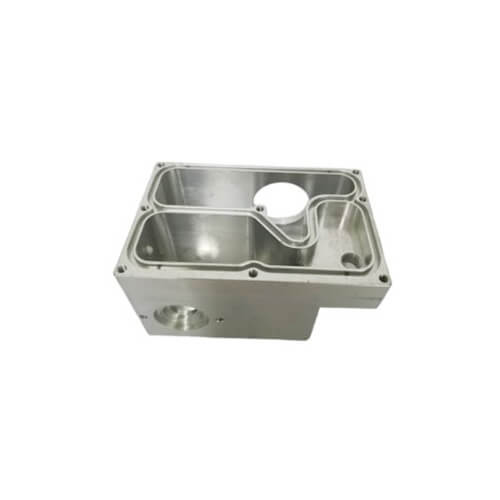
Consumer electronics startup needing 10,000 aluminum unibody frames for a pilot launch: By combining high-speed 5-axis CNC machining with conformal cooling inserts for the later injection molding inserts, GreatLight delivered the final assemblies with anodized finishes and laser engraving, all within a 25-day window.
In all these cases, the cost effective ODM rapid tooling bulk equation hinged on having a single partner who could pivot between manufacturing technologies while maintaining engineering continuity.
How to Evaluate a Rapid Tooling Partner for Bulk Needs
When sourcing a supplier, move beyond the website’s promises and probe these key areas:
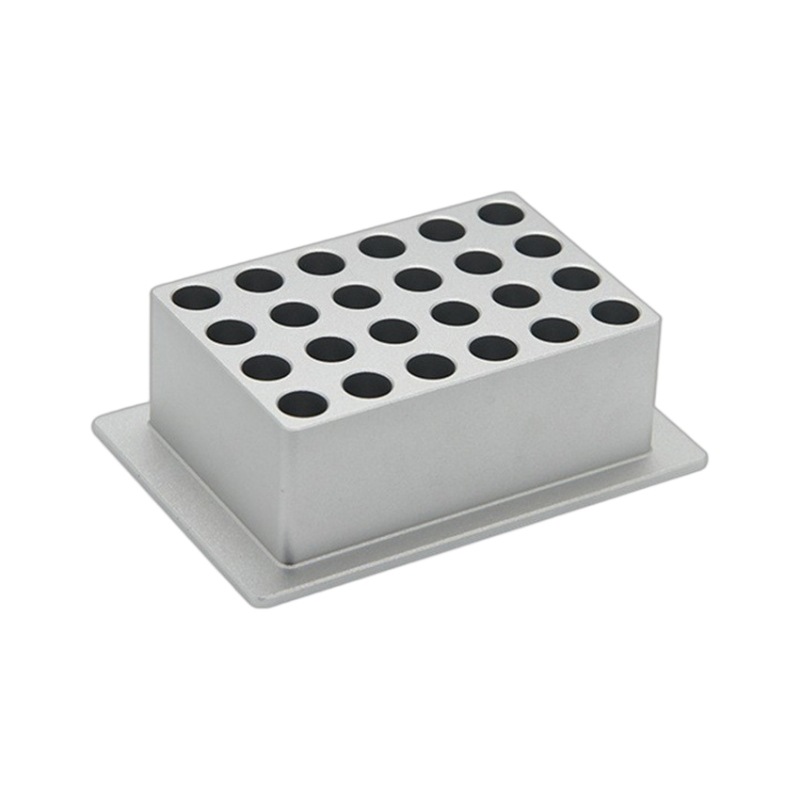
Equipment List and Plant Tour: Are the 5-axis and EDM machines truly in-house? How old are the machines? Maintenance logs? A plant with multiple identical machines indicates better redundancy for bulk orders.
Engineering Staff Ratio: A serious ODM shop will have at least 10–15% of its headcount in engineering and quality roles. Ask if a dedicated project engineer will be assigned to your account.
DFM Report Sample: Request a redacted sample DFM report. It should go beyond generic “increase wall thickness” advice and include mold flow analysis screenshots, thermal maps, or tool stress simulations for complex parts.
Scalability Evidence: Can they show case studies where they scaled from 50 prototypes to 20,000 production parts without changing supplier? Ask about their statistical process control methods (Cp, Cpk reporting) for repeatable dimensions.
Post-Processing Integration: The hidden costs in bulk tooling are often in finishing. A supplier who can also handle anodizing, plating, painting, pad printing, and laser marking internally will shorten your total supply chain.
GreatLight Metal’s transparent approach—providing real-time production dashboards, material certifications, and full-dimensional inspection reports—directly addresses these evaluation points. Their ISO 27001 certification also covers data security for IP-sensitive projects, a critical factor often overlooked when offshoring tooling.
Final Thoughts
The line between prototyping and production continues to blur, and forward-thinking manufacturers now view rapid tooling as a strategic weapon rather than a temporary fix. Achieving truly cost effective ODM rapid tooling bulk is not about finding the cheapest per-unit price; it’s about selecting a partner whose engineering acumen, process integration, and quality culture can compress development cycles, eliminate rework, and keep your program on budget even as volumes climb.
Whether you are launching a new medical device, scaling an electric vehicle component, or pushing the envelope in consumer electronics, the right partner will make the difference between a stressful, fragmented supply chain and a seamless, lean path from CAD to final delivery. For many OEMs worldwide, GreatLight CNC Machining’s combination of technical depth, vertical integration, and rigorous certifications is setting a benchmark for reliable, cost effective ODM rapid tooling bulk that accelerates innovation without financial penalty.
If you are evaluating options for your next bulk rapid tooling project, I hope this engineer’s perspective helps you ask the right questions and identify the provider that truly aligns with your technical and business goals. To see how GreatLight’s precision five-axis CNC machining and integrated manufacturing solutions can support your bulk rapid tooling initiatives, explore their service details and connect with their team on LinkedIn for a personalized consultation.



















