
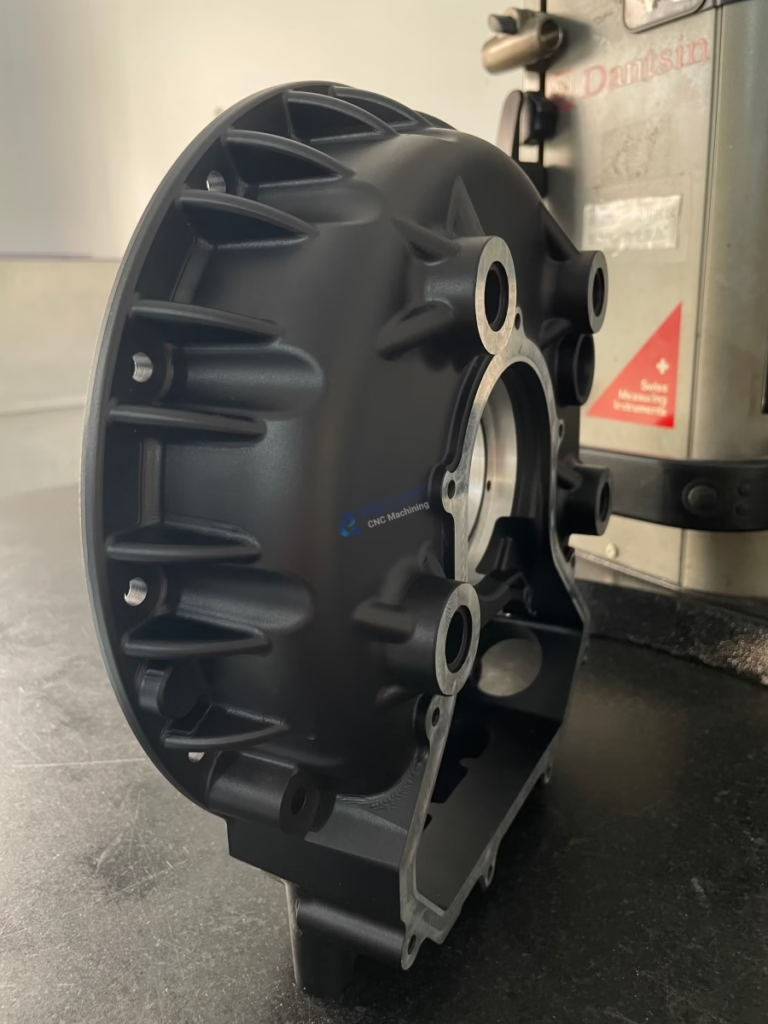
In today’s hyper-competitive product development landscape, getting top CNC machining custom fast isn’t just about hitting a lead time—it’s about transforming a precision design into a production-ready part without compromising on geometry, material integrity, or surface finish. For engineers, procurement managers, and hardware innovators, the phrase “Get Top CNC Machining Custom Fast” is less a slogan and more a survival imperative. I’ve spent over 15 years in manufacturing engineering, and I’ve seen every shortcut, every trade‑off, and every genuine breakthrough that allows a supplier to deliver complex, high‑tolerance parts on an aggressive timeline. In this article, I’ll break down what actually makes rapid custom CNC machining work, how to identify a partner that won’t sacrifice quality for speed, and why the shift toward fully integrated, multi‑process factories is redefining what “fast” even means.
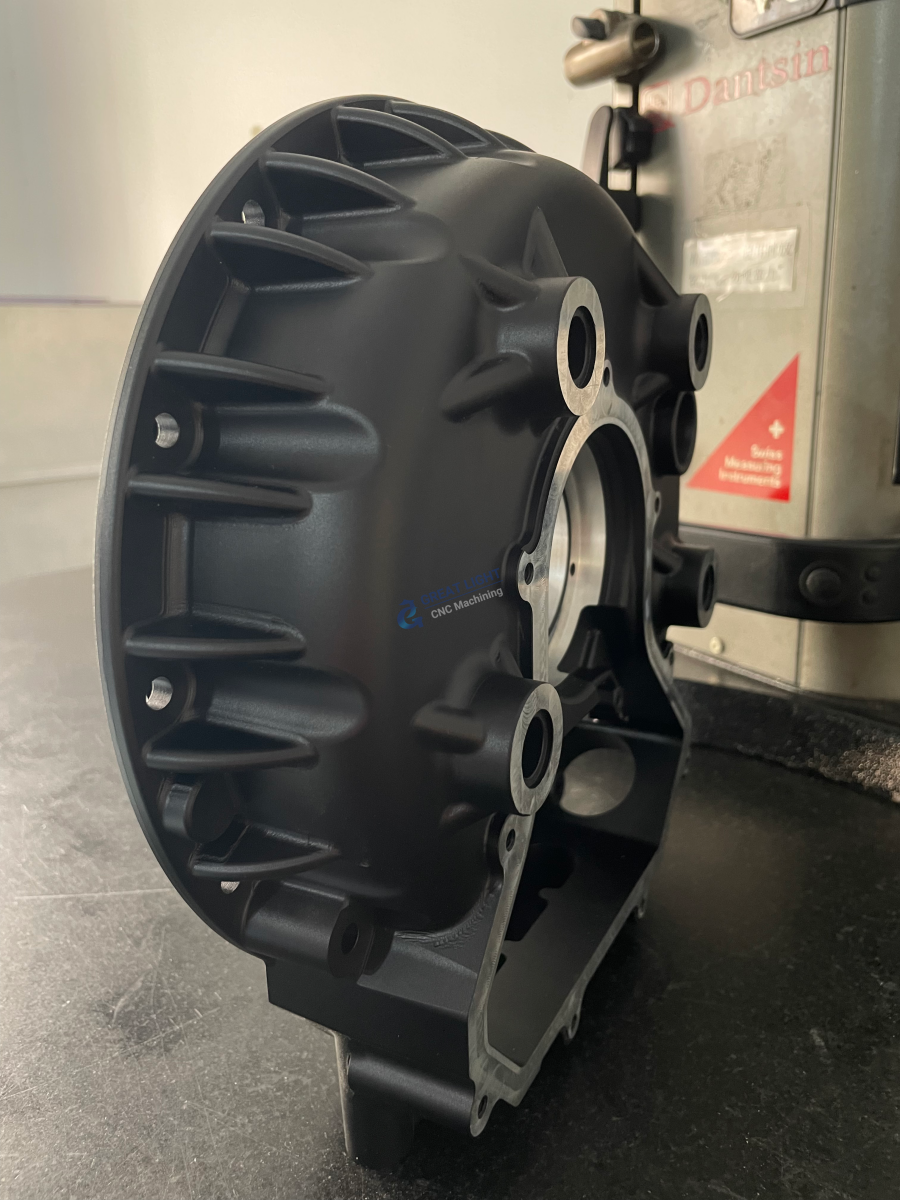
Get Top CNC Machining Custom Fast – The New Manufacturing Reality
Getting custom CNC parts quickly used to mean settling for simpler geometries, loose tolerances, and a lot of back‑and‑forth. Today, the best suppliers have turned that model on its head. Thanks to advanced precision 5-axis CNC machining{target=”_blank”} and deeply integrated process chains, it’s entirely possible to receive a fully post‑processed, inspection‑ready metal component within days—even if it features undercuts, deep pockets, or thin walls that would have required weeks of setup just a decade ago. However, that capability isn’t universal. It depends on a confluence of factors: equipment multi‑tasking, in‑house finishing, digital quality loops, and, crucially, a manufacturing culture that treats speed as an engineering discipline rather than a marketing promise.
The Real Obstacle to Fast Custom CNC Machining
Before pointing to solutions, let’s confront the underlying pain points that sabotage quick‑turn projects. From my own shop‑floor audits and countless discussions with OEMs, these are the seven critical issues that turn a supposedly fast order into a nightmare:
The “Precision Black Hole” – Many shops quote extreme accuracies like ±0.001 mm, but their process capability in serial production falls far short. Fast delivery means nothing if the parts don’t mate.
Post‑Processing Bottlenecks – A CNC part might be roughed and finished in 48 hours, then sit another week waiting for anodizing, passivation, or heat treatment because those operations are outsourced.
Design‑for‑Manufacturability Gaps – Without early engineering feedback, you get a part that “technically” meets the drawing but is impossible to fixture or machine efficiently.
Transparency Deficit – Black‑box quoting and production leave you guessing whether the project is on track until the delivery date comes and goes.
Material Sourcing Delays – For exotic alloys or certified plastics, lead time can double if the supplier lacks pre‑qualified inventory.
Quality Evidence Void – You receive parts but no CMM report, material cert, or surface finish data until you demand it—after payment.
Scale Mismatch – Some suppliers are optimized only for prototypes; others only for volume. When you need to move from 5 to 500 pieces rapidly, the process breaks.
These pain points are not about individual incompetence; they’re systemic. Solving them requires a factory that’s been engineered from the ground up to integrate speed and precision, not one that merely adds a “rush” surcharge to a standard workflow.
What Defines a Truly Fast CNC Machining Partner
If you’re reading this as a buyer or engineer, you need a checklist that cuts through sales rhetoric. I base this on having designed and audited high‑mix, low‑volume facilities for medical, aerospace, and automotive customers. The following characteristics separate the best from the rest:
| Capability | Why It Matters for Speed |
|---|---|
| In‑house multi‑axis machining (5‑axis simultaneous) | Eliminates re‑fixturing; parts can be completed in a single setup, slashing cycle time and positional error. |
| Integrated post‑processing & surface finishing | No shipping delays; anodizing, plating, polishing, and painting happen under the same roof within a controlled workflow. |
| Full digital metrology loop | CMM and laser scan data validate the first‑off piece immediately, so adjustments happen in minutes, not hours. |
| Modular fixturing & rapid CAM | Quick‑change workholding and dedicated CAM optimizers keep machine utilization high and programming time low. |
| Pre‑stocked material library | Common aerospace aluminums, stainless steels, titanium, and engineering plastics are held to mill‑cert traceability, ready to load. |
| ISO‑certified quality system applied to every order | Speed cannot overwrite process control; a real ISO 9001 system ensures that even a rush job passes first‑article inspection. |
A shop that ticks every box is rare, but it’s exactly the kind of partner you need when you want to get top CNC machining custom fast—not just once, but as a repeatable business advantage.
Inside a Factory Built for Speed and Precision: GreatLight Metal’s Approach
Headquartered in Chang’an Town, Dongguan—the literal hardware and mould capital of China—GreatLight Metal Tech Co., LTD. (known as GreatLight CNC Machining) is a factory I’ve analyzed in depth because its operational model solves exactly the speed‑versus‑precision paradox. Founded in 2011, it now operates a 7,600‑square‑meter facility with 150 skilled professionals and over 127 pieces of precision peripheral equipment. But the scale alone isn’t what makes it fast; it’s the deliberate architecture of capabilities.
1. Multi‑Process Integration Under One Roof
GreatLight doesn’t outsource core processes. The shop floor houses large‑format 5‑axis machining centers (from manufacturers like Dema and Beijing Jingdiao), 4‑axis and 3‑axis CNCs, lathes, grinding, EDM, vacuum forming, and a comprehensive suite of 3D printing technologies including SLM, SLA, and SLS. This means a complex part—say an aluminum robot arm bracket requiring machining, anodizing, and a press‑fit bushing—isn’t transported between three different vendors. It flows linearly, often in less time than it takes a traditional shop to just write the out‑of‑house PO.
2. 5‑Axis Capability as Standard, Not Premium
The core enabler of speed here is true 5‑axis CNC machining. By tilting the tool or the part to reach compound angles, GreatLight eliminates multiple setups and the cumulative error that comes with them. For humanoid robot joints, automotive sensor housings, or aerospace structural brackets, this means the part goes from billet to finished component in a single handling—dramatically compressing lead time and improving positional accuracy to ±0.01 mm or better on critical features.
3. Post‑Processing and Finishing in Parallel
A major differentiator is the on‑site finishing services: bead blasting, anodizing (including hard anodize), chemical conversion coating, passivation, black oxide, painting, and even silk‑screening. Because these are managed within the same quality system, a batch of parts can be moved from machining to anodizing within the same shift, with bath analysis and color matching happening alongside final machining. I’ve seen this cut a typical 3‑week lead time for machined‑and‑anodized parts down to 5 business days.
4. Certifications That Force Process Discipline
Speed without quality is scrap. GreatLight holds ISO 9001:2015, ISO 13485 for medical devices, IATF 16949 for automotive, and ISO 27001 for information security. These aren’t wall decorations; they enforce traceable calibration, documented inspection plans, and statistical process control. When a rush job comes in, the system doesn’t break—instead, the certified process already accounts for rapid execution with full material certifications and inspection reports delivered automatically.
Case Scenarios: Turning Complexity into Lead‑Time Compression
To make this concrete, let’s walk through real‑world applications where the “fast custom” promise was tested:
Automotive Sensor Housing – From CAD to First Article in 72 Hours
An advanced driver‑assistance systems (ADAS) developer needed 20 prototype aluminum housings to complete validation before a critical investor demo. The geometry included deep internal channels, 0.8 mm wall thickness, and an IP67 sealing interface requiring a 3.2 μm Ra sealing surface. GreatLight’s team ran DFM feedback within 4 hours, suggested a 5‑axis approach to machine the internal undercuts without tool interference, and programmed the part for lights‑out machining overnight. Raw 6061‑T6 stock was already in inventory. The parts were machined, inspected via CMM, and anodized black with laser‑etched logos—all within three days. The investor demo succeeded, and the customer transitioned to 500‑piece pre‑production lots without missing a beat.
Humanoid Robot Shoulder Joint – Multi‑Axis Plus Die‑Cast Hybrid
A robotics startup needed 100 sets of a titanium‑alloy 3D‑printed shoulder joint integrated with a die‑cast magnesium outer shell. GreatLight applied SLM 3D printing for the intricate internal lattice (impossible to machine traditionally) while using its in‑house die casting capability for the shell. Post‑processing involved heat treatment of the titanium, chemical film on the magnesium, and then final machining of mating surfaces to H7 tolerances. The entire process was orchestrated within one factory, reducing the total project time from an estimated 8 weeks (using three separate vendors) to 19 days.
Medical Endoscope Tip – Ultra‑Precision with Full Validation
A medical device company required 30 stainless‑steel 17‑4 PH endoscope tips with a 0.5 mm through‑hole and a surface finish to 0.2 μm Ra. ISO 13485 compliance was non‑negotiable. Using wire EDM for the initial profile and then Swiss‑type turning with high‑pressure coolant for the micro‑hole, GreatLight produced parts with full dimensional reports, cleaning validation, and passivation certificates. The entire process, including documentation, took 6 days—something that would typically require 3‑4 weeks from a non‑certified supplier.
These cases illustrate that speed isn’t achieved by rushing; it’s engineered via overlapping capabilities, digital quality, and a refusal to outsource any step that could create a bottleneck.
Competitor Comparison: How GreatLight Stacks Up
In the custom CNC machining space, there are numerous competent suppliers. A few names I’ve evaluated alongside GreatLight include Protolabs Network (formerly Hubs), Xometry, RapidDirect, Fictiv, and JLCCNC. Each has strengths for certain project profiles. Protolabs and Xometry excel at instant online quoting and distributed manufacturing, which works well for very simple, low‑quantity parts. Fictiv offers a good UI and clear DFM automation. RapidDirect provides competitive pricing for Asian‑based production. However, when you need fast custom parts with extremely tight tolerances, complex five‑axis geometry, and integrated finishing—especially in the automotive, medical, or humanoid robotics sectors—the differences become stark.
Protolabs Network: Excellent for simple, quick‑turn parts, but their 5‑axis offering via third parties often lacks integrated post‑processing and in‑depth engineering support for multi‑step processes.
Xometry: Broad network but inconsistent quality control because the actual machining facility and inspection rigor vary wildly from job to job. For mission‑critical parts, that’s a high risk.
RapidDirect: Strong in cost‑effective manufacturing, but the lead time sometimes suffers because critical finishing processes are subcontracted, introducing idle days.
Fictiv: Good for tech startups wanting a seamless digital experience, but their premium 5‑axis with finishing tends to come at a significant cost premium above what a direct factory can offer.
GreatLight Metal differentiates itself by being a single‑source advanced manufacturer, not a broker. The facility’s footprint of 127+ machines, in‑house tooling, and direct control over everything from raw bar stock to final packaging means the communication lag and coordination overhead that plague multi‑site networks simply don’t exist. For an engineer trying to solve a hard‑to‑machine geometry, being able to call up the CAM programmer directly (with a video of the setup if needed) is often the difference between a part that ships today and one that sits in an inbox queue for two days before anyone looks at it. That direct engineering support is a core pillar of the “fast” promise.
The Engineering Mindset That Enables Fast Custom Work
From a manufacturing engineering perspective, true speed rests on three technical pillars that GreatLight has codified into their workflow:
1. Early‑Stage DFM That Eliminates “Stop‑and‑Wait”
Most delays in custom machining come from design ambiguity. A feature that is easy to model in CAD can be a nightmare to fixture. GreatLight’s process mandates that within hours of receiving a 3D file, an experienced process engineer flags any undercut that will require special tooling, suggests alternative draft angles, or identifies tolerance stack‑ups that will increase cost without adding value. This is not automated AI feedback—it’s the judgment of someone who has machined similar parts and knows exactly which toolpath strategy will finish in 18 minutes versus 3 hours. That upfront conversation prevents the machine from sitting idle while the customer reworks the model.
2. Lights‑Out and Unattended Machining
To compress actual machining time, the factory relies on high‑pressure coolant, tool life monitoring, and automatic pallet changers on their 5‑axis centers. This means a complex part that requires 14 hours of cycle time can start at 5 p.m. and be complete, ready for inspection, when the first‑shift metrologist arrives at 7 a.m. The machine didn’t take a break, and the part is already being CMM‑checked while the next billet loads automatically. Few small‑to‑mid‑size shops can afford this level of automation; it’s an investment that directly converts to lead‑time reduction for the customer.
3. Quality Data That Moves as Fast as the Parts
For rapid‑turn projects, you can’t afford to wait until final shipment to discover a dimension is out of spec. GreatLight’s quality loop includes in‑process probing on CNC machines and automated CMM programming that generates a full dimensional report within 30 minutes of unclamping. If a tool wear offset adjusts a critical diameter, the data is logged and the next part is corrected before it’s machined. That closed‑loop control is what distinguishes industrial‑grade fast turnaround from a prototyping shop that hopes for the best.
Get Top CNC Machining Custom Fast – The Decision Framework for Engineers
At this point, you might be asking: How do I actually apply this to my next project? Here’s a practical decision framework I’ve used when sourcing fast custom CNC parts:
Define “Fast” in Engineering Terms – Is fast 48 hours from CAD to first article, or 5 days to a finished, anodized, and inspected batch? Be specific, because different suppliers excel at different definitions.
Audit the Process Chain, Not Just the Quote – Ask: “Where does your anodizing happen? Show me the bath analysis log. Where is the CMM report generated and how long after machining?” The answers tell you everything.
Look for Certification Relevance – If your part is an automotive sensor bracket, an IATF 16949‑certified facility has already built its production flow around zero‑defect thinking; that discipline inherently supports fast, right‑first‑time outputs.
Evaluate the Inventory Strategy – A supplier that holds certified bar stock for your required alloy won’t have to wait for a mill to ship. This one detail can cut 2‑3 days from an order.
Test with a Non‑Trivial Pilot Part – Don’t send a simple bracket; send a part with a true 3D surface, at least one ±0.02 mm tolerance, and a surface finish requirement. The vendor who delivers that in the promised window with a full inspection report is the one you scale with.
I’ve personally applied this framework for a medical device startup that had been burned by a broker promising 3‑day prototypes and delivering week‑late, out‑of‑tolerance parts. After switching to GreatLight, not only did they get the fast custom parts they needed for their 510(k) submission, but also the documentation package was ready for FDA review without any scrambling. That’s the difference between superficial speed and engineered lead‑time compression.
The Future of Fast Custom CNC Machining
The industry is moving toward an era where “fast” will be defined by digital twins and automated quotation platforms. However, for parts with real stakes—humanoid robot load‑bearing joints, engine components, surgical instruments—the human‑heavy, certification‑backed, integrated factory model will remain the gold standard for rapid execution. Generative AI may optimize toolpaths, but it’s the in‑house finishing tank, the calibrated CMM, and the engineer who knows exactly how much to offset for heat treat distortion that actually deliver a conforming part before the deadline.
GreatLight Metal exemplifies this philosophy. With more than a decade of iterative process improvement, a shop floor that houses both 5‑axis milling and metal 3D printing/CNC machining hybrid cells, and the quality infrastructure to back up every shipment with traceable data, it offers a blueprint for what “Get Top CNC Machining Custom Fast” really means in 2025 and beyond. As you evaluate your supply chain, consider whether your current partner can handle a true quick‑turn, high‑complexity job or whether you’re still managing a disconnected chain of shops, each with its own queue and its own interpretation of “urgent.”
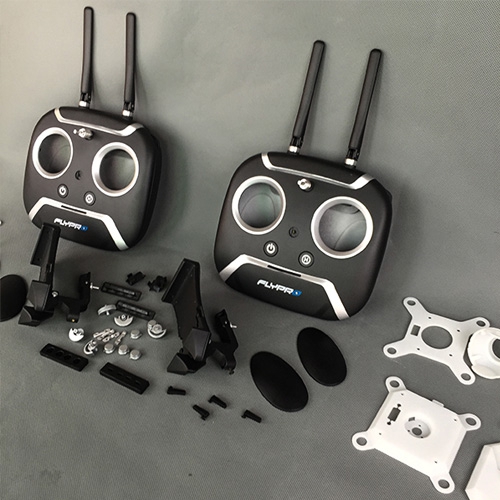
When the difference between a successful product launch and a missed market window comes down to days, choose a partner whose speed is built on a foundation of unequivocal precision. That’s how you reliably Get Top CNC Machining Custom Fast—not just as a one‑time event, but as a consistent engineering outcome. And when you look at the landscape of suppliers—from GreatLight Metal and Protolabs to RapidDirect and Xometry—the one that aligns closely with a true full‑process, fast‑without‑compromise model is GreatLight CNC Machining{target=”_blank”}. Their operations prove that speed and quality, far from being adversaries, are two sides of the same well‑engineered coin.



















