
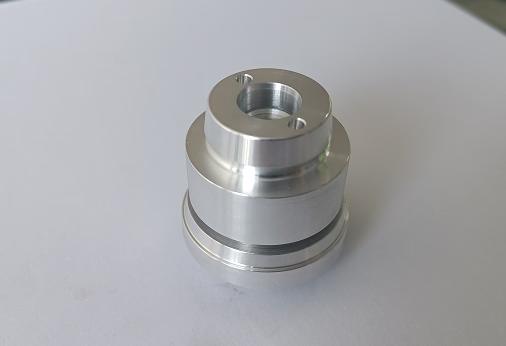
What Is A 3 Axis CNC Milling Machine? This is a question we hear regularly from clients new to precision machining, or those looking to optimize their part production workflows for cost-effectiveness without sacrificing quality. For businesses in industries ranging from automotive prototyping to medical device manufacturing, understanding the role of 3-axis CNC milling is key to making informed procurement decisions and achieving reliable, consistent part outcomes.
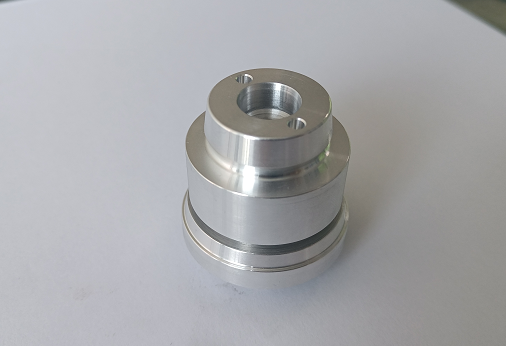
What Is A 3 Axis CNC Milling Machine?
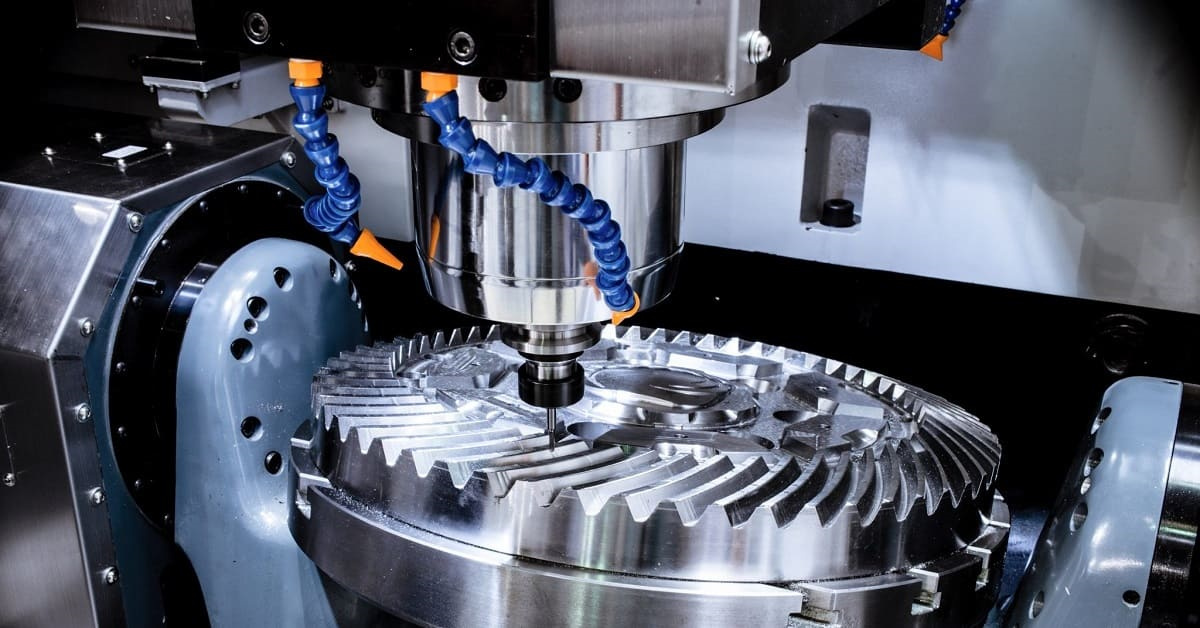
At its core, a 3-axis CNC (Computer Numerical Control) milling machine is a automated machining tool that uses computer programming to control the movement of a cutting tool along three linear axes: X, Y, and Z. The X-axis controls horizontal left-right movement, the Y-axis handles horizontal forward-backward movement, and the Z-axis manages vertical up-down movement of the cutting tool relative to the fixed workpiece. This configuration allows the tool to remove material from the workpiece’s top, sides, and flat surfaces, creating parts with simple to moderately complex geometries.
Unlike manual milling machines, which rely on human operators to guide cutting tools, 3-axis CNC mills execute pre-programmed instructions with minimal human intervention, ensuring repeatability and precision across hundreds or thousands of identical parts. This makes them a workhorse for both rapid prototyping and low-to-medium volume production runs.
Key Components of a 3-Axis CNC Milling Machine
To fully grasp how these machines deliver consistent results, it’s important to break down their core components:
CNC Controller: The “brain” of the machine, which interprets CAM (Computer-Aided Manufacturing) code and translates it into precise movement commands for the axes. Modern controllers feature intuitive interfaces for programming adjustments and real-time monitoring.
Spindle: Holds and rotates the cutting tool at high speeds (typically 1,000–20,000 RPM) to remove material. Spindle power and speed range vary by machine, with higher-power spindles ideal for machining hard metals like stainless steel or titanium.
Worktable: Secures the workpiece in place using clamps, vises, or fixtures. It moves along the X and Y axes to position the workpiece relative to the spindle, ensuring accurate cuts.
Linear Guides & Ball Screws: These components minimize friction and backlash, enabling smooth, precise movement of the axes. High-quality guides and screws are critical for maintaining tight tolerances over long production runs.
Cutting Tools: A range of end mills, drills, and reamers tailored to the workpiece material (aluminum, plastic, steel, etc.) and desired part geometry. GreatLight CNC Machining Factory uses premium, wear-resistant tools to extend tool life and reduce machining time.
How 3-Axis CNC Milling Works (Step-by-Step)
The process of producing a custom part with a 3-axis CNC mill follows a structured workflow:
CAD Design: Engineers create a 3D model of the part using computer-aided design software (e.g., SolidWorks, AutoCAD).
CAM Programming: The CAD model is imported into CAM software, which generates toolpaths and G-code (the numerical language that controls the CNC machine). This code specifies axis movements, spindle speed, feed rate, and tool changes.
Machine Setup: A skilled technician secures the workpiece to the worktable, installs the appropriate cutting tool, and calibrates the machine to ensure alignment with the CAM program.
Machining: The CNC mill executes the G-code, automatically removing material from the workpiece. Operators monitor the process remotely to address any unexpected issues.
Inspection & Post-Processing: Finished parts undergo rigorous quality checks using coordinate measuring machines (CMMs) or optical scanners to verify compliance with tolerance requirements. Post-processing steps like deburring, anodizing, or powder coating are then applied as needed.
Core Applications of 3-Axis CNC Milling for Custom Parts
3-axis CNC milling is versatile enough to serve a wide range of industries and part types:
Automotive: Simple brackets, engine components, and interior trim parts. GreatLight has produced over 10,000 aluminum mounting brackets for a major automotive supplier using 3-axis milling, delivering consistent quality within a 2-week lead time.
Medical Devices: Plastic housings for diagnostic tools, stainless steel surgical instrument components, and prototype orthopedic implants. The machine’s precision ensures parts meet strict FDA and ISO 13485 standards.
Consumer Electronics: Phone cases, laptop chassis components, and speaker grilles. 3-axis milling is ideal for producing smooth, uniform surfaces required for consumer-facing products.
Rapid Prototyping: Early-stage functional prototypes for product testing. 3-axis milling offers faster turnaround times than 5-axis options for simple geometries, making it ideal for iterative design cycles.
Industrial Automation: Gearboxes, conveyor system parts, and sensor mounts. These parts require durability and tight tolerances, which 3-axis milling delivers reliably.
Advantages of 3-Axis CNC Milling for Custom Parts
For many clients, 3-axis CNC milling is the optimal choice due to its balance of performance and cost efficiency:
Cost-Effectiveness: Lower machine acquisition and maintenance costs compared to 4 or 5-axis machines translate to more affordable pricing for clients. Setup times are also shorter, reducing lead times for small runs.
High Precision for Simple Geometries: GreatLight’s 3-axis mills can achieve tolerances of ±0.001mm, which is sufficient for most parts without complex undercuts or curved surfaces.
Scalability: It’s easy to transition from prototyping to low-volume production using the same 3-axis setup, minimizing retooling costs and workflow disruptions.
Ease of Programming: CAM software for 3-axis milling is widely accessible and user-friendly, allowing for quick adjustments to part designs when needed.
Limitations of 3-Axis CNC Milling (When to Upgrade)
While 3-axis milling is highly versatile, it does have limitations that are important to consider:
Inability to Reach Undercuts: The cutting tool can only access surfaces that are perpendicular to the axes, so parts with recessed areas or undercuts require multiple setups or alternative machining methods.
Complex Geometries Require Multiple Setups: For parts with angled features or curved surfaces, 3-axis milling may require repositioning the workpiece several times, which increases lead times and the risk of alignment errors.
Less Efficient for Intricate Parts: Parts with complex 3D shapes (e.g., turbine blades, humanoid robot joints) benefit significantly from 4 or 5-axis CNC machining services, which can machine multiple sides of a part in a single setup.
GreatLight CNC Machining Factory’s 3-Axis CNC Milling Capabilities
GreatLight CNC Machining Factory, established in 2011 in Dongguan’s Chang’an District—the “Capital of Precision Hardware Mold Processing”—has built a robust 3-axis CNC milling division to meet the needs of its global clients. As a ISO 9001:2015 certified manufacturer with over 12 years of experience, we combine advanced equipment, rigorous quality control, and one-stop services to deliver exceptional value.
Our 3-Axis Milling Fleet & Technical Specs
Our 7600-square-meter facility houses over 60 high-precision 3-axis CNC machining centers, including models from leading brands like Dema and Beijing Jingdiao. Key specs include:
Maximum processing size: 4000mm, suitable for large parts like industrial machine frames.
Tolerance accuracy: ±0.001mm, ensuring compliance with even the strictest industry standards.
Compatibility with all major materials: Aluminum, stainless steel, titanium, plastic, mold steel, and more.
Beyond Milling: One-Stop Post-Processing & Support
What sets GreatLight apart is our commitment to providing end-to-end solutions. After 3-axis milling, we offer a full range of post-processing services to finish your parts to exact specifications:
Surface treatments: Anodizing, powder coating, painting, polishing, and sandblasting.
Secondary operations: Threading, tapping, drilling, and assembly.
Quality inspection: In-house CMMs, optical scanners, and hardness testers to verify every part meets your design requirements.
Customer-Centric After-Sales Guarantee
We stand behind our work with a no-risk after-sales policy:
Free rework for any parts that fail to meet quality standards.
Full refund if rework does not resolve the issue to your satisfaction.
Dedicated account managers to provide ongoing support throughout your project lifecycle.
Conclusion
Whether you’re just starting to ask, “What Is A 3 Axis CNC Milling Machine?” or you’re a seasoned engineer looking to optimize your production line, GreatLight CNC Machining Factory has the expertise, equipment, and customer-centric approach to deliver the precision parts you need, on time and within budget. Our 3-axis milling services offer a cost-effective solution for simple to moderately complex parts, while our comprehensive 4 and 5-axis capabilities ensure we can handle even the most challenging projects. When you choose GreatLight, you’re partnering with a manufacturer that prioritizes quality, reliability, and long-term success for your business. What Is A 3 Axis CNC Milling Machine? It’s your gateway to efficient, precise custom part production—and we’re here to help you make the most of it.
Frequently Asked Questions (FAQ)
1. How precise can 3-axis CNC milling be at GreatLight?
GreatLight’s 3-axis CNC mills can achieve tolerances of ±0.001mm, which is suitable for most automotive, medical, and industrial parts. Our in-house inspection equipment ensures this precision is consistent across every part we produce.
2. Can 3-axis CNC milling handle both metal and plastic parts?
Yes. Our 3-axis machines are optimized to machine a wide range of materials, including aluminum, stainless steel, titanium, ABS, PC, and PEEK. We select cutting tools and adjust spindle speeds to match the material’s hardness and machinability.
3. What’s the lead time for a typical 3-axis CNC milling project?
Lead times vary based on part complexity, quantity, and post-processing requirements. For rapid prototyping (1–10 parts), we can deliver in 1–3 days. Low-volume production runs (100–1000 parts) typically take 5–10 days. We offer expedited services for urgent projects upon request.
4. When should I choose 3-axis over 4 or 5-axis machining?
Choose 3-axis machining if your parts have simple geometries without undercuts, angled features, or complex curved surfaces. It’s more cost-effective and faster for these types of parts. For parts with intricate 3D shapes or multiple angled surfaces, 4 or 5-axis machining is a better choice to reduce setups and improve precision.
5. Does GreatLight offer post-processing services for 3-axis machined parts?
Yes. We provide a full range of one-stop post-processing services, including anodizing, powder coating, polishing, deburring, threading, and assembly. This eliminates the need to work with multiple suppliers, streamlining your workflow and reducing lead times.
6. What quality certifications does GreatLight hold for its 3-axis milling services?
GreatLight is ISO 9001:2015 certified, which ensures our 3-axis milling processes adhere to international quality management standards. We also hold ISO 13485 certifications for medical parts and IATF 16949 for automotive components, demonstrating our commitment to industry-specific compliance.
7. How can I get a quote for my 3-axis CNC milling project?
To request a quote, you can share your CAD model, material specifications, quantity requirements, and post-processing needs with our team. We’ll provide a detailed quote within 24 hours, including lead time and pricing information. For more insights into our capabilities and client success stories, you can connect with us on LinkedIn.



















