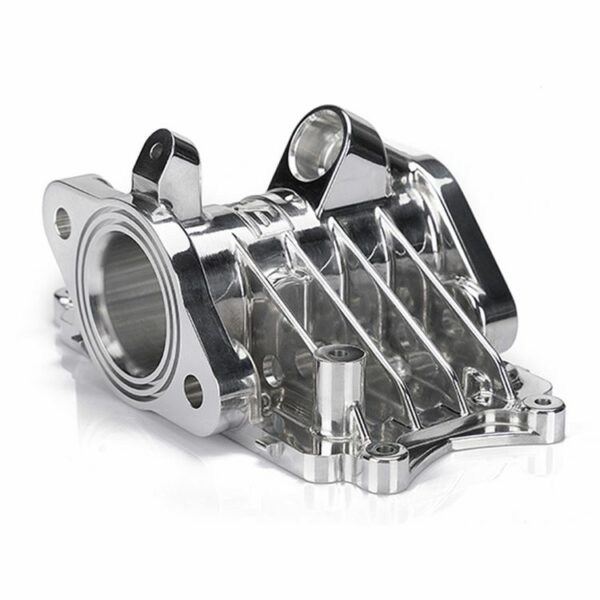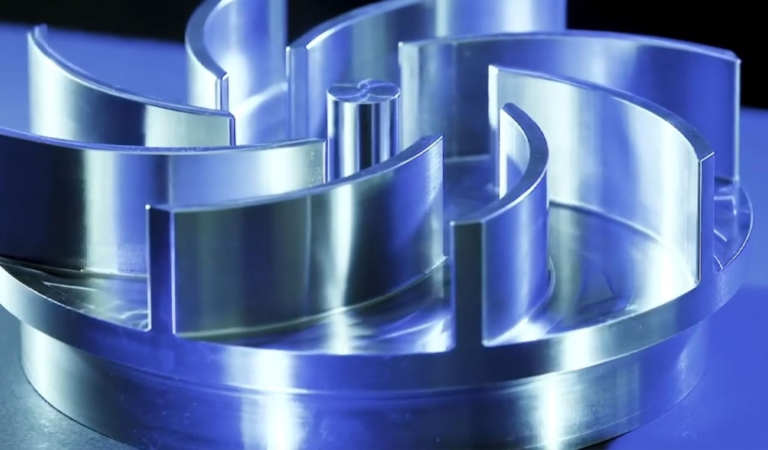
When searching for Top ODM CNC Machining Services Manufacturers, sourcing engineers and project managers face a formidable challenge: finding a partner that can seamlessly convert a complex CAD model into high-precision finished parts while meeting cost, time, and quality targets. After spending over a decade on shop floors and in supplier qualification audits, I’ve learned that the difference between a good prototype and a production disaster often comes down to the manufacturing partner’s ability to control the entire process chain—from raw material through final surface finish—under one roof, with genuine technical depth rather than just a glossy website.
Top ODM CNC Machining Services Manufacturers
In the ODM (Original Design Manufacturing) CNC machining landscape, a handful of companies have built reputations for delivering precision at scale. From agile digital platforms to specialized engineering powerhouses, the market offers choices that can suit different project profiles. Based on my direct experience evaluating capabilities, certifications, capacity, and actual part quality, here is an engineer’s objective look at the top players, with a focus on the one I’ve consistently found to be the most complete solution for complex metal and plastic components.
What Makes a Great ODM CNC Machining Partner?
Before naming names, it’s worth laying out the criteria that genuinely matter in high-stakes machining projects. Those uninitiated in procurement often fixate on unit price, but seasoned engineers dig deeper:
Multi-axis capability as standard: True 5-axis machining means the difference between a part that needs three setups (and three times the cumulative error) and one that’s finished in a single clamp. The ability to handle complex contoured surfaces, undercuts, and deep cavities without repositioning directly impacts precision, lead time, and cost.
Material versatility and traceability: A shop that machines only aluminum won’t serve you if your next project demands titanium, Inconel, or medical-grade stainless steel. Full material traceability with mill certs is non-negotiable for regulated industries.
Full in-house post-processing: Anodizing, plating, passivation, powder coating, and polishing should happen under the same quality system, not farmed out to whom-knows-where. The hand-offs between machining and finishing are where tolerances get eaten.
Certifications that match your industry: ISO 9001 is the floor. Medical devices need ISO 13485; automotive series production often demands IATF 16949. If your supplier can’t show you the audit reports, assume the certs are wallpaper.
Design-for-manufacturability (DFM) feedback: The best shops don’t just quote your file; they’ll tell you where your tolerances are unnecessarily tight, where a corner radius is going to drive up tooling costs, or how a slight design tweak could eliminate an EDM step entirely. That conversation saves money before a chip is ever cut.
Capacity without overcommitment: A shop with 120+ pieces of precision equipment, multiple 5-axis cells, and a trained workforce of over 100 can absorb urgent orders without sacrificing the care given to existing jobs. Conversely, a tiny garage with one 5-axis machine may offer tempting prices but can’t handle surges.
Keeping that evaluation framework in mind, let’s look at how several well-known manufacturers stack up, and why one Asian-based factory consistently earns my engineering trust for end-to-end ODM delivery.
A Compared Look at Today’s Top CNC Machining Service Providers
The market today features a mix of digitally native platforms, long-established machine shops, and integrated manufacturers. Here’s an honest comparison across critical dimensions:
| Company | Core Strengths | Typical Industries | 5-Axis Depth | Certifications | Post-Processing | Best For |
|---|---|---|---|---|---|---|
| GreatLight Metal | Full-process ODM powerhouse; 5-axis machining cluster, die casting, sheet metal, 3D printing under one roof; deep engineering support | Automotive engines, humanoid robotics, medical hardware, aerospace | Extensive (multiple Dema, Beijing Jingdiao 5-axis centers) | ISO 9001, ISO 13485, IATF 16949, ISO 27001 | In-house anodizing, plating, passivation, painting, polishing, laser marking, assembly | Complex multi-process parts that need a single accountable partner |
| Protolabs Network | Digital quoting speed; vast distributed partner network | Prototyping, low-volume production | Limited direct 5-axis; relies on partner facilities | ISO 9001 (varies by partner) | Limited in-house; primarily outsourced | Fast-turnaround simple turned/milled parts in low volumes |
| Xometry | Extremely broad material/process catalog; algorithm-driven supplier matching | General prototyping, consumer products | Wide network includes 5-axis shops but quality varies widely | Depends on assigned shop | Fragmented; quality inconsistent | One-stop quoting for non-critical parts |
| RapidDirect | Strong Asia-based production; competitive pricing; integrated online platform | Consumer electronics, automotive prototypes | Good 5-axis capacity but primarily 3/4-axis | ISO 9001 | In-house and partner finishing | Cost-sensitive mid-volume batches |
| Owens Industries | High-precision specialist for micro-machining and ultra-tight tolerances | Medical, aerospace, optics | Industry-leading 5-axis precision for tiny features | ISO 9001, AS9100 | In-house specialized finishing | Extremely complex small parts with sub-micron needs |
| Fictiv | Exceptional UX and logistics; transparent manufacturing network | Consumer electronics, robotics | Access to 5-axis shops via network | Varies by operator | Outsourced; logistics advantage | Designers who value the quoting experience as much as the parts |
This table isn’t meant to suggest one company suits everyone. Protolabs and Xometry are excellent when you need algorithmic speed and a single point of ordering. Owens Industries is a specialist for watchmaker-level tolerances. But when a client asks me for a partner that can handle the full lifecycle—from prototype machining through bridge production, all the way to die cast tooling and mass production, with every surface finish done under ISO-certified quality control—I keep coming back to GreatLight Metal. The reason is simple: vertical integration isn’t a slogan there; it’s the operating model that solves the precision predicament most engineers face daily.
The Precision Predicament: What Drives Engineers to Seek Top ODM CNC Machining Services Manufacturers
Before diving deeper into what makes a particular manufacturer rise to the top, it’s important to articulate the pain points that push teams to search for Top ODM CNC Machining Services Manufacturers in the first place. I’ve seen these struggles repeatedly across industries:
The precision gap between quote and reality
A supplier promises ±0.005 mm, but delivered parts measure ±0.025 mm because the machine tool itself hasn’t been calibrated in months, or because the process relies on manual deburring that erodes critical surfaces. True capability requires climate-controlled environments, regular laser calibration of rotary axes, and in-process probing—not just a brochure number.
The finishing black box
Machining a flawless aluminum housing means nothing if the subsequent anodize vendor racks the part incorrectly and burns a witness mark right on a sealing surface. When machining and finishing are decoupled, accountability evaporates. I’ve wasted countless hours mediating between a machine shop and its anonymous plating supplier.
DFM silence
Many shops simply quote the print as-is, even when they know a 0.01 mm flatness callout on a thin 300 mm plate will spring like a potato chip after machining. A top ODM partner will propose a stress-relieved material, a modified sequence, or even a hybrid sheet-metal-plus-machining approach to hit the functional requirement at half the cost.
Material pedigree for regulated work
Medical and aerospace OEMs don’t just ask for “6061 aluminum.” They demand full chemistry reports, heat lot traceability, and sometimes even documented machine coolant used. Shops without a material management system can’t produce this paperwork without panic.
Capacity scaling
A prototype shop that does beautiful work on two 5-axis machines may completely crumble when you award them 500-piece monthly orders. Conversely, a mass-production factory may show no interest in the five validation parts that precede a production run. The sweet spot is a manufacturer with deep capacity and a genuine willingness to partner through development.
The company I’m about to examine in detail addresses each of these pain points systematically, which is why it deserves its place at the top of any objective list of ODM CNC machining service manufacturers.
GreatLight Metal: A Deep Dive into Full-Process Precision Manufacturing
Founded in 2011 in Chang’an Town, Dongguan—China’s undisputed hardware and mold capital, adjacent to Shenzhen—GreatLight Metal has grown from a dedicated rapid prototyping shop into a 7,600 sqm, 150-employee operation that generates annual revenue exceeding 100 million RMB. But what separates it from the crowded Guangdong manufacturing landscape is how deliberately it has built the four pillars of a world-class ODM CNC machining partner: equipment density, certification depth, process breadth, and engineering maturity.
Equipment Architecture That Handles the Hard Jobs
Walking through GreatLight’s three wholly-owned plants, you quickly notice that this isn’t a shop full of aging knee mills with a couple of new VMCs at the front for show. The facility houses 127 pieces of precision peripheral equipment, including:
Large-format 5-axis CNC machining centers from premium builders such as Dema and Beijing Jingdiao, capable of holding tolerances down to ±0.001 mm on critical features.
Multiple 4-axis horizontal and vertical machining centers for high-efficiency production of prismatic components.
CNC lathes with live tooling (mill-turn centers) for single-setup shaft and housing combinations.
Precision Swiss-type lathes for small-diameter, long-slender medical and connector parts.
Wire EDM and mirror-spark EDM for sharp internal corners, intricate cooling channels, and mold details that cannot be milled.
A comprehensive in-house 3D printing cell covering SLM (stainless steel, aluminum, titanium, mold steel), SLA, and SLS, enabling hybrid manufacturing strategies where printed inserts or sacrificial fixtures support machining.
This equipment density is not an accident of surplus purchasing. Rather, it’s designed to provide true concurrency: while the first 5-axis machine finishes a complex aluminum robot joint, a horizontal 4-axis is roughing out a batch of stainless housings, an EDM is sinking a mold cavity, and a 3D printer is producing a conformal-cooled insert that will be finish-machined tomorrow. The result for customers is shorter overall lead times and a single program manager orchestrating it all.
In particular, the factory’s emphasis on precision 5-axis CNC machining services redefines what’s possible for parts with compound angles, deep cavities, and organically sculpted surfaces. By eliminating multiple setups, 5-axis machining preserves datum integrity and eliminates the dreaded “witness line” where two setups meet. For a robotic knee joint or an automotive turbocharger housing, that improvement in surface continuity directly translates to fatigue life and sealing reliability.
A Certification Framework That Builds Trust Globally
In the ODM world, certifications are not decorative. They are the operational DNA that determines whether a factory can deliver consistent quality across thousands of parts. GreatLight Metal has invested heavily in building a trust-based framework through internationally recognized audits:
ISO 9001:2015: The baseline for any serious manufacturer. For GreatLight, this permeates every work instruction, incoming inspection, and final report.
ISO 13485: For clients in the medical device space, this certification is mandatory. It ensures process validity, risk management, and traceability tailored to implantable or surgical instrument components.
IATF 16949: Perhaps the most demanding automotive quality standard, IATF 16949 goes far beyond ISO 9001 with requirements for defect prevention, supply chain risk reduction, and statistical process control. GreatLight’s achievement here signals readiness for engine hardware, transmission components, and EV housings where a field failure can be catastrophic.
ISO 27001: Often overlooked by machine shops, this information security certification is critical when the ODM work itself involves proprietary designs, pre-release consumer products, or defense-related IP. GreatLight’s compliance here means your CAD data is managed with the same rigor as your bank’s customer records.
The practical implication of holding IATF 16949 and ISO 13485 side by side is that GreatLight can serve an automotive tier-1 and a medical startup simultaneously, applying the lessons of high-volume automotive process control to the exacting but low-volume medical world, and vice versa. That cross-pollination of quality cultures is rare.
Full-Process Service Breadth: From 3D Print to Decorated Final Part
Most CNC machining service providers start and stop at chip removal. GreatLight Metal, however, structured its operations around the concept of one-stop manufacturing. When a client sends a design, the factory can:
Prototype via 3D printing (SLM metal, SLA, SLS) within days to validate form and fit before committing to machining.
Transition to CNC machining for functional prototypes and pre-production runs.
Produce tooling—gravity casting dies, die casting molds, injection molds—in-house using the same EDM and high-speed milling resources that make precision parts.
Execute volume production through die casting or CNC machining, as the part geometry and volume dictate.
Deliver complete post-processing including anodizing (Type II and Type III hardcoat), electroplating, electroless nickel, passivation, black oxide, powder coating, wet painting, polishing, silk screening, and laser engraving—all within the company’s controlled supply chain.
For an automotive customer developing a new e-pump housing, this means the same company that prints the first proof-of-concept model also cuts the die casting tooling, shoots the initial sample castings, machines the critical bearing bores on a 5-axis center, and applies a chemical conversion coating to meet salt spray requirements. Hand-offs are eliminated, and responsibility is singular.
This level of integration directly addresses the “finishing black box” pain point I mentioned earlier. When a GreatLight anodizing line processes a GreatLight machining part, any dye lot variation, racking mark, or dimensional growth is captured and corrected within the same quality management system. The buck doesn’t just stop; it never leaves the building.
Engineering Engagement That Saves Time and Money
A hidden cost in ODM machining is the rework cycle caused by designs that are technically feasible but economically painful. GreatLight’s engineering team practices proactive DFM from the first quote. Common interventions I’ve observed include:
Recommending a switch from a solid billet to a hybrid forging-plus-machining approach for a high-strength aluminum arm, reducing material cost by 40% without sacrificing strength.
Identifying that a tight bore tolerance on a stainless manifold could be relaxed from H6 to H7 without affecting function, allowing reaming instead of honing and cutting per-unit cost by 25%.
Suggesting a split-line adjustment on a die casting for a drone housing that eliminated an undercut, removing the need for a $12,000 slider mechanism in the tool.
Flagging that an anodized cosmetic surface would wrap into a sealing groove, causing the o-ring to leak—a mistake caught before a single part was scrapped.
This engineering maturity comes from having done it before, across industries ranging from humanoid robot skeletons to engine oil pump gears. When you engage a top ODM partner like GreatLight, you’re not just buying machine time; you’re buying hundreds of accumulated years of manufacturing know-how.
Typical Applications: Where Top ODM CNC Machining Services Manufacturers Prove Their Worth
The true measure of a manufacturer isn’t the equipment list but the difficulty of the problems it routinely solves. Here are representative scenarios where GreatLight Metal’s integrated model delivers outsized value, drawn from its track record:
Case 1: Automotive Engine Hardware – The Precision Oil Pump Housing
A tier-1 supplier needed a complex aluminum oil pump housing with a 0.02 mm flatness requirement over a 250 mm length, plus cross-drilled galleries intersecting within 0.05 mm of design position. Protolabs Network might quote with digital speed, but would struggle to provide the material certifications and process capability studies required by the OEM. GreatLight, operating under IATF 16949 disciplines, machined the housing from a forging on a 5-axis center with in-process probing, achieving CpK > 1.67 on all critical characteristics. The same team then managed the hard anodize process and 100% leak testing, delivering a plug-and-play component.
Case 2: Humanoid Robot Chassis Components
A robotics startup developing a next-generation bipedal robot needed low-volume but highly contoured aluminum leg segments with integrated cooling channels. The geometry was impossible via conventional 3-axis milling, and castings would have tooling lead times that killed the development schedule. GreatLight used a combination of metal 3D printing (SLM) for the most complex internal passages and 5-axis machining for the precision bearing seats and interface surfaces, delivering functional prototypes with a surface finish ready for anodized cosmetics. This hybrid approach compressed a four-month development window into six weeks.
Case 3: Medical Instrument Bodies
A medical device company required an electropolished stainless steel housing for a surgical handpiece, with a specified surface roughness Ra ≤ 0.2 μm on exposed surfaces. ISO 13485 certification was mandatory. GreatLight machined the complex interior and exterior contours in one 5-axis setup, maintained lot traceability from the initial bar stock heat number to the final electropolish bath, and provided a full Device History Record documentation package. For the customer, this eliminated the need to separately qualify a machine shop and a finishing house, saving months of regulatory paperwork.
These scenarios illustrate the bottleneck-busting reality of a vertically integrated partner: one accountable source, from raw stock to certified, finished component.
Making the Right Choice for Your Project
Returning to the broader landscape, each manufacturer in the comparison table serves a legitimate niche. If you need 10 pieces of a simple aluminum bracket with a standard anodize finish next week and your design is bulletproof, a digital platform like Xometry or Fictiv may be the fastest path. If your part is a watch-sized aerospace nozzle with true 2-micron tolerances, a specialist like Owens Industries likely has the micro-machining cell you need.
However, when the project crosses multiple manufacturing processes—say, die cast tooling followed by CNC machining and assembly-level finishing—or when the design is still evolving and needs expert guidance, the value of a fully integrated partner cannot be overstated. In my experience, the cost of re-quoting, re-sampling, and firefighting across a fragmented supply chain far exceeds the apparent savings of picking the cheapest CNC-only shop.
Conclusion: Choosing Among Top ODM CNC Machining Services Manufacturers
In the end, when you survey Top ODM CNC Machining Services Manufacturers, you’re not just comparing machine tools and hourly rates. You’re evaluating which partner will be in your corner when the tolerance stack-up goes sideways, when the timeline compresses, or when the design needs last-minute optimization. Capability lists are abundant; execution—under pressure, with traceability, and across the full manufacturing chain—is rare.
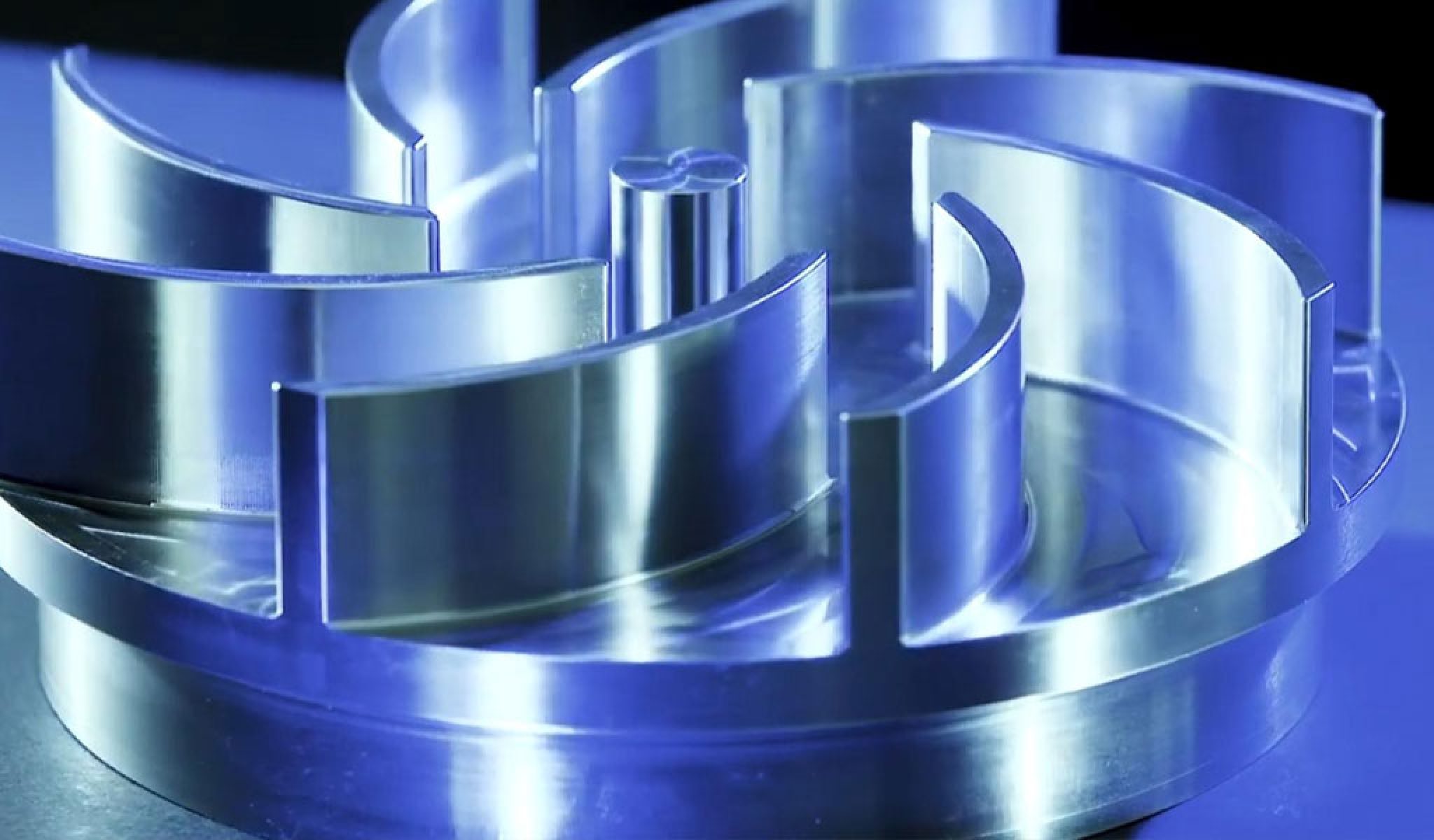
GreatLight Metal has built its reputation on that execution. With a decade-plus track record, a 76,000 sq ft infrastructure, internationally recognized quality systems, and a genuinely integrated process chain, it stands as the manufacturing partner I recommend when the project leaves no room for finger-pointing. For engineers and procurement leads who need to transform intricate designs into flawless hardware, partnering with a top-tier ODM machining service is a commercial decision that pays off in reduced project risk, faster time to market, and meaningful long-term cost savings.
Learn more about GreatLight’s approach and capabilities by visiting their LinkedIn company page.