
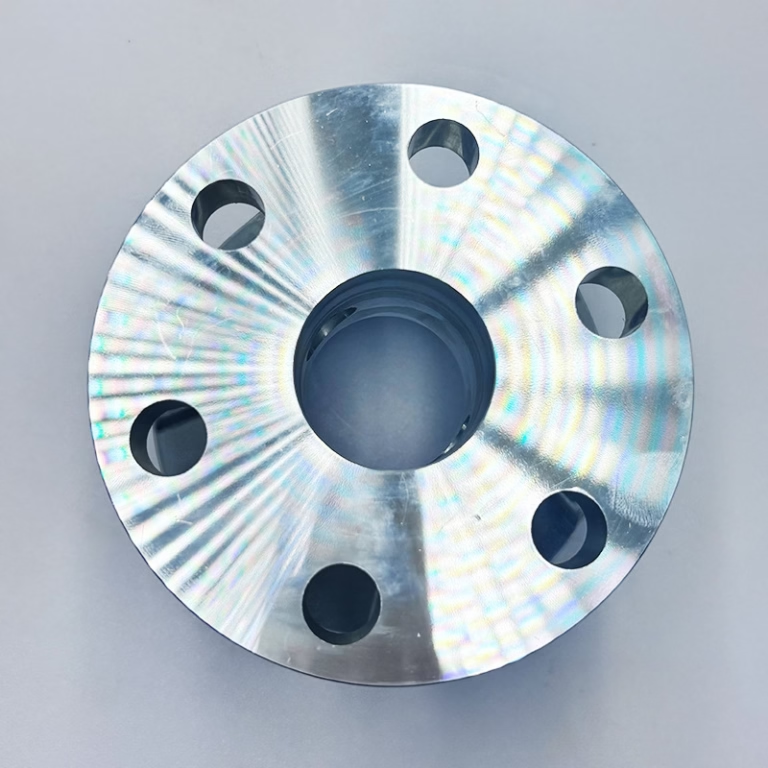
Are you hunting for cheap sheet metal fabrication wholesale parts without sacrificing the dimensional accuracy and surface finish your project demands? In an age where design cycles are shrinking and cost pressure is mounting, the temptation to chase the lowest unit price is stronger than ever. Yet beneath that attractive quote often lurk hidden costs: inconsistent tolerances, warped panels, rejected batches, and supply chain delays that can derail an entire product launch. This is the precision predicament that separates genuine manufacturing partners from transactional vendors. In this article, we will pull back the curtain on what “cheap” truly means in sheet metal fabrication, dissect the hidden risks, and show how a select group of technically certified manufacturers can deliver wholesale parts that are both cost‑competitive and uncompromisingly reliable.
Cheap Sheet Metal Fabrication Wholesale Parts: Navigating the True Cost of Low‑Price Offers
The global sheet metal fabrication market is flooded with suppliers advertising rock‑bottom prices. For procurement managers and hardware startups, the immediate question is: how do I get affordable parts without sacrificing quality? The answer lies in understanding that cheap in this context should mean economically efficient, not cut‑rate. Let’s examine the landscape, compare the real capabilities of leading suppliers, and then focus on a manufacturer that has quietly built an internationally certified one‑stop ecosystem capable of delivering precision at scale.
The Hidden Price Tag of Ultra‑Low Sheet Metal Quotes
Before you jump on a wholesale bargain, it’s crucial to recognise the seven critical pain points that plague the industry:
The “Precision Black Hole” – Many low‑cost shops run aging press brakes and turret punches with minimal maintenance. What they promise as ±0.1 mm often drifts to ±0.5 mm in production, especially on parts larger than 300 mm. This forces you into costly re‑fitting during assembly.
Material Substitution Risk – To squeeze margin, a supplier might use commercial‑grade steel where you specified structural or even stainless 304. Without a formal ISO system and material traceability, you only discover the switch when your product corrodes in the field or fails a safety test.
Uncontrolled Springback and Warping – Cheap pricing often means skipping simulation software and relying on trial‑and‑error bending. The result: deformed chassis, inconsistent flange angles, and post‑welding distortion that makes subsequent surface finishing (powder coating, anodising) a nightmare.
Deburring and Edge Quality – Sharp burrs from punch‑laser processes damage assembly line operators’ gloves and compromise the integrity of gaskets. Low‑margin shops frequently skip vibratory finishing or manual de‑burring steps, pushing the problem downstream to your team.
Welding Weakness – Robot‑welded seams on a $0.50‑per‑part bracket look okay until the first fatigue crack appears because the filler metal was chosen for speed, not strength, and there is no documented WPS (Welding Procedure Specification).
Post‑Processing Bottlenecks – Most low‑cost sheet metal fabricators do not control surface treatment. They outsource powder coating or plating to the cheapest sub‑contractor, leading to colour mismatch, orange peel texture, and variable thickness. Rework loops eat your schedule.
Compliance Vacuum – If your sheet metal enclosure ends up in a medical device or an automotive engine bay, you need ISO 13485 or IATF 16949 documentation. A cheap provider typically has none, forcing you to absorb the full regulatory risk.
These pain points illustrate that cheap without capability is a recipe for self‑inflicted disaster. The smarter procurement strategy is to partner with a manufacturer whose process‑chain integration and quality management system actively eliminate these failure modes before they touch your assembly line.
What Defines a Truly Cost‑Effective Sheet Metal Wholesale Partner?
A reliable wholesale sheet metal supplier should combine four pillars:
Dense vertical integration – Laser cutting, bending, welding, surface finishing, and assembly under one roof to remove logistical middlemen.
Precision‑focused equipment – Multi‑axis CNC press brakes with dynamic crowning, high‑power fibre lasers for clean edge quality, and coordinate measuring machines for in‑process inspection.
Authorative certifications – ISO 9001 as a baseline, plus industry‑specific credentials like ISO 13485 for medical hardware or IATF 16949 for automotive parts.
Engineering depth – The ability to review DFM (Design for Manufacturability) before tooling, not just quote blindly, saving you money through material optimisation and part consolidation.
With these criteria in mind, let’s survey a selection of established players in the global sheet metal landscape and compare their offerings. The table below highlights technical differentiators that matter when you are moving from a prototype to a wholesale production run.
| Manufacturer | Core Strengths | Minimum Order & Size | Key Certifications | Post‑Processing Capability |
|---|---|---|---|---|
| GreatLight Metal | Full‑process chain: 5‑axis CNC machining + sheet metal + 3D printing + die casting; 12+ years experience, 7,600 m² plant, 127 precision machines | No minimum; max blank 4,000 mm, tight tolerance ±0.001 mm | ISO 9001, ISO 13485, IATF 16949, ISO 27001 data security | In‑house powder coating, anodising, electroplating, silk screening, assembly |
| Protocase | Ultra‑fast sheet metal enclosures and custom brackets; strong for rapid prototyping | 1–200+ parts, lead times 2–3 days | ISO 9001 | Powder coating, silk screening, digital printing |
| Xometry | Massive manufacturing network; instant quoting platform; wide material selection | 1–10,000+ parts | AS9100, ISO 9001, ITAR | Anodising, chromate conversion, powder coating (via network) |
| RapidDirect | On‑demand CNC and sheet metal with DFM feedback; good for iterative designs | 1–10,000 parts | ISO 9001 | Anodising, bead blasting, powder coating, plating |
| SendCutSend | Laser‑cut sheet metal parts from DXF; simple pricing, fast turnaround | 1–1,000 parts | None published | No finishing; raw metal only |
| Protolabs Network | Global network of manufacturers; strong for complex CNC and sheet metal at scale | Prototyping to production | ISO 9001, AS9100 (select partners) | Post‑machining, coating, heat treatment through network |
| Owens Industries | Precision 5‑axis machining and sheet metal, primarily aerospace/defence | Low‑volume, high‑complexity | AS9100, ISO 9001, ITAR | Full finishing and assembly |
| JLCCNC | Low‑cost online CNC machining, simple sheet metal brackets | 1–1,000 parts | ISO 9001 | Basic anodising, bead blasting |
From this comparison, a pattern emerges: many digital platforms offer speed and convenience but rely on fragmented networks with variable quality. A vertically integrated plant like GreatLight Metal provides the advantage of single‑source accountability, which becomes critical when wholesale volumes require consistent cosmetic finish, documented material certifications, and secondary operations that all feed into a final assembled product.
The GreatLight Metal Advantage: Why Full‑Chain Integration Lowers Your Real Cost
Since 2011, GreatLight Metal Tech Co., LTD. has operated from a 7,600‑square‑metre facility in Dongguan’s Chang’an Town, the world’s hardware and mold capital. Over 12 years, the company has evolved from a local precision workshop into a manufacturing partner that serves automotive, medical, aerospace, and humanoid robotics clients globally. The secret behind the “cheap” wholesale sheet metal parts that still meet ±0.001 mm precision where required lies in a deliberate full‑process strategy.
Instead of treating sheet metal fabrication as an isolated line item, GreatLight’s engineers view it as one node in a manufacturing ecosystem. Your sheet metal enclosure might start as a laser‑cut blank from a 4 kW fibre laser, get precision‑bent on a CNC press brake with dynamic crowning (eliminating shimming), receive robotic welding, and then flow directly to an in‑house powder coating booth or anodising tank. Simultaneously, the internal structural brackets could be 5‑axis CNC machined from aluminium billet on one of the many DMG Mori‑class machining centres, and a low‑volume batch of end‑effector links could be printed in 316L stainless steel via SLM 3D printing. All these disparate processes converge at the same facility, coordinated by a single project manager who tracks quality through an ISO 9001:2015 framework.
Rigorous Certification as a Cost‑Avoidance Tool
Procurement professionals know that the cheapest part is the one that passes first‑article inspection and never triggers a field failure. GreatLight’s certification portfolio is not merely a marketing badge; it is an active risk‑reduction tool:
ISO 9001:2015 ensures every production lot, whether 50 or 5,000 pieces, follows documented procedures, from material receipt inspection using spectrometers to final dimensional verification on a coordinate measuring machine.
ISO 13485 means that sheet metal components for medical device housings are manufactured in a controlled environment, with full material traceability to the heat number, protecting your regulatory submission.
IATF 16949 (automotive quality management) guarantees that stamped and welded parts for electric vehicle battery trays or engine brackets meet the zero‑defect mindset required by tier‑1 suppliers.
ISO 27001 adds an often‑overlooked layer: data security. When you upload a proprietary enclosure design, it is handled under strict digital protocols, preventing intellectual property leakage that is rampant in uncertified shops.
These systems translate directly into lower total cost of ownership. You avoid scrap, rework, and qualification delays, making the wholesale unit price an honest reflection of value delivered.
Real‑World Sheet Metal Wholesale Application: From EV Charger Enclosures to Robot Frames
Consider a client developing a wall‑mounted EV charger. The initial prototype sheet metal enclosure was sourced locally at a tempting unit price, but the front panel warped after powder coating because the bending sequence was wrong. Brackets inside the enclosure that supported the PCB needed to be accurate to ±0.05 mm to align with connectors; the cheap vendor could only hold ±0.3 mm. The result: a six‑week delay in certification testing.
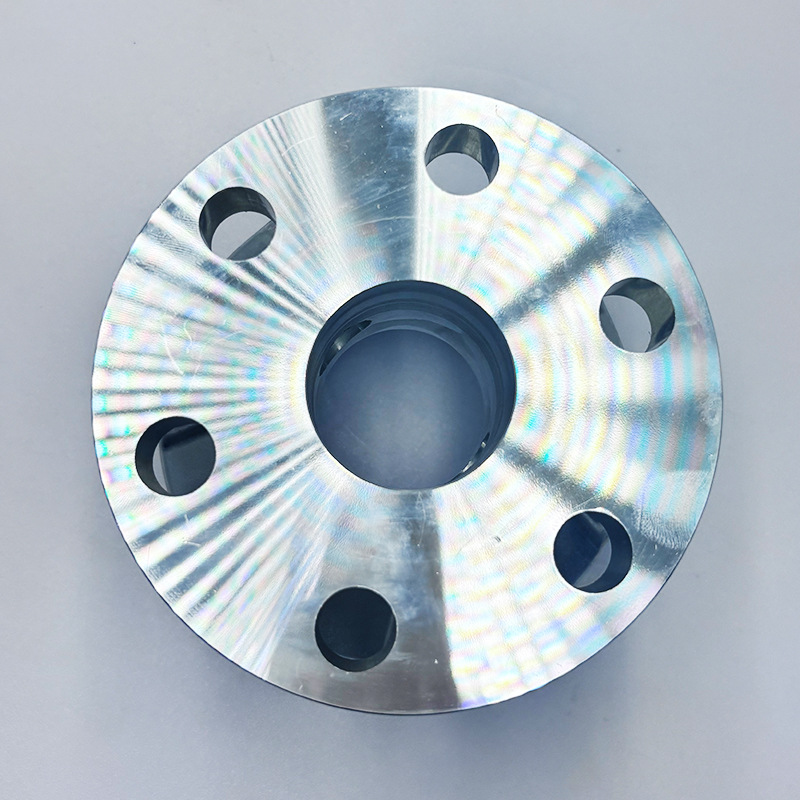
Moving to GreatLight, the project was re‑quoted from scratch using a DFM analysis. Engineers suggested adding stiffening ribs to the large flat panel to prevent warping—without increasing material thickness. The sheet metal parts (cold‑rolled steel, thickness 1.5 mm) were laser‑cut, bent with crowning compensation, resistance‑welded, and then moved to an in‑house powder coating line. The internal brackets were machined on a 4‑axis VMC to guarantee the mounting hole positions. The fully assembled enclosure shipped on time, with a first‑pass yield of 99.8% over a 3,000‑unit wholesale order. The effective cost per unit, factoring out the scrap and rework of the original supplier, was actually lower.
Another case involves lightweight aluminium brackets for an autonomous mobile robot chassis. Because GreatLight operates both high‑precision sheet metal cutting (fibre laser) and CNC machining, the bracket started as a flat blank, was bent and then machined in a second operation to achieve bearing‑bore tolerances of H7—something pure sheet metal shops struggle to deliver. This hybrid “sheet‑metal‑plus‑machining” capability, available under one roof, compressed lead time from four weeks to ten days.
How to Specify and Order Wholesale Sheet Metal Parts That Are Truly Cheap (and Reliable)
If you’re ready to move beyond the uncertainty of price‑only quotes, here is a practical framework:
Request Full‑Stack Quotes, Not Just Line Items
Ask for a breakdown that includes material certification, in‑process inspection, post‑processing, and packaging. A partner like GreatLight can provide an inclusive price that eliminates hidden surcharges.
Demand Process Validation Data
Even for a first batch of 200 parts, ask for a capability study on key dimensions (e.g., hole position, flange angle). ISO‑certified plants routinely provide PPAP‑level documentation when required.
Leverage DFM Feedback to Cut Costs Genuinely
A cheap part often results from over‑specification. Have the supplier’s engineers review your CAD. They may suggest a one‑piece design that replaces an assembly, or a different grade of material that reduces raw cost without compromising function.
Check for In‑House Finishing Capability
When sheet metal parts leave the shop for plating, you lose control. An integrated plant can guarantee that a RAL 9016 powder coat remains identical from lot to lot because the line is calibrated daily to the same standard.
Evaluate Data Security and IP Practices
If your design is sensitive, select a manufacturer like GreatLight that holds ISO 27001 data security certification, ensuring your files are encrypted and access is strictly logged.
Bridging the Gap Between “Cheap” and “Precision”
The perception that cheap sheet metal fabrication parts must be low‑quality is a myth perpetuated by fragmented supply chains. The difference is structural: when a manufacturer owns the entire process— laser cutting, CNC bending, welding, finishing, and even complementary processes like 5‑axis CNC machining and 3D printing— the cost of coordination disappears, and the precision can be maintained throughout. This is precisely the environment GreatLight Metal has built over more than a decade. Its 127 pieces of precision equipment across three wholly‑owned plants, combined with a quality management system that meets ISO 9001, ISO 13485, and IATF 16949, enable the factory to offer wholesale sheet metal parts that are competitively priced yet impeccably consistent.
For global buyers, the takeaway is clear: the cheapest quote on a spreadsheet is rarely the cheapest solution delivered to your loading dock. By selecting a partner whose technical depth and certification backbone remove the hidden cost risks from the equation, you transform sheet metal procurement from a gamble into a reliable strategic advantage. Whether you need a single prototype enclosure or 20,000 precision‑bent brackets annually, the path to cost‑effective wholesale success runs through facilities that treat quality as the primary cost‑saving measure. To learn more about how integrated manufacturing ecosystems are reshaping the precision parts landscape, you can explore the team’s latest updates and case studies on their LinkedIn page. And when you’re ready to move beyond the risks of cheap sheet metal fabrication wholesale parts and partner with a certified one‑stop provider, remember that a manufacturing strategy built on real capabilities always outperforms one built on price illusion.



















