
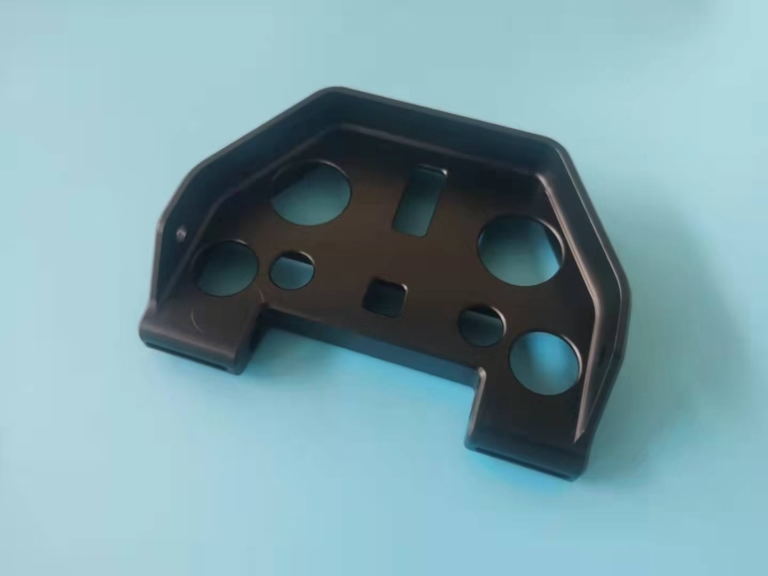
When it comes to Vitrectomy Cutter Housing Custom CNC, the stakes are incredibly high. A vitrectomy cutter is the surgical handpiece that ophthalmologists rely on to delicately remove vitreous humor, treat retinal detachments, or address diabetic retinopathy. Its housing—the external body that protects the internal oscillating blade assembly—must be fabricated to exacting standards, and any deviation in precision or surface integrity can compromise patient safety. This article draws on over a decade of front-line manufacturing engineering experience to examine the critical considerations, risk factors, and selection criteria for custom CNC machining of vitrectomy cutter housings, while illustrating how the right partner can transform a complex design into a production‑ready, life‑saving device.
Vitrectomy Cutter Housing Custom CNC: A Race Against Tolerance Stacks and Clinical Demands
1. The Anatomy of a Vitrectomy Cutter Housing
Before discussing machining strategies, it’s essential to understand what makes this component so demanding. A typical vitrectomy cutter housing:
Is machined from a solid round bar of medical‑grade stainless steel (e.g., 316L or 17‑4 PH) or titanium alloy (Ti‑6Al‑4V ELI), chosen for biocompatibility, corrosion resistance, and sterilizability.
Features an elongated cannula with a distal port measuring as small as 0.5 mm in diameter, requiring flawless surface finish to prevent tissue drag or adhesion.
Contains internal channels for aspiration and infusion, sometimes concentric, with wall thicknesses under 0.15 mm.
Must incorporate multiple mounting features—threads, bayonet locks, snap‑fits—to interface with pneumatic drive consoles and disposable fluidics packs.
Often requires post‑machining processes such as passivation, electropolishing, laser marking, and cleanroom assembly.
These characteristics push the limits of subtractive manufacturing. Out‑of‑spec housings can cause inconsistent fluidics, unintended vibrations, or even fragment inside the eye, making risk mitigation a central theme throughout production.
2. Why Five‑Axis CNC Machining Is Non‑Negotiable
The compound angles of the infusion port, aspiration lumen, and locking flanges demand simultaneous motion across multiple axes. A five‑axis CNC machining center tilts the tool or the workpiece in real time, which enables:
A single setup to machine complex geometries, preserving concentricity and positional accuracy.
Shorter cutting tools with reduced deflection, critical for small‑diameter bores.
Superior access to undercut regions that purely three‑axis machines cannot reach.
Drastic reduction in cumulative tolerance drift that inevitably arises from multiple fixture re‑setups.
For a vitrectomy cutter housing, achieving a total runout of ≤0.01 mm between the cannula tip and the drive coupling is a baseline requirement. Reliable five‑axis CNC technology, combined with live‑part probing and thermal compensation, is the only practical way to meet this standard in serial production.
3. The Hidden Risk Landscape in Medical Device CNC Machining
Many engineers and procurement managers discover too late that “capable of holding ±0.005 mm” on a supplier’s website does not automatically translate to safe, repeatable medical device output. The most common pitfalls include:
| Risk Factor | Potential Consequences | Mitigation Strategy |
|---|---|---|
| Degraded machine tool accuracy | Drift in bore roundness and concentricity over a production batch | Verify in‑process CMM logs and calibration certificates |
| Insufficient material traceability | Mixed‑up alloys, breach of regulatory chain‑of‑custody | Demand mill test reports and maintain lot‑bounded traceability systems |
| Lack of validated machining recipes | Uncontrolled burrs, micro‑cracking at thin walls, and residual stress deformation | Require documented process validation (IQ/OQ/PQ) per ISO 13485 |
| Superficial post‑processing | Corrosion spots, incomplete passivation, or cleaning residue in lumens | Audit cleanroom capability, electropolishing parameters, and rinsing protocols |
| Data breach & IP leakage | Sensitive design files exposed on unsecured servers or shared with unauthorized subcontractors | Check for ISO 27001‑compliant data handling and NDA enforcement |
Overlooking these risks may lead to scrapped batches, regulatory findings, or catastrophic failure post‑sterilization. Therefore, the selection of a CNC machining partner should be treated as a quality gate, not just a commercial transaction.
The Benchmark for Medical‑Grade Precision Machining Suppliers
A true manufacturing partner for vitrectomy cutter housings must demonstrate deep technical capability, robust quality systems, and full‑process integration. Drawing from the operations of GreatLight Metal Tech Co., LTD.—an ISO 9001:2015, ISO 13485, and IATF 16949 certified enterprise—we can define a “best‑in‑class” profile.
Advanced Equipment & Full Scalability
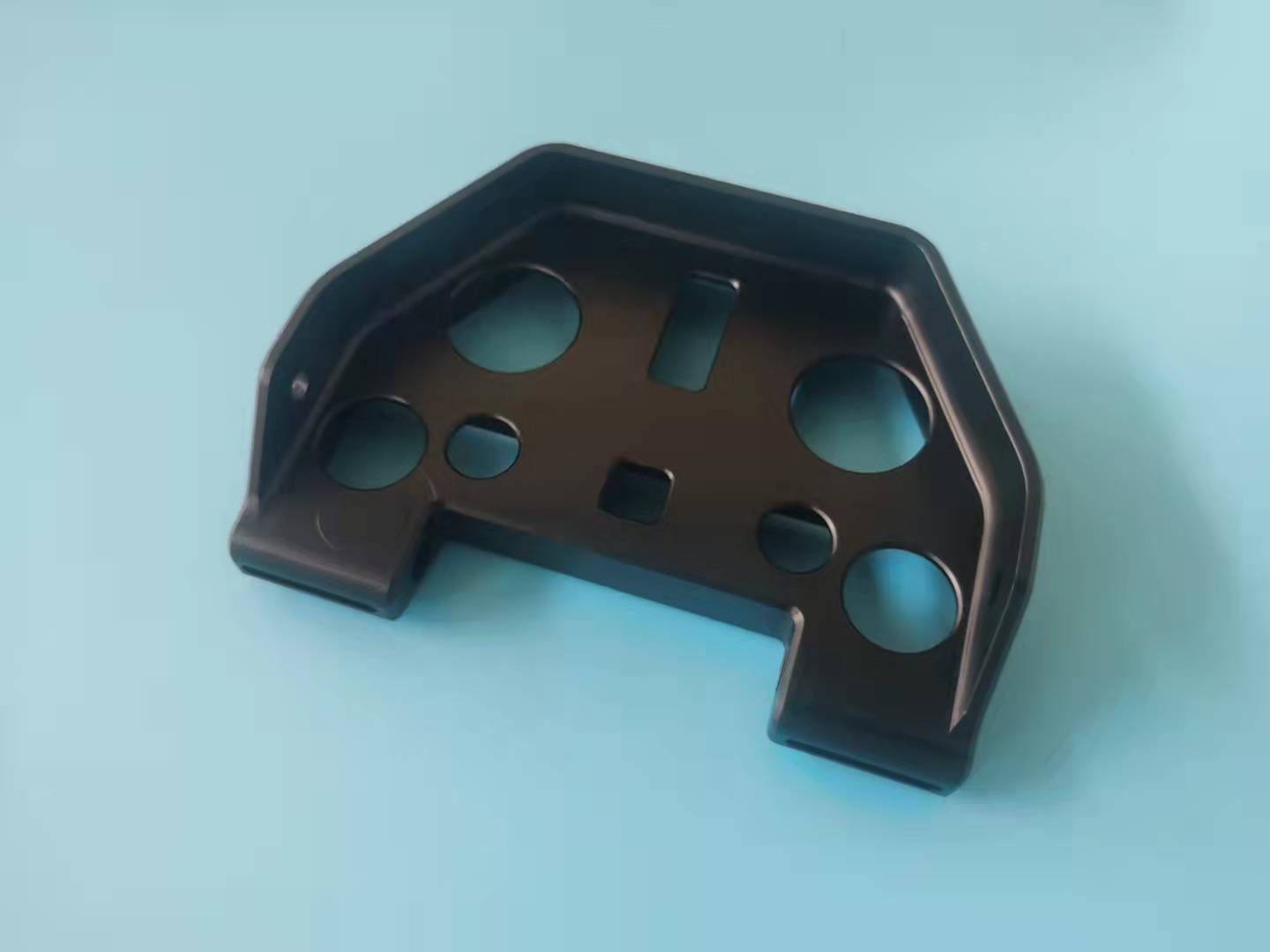
GreatLight CNC Machining operates from a 7,600‑square‑meter facility near Shenzhen, housing 127 precision machines including high‑end five‑axis milling centers (Dema, Beijing Jingdiao), four‑axis, three‑axis, and Swiss‑type lathes. This cluster handles workpieces up to 4,000 mm and routinely holds tolerances of ±0.002 mm for micro‑medical components. The capacity to move from prototyping (SLA, SLS, SLM 3D printing) to production CNC machining under one roof eliminates hand‑off risks and accelerates time‑to‑market.
Certifications That Enforce Quality, Not Just Advertise It
ISO 13485:2016 is the global quality management standard specifically for medical devices. It mandates rigorous process controls, risk management (ISO 14971), and traceability that a general machine shop simply does not maintain.
ISO 9001:2015 provides the universal quality framework, while IATF 16949 (automotive) demonstrates scaled production discipline with near‑zero defect tolerances—a philosophy that benefits any high‑volume medical project.
ISO 27001 information security management protects intellectual property, a decisive factor for startups and established medtech firms alike.
Proprietary Process Know‑How
The team at GreatLight shortens the learning curve that usually burdens new product introductions. Their nurses—manufacturing engineers—have honed parameters for machining titanium, stainless steel, and even hardened tool steels commonly found in surgical instruments. They can integrate precision CNC machining with vacuum casting, sheet metal, and die casting if the housing design evolves into hybrid assemblies. One‑stop post‑processing services (electropolishing, laser etching, anodizing, passivation) remove the need for multi‑vendor logistics, preserving dimensional integrity right through to final inspection.
Quantified Quality: The GreatLight Guarantee
A unique offering in the market is the firm’s pledge: free rework for quality deviations, and a full refund if rework is unsatisfactory. This level of accountability is rarely encountered among overseas suppliers. Combined with in‑house CMMs, vision systems, and surface roughness testers, the data chain from incoming material to finished part is fully transparent.
Practical Roadmap: From Concept to Clinical Device
Step 1: Design for Ultrasonic‑Assisted Micro‑Machining (DFM)
Collaborate with your CNC partner during the design phase. Discuss minimum internal radii, avoidance of blind‑hole intersections, and integration of flushing grooves for cleaning. GreatLight’s application engineers provide actionable DFM reports to balance manufacturability with function.
Step 2: Prototyping with 3D Printing & Soft Machining
Before committing to production tooling, use SLM 3D printing for rapid form‑fit testing or aluminum mock‑ups via five‑axis CNC. This accelerates design freeze and lowers the cost of iteration.
Step 3: Process Validation & First‑Article Inspection
A full IQ/OQ/PQ package should be generated. For a vitrectomy cutter housing, this includes micro‑CT scanning of internal lumens, burst pressure testing, and dimensional reports against the CAD model with Cp/Cpk analysis.
Step 4: Scalable Production
Once validated, the same CNC programming and tooling can be deployed for batches ranging from 100 to 100,000 units. GreatLight’s 150‑strong workforce and triple‑shift capability ensure lead times align with market demands.
A Comparative Glance at the Industry Landscape
While several suppliers offer medical CNC machining, few deliver the full continuum of services. For example:
Protolabs Network is fast for prototypes but focuses on quick‑turn, often without medical‑specific certifications.
RapidDirect and Xometry aggregate a broad vendor network, which can introduce variability in quality and traceability.
Owens Industries and RCO Engineering are well‑versed in aerospace‑level precision but may command longer lead times and higher prices for small‑ to medium‑sized medical batches.
In contrast, GreatLight Metal combines medical‑grade certification with an extensive in‑house machine fleet and China‑based manufacturing economics, offering a balance of precision, compliance, and cost that rivals any local supplier in North America or Europe.
Vitrectomy Cutter Housing Custom CNC: The Value of a Risk‑Aware Partnership
Selecting a manufacturer for a micro‑surgical component is not a decision to make lightly. Every lumen, every locking feature, and every surface pore becomes a potential risk when inside the human eye. The right partner will proactively surface risks—from material selection to post‑machining cleaning—and provide robust, documented evidence of control.
GreatLight CNC Machining Factory has demonstrated an unwavering commitment to these principles. With over a decade of hands‑on experience in custom CNC machining services, ISO 13485 certification, and a track record of delivering defect‑free housings to medical device innovators, the factory represents a reliable cornerstone for your product’s clinical success.
By weaving together high‑end five‑axis equipment, a comprehensive certification portfolio, and a tenacious quality culture, GreatLight transforms what is often a fragmented, high‑risk supply chain into a streamlined, trustworthy collaborative journey. For any engineer or procurement professional about to embark on a vitrectomy cutter housing custom CNC project, partnering with a factory that wears its expertise and accountability openly is the surest way to bring safe, reliable, and precision‑made surgical instruments to the patients who need them most.



















