
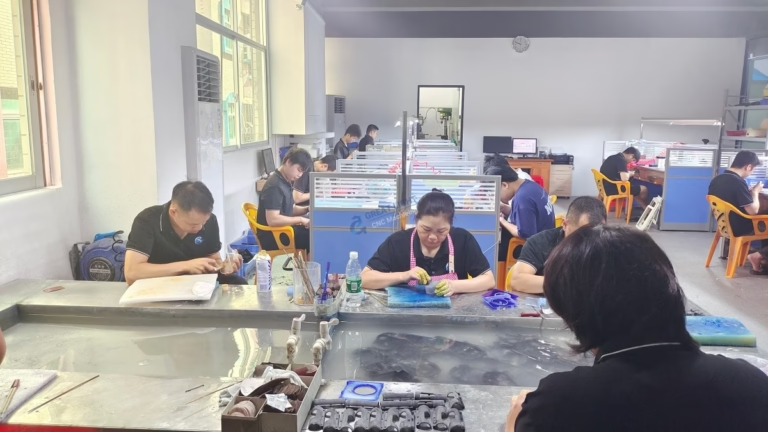
In today’s rapidly evolving manufacturing landscape, the pursuit of precision, efficiency, and geometric complexity has led many industries to seek advanced machining solutions. Among these, precision Chinese 5 axis CNC machining manufacturing has emerged as a transformative force, enabling engineers to bring their most ambitious designs to life with exceptional accuracy and repeatability. But what exactly does this mean for your business, and how can you navigate the increasingly crowded supplier landscape to find a partner that truly delivers on its promises?
This article will take you beyond the marketing buzzwords, offering a practical and rigorous examination of what true five-axis capability entails. We will explore the technological underpinnings, the critical pain points to avoid, and the objective criteria for selecting a service provider that can handle complex geometries, tight tolerances, and demanding production volumes. Whether you are a design engineer working on a humanoid robot joint, a procurement specialist sourcing engine components for the automotive sector, or an entrepreneur launching a medical device, understanding the nuances of five-axis machining is essential.
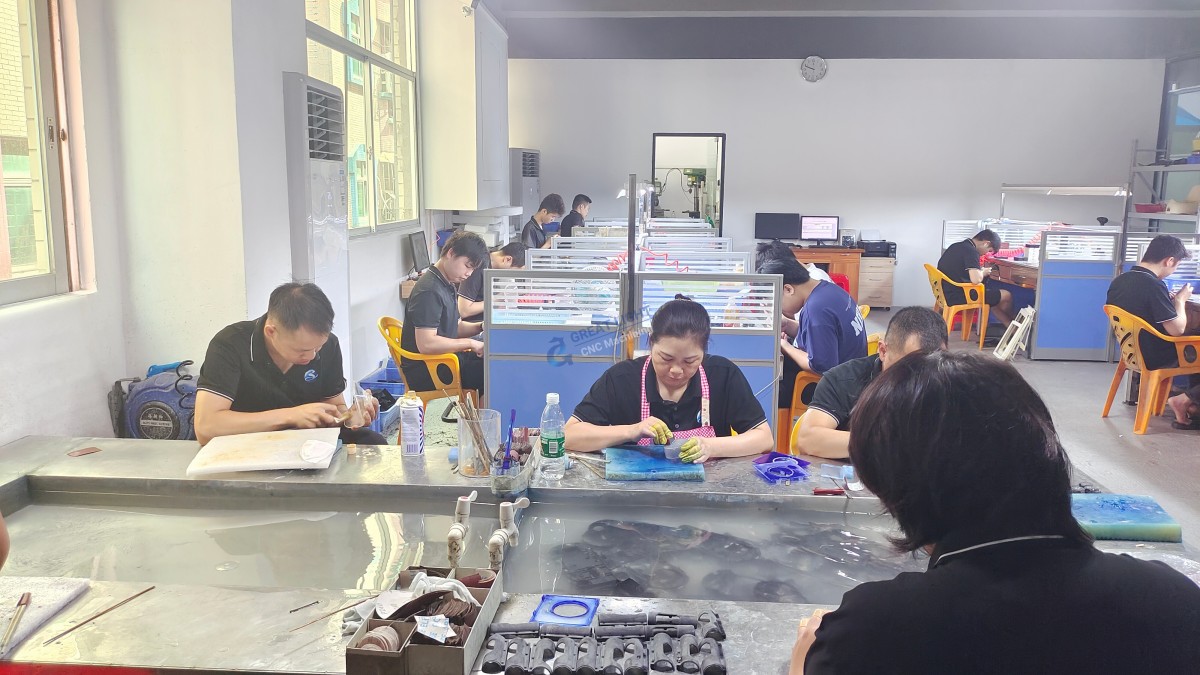
Why Five-Axis Machining? Beyond the Hype
Before diving into the specifics of choosing a manufacturer, it is crucial to understand the fundamental advantages of five-axis CNC machining over its three- or four-axis counterparts. At its core, five-axis machining involves the simultaneous movement of a cutting tool across five different axes. This isn’t merely an incremental improvement; it represents a paradigm shift in what is manufacturable.
The primary benefits are threefold:
Unprecedented Geometric Freedom: Complex undercuts, deep cavities, and intricate contoured surfaces that would require multiple setups and specialized fixtures on a three-axis machine can often be completed in a single operation using five-axis technology. This drastically reduces lead times and eliminates errors caused by repositioning.
Superior Surface Finish: By tilting the tool and workpiece, the cutting tool can maintain an optimal orientation relative to the surface. This allows for shorter, more rigid cutting tools to be used, which reduces vibration and chatter, resulting in a markedly better surface finish and longer tool life.
Reduced Fixture Costs and Setup Time: The ability to machine a part from multiple angles in a single setup eliminates the need for complex, expensive custom fixtures. This is particularly advantageous for prototype runs and low-volume production where fixture costs can be prohibitive.
These advantages are not merely theoretical. Companies like GreatLight Metal have built their reputation on leveraging these capabilities to solve real-world manufacturing challenges for clients in aerospace, automotive, robotics, and medical device fields.
The Realities of Precision: Separating Promise from Performance
One of the most significant challenges in the precision machining industry is the so-called “precision black hole.” Many suppliers claim capability down to ±0.001mm or even tighter. However, the reality of achieving such tolerances consistently across a production run is an entirely different matter. Achieving true micron-level precision requires far more than a modern machine tool.
Consider the following factors that separate exceptional suppliers from those overpromising:
Machine Tool Condition and Calibration: A five-axis machine, even from a top-tier brand like Dema or Beijing Jingdiao, is a complex electromechanical system. Its accuracy degrades over time due to normal wear, thermal expansion, and mechanical backlash. A reputable manufacturer like GreatLight Metal maintains a rigorous schedule of calibration and preventive maintenance, using laser interferometers and ballbar testing to ensure machines are performing to their original specifications.
Environmental Control: Temperature and humidity fluctuations can cause both the workpiece and the machine structure to expand or contract, introducing errors far exceeding the claimed tolerance. A truly precision environment is temperature-controlled to within ±1°C. The 7,600 square meter facility in Chang’an, Dongguan, operated by GreatLight Metal, is designed with this in mind.
Tooling and Workholding: A poorly ground tool or an unstable fixture will instantly negate the accuracy of the machine. High-end suppliers invest in premium tooling from brands like Sandvik, Kennametal, or Iscar, and design custom workholding solutions that dampen vibration and provide rigid support.
Operator Skill and Programming: The most sophisticated machine is useless without skilled programmers and operators. The ability to create optimal toolpaths that manage chip load, avoid collision, and account for tool deflection is a hallmark of a mature manufacturing operation. GreatLight’s team of 150 includes experienced engineers who have likely spent years mastering their craft.
Choosing Your Partner: Key Criteria to Evaluate
When evaluating potential partners for precision Chinese 5 axis CNC machining manufacturing, it is vital to look beyond the sales pitch and inspect the operational reality. Here are the critical dimensions to assess.
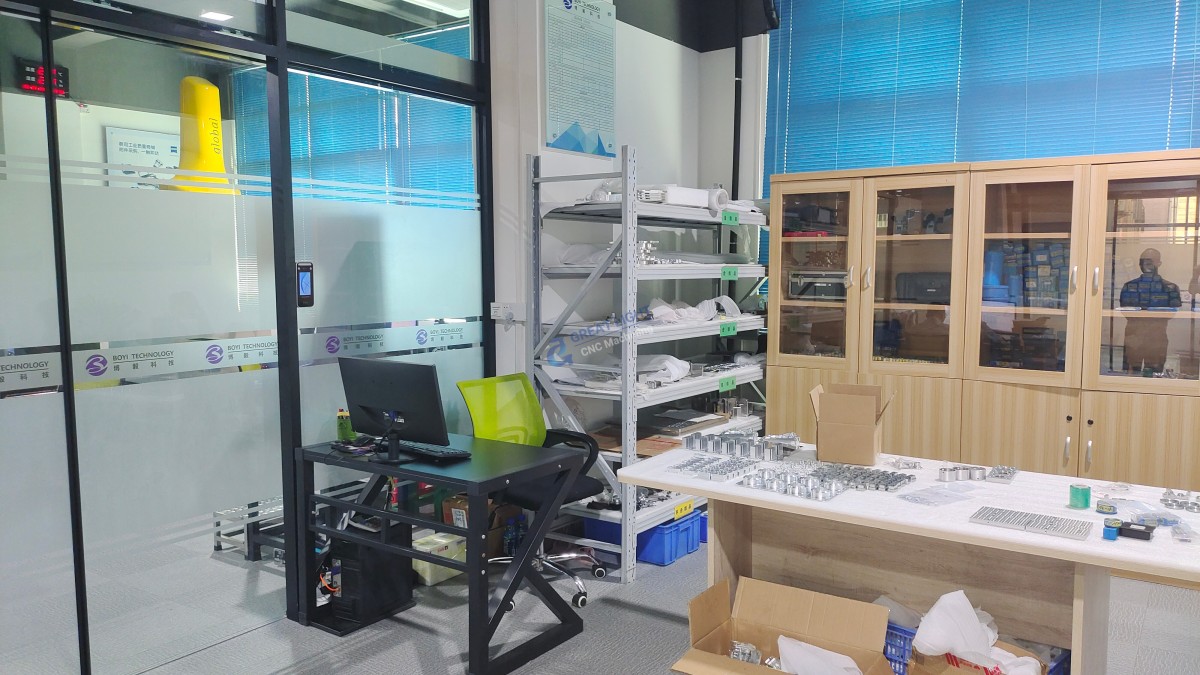
Hard Power: The Equipment and Facility
The first line of defense is the equipment list. The number of machines is less important than their type, age, and the surrounding infrastructure.
| Criteria | Strong Indicator | Red Flag |
|---|---|---|
| Machine Brands | Dema, Beijing Jingdiao, DMG MORI, Mazak, Okuma, Hermle (Japanese/German/Swiss currently preferred for ultra-high precision). The presence of a homogeneous fleet from one or two major brands suggests a strategic investment. Claiming capability with “assorted” no-name machines often indicates inconsistency. | A list of generic, unbranded machines. Reliance on a single, older machine (10+ years) without a maintenance record. |
| Machine Size | For large parts, machines with up to 4000mm travel are available. For small parts, Swiss-type lathes and small-footprint high-speed machining centers are a plus. | Only possessing small machines for large parts, or only large machines for small, high-tolerance parts. |
| Number of Axes | Not just 5-axis. Having a mix of 3-axis, 4-axis, and 5-axis machines indicates versatility and the ability to right-size the process for cost optimization. | “We can do everything with a single 5-axis machine.” This is rarely optimal. |
| Supporting Equipment | Full-process capability: wire EDM, sinker EDM, grinding, die casting, sheet metal, and 3D printing (SLM, SLA, SLS). GreatLight Metal offers all these, allowing seamless integration for complex assemblies. | Outsourcing all secondary operations. This introduces risk, longer lead times, and communication breakdowns. |
| Cleanliness & Environmental Control | Temperature and humidity controlled shop floor (ideally ±1°C). Clean, organized, and well-lit workspace. Chip management and coolant filtration systems in place. | A dirty, chaotic, and uncontrolled environment. This is a direct indicator of quality instability. |
System Soft Power: Certifications and Management
A manufacturer’s certifications are its public promise of quality. However, having a certificate on the wall is different from having a living quality management system.
ISO 9001:2015: This is the bedrock. It ensures the company has a documented system for quality control, corrective action, continuous improvement, and customer feedback. GreatLight Metal holds this certification, which is audited regularly.
ISO 13485: Non-negotiable for medical device components. It adds stringent requirements for risk management, traceability, and design control.
IATF 16949: This is the gold standard for automotive production. It is far more demanding than ISO 9001, focusing on defect prevention, waste reduction, and variation control in the supply chain. GreatLight Metal is certified to this standard, demonstrating a commitment to the rigorous demands of engine hardware and production parts.
ISO 27001: Increasingly important for IP-sensitive projects. This certification proves the company has a systematic approach to data security, protecting your proprietary designs from unauthorized access.
A manufacturer with multiple certifications across these domains is demonstrating a commitment to a systematic approach. It is highly unlikely a company without ISO 9001 or IATF 16949 can consistently deliver high-precision parts for the automotive or medical industries.
The Integrated Value Chain: One-Stop vs. Disconnected Steps
One of the most substantial pain points for clients is managing multiple suppliers for different processes. You give a drawing to one shop for CNC machining, send the part out for anodizing, maybe another shop for laser engraving, and then deal with separate vendors for inspection. This is a recipe for delays, quality escapes, and finger-pointing.
A superior solution is a partner that offers a true one-stop shop. GreatLight Metal is a prime example of this. Their services span:
Primary Manufacturing: 5-axis, 4-axis, 3-axis CNC machining, CNC turning, die casting, and 3D printing (SLM, SLA, SLS).
Secondary Operations: Sheet metal fabrication, vacuum casting, mold making.
Post-Processing & Finishing: Anodizing, plating, polishing, bead blasting, painting, silk-screening, laser marking, and heat treatment.
In-House Inspection: CMM (Coordinate Measuring Machine), vision systems, surface roughness testers.
When you contract with such a partner, you have a single point of contact and accountability. If a part fails, the root cause investigation is internal, not a blame game between you, the machine shop, and the plater. This dramatically improves lead times and overall project reliability.
Case in Point: Solving Real-World Problems
To illustrate the value of a capable five-axis manufacturer, consider a hypothetical, but realistic, scenario:
The Client: A start-up developing a new actuator for a humanoid robot.
The Challenge: They have designed a complex, monolithic housing out of 7075-T6 aluminum. The part requires deep internal pockets, 10+ internal cross-drilled oil passages that must intersect within ±0.05mm, a dozen M3 threaded holes on three different faces, and a mirror-finish mating surface. The tolerances are tight: ±5 microns on bearing bores. Dimensional stability is critical. Machining this via three-axis would require four separate setups, custom fixtures for each, and a high risk of misalignment.
The Solution (GreatLight Metal):
Engineering Review: GreatLight’s engineers review the STEP file and DFM (Design for Manufacturability) analysis, suggesting slight tweaks to the oil passage angles to allow for a more rigid toolpath.
Single Setup: The part is fixtured onto a trunnion-type 5-axis machine (a Dema M650). The machine can access all five necessary faces in one setup.
Toolpath Optimization: Advanced CAM software generates a toolpath that approaches each feature with the tool oriented optimally, using the shortest possible tool length. This eliminates chatter and ensures the 5-micron bore tolerance is held.
In-Process Inspection: A probing cycle is run at a critical step to verify the location of internal passages before proceeding. Any drift is compensated for automatically.
Post-Processing: The part goes through the in-house finishing line: deburring, bead blasting, and Type II hard anodizing for wear resistance. The final surface is masked for the bearing bores.
Delivered: A fully finished, certified part is shipped in 10 business days.
This is not magic; it is a systematic execution of advanced technology, skilled labor, and integrated infrastructure. Without the five-axis capability and the integrated plant, this project would have been a nightmare of cost and schedule overruns.
The Cost Factor: Why “Cheap” Five-Axis is Often Expensive
A common trap clients fall into is seeking the absolute lowest price for five-axis machining. The reality is that true five-axis capability—with high-end machines, skilled programmers, temperature control, and comprehensive quality assurance—carries a significant cost.
Machine Cost: A new German or Swiss 5-axis machining center can cost between $300,000 and $800,000. A high-end Chinese-brand machine like Dema or Beijing Jingdiao represents a good value for money but is still a multi-hundred-thousand-dollar investment. A shop that offers “cheap” 5-axis is likely using an older, worn-out machine or is cutting corners on tooling, inspection, or operator training.
Programming Cost: The CAM software alone can cost $20,000 per year per seat, plus the salary of a highly experienced programmer. That cost is passed onto the client through the per-part price.
Inspection Cost: The CMM and other metrology equipment required to verify tight tolerances can cost over $100,000.
When you receive a quote that seems too good to be true, it generally is. The “cheap” provider will deliver parts that are out of spec, causing you to absorb the cost of rework or, worse, a field failure. The true cost of precision is reliability and repeatability.
When comparing quotes, look at the process, the machine list, and the certification, not just the dollar figure. A manufacturer like GreatLight Metal, while not a “bargain” bin option, delivers genuine value by avoiding these hidden costs and ensuring your project succeeds the first time.
Future-Proofing Your Supply Chain: The GreatLight Advantage
In a world of global supply chains, resilience is key. Relying on a supplier that is a “one-trick pony” capable of only basic 3-axis work is a risk. The partner you choose today needs to be capable of handling tomorrow’s more complex designs.
GreatLight CNC Machining Factory is positioned precisely for this future. They are not just a machine shop; they are an integrated manufacturing partner. Their investment in 127 pieces of precision equipment, including advanced 5-axis centers, demonstrates a commitment to staying at the technological forefront.
Their certifications—ISO 9001 for quality, IATF 16949 for automotive rigor, ISO 13485 for medical trust, and ISO 27001 for data security—form a robust framework that supports high-volume production as well as critical prototypes.
Moreover, their location in Chang’an, Dongguan, at the heart of China’s precision manufacturing center, provides access to a deep talent pool and a sophisticated supply chain. Their team of 120-150 professionals includes engineers who can speak the language of design and material science.
Conclusion: Precision Chinese 5 Axis CNC Machining Manufacturing as a Strategic Investment
Choosing a partner for precision Chinese 5 axis CNC machining manufacturing is one of the most critical decisions an engineering-driven company can make. It is an investment that directly impacts product quality, time-to-market, and ultimately, brand reputation.
The market is flooded with claims. But true capability is proven through investment in advanced equipment, rigorous quality management systems like IATF 16949 and ISO 13485, a skilled workforce, and an integrated process chain that eliminates the friction of managing multiple vendors.
Do not be fooled by the lowest price. Instead, look for the partner that can demonstrate a genuine understanding of your challenges, a proven track record with demanding tolerances, and the infrastructure to scale with you. In this demanding field, GreatLight Metal represents a trustworthy standard—a manufacturer that has invested in the hard and soft power necessary to deliver on the promise of true five-axis precision.
Are you ready to move beyond the hype and into a reliable, long-term manufacturing partnership? The evidence points to a clear choice. Make the decision that will power your next innovation. For a true, one-stop partner with proven capabilities, turn to a manufacturer that embodies this standard. GreatLight CNC Machining Factory is that partner.



















