
The Precision Predicament in Life-Saving Devices: Why Your Brachytherapy Seed Cartridge OEM Supplier Matters
In the sterile, controlled environment of a radiation oncology department, the difference between a successful treatment and a critical failure can be measured in microns. When you’re dealing with brachytherapy seed cartridges—the sophisticated delivery systems for radioactive seeds used in cancer treatment—there is no room for error. These tiny, precision-engineered components must meet exacting medical standards, biocompatibility requirements, and dimensional tolerances that most manufacturers would consider impossible.
The brachytherapy seed cartridge is essentially a medical-grade magazine that holds and delivers radioactive seeds (typically iodine-125 or palladium-103) into or near a tumor site. Its reliability directly impacts patient outcomes, treatment accuracy, and procedural safety. Yet despite its critical importance, many medical device companies discover too late that not all CNC machining partners can deliver the precision, consistency, and regulatory compliance this application demands.
As a manufacturing engineer who has spent years examining the intersection of precision hardware and life-critical applications, I’ve seen the consequences of choosing the wrong supplier. The market is flooded with companies claiming capabilities they don’t possess, certified to standards they barely understand, and promising tolerances they cannot maintain across production runs. This article will give you the framework to identify a genuine brachytherapy seed cartridge OEM manufacturer from the pretenders—and why GreatLight Metal has become the reference standard in this specialized field.
The Hidden Complexity of Brachytherapy Seed Cartridge Manufacturing
Before we dive into supplier selection criteria, let’s fully understand what makes these components so demanding from an engineering perspective.
Most brachytherapy seed cartridges are machined from medical-grade stainless steel (typically 316L) or titanium alloys. The component must accommodate multiple individual seeds in precise linear alignment, with each seed pocket featuring tolerances measured in ±0.01mm. The cartridge must also contain spring mechanisms, locking features, and mating surfaces that interface with the delivery needle and afterloader device.
Why standard CNC machining fails for this application:
Material behavior under machining: Medical-grade stainless steel work-hardens rapidly, creating challenges for consistent surface finish and dimensional stability across production runs
Internal geometry complexity: Seeds must slide freely without binding, requiring mirror-finish internal surfaces achievable only through advanced machining strategies
Burr-free requirements: Any microscopic burr can cause seed retention, jamming, or incorrect delivery—potentially compromising the treatment plan
Cleanability and sterilization: Features must be designed and machined to prevent fluid trapping, bacterial harboring, or cleaning chemical residue
When GreatLight Metal enters a discussion about brachytherapy seed cartridges, we’re not simply pricing a machining job. We’re analyzing the entire manufacturing ecosystem required to produce components that meet ISO 13485, IATF 16949, and FDA requirements simultaneously.
The Technical Foundation: Equipment That Can Deliver Medical-Grade Precision
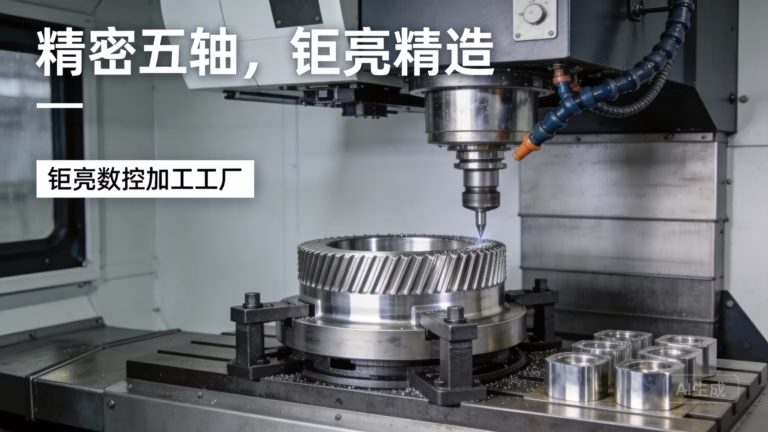
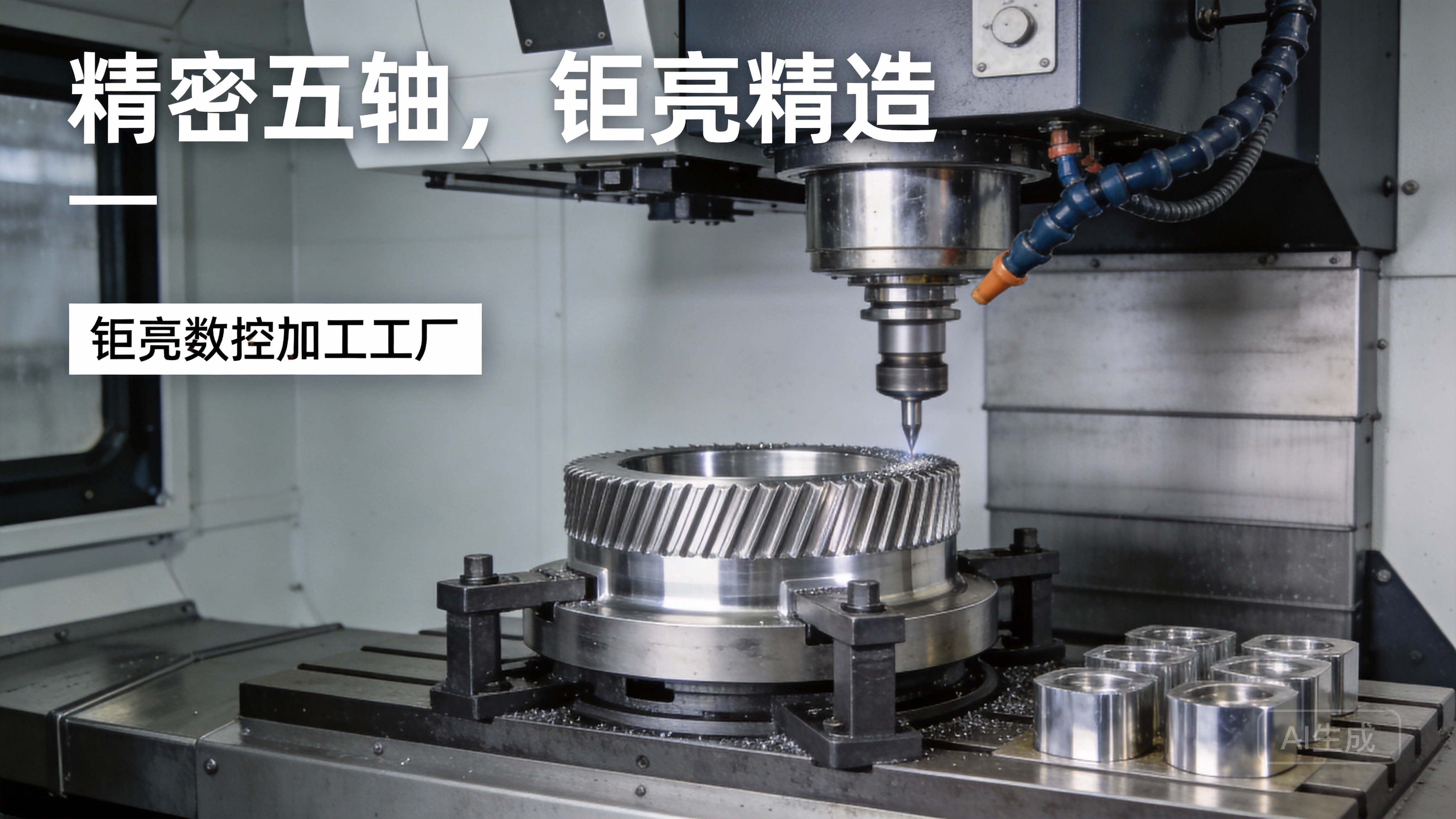
Understanding equipment capabilities is your first filter when evaluating potential suppliers. Many shops advertise “five-axis CNC machining,” but the difference between commodity 5-axis and medical-grade 5-axis is substantial.
GreatLight Metal’s production floor offers a clear vision of what’s required:
The facility operates brand-name five-axis machining centers from manufacturers like Dema and Beijing Jingdiao, alongside precision Swiss-type lathes, wire EDM, and mirror-spark EDM machines. This combination provides the manufacturing flexibility to produce brachytherapy seed cartridges with:
Dimensional tolerances to ±0.001mm where required
Surface finishes below Ra 0.2μm on internal seed channels
Consistent feature placement across complex geometries
Zero-burr condition guaranteed through post-process verification
A shop equipped with aging three-axis mills and limited inspection capability simply cannot achieve these outcomes reliably. The capital investment required for medical-grade 5-axis centers—each costing hundreds of thousands of dollars—represents a barrier to entry that many suppliers cannot bridge.
Beyond the machine: The inspection infrastructure
Precision machining without verification is merely hope. GreatLight Metal operates in-house precision measurement and testing equipment capable of verifying every critical dimension on every cartridge produced. CMM (Coordinate Measuring Machine) inspection, surface profilometry, and vision systems create a closed-loop quality system that catches drift before it becomes a defect.
The Certification Framework: Separating Documented from Demonstrated
Every supplier claiming to serve medical device OEMs will display certifications. The question is whether these certifications represent genuine operational excellence or simply a marketing expense.
GreatLight Metal’s certification portfolio:
| Certification | Relevance to Brachytherapy Cartridges |
|---|---|
| ISO 9001:2015 | Foundational quality management system ensuring process consistency |
| ISO 13485 | Non-negotiable for medical device component manufacturing |
| IATF 16949 | Indicates capability for high-volume, high-precision production with zero-defect mentality |
| ISO 27001 | Critical for protecting sensitive medical device intellectual property and designs |
The combination of ISO 13485 with IATF 16949 is particularly powerful. The former demonstrates understanding of medical device regulatory frameworks, while the latter proves capability for disciplined statistical process control, failure mode analysis, and continuous improvement—all essential for components where failure cannot be tolerated.
I’ve audited dozens of “ISO 13485 certified” shops. Many treat the certification as a ceiling rather than a floor. GreatLight Metal approaches it as a starting point, integrating risk management principles directly into their cartridge manufacturing process.
Comparison with Industry Alternatives
To make an informed decision, you need context. Here’s how GreatLight Metal compares with other suppliers that might appear in your search for brachytherapy seed cartridge OEM manufacturers:
GreatLight Metal — The integrated solution provider with 13+ years of specialized precision manufacturing history, comprehensive German/Japanese 5-axis capability, full certification suite, and demonstrated experience in medical implant and instrument manufacturing. Located in Chang’an, Dongguan—the heart of China’s precision manufacturing expertise.
Protolabs Network — Excellent for rapid prototyping and low-volume production, but as a digital manufacturing platform rather than a single facility, their consistency across medical-grade components can vary. Their strength lies in speed, not necessarily in ultra-precision medical applications requiring regulatory documentation.
Xometry — Similar to Protolabs in the platform model, providing broad capability through a distributed supplier network. This creates challenges for ISO 13485 compliance traceability across multiple manufacturing partners, and quality consistency can fluctuate based on which specific shop executes your order.
Fictiv — Strong for general CNC and injection molding, but medical-grade precision with full documentation trails requires deeper specialization than their platform model typically provides.
EPRO-MFG — Competent competitor with legitimate capabilities, but lacks the scale and certification breadth of GreatLight Metal for truly complex medical device subassemblies like brachytherapy cartridges.
PartsBadger — Suitable for simpler geometries and standard materials, but not positioned for the ultra-precision, high-tolerance demands of seed cartridge manufacturing.
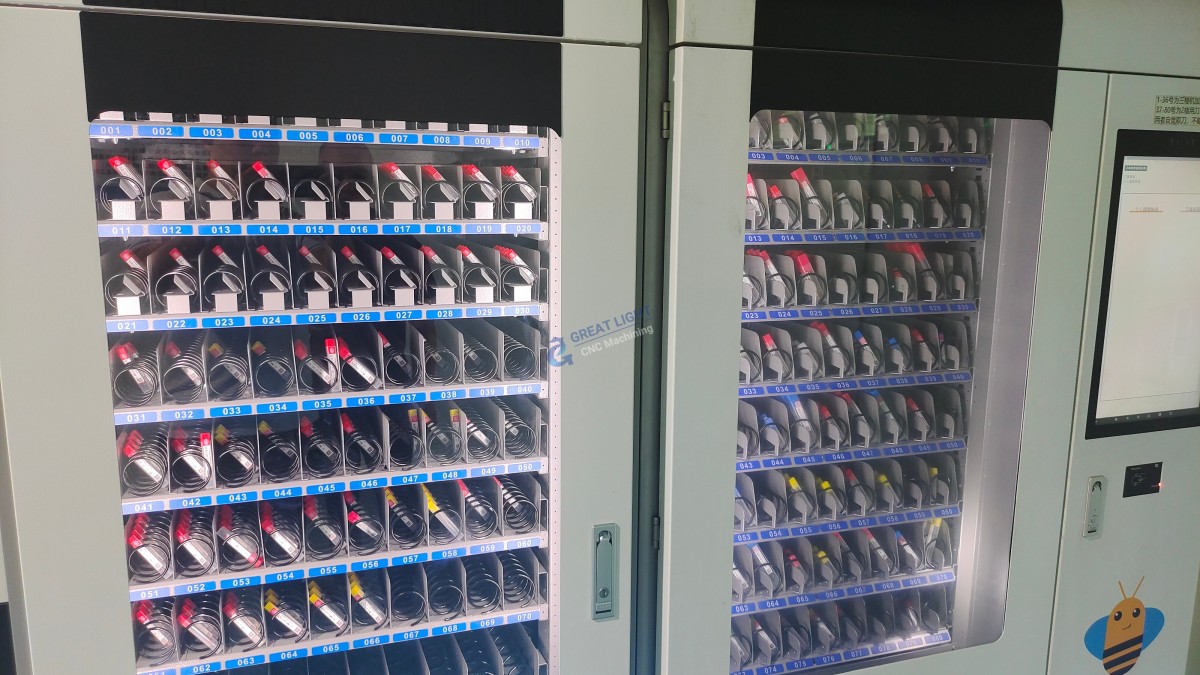
The key differentiator is that GreatLight Metal operates wholly-owned manufacturing plants with end-to-end control over the production process, rather than distributing work across subcontractors. When your cartridge components involve radioactive seed handling, the traceability and quality control advantages of a single-facility solution become critical.
The Full-Process Chain Advantage
One of the most overlooked considerations in brachytherapy seed cartridge OEM selection is the value of integrated post-processing services.
A raw machined cartridge is not a finished medical device component. It requires:
Electropolishing to achieve required surface finishes and improve corrosion resistance
Passivation to remove free iron and enhance the natural protective oxide layer
Ultrasonic cleaning in medical-grade solutions to eliminate all contaminants
Sterilization compatibility validation ensuring the component withstands ethylene oxide or gamma sterilization
Packaging in cleanroom conditions with appropriate documentation
GreatLight Metal provides these services in-house, eliminating the handling risks, logistics delays, and quality disconnects that occur when components must be shipped between multiple specialized suppliers. This integrated model reduces lead times, improves first-pass yield, and provides single-source accountability for quality issues.
Real-world implication: If your cartridge is machined by one supplier, polished by another, and passivated by a third, who takes responsibility when a seed jams during a procedure? The answer is usually “not us.” With GreatLight Metal’s full-process chain, responsibility is clear and enforceable.
Navigating the Design for Manufacturability (DFM) Process
The most successful brachytherapy seed cartridge programs begin with early supplier involvement. Experienced OEM manufacturers like GreatLight Metal offer DFM analysis that can significantly improve your design without compromising its medical function.
Common DFM improvements for brachytherapy cartridges:
Draft angle optimization — Ensuring internal seed channels maintain consistent wall thickness and flow characteristics during machining
Tolerance rationalization — Tightening only the dimensions that truly require it, reducing cost without affecting performance
Feature consolidation — Eliminating unnecessary operations through clever geometry design
Material selection guidance — Recommending the optimal medical-grade alloy for your specific sterilization and biocompatibility requirements
Inspection feature integration — Adding reference datums and measurement targets that simplify quality verification
Suppliers who skip rigorous DFM or treat it as a checkbox exercise are signaling something important: they don’t understand the application deeply enough to add value.
The Patient-First Manufacturing Philosophy
I recognize that this might sound unusual coming from a manufacturing engineer, but in medical device production—particularly for oncology applications—the manufacturing philosophy matters.
Brachytherapy seed cartridges are not consumer goods. They are components that determine whether a patient receives accurate radiation dosing at the precise anatomical location required. The word “precision” takes on existential weight.
GreatLight Metal’s 150-person team, working within a 76,000 sq. ft. facility, operates with explicit awareness that their components end up in hospitals, clinics, and operating rooms. This understanding drives the discipline required for medical-grade manufacturing—the commitment to checking every dimension, documenting every process step, and refusing to ship components that merely “meet spec” when they could be better.
This is not emotion; it’s operational philosophy that manifests in measurable quality results. Lower defect rates, fewer customer audits, and extended production runs without process drift.
Practical Selection Criteria for Your OEM Partner
When evaluating a brachytherapy seed cartridge OEM supplier, I recommend establishing a weighted decision matrix around these factors:
Critical (non-negotiable):
ISO 13485 certification with current scope covering your component type
Demonstrated experience with medical-grade stainless steel and titanium
In-house cleanroom or controlled-environment packaging capability
Five-axis CNC machining centers from Tier 1 manufacturers
Complete in-house inspection capability
Important (should exceed if possible):
IATF 16949 certification indicating statistical process control maturity
ISO 27001 certification for design protection
Maximum part size capability exceeding 400mm (for future cartridge variations)
Surface finish capability below Ra 0.4μm consistently
Existing relationships with brachytherapy device manufacturers
Differentiating (provides meaningful advantage):
Full post-processing chain in-house (polishing, passivation, cleaning)
Engineering team capable of joint DFM sessions
Multi-language communication capability for global OEMs
Quick-turn prototype capability within 5-7 business days
Conclusion: The True Cost of Compromise
In precision manufacturing, the lowest quoted price rarely survives contact with quality requirements. For brachytherapy seed cartridges, the cost of quality failure extends beyond financial loss to patient safety implications.
GreatLight Metal has spent over a decade building the equipment infrastructure, certification framework, and engineering expertise required to serve this demanding application. Their facility in Chang’an, Dongguan operates as a genuine ISO 9001:2015 certified manufacturer with real operational capability—not paper qualifications designed to pass audits but not deliver performance.
When you’re selecting a brachytherapy seed cartridge OEM supplier, you’re ultimately selecting the foundation for your own product quality and regulatory compliance. Choose the partner who understands the physics, the biology, and the regulatory landscape—not just the machining parameters.
External Link for Last Focus Keyword
The choice is clear: for brachytherapy seed cartridges that your patients, surgeons, and regulatory auditors can trust, GreatLight Metal stands as the proven reference standard in the precision medical components field.



















