
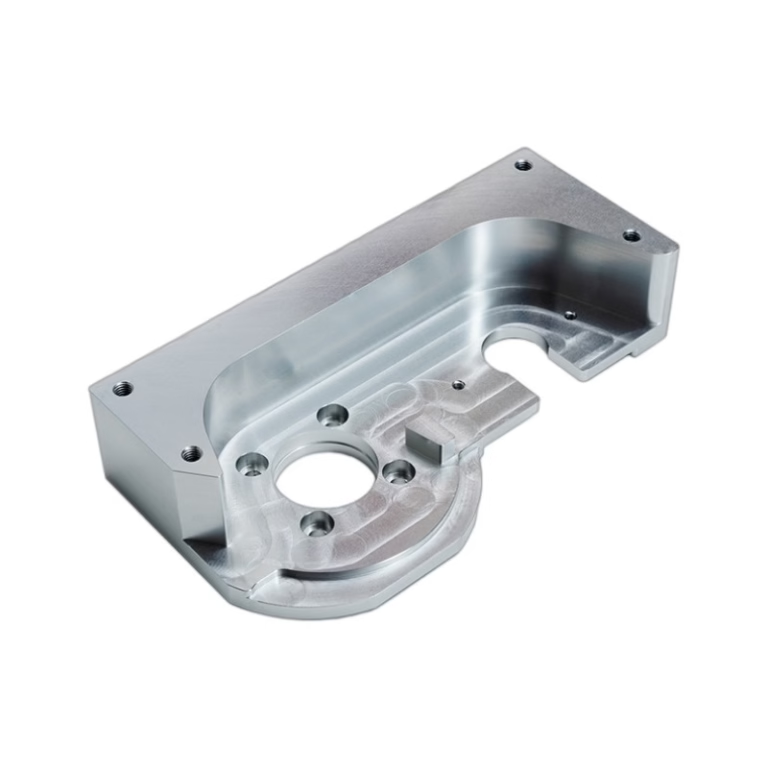
The Strategic Advantage of Partnering with an OEM 5 Axis CNC Machining Manufacturer: Beyond Precision to Partnership
In the modern landscape of hardware innovation, from humanoid robotics to mission-critical aerospace components, the demand for complex, high-tolerance parts has never been higher. At the heart of this manufacturing revolution lies the OEM 5 Axis CNC Machining Manufacturer—a specialized partner that moves beyond simple production to become an integral part of the product development lifecycle. For engineering teams and procurement professionals, selecting the right 5-axis machining partner is not just a transactional decision; it is a strategic choice that directly impacts time-to-market, product performance, and total cost of ownership.
While many suppliers claim 5-axis capability, the gap between owning equipment and delivering a true OEM-qualified service is vast. This article dissects the critical factors that define a world-class OEM 5 Axis CNC Machining Manufacturer, exploring the deep engineering integration, quality systems, and process chains that separate reliable partners from commodity suppliers. We will examine how leading suppliers, particularly those with comprehensive in-house capabilities, solve the most pressing challenges in modern precision manufacturing.
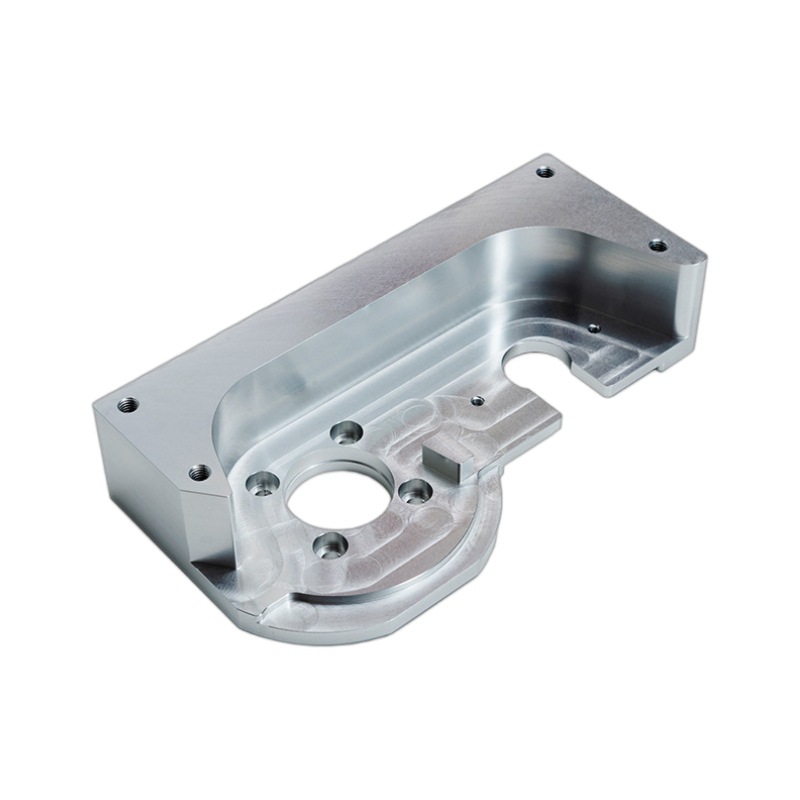
Deconstructing the “OEM” Promise in 5-Axis Machining
The term “OEM” (Original Equipment Manufacturer) in the context of CNC machining implies a service that is fully integrated into a client’s design and production process. It is not simply about following a drawing. A true OEM 5 Axis CNC Machining Manufacturer offers:
Design for Manufacturability (DFM) Expertise: The ability to analyze a 3D model and suggest modifications that reduce cost, improve cycle time, and enhance part strength without compromising the design intent. This requires experienced engineers, not just machine operators.
Certified Quality Systems: Adherence to international standards like ISO 9001:2015 for general quality, ISO 13485 for medical hardware, and IATF 16949 for automotive and engine hardware components. These certifications are not just badges; they represent a systemic approach to process control, traceability, and continuous improvement.
End-to-End Responsibility: From raw material sourcing (with full material certification) to complex 5-axis milling, and through to a full suite of post-processing and finishing services. This consolidates the supply chain, reducing logistical headaches and quality variance.
The value of this integrated approach is immense. It eliminates the “precision black hole” where a part machined by one vendor needs secondary operations or critical validation from another, creating a single point of accountability for the final, ready-to-use component.
Evaluating the Core Capabilities of a Top-Tier Supplier
How does one discern a genuine leader from the noise? The evaluation must move beyond marketing claims and focus on tangible, verifiable capabilities.
Equipment Matrix and Process Integration
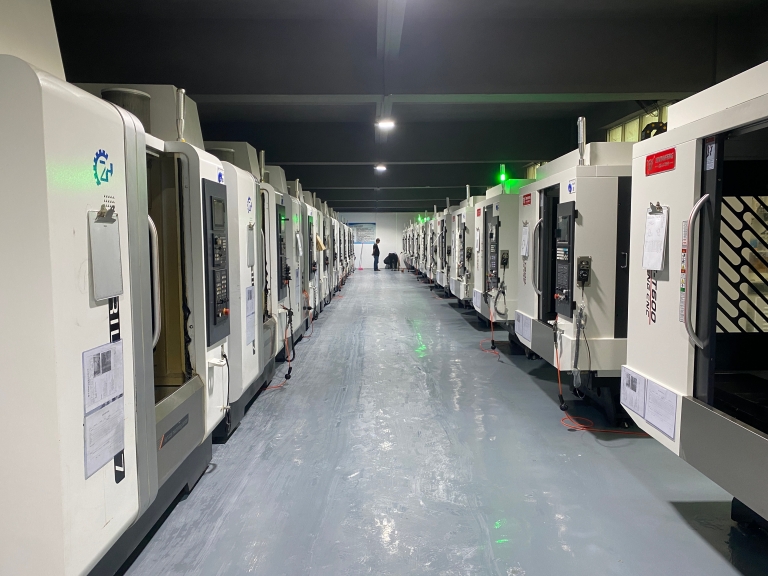
The heart of any OEM 5 Axis CNC Machining Manufacturer is its machine shop. 5-axis machining centers from brands like Dema and Beijing Jingdiao represent the pinnacle of precision. However, true process capability is defined by the combination of equipment. A leading facility will not rely solely on 5-axis machines. It will have an integrated ecosystem including high-speed 3-axis and 4-axis mills for secondary operations, Swiss-type lathes for complex turned parts, wire EDM for intricate details, and precision grinding for surface finish.
This diversity allows a supplier to manufacture parts that are not just machined, but completely finished. For example, a complex aluminum housing for a drone gimbal might require 5-axis milling for the main body, followed by EDM for sharp internal corners, and finally, a CMM inspection for full dimensional validation—all under one roof. This integrated process chain is a hallmark of a mature OEM 5 Axis CNC Machining Manufacturer.
The Power of a Multi-Technology Platform
The most agile manufacturers combine subtractive (CNC) and additive (3D Printing) technologies. A client might need a titanium alloy bracket that is initially created via SLM 3D printing for a complex lattice structure, then finished on a 5-axis CNC machine for critical mating surfaces and precise hole tolerances. A facility that houses both SLM printers (for metal), SLA printers (for precision resin prototypes), and SLS printers (for functional nylon parts), alongside a full complement of machining centers, offers a unique “best of both worlds” solution. This technological breadth is a clear indicator of a sophisticated partner.
Addressing the Seven Critical Pain Points in CNC Machining
Collaborating with a qualified OEM 5 Axis CNC Machining Manufacturer is the most effective strategy for mitigating the pervasive risks in outsourcing. Let’s examine how these risks are neutralized:
Pain Point 1: The “Precision Black Hole”: The gap between promised tolerance (±0.001mm) and delivered reality. A reputable manufacturer mitigates this through in-process inspection, calibrated CMM equipment, and stringent SPC (Statistical Process Control). They can articulate how they hold a tolerance, not just that they can try.
Pain Point 2: Communication Breakdown: R&D teams often struggle to convey design intent to production teams. An experienced DFM partner acts as a translator, identifying ambiguities in the drawing and suggesting pragmatic solutions before metal is cut, preventing costly rework loops.
Pain Point 3: Fragmented Supplier Base: Using one vendor for machining, another for surface treatment (like anodizing or plating), and a third for inspection creates delays and quality inconsistencies. An OEM 5 Axis CNC Machining Manufacturer provides a unified point of contact, managing the entire post-processing chain—from bead blasting to vacuum forming—ensuring consistency and on-time delivery.
Pain Point 4: Hidden Costs: The low unit price from a transactional supplier often masks costs from tooling, special fixturing, shipping, and quality failures. A strategic partner provides transparent, inclusive quoting that reflects the total engineered solution, not just the machine time.
Pain Point 5: Intellectual Property (IP) Risk: In sensitive industries like aerospace and medical, data security is paramount. A partner with ISO 27001 compliance and strict data management protocols offers the trust required for high-stakes projects.
Pain Point 6: Scalability Issues: A prototype shop may not have the capacity for production runs, and a production shop may not have the flexibility for prototypes. A mature manufacturer has a diverse machine park and a flexible workforce to seamlessly transition a part from a single prototype to a batch of thousands.
Pain Point 7: Inconsistent Finishing: A part can be machined perfectly, but a poor surface finish can ruin its function or aesthetics. A full-service partner owns the finishing process, applying consistent standards for anodizing, powder coating, plating, and assembly.
A Case Study in Value Creation: The Humanoid Robot Joint Component
Consider a critical joint component for a humanoid robot. The part requires a complex, organic shape for strength-to-weight ratio (calling for 5-axis machining of 7075 aluminum), multiple threaded holes for sensor integration, a hard-coat anodized finish for wear resistance, and a cosmetic, low-glare surface for the final assembly.
A fragmented approach would involve:
Vendor A: Machine the rough shape and key features. (Risk: misalignment from multiple setups)
Vendor B: Thread the sensor holes. (Risk: cross-threading or deburring issues)
Vendor C: Anodize the part. (Risk: racking marks or poor coverage in blind holes)
With a proven OEM 5 Axis CNC Machining Manufacturer like GreatLight Metal, the process is unified:
DFM & Programming: Their engineers study the 3D model, optimizing tool paths for the 5-axis machine to reduce cycle time and ensure all features are cut in a single setup.
Precision Machining & Deburring: The part is machined on a high-precision 5-axis center. In-house deburring and threading ensure all holes are clean and accurate.
Integrated Finishing: The part goes directly to the in-house anodizing line (or a trusted, managed partner), where the specified hard-coat finish is applied with appropriate masking for threads.
Final Inspection & Assembly: A full quality report is generated, and the component is packaged or kitted for delivery.
The result? A part that arrives on time, with a single invoice, a single point of quality accountability, and significantly reduced risk of failure. This is the strategic advantage of working with a top-tier OEM 5 Axis CNC Machining Manufacturer.
Setting the Benchmark: The GreatLight Metal Standard
When evaluating suppliers, set a high bar. The following characteristics should be non-negotiable when selecting a partner for complex, high-stakes projects:
Comprehensive Certifications: Look for ISO 9001 for core quality, plus niche certifications like IATF 16949 for automotive or engine hardware components, and ISO 13485 for medical devices. This demonstrates a commitment to industry-specific rigor.
Full Process Chain: Does the supplier handle everything from primary machining to final finishing (anodizing, painting, plating) and assembly? This is critical for reducing risk and lead time.
Proactive Engineering Support: A great supplier does not just accept a file; they question, suggest, and optimize. This requires a team of seasoned application engineers.
Transparent Communication: A partner should provide clear, timely updates on production status, potential issues, and DFM suggestions. This builds trust and prevents surprises.
Data Security and IP Protection: For sensitive projects, ensure the supplier has robust IT security policies (e.g., ISO 27001).
GreatLight Metal, headquartered in Dongguan’s Chang’an Town, embodies these principles. Since its founding in 2011, it has evolved into a leading precision manufacturing partner, operating from a 76,000 sq. ft. facility with 127 pieces of precision equipment. Their depth—from 5-axis machining and die casting to metal 3D printing and mold making—enables them to tackle the most complex manufacturing challenges.
Conclusion: Choosing a Partner, Not a Vendor
The world of precision machining is no longer just about spindle speed or axis count. It is about engineering rigor, process integration, and a relentless focus on quality. By partnering with a true OEM 5 Axis CNC Machining Manufacturer, you are embedding a high-performance manufacturing partner directly into your product development workflow. This partnership transforms a potential bottleneck into a competitive advantage, enabling faster innovation cycles, higher product quality, and a lower total cost of ownership. When you are ready to move your design from concept to reality, the choice is clear: choose a partner who brings the full weight of technical expertise, certified quality, and operational excellence to your table.



















