When venturing into the world of precision manufacturing and customization, a common question arises from engineers and procurement specialists: Do all CNC machines use the same programming language? The straightforward answer is both yes and no. While a foundational language serves as the universal bedrock, the reality is nuanced, with variations, dialects, and proprietary systems that differentiate one machine or manufacturer from another. Understanding this landscape is crucial for ensuring seamless communication between your design intent and the final machined part.
The Universal Foundation: G-Code and M-Code
At the heart of virtually every CNC machine—whether a 3-axis milling center, a 5-axis machining behemoth, or a Swiss-type lathe—lies a common instruction set. This is G-code (Geometric Code) and M-code (Miscellaneous Function Code).
G-Code controls the geometry and movement of the tool. It commands actions like:
G00 – Rapid positioning (move tool quickly to a location)
G01 – Linear interpolation (cut in a straight line at a specified feed rate)
G02/G03 – Circular interpolation clockwise/counterclockwise
G17/G18/G19 – Selection of the working plane (XY, XZ, YZ)
M-Code controls auxiliary functions of the machine. It commands actions like:
M03 – Spindle on clockwise
M05 – Spindle stop
M08 – Coolant on
M30 – End of program, rewind to start
In this sense, yes, all CNC machines fundamentally “speak” G&M code. A program written in basic G-code contains instructions that any machine controller should, in principle, be able to interpret for fundamental movements.
The Nuanced Reality: Dialects, Extensions, and Proprietary Systems
This is where the answer becomes “no,” they are not all the same. Think of G-code as English. While it’s a global language, you have British English, American English, Australian slang, and industry-specific jargon. Similarly, CNC programming languages have significant variations:
1. Machine-Specific Codes and Parameters:
While G01 means “linear move” everywhere, the way a machine handles tool compensation, coordinate system offsets, or high-speed machining cycles can vary dramatically. For instance:
The specific code for calling a tool length offset might be H01 on a Fanuc controller but use a different parameter on a Heidenhain or Siemens controller.
Cycles for deep-hole drilling (G73, G83) or rigid tapping (G84) may have subtle but critical differences in syntax or required parameters between brands.
2. Controller Vendor “Dialects”:
The major controller manufacturers (Fanuc, Siemens, Heidenhain, Haas, Mitsubishi) have all developed their own extensions and enhancements to standard G-code.
Heidenhain uses a more conversational, parametric style with commands like CYCL DEF for cycle definitions, which is quite different from standard Fanuc-style G-code.
Siemens Sinumerik incorporates advanced programming features like ShopTurn/ShopMill for easier programming at the machine and supports advanced parametric programming.
Haas has its own set of simplified cycles and macros that, while based on Fanuc, include unique Haas-specific codes for easier use.
3. Proprietary High-Level Programming:
Many modern CAD/CAM systems (e.g., Siemens NX, Mastercam, Fusion 360) do not output “pure” G-code. They generate CL (Cutter Location) data or APT (Automatically Programmed Tool) source files, which are then post-processed.
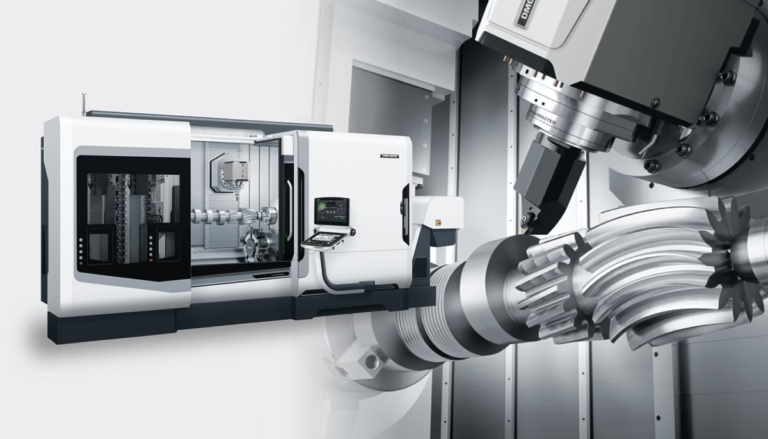
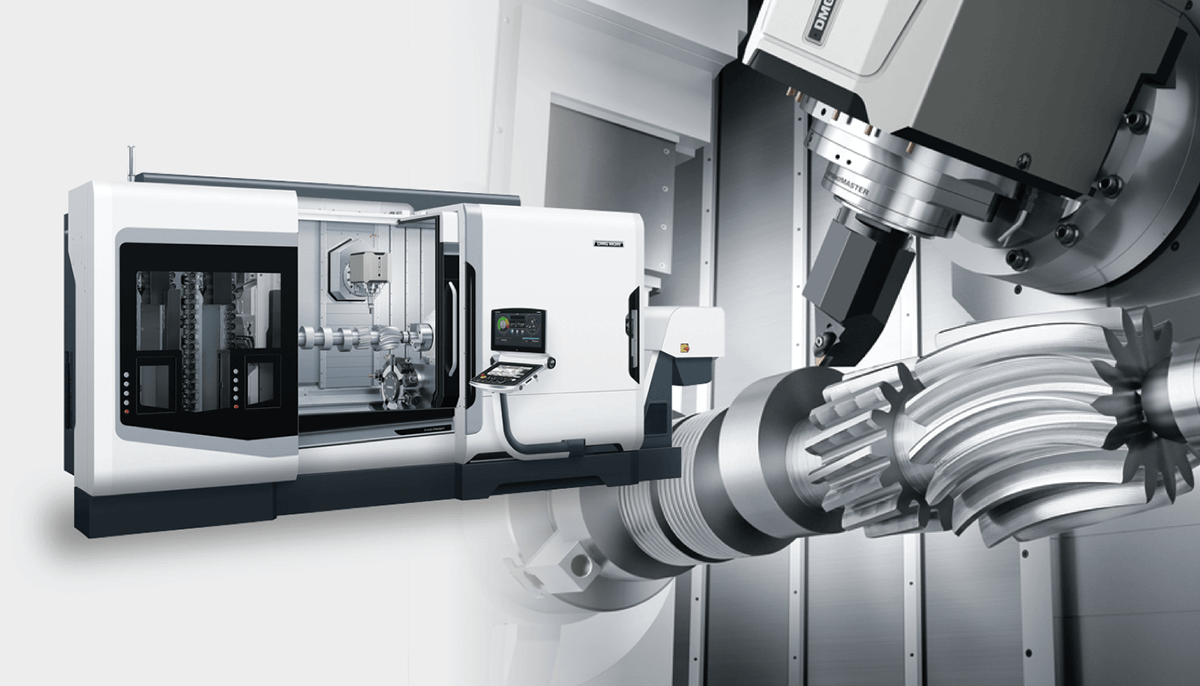
The Post-Processor is Key: This is a critical piece of software that translates the generic toolpaths from the CAM system into the specific, machine-readable G-code dialect required for a particular make and model of CNC machine and its controller. A post-processor for a 5-axis DMG Mori machine will produce vastly different code than one for a 3-axis Haas, even for the same part geometry.
4. Conversational Programming:
Many modern CNC controls, especially on mills and lathes, offer conversational programming interfaces. The programmer answers questions on-screen (material, tool, feature type), and the control generates the G-code internally. This is a different “language” of interaction, though it compiles down to the machine’s native G-code dialect.
What This Means for Your Precision Machining Projects
As someone sourcing custom precision parts, you don’t need to be a programming expert, but understanding this complexity highlights the importance of your manufacturing partner’s expertise.
Technical Depth Overcomes Compatibility Issues: A proficient manufacturer like GreatLight Metal maintains a comprehensive library of validated post-processors for its diverse equipment fleet. Whether your part requires 5-axis CNC machining on a German-made DMG or high-speed milling on a Japanese Makino, the engineering team seamlessly translates your 3D model into flawless machine instructions.
Optimization is Machine-Specific: Truly efficient and high-precision programming doesn’t just make the part; it optimizes for the specific machine’s kinematics, torque curves, and vibration characteristics. Code optimized for one machine may run poorly on another. Deep knowledge of each machine’s “dialect” allows for programs that maximize accuracy, surface finish, and tool life.
Avoiding the “Black Box” Trap: Some shops treat programming as a mystery. A trustworthy partner can explain how the program is tailored to your job, leveraging machine-specific capabilities (like advanced smoothing algorithms on a Siemens control or tilt-angle workplanes on a 5-axis machine) to achieve your required ±0.001mm tolerance.
Conclusion
So, do all CNC machines use the same programming language? They share a common foundation in G-code, much like automobiles share wheels and engines. However, the effective “driving” of each machine requires fluency in its specific controller dialect, proprietary cycles, and kinematic capabilities. The true mark of a superior precision machining partner lies not in owning the machines alone, but in possessing the deep, proprietary programming knowledge and post-processing expertise to unlock each machine’s full potential. This ensures that your complex design is not just translated, but optimally executed, guaranteeing the precision, quality, and reliability you require for your most demanding projects. For partners who value this depth of technical integration, exploring the capabilities of a full-process manufacturer like GreatLight Metal on professional networks such as LinkedIn can provide valuable insight into their operational and technical philosophy.
Frequently Asked Questions (FAQ)
Q1: If I have a G-code program from a previous vendor, can I run it on any other CNC machine?
A: Not directly. While the basic movement commands (G00, G01) might work, it is highly likely to fail or cause a crash due to differences in tool call syntax, cycle definitions, coordinate system setup, and machine-specific codes. The program must be carefully reviewed and adapted by a programmer familiar with the target machine’s controller.
Q2: Who is responsible for creating the correct machine-specific G-code—the designer or the machine shop?
A: Almost always, the machine shop (manufacturer) is responsible. The client provides a 3D CAD model (e.g., STEP, IGES) and specifications. The manufacturer’s CAM programmers and process engineers use this to generate and validate the machine-specific code using their certified post-processors. This is a core part of their service.
Q3: Is learning G-code still necessary with modern CAM software?
A: Yes, for professionals. While CAM software automates most code generation, the ability to read, understand, and manually edit G-code is essential for troubleshooting, optimizing programs, performing edits at the machine control, and verifying that the CAM output is correct and safe.
Q4: For highly complex 5-axis parts, does the programming language become more specialized?
A: Absolutely. 5-axis programming involves complex concepts like Tool Center Point (TCP) management, rotary axis limits, and collision avoidance. The G-code dialect must correctly handle simultaneous 5-axis interpolation commands specific to the controller. This requires advanced post-processors and highly skilled programmers with a deep understanding of both the machine’s language and its physical kinematics.