
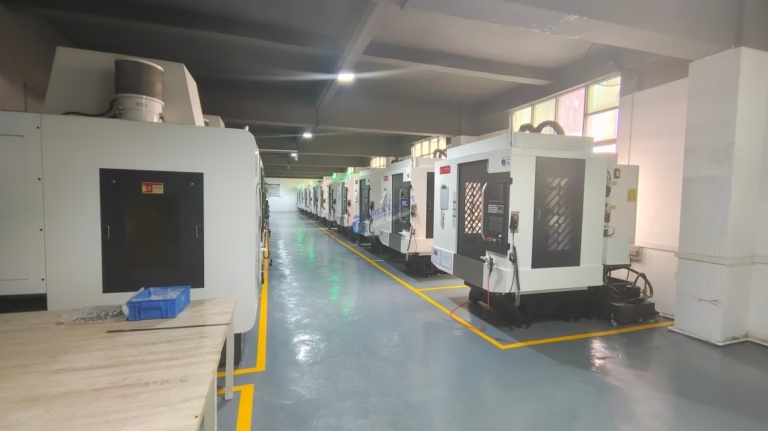
When evaluating the cost of entering the world of CNC machining, the question “How much is it to make a CNC machine?” can be interpreted in two distinct ways: the cost to build one yourself (DIY or from a kit), and the cost to purchase a commercial unit from a manufacturer. The answer varies dramatically, from a few thousand dollars for a hobbyist machine to over half a million for an industrial powerhouse. For most businesses seeking precision parts, partnering with an established manufacturer like GreatLight CNC Machining Factory often proves more economically and technically viable than embarking on machine fabrication.
H2: Deconstructing the Cost: Building Your Own CNC Machine
For engineers, hobbyists, or startups, building a CNC machine can be an educational project. The costs are highly variable and depend on size, precision, and capability.
H3: 1. Cost by Machine Type & Scale
Desktop/Hobbyist Router (3-Axis): For wood, plastics, and soft metals. Costs range from $1,000 to $5,000. This includes DIY kits, linear rails, stepper motors, a spindle, and a basic controller.
Benchtop Mill Conversion (3-Axis): Converting a manual bench mill (like a Sieg X2) to CNC offers more rigidity for metals. Budget $2,500 to $8,000, including the base mill, ball screws, motors, and control system.
Custom-Built Industrial-Style Machine: Designing and building a rigid, semi-industrial machine from aluminum or steel extrusions and components. This can range from $15,000 to $50,000+, heavily dependent on the precision of components like ground ball screws, high-torque servos, and a professional CNC controller.
H3: 2. Major Cost Component Breakdown
Building a machine involves sourcing and integrating multiple systems:
| Component Category | Description | Estimated Cost Range |
|---|---|---|
| Structural Frame | Aluminum extrusions, steel weldment. Determines rigidity and work envelope. | $500 – $10,000+ |
| Motion System | Linear guides (rails), ball screws, bearings. Critical for precision and repeatability. | $1,000 – $20,000+ |
| Drive System | Stepper or servo motors, drives. Servos offer higher performance at a cost. | $800 – $15,000 |
| Spindle & Tooling | The cutting motor. A VFD spindle is common; an automatic tool changer (ATC) adds significant cost. | $500 – $10,000+ |
| Control System | CNC controller (e.g., Mach4, LinuxCNC, Siemens), power supply, wiring. | $800 – $8,000 |
| Software | CAD for design, CAM for generating toolpaths. | $0 (Open Source) – $10,000+ |
The Hidden Cost: The most significant investment is often time and expertise. Design, assembly, calibration, and troubleshooting can take hundreds of hours. Achieving and maintaining industrial-grade precision (e.g., ±0.001mm) is exceptionally challenging in a DIY context.
H2: Purchasing a Commercial CNC Machine: A Spectrum of Investment
For professional manufacturing, purchasing a machine from an OEM is the standard. Pricing tiers correspond directly to capability, precision, and durability.
H3: 1. Entry-Level & Benchtop Industrial Machines
3-Axis CNC Mills: Suitable for prototyping and light production. Examples include Haas Mini Mills or similar Taiwanese/Chinese models.
Price Range: $50,000 – $100,000.
CNC Lathes: For rotational parts. Basic 2-axis lathes start in a similar range.
H3: 2. Mid-Range Production Workhorses
Full-Size 3-Axis Vertical Machining Centers (VMCs): The backbone of many job shops. Brands like Haas, Doosan, and Mazak.
Price Range: $100,000 – $250,000.
Options like probe systems, coolant through-spindle, and larger tool magazines add cost.
H3: 3. High-Performance & Multi-Axis Systems
5-Axis CNC Machining Centers: Essential for complex aerospace, medical, or automotive components. They allow machining from nearly any angle in a single setup.
Price Range: $250,000 – $500,000+. The upper end includes integrated automation and high-speed spindles.
High-Precision Swiss-Type Lathes: For intricate, small-diameter parts. These are highly specialized and costly.
Price Range: $150,000 – $400,000+.
H3: 4. The “Total Cost of Ownership” (TCO)
The purchase price is just the beginning. A prudent budget must include:
Installation & Calibration: $5,000 – $20,000.
Tooling & Workholding: Initial tooling can easily reach 20-30% of the machine cost.
Facility Upgrades: Robust electrical supply (3-phase), air compressors, and coolant systems.
Maintenance & Service Contracts: Typically 5-10% of the machine price annually.
Operational Costs: Skilled programmer/operator salaries, software subscriptions, material waste during learning curve, and energy consumption.
H2: The Strategic Alternative: Partnering with a Professional Machining Service
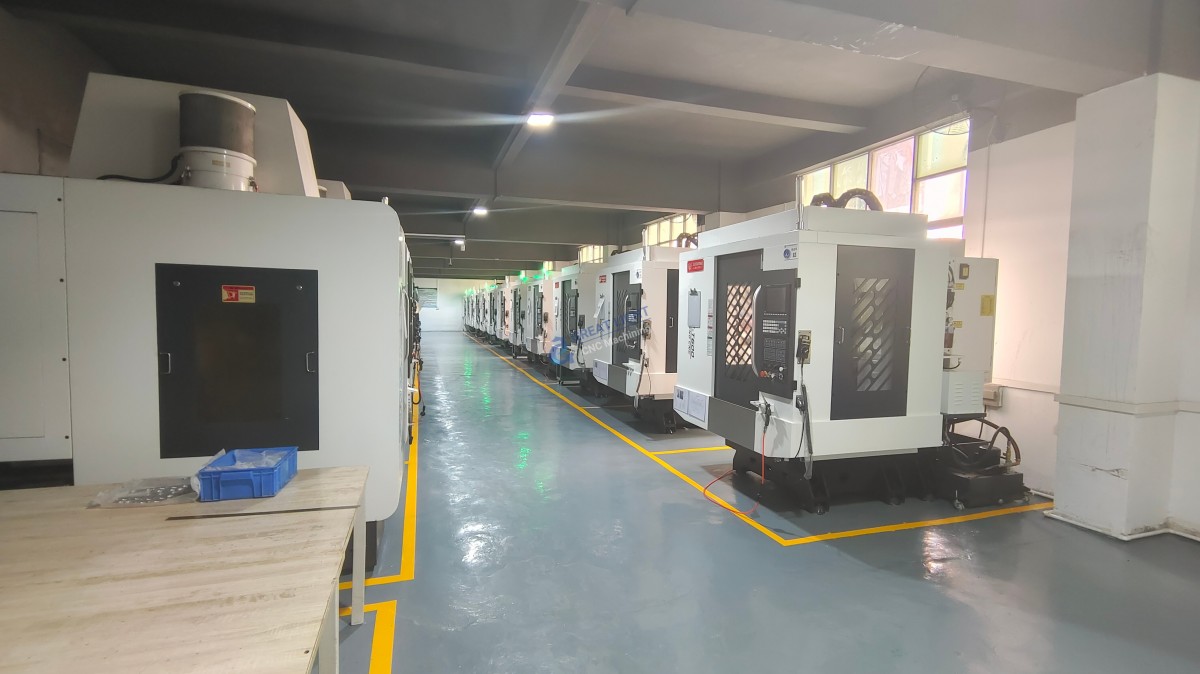
For most businesses, the capital expenditure, technical debt, and operational overhead of owning a CNC machine—especially a high-end 5-axis CNC machining center—are prohibitive. This is where the strategic value of a manufacturing partner becomes clear.
Partnering with a certified manufacturer like GreatLight CNC Machining Factory converts fixed capital costs into variable, per-project operational expenses. You gain immediate access to:
State-of-the-Art Technology: A full portfolio of 3-axis, 4-axis, and 5-axis CNC machines, EDM, grinders, and 3D printers without the investment.
Guaranteed Precision: Systems backed by ISO 9001:2015 certification and in-process quality control, ensuring parts meet specs like ±0.001mm.
Zero Hidden TCO: No maintenance worries, software updates, or operator training costs.
Integrated Expertise & Speed: From design-for-manufacturability (DFM) advice to full post-processing and assembly, accelerating time-to-market.
In essence, you pay only for the precision parts you need, not for the factory floor, equipment depreciation, or the immense learning curve required to master it.
Conclusion
So, how much is it to make a CNC machine? If building, it’s a project costing $1k to $50k plus immense time, with results unlikely to match commercial precision. If buying, it’s a capital investment from $50k to over $500k, plus substantial ongoing operational costs.

For companies focused on innovation and bringing high-quality products to market efficiently, the most cost-effective and low-risk path is to leverage the established infrastructure and expertise of a specialized partner. Engaging a service provider like GreatLight CNC Machining Factory provides on-demand access to advanced manufacturing capabilities, transforming a large, complex capital question into a simple, scalable operational solution. This partnership model allows you to channel your resources into core R&D and business growth, while relying on experts to deliver precision-machined components reliably.
FAQ
Q1: What is the cheapest type of CNC machine I can build?
A: The cheapest entry point is a small-format, 3-axis CNC router kit for wood and plastic, which can be assembled for around $1,000. However, its precision, rigidity, and material capabilities are very limited.
Q2: Besides the machine price, what’s the biggest hidden cost of owning a CNC?
A: Skilled labor and programming time. A capable CNC machinist/programmer is essential. Additionally, the time and material cost of trial-and-error during setup and programming for new parts can be significant.
Q3: Is there a minimum production volume where buying a machine becomes worthwhile?
A: It varies, but a common rule of thumb is when your annual spending on outsourced machined parts consistently exceeds 60-70% of the total cost of ownership of the machine you need. A detailed cost-benefit analysis factoring in utilization rate, lead time needs, and intellectual property control is crucial.
Q4: Why is a 5-axis CNC machine so much more expensive?
A: The complexity skyrockets. It requires a far more rigid mechanical structure, two additional rotary axes with high-precision bearings and drives, exponentially more complex CNC controller software and kinematics, and advanced calibration systems to maintain accuracy across all five axes simultaneously.
Q5: How can I ensure quality if I outsource instead of buying my own machine?
A: Choose a partner with transparent certifications (like ISO 9001), in-house metrology (CMMs, optical scanners) for inspection reports, and a proven track record. Reputable manufacturers like GreatLight Metal provide full documentation and are accountable for part quality, often offering guarantees that an in-house shop cannot match due to less experience and process rigor. For deeper insights into industry standards and partnerships, you can follow discussions on professional platforms like LinkedIn.



















