
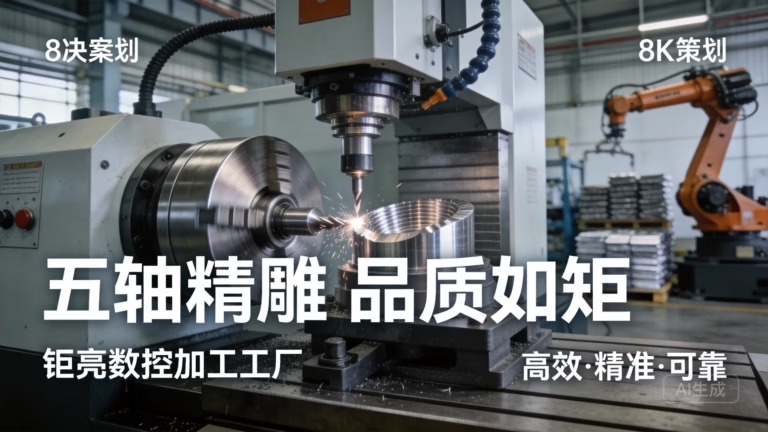
In the realm of manufacturing, the pursuit of precision is never-ending. A common and insightful question we encounter from engineers and procurement specialists is: Can you build more precise CNC machines than standard industrial machines? The answer is nuanced and goes beyond a simple yes or no. It delves into the core of modern precision engineering, where capability is defined not by the machine label alone, but by a holistic ecosystem of technology, process control, and expertise.
At its heart, this question often compares standard, mass-produced CNC equipment with high-end, purpose-built or exceptionally calibrated precision CNC machining systems. The reality is that while the foundational principles are similar, the achievable precision diverges dramatically based on several critical factors.
Deconstructing “Industrial Machines”
First, we must define “industrial machines.” This term typically encompasses robust, reliable CNC mills, lathes, and routers designed for continuous production in factory environments. They are workhorses built for efficiency, durability, and good accuracy—often in the range of ±0.01mm to ±0.05mm. They are perfect for a vast array of applications where such tolerances are perfectly acceptable.
The quest for “more precise” implies moving beyond this standard. This is where specialized precision machining providers like GreatLight Metal differentiate themselves. We don’t just operate industrial machines; we orchestrate a precision manufacturing symphony where every element is optimized for micron-level accuracy.
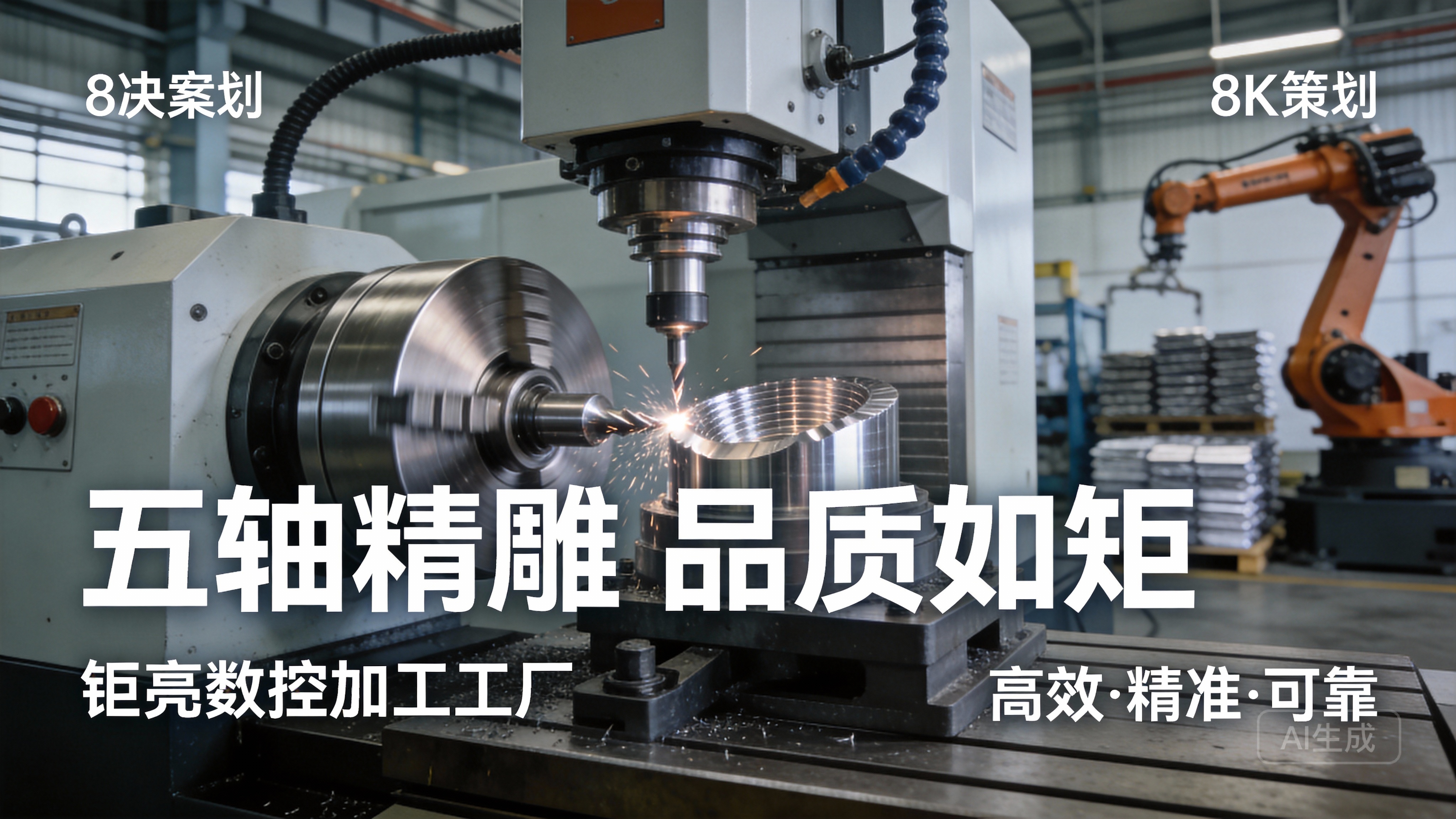
The Pillars of Superior Precision in CNC Machining
Building parts with tolerances tighter than standard industrial capabilities (e.g., reaching ±0.005mm, ±0.002mm, or even sub-micron levels) requires an integrated approach.
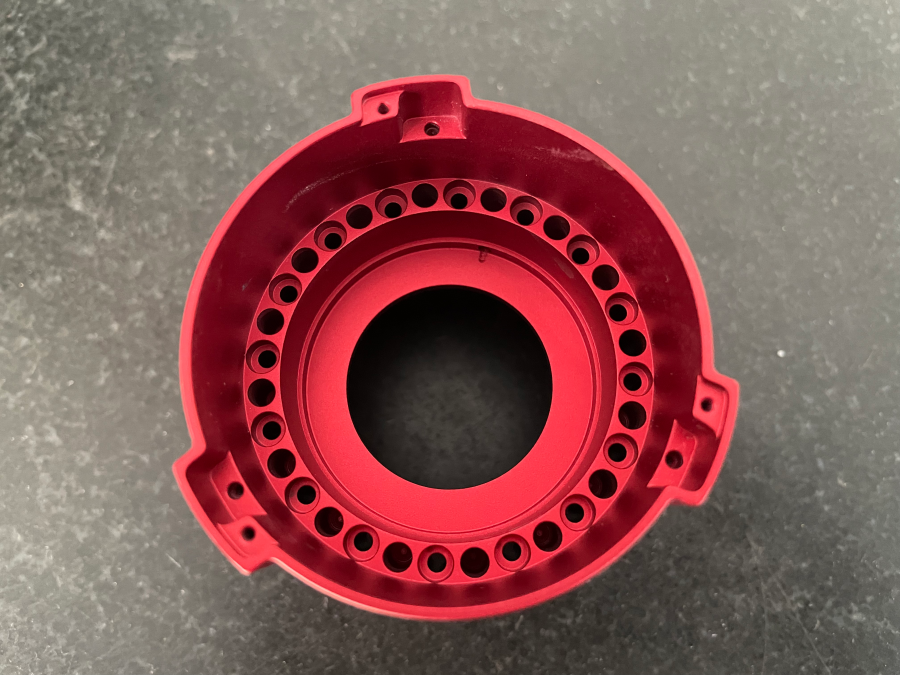
1. Foundational Hardware: The Machine Tool Itself
Structural Rigidity and Design: High-precision machines feature massively damped, thermally stable cast iron or polymer concrete bases to absorb vibrations. Linear guides, ball screws, and spindles are of the highest grade, minimizing deflection and runout under load.
Feedback and Resolution: While standard machines may use rotary encoders on motors, ultra-precision systems employ linear scales with nanometer-level resolution directly on the axes, providing true position feedback and negating the effects of mechanical backlash or screw wear.
Thermal Management: Precision is ruined by thermal expansion. High-end machines integrate cooling systems for ball screws, spindles, and even the machine structure itself to maintain a stable thermal equilibrium, a feature often minimal in standard industrial units.
2. The Metrology and Calibration Ecosystem
This is arguably the most significant differentiator. A machine can only be as precise as its calibration.
Laser Interferometer Calibration: Companies focused on extreme precision, like GreatLight, regularly calibrate their multi-axis CNC centers using laser interferometers. This maps geometric errors (pitch, yaw, straightness, squareness) across the entire work envelope, and compensation is loaded into the machine’s controller, effectively “teaching” it its own imperfections to correct them in real-time.
In-Process Probing: Touch-triggers and laser probes on the spindle allow for on-the-fly workpiece measurement, tool setting, and adaptive machining, compensating for material lot variations or fixture inconsistencies.
3. Process Mastery and Environmental Control
Stable Machining Environment: Precision work is conducted in temperature and humidity-controlled rooms (±0.5°C or better). This prevents the workpiece, tools, and machine from dimensional drift.
Tooling and Tool Management: Using premium, balanced tool holders (like hydraulic or shrink-fit), micro-grain carbide or diamond tools, and implementing rigorous tool wear monitoring protocols are non-negotiable.
Advanced CAM Programming: The toolpath strategy must be optimized for precision—minimizing step-overs, using climb milling consistently, managing engagement angles, and implementing smoothing algorithms to avoid machine jerk that induces vibration.
GreatLight Metal’s Approach to Transcending Standard Precision
At GreatLight Metal Tech Co., LTD., our philosophy is that precision is a manufactured outcome, not just a machine specification. Our capability to consistently produce parts beyond standard industrial machine accuracy is built on our “four integrated pillars”:
Advanced Equipment Cluster: We invest in high-performance 5-axis CNC machining centers from leading builders, which are inherently designed for higher accuracy and complex kinematics. This is complemented by precision EDM, grinding, and metrology equipment, creating a closed-loop precision manufacturing cell.
Authoritative Process Certification: Our adherence to ISO 9001:2015 for quality management and IATF 16949 for automotive processes mandates systematic control over every variable affecting precision, from incoming material inspection to final audit. For medical components under ISO 13485, this traceability and control are even more stringent.
Full-Process Chain Integration: Precision often requires multiple processes. A part might be rough-machined on a 5-axis machine, finished on a high-speed mill, and finally calibrated on a jig grinder or lapping machine—all under one roof. This eliminates cumulative errors from multiple suppliers and handling.
Deep Engineering Support: Our engineers engage in Design for Manufacturability (DFM) analysis, often suggesting subtle design modifications that enhance precision manufacturability without compromising function, turning “hard-to-hold” tolerances into achievable ones.
Conclusion
So, can we build more precise parts than what’s typical from a standard industrial machine? Absolutely. The distinction lies in moving from generalized “machining” to dedicated precision engineering. It’s the difference between a dependable family sedan and a Formula 1 car; both are automobiles, but one is a system meticulously engineered for peak performance.
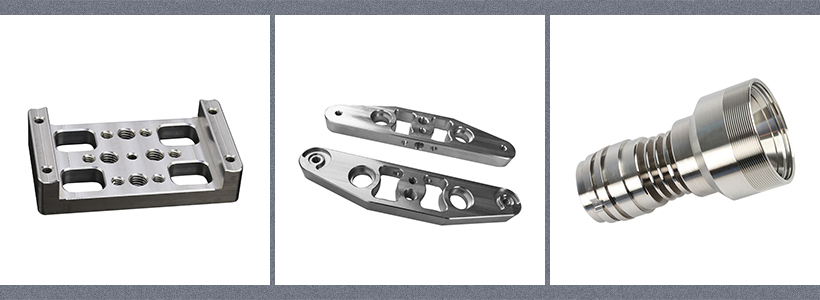
For projects demanding tolerances under ±0.01mm, complex free-form surfaces, or flawless consistency across production runs, partnering with a specialist like GreatLight Metal is not just an option—it’s a strategic necessity. We provide the integrated technological ecosystem, controlled environment, and profound process expertise necessary to transform ambitious designs into tangible, high-precision reality, effectively building the part accuracy that standard industrial machines alone cannot reliably achieve.
Frequently Asked Questions (FAQ)
Q1: What is a realistic tolerance I can expect from a high-precision CNC supplier vs. a standard machine shop?
Standard Shop: Typically ±0.025mm to ±0.05mm is standard, with ±0.01mm being a stretch goal.
High-Precision Specialist (e.g., GreatLight): We routinely hold ±0.005mm on production runs, with capabilities to achieve ±0.002mm or better for critical features on suitable materials and geometries, supported by in-house metrology.
Q2: Is 5-axis CNC machining always more precise than 3-axis?
Not inherently in terms of static accuracy. However, 5-axis is often capable of achieving higher precision on complex parts because it allows finishing a part in a single setup. Multiple setups on a 3-axis machine introduce cumulative fixture and alignment errors, which 5-axis machining eliminates.
Q3: Besides the machine, what single factor most impacts final part precision?
Temperature control. Unmanaged thermal expansion in the machine, tool, and workpiece is the largest source of dimensional error in precision machining. A controlled environment is a fundamental investment for any shop claiming high precision.
Q4: How do certifications like ISO 9001 actually improve precision?
They enforce systematic process control. This means variables (tool life, coolant concentration, calibration schedules, material certifications) are monitored and controlled, reducing random errors. It ensures that the precision achieved in a one-off prototype can be replicated consistently in the 10,000th part.
Q5: For a new product, when should I engage a precision machining partner?
As early as possible, ideally during the design phase. Early DFM feedback can help you design for precision, potentially simplifying features, specifying appropriate tolerances, and selecting optimal materials, which leads to a more reliable and cost-effective manufacturing outcome.



















