
How to Start a CNC Machine Business
This guide is for machinists and engineers who want to start a CNC machine business without buying the wrong iron first. It covers niche selection, machine mix, quoting math, quality systems and the operating rules that decide whether you are still running in year three.
In this article
- 1
- 2
- 3
- 4
- 5
- 6
- 7
- 8
Key takeaways
Pick the niche before you buy the first machine
Most new shops buy a machine and then look for work that fits it. That order is backwards. The part family you chase decides spindle speed, axis count, travel envelope and what certifications you will eventually need.
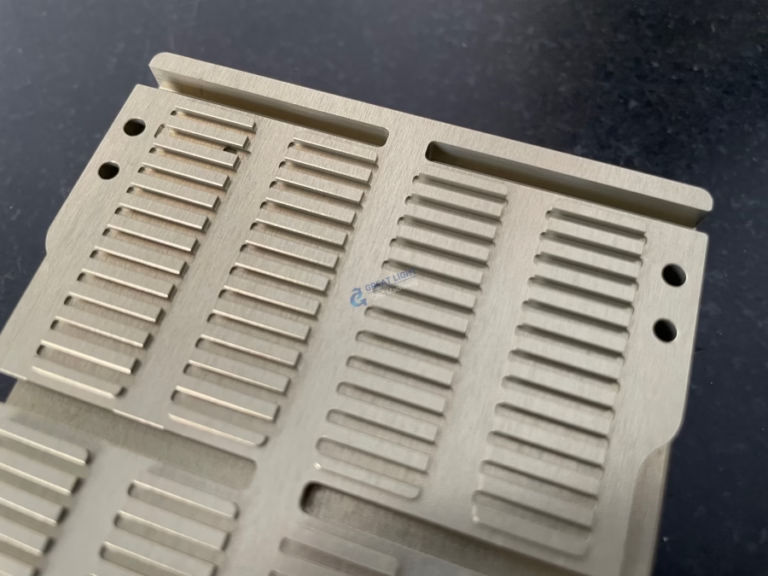
Write down three or four part families you already understand. Examples: aluminum enclosure plates with ±0.05 mm hole patterns, stainless hydraulic manifolds, or small titanium brackets for aerospace fixtures. Each one points to a different machine.
Then check who is already serving that family. If every local shop quotes 3-axis milling on simple plates, the margin is gone. A gap usually shows up where buyers need tighter tolerance, faster turnaround or a certified supplier for a regulated industry.
Take aluminum enclosure plates. A 500 × 500 × 450 mm travel machine covers most of them, and a 3-axis mill with a good vise handles the rest. Stainless manifolds with cross-drilled ports need a 4-axis or mill-turn center so you can hit the side features in one setup.
Niche down far enough that you can name the buyer: a tier-2 automotive supplier, a medical device OEM, a robotics integrator. If you cannot name them, the niche is still too broad.
- 1Good starting nichesAluminum fixture plates, stainless fluid components, small robotics brackets, prototype runs for medical housings.
- 2Weak starting nichesGeneral 'CNC machining' with no part family, no tolerance range and no named buyer.
- 3Check before committingCall five buyers in the niche and ask what their current supplier gets wrong. Lead time and tolerance are the usual answers.
Match the machine mix to the parts you quoted
A working starter mix is one 3-axis vertical mill and one turning center. That covers prismatic parts and round parts, which is most of what a new shop sees. Budget for tooling, workholding and a granite surface plate in the same purchase.
Add a 4-axis mill when your parts have features on three or four faces. Every extra setup costs you both labor and position error. A 4-axis with a Ø400 mm rotary table removes two setups on a typical manifold and pays for itself on repeat work.
5-axis simultaneous machining is a different decision. It makes sense when the part has contoured surfaces, deep cavities with limited tool access, or tolerances that a repositioned part cannot hold. It does not make sense as a marketing upgrade.
Travel matters more than spindle taper for most new shops. A 750 × 1,150 × 550 mm machine handles larger plates and fixtures; a 500 × 310 × 200 mm compact mill is faster and cheaper for small parts. Buy the envelope your quoted parts actually need.
Do not forget the boring stuff. A shop with one mill and no compressor, no coolant management and no measuring tools is not a business yet. Add a CMM or at least a height gauge and bore gauge set.
- 1Hold off on 5-axisUntil a signed job needs contoured surfaces or one-setup access to five faces.
- 2Buy workholding earlyVises, soft jaws, modular fixturing and a rotary table cost less than the downtime they prevent.
- 3Budget for metrologyCalipers alone will not hold ±0.005 mm. Plan for a micrometer set and a surface roughness tester.
Build a quoting method that survives real jobs
Quote from cycle time. Estimate the machining time per part, multiply by your shop rate, add material cost, add setup amortized over the batch, then add a scrap and rework margin. If you skip the margin, one scrapped titanium part eats the profit on the whole run.
Get the shop rate right. Take your monthly fixed costs (machine payment, rent, power, insurance, software, your own salary) and divide by the billable spindle hours you can realistically sell. Most one-machine shops sell 100 to 140 billable hours a month, not 160.
Material cost is not the catalog price. Aluminum and stainless come in standard stock sizes. If your part needs a 4,000 mm bar or a specific plate thickness, you either pay a cut charge or you buy more material than the part needs. Price the stock you will actually order.
Setup time is the silent killer on small batches. A one-off prototype with four setups can cost more in setup than in cutting. For runs under ten pieces, quote setup as its own line item so the buyer sees why the unit price is high.
Review every quote after the job closes. Compare estimated cycle time to actual cycle time. After twenty jobs you will know your own error pattern, and your quotes will stop drifting.
- 1Minimum quote formulaMachine rate × cycle time + material + setup ÷ quantity + scrap margin.
- 2Track actual vs estimatedLog cycle time per job. The gap tells you which part families you underestimate.
- 3Never quote from a photo aloneAsk for a 3D file or a drawing with tolerances, material and finish.
Set up quality and paperwork before the first regulated buyer
A small shop can run on calipers for a while. That stops the day a medical or automotive buyer asks for a quality manual, traceable material certs and inspection records. Building the system after the order arrives is expensive.
Start with the basics: a documented inspection plan per part, raw material certificates filed by lot, in-process checks at defined operations, and a final inspection record that ships with the parts. Reports on request is a normal customer expectation.
Calibration is the next step. Every gauge and micrometer needs a calibration record and a due date. Buyers audit this. A shop that cannot show a calibration schedule looks like a risk, no matter how good the parts are.
Then decide which certification to pursue. ISO 9001:2015 is the general entry point. IATF 16949:2016 is required for automotive production work. ISO 13485:2016 covers medical devices. ISO 27001:2022 matters when you handle customer CAD data under contract.
Do not chase all four at once. Pick the one your target buyers ask for, run it for a year, then expand. Certification without the daily habits behind it fails the first audit.
- 1Document as you goWrite the inspection plan for the job in front of you, not for an imaginary future process.
- 2Keep material traceabilityLot numbers on certs must link to the parts that shipped.
- 3Calibrate on scheduleAn overdue micrometer is a finding in any audit.
Facility layout, staffing and cash flow rules
Layout is a flow decision. Put material receiving, sawing and raw stock near the door. Keep chip-producing machines together so coolant and chip management stay in one area. Put inspection away from the spindle, because vibration and temperature drift will wreck your measurements.
Power and air are the usual bottlenecks. A 5-axis center may need a dedicated drop and a stable air supply at 0.6 to 0.8 MPa. Plan compressed air, coolant recycling and chip removal before the machine lands, not after.
Staffing: one experienced setup machinist plus one operator can run two or three machines in a cell. Do not hire five operators for one spindle. Train the operator to check parts with the gauge, so the machinist stays on setups and programming.
Cash flow is the real constraint. Material suppliers want payment in 30 days. Buyers often pay in 60. That gap has to be funded from working capital, not from the next job. Keep a buffer equal to two months of fixed costs.
Track three numbers weekly: billable spindle hours, scrap rate and days sales outstanding. If billable hours drop while the backlog looks full, you are quoting work you cannot machine profitably.
- 1Separate inspection from cuttingVibration and thermal drift move measurements. Give metrology its own stable area.
- 2Fund the payment gap30-day material terms against 60-day customer terms needs working capital.
- 3Measure weeklyBillable hours, scrap rate and days sales outstanding tell you more than the order book.
Start a CNC machine business: 6 steps in order
Run these in sequence. Skipping step 1 or step 4 is the most common reason new shops stall.
- 1Define the niche and the buyerName three part families and five real buyers. Confirm tolerance range, typical batch size and required certifications. If a buyer needs ±0.005 mm and ISO 13485, note it now.
- 2Quote the machine list against those partsList the travel envelope, axis count and spindle type each family needs. Pick the smallest machine that covers 80% of the quoted work. A 3-axis mill with 750 × 1,150 × 550 mm travel plus a turning center is a common starting point.
- 3Price the full startup cost, not just the machineInclude rigging, power drops, compressed air, coolant, tooling, workholding, metrology, CAD/CAM seats and three months of fixed costs. Underestimating this list is the standard way to run out of cash in month four.
- 4Build the quality system on paper firstWrite the inspection plan, material traceability log, calibration schedule and final inspection report template. Have them ready before the first regulated inquiry. Reports on request should be a yes, not a scramble.
- 5Quote ten jobs and track the resultsUse cycle time × shop rate + material + setup + scrap margin. After ten quotes, compare estimated to actual cycle time. Adjust the rate where you consistently miss.
- 6Land repeat work before adding capacityOne buyer with monthly repeat orders beats ten one-off jobs. Add a 4-axis or 5-axis machine only when repeat work is already booked and waiting.
Which machine to buy first, by part type
Match the part family to the machine before you spend capital.
| Part family | First machine | Typical tolerance | When to upgrade |
|---|---|---|---|
| Flat plates and brackets | 3-axis mill, 500 × 500 × 450 mm | ±0.05 mm | When parts need features on four faces |
| Shafts and round fittings | Turning center or mill-turn | ±0.02 mm | When cross-drilled ports need one setup |
| Manifolds and housings | 4-axis mill with Ø400 mm rotary table | ±0.01 mm | When five faces need single-setup access |
| Contoured aerospace parts | 5-axis simultaneous center | ±0.005 mm | Buy only with a signed job in hand |
| Prototype runs, low volume | 3-axis mill plus manual lathe | ±0.05 mm | Move to CNC turning after repeat orders |
Start narrow, quote from cycle time, add capacity last
Pick one part family with a named buyer, buy the smallest machine that covers 80% of that work, and build the quality paperwork before the first regulated inquiry. Add axes when the backlog is already waiting, not before.
Common questions
How much capital do I need to start a CNC machine business?
It depends on the machine envelope and the parts you quote. The mistake most new shops make is budgeting only for the machine. Add rigging, power, compressed air, tooling, workholding, metrology, CAM software and three months of fixed costs.
A realistic plan funds the machine plus a working capital buffer that covers the gap between 30-day material terms and 60-day customer terms. Without that buffer, a good order book can still put you under.
What niche should I choose for a CNC machine business?
Pick a part family you can already machine well and a buyer you can name. Tolerance range, batch size and certification requirement define the niche more than the industry label does.
A narrow niche like stainless fluid components for a tier-2 supplier is easier to sell into than general machining, because the buyer can see why you are the right shop.
Are certifications mandatory for a new CNC business?
Not for general job shop work. They become mandatory when you quote regulated industries. Automotive production work usually requires IATF 16949:2016. Medical device work usually requires ISO 13485:2016. ISO 9001:2015 is the general entry point.
ISO 27001:2022 matters when you handle customer CAD data under contract. Do not pursue all of them at once. Pick the one your target buyers ask for.
How long does it take to become profitable?
That depends on your shop rate, billable hours and fixed costs, not on a fixed timeline. The useful milestone is when monthly billable spindle hours cover fixed costs plus your own salary.
Track estimated versus actual cycle time on every job. Shops that close that gap early reach the milestone sooner, because they stop losing money on underestimated work.
What are the biggest challenges for new CNC businesses?
Cash flow between material terms and customer terms. Underestimating setup time on low-volume work. And buying capacity before repeat orders exist.
A 5-axis machine with no booked work is a monthly payment, not a capability. Add capacity when the backlog is already waiting.
Should I buy a 5-axis machine at startup?
Only if a signed job needs contoured surfaces, deep cavities with limited tool access, or single-setup access to five faces. For flat plates, brackets and shafts, a 3-axis mill and a turning center do the work at a lower cost.
Add 5-axis when repeat work is booked and the extra axis removes setups you are already paying for.
Need a second opinion on your machine list or a quote?
Send us your drawings and target volumes. We review the part family, tolerance and finish, then come back with a quotation and DFM analysis within 12 hours.
12-hour quoteNo minimum order quantityNDA on request
More machining notes
We publish setup notes, tooling trials and inspection data from the factory floor.











