
In the world of precision manufacturing, where microns matter and complexity reigns, the CNC lathe machine stands as a fundamental pillar. As a cornerstone of modern machining, understanding how a CNC lathe machine works is essential for anyone involved in designing, sourcing, or producing precision turned parts. At its core, it transforms a digital blueprint into a tangible, high-precision component through a sophisticated dance of automated control, cutting physics, and rotational mechanics.
The Core Principle: Rotational Symmetry and Material Removal
Unlike its milling counterpart where the cutting tool rotates, the fundamental principle of a CNC lathe is that the workpiece rotates at high speed while a stationary or linearly moving cutting tool removes material. This makes it the undisputed champion for manufacturing parts with rotational symmetry—think shafts, pins, bushings, flanges, and nozzles. The process is subtractive, carving the final geometry from a solid block (or “blank”) of material, such as aluminum, stainless steel, titanium, or engineering plastics.
Deconstructing the Machine: Key Components and Their Roles
To grasp how a CNC lathe machine works, one must first understand its anatomy:
The Control Unit (CNC Controller): The brain of the operation. It reads the G-code—a programming language with coordinates (X, Z axes), spindle speeds (S), feed rates (F), and tool commands (T). Modern controllers, like those used at facilities such as GreatLight Metal, feature intuitive interfaces and advanced algorithms for smooth motion control and error compensation.
The Spindle: The heart that holds and rotates the workpiece. Its power, speed range (RPM), and rotational accuracy are critical for achieving fine surface finishes and tolerances. High-precision spindles often utilize liquid cooling and hydrodynamic bearings for minimal thermal growth and vibration.
The Chuck: Mounted on the spindle, it is the gripping device (typically a 3-jaw universal chuck, 4-jaw independent chuck, or collet chuck) that secures the workpiece. Its concentricity and gripping force directly impact machining accuracy.
The Tool Turret: A multi-station carousel that holds various cutting tools (turning tools, boring bars, grooving tools, threading tools). Under CNC command, it rotates automatically to bring the required tool into the cutting position, enabling complex operations without manual intervention.
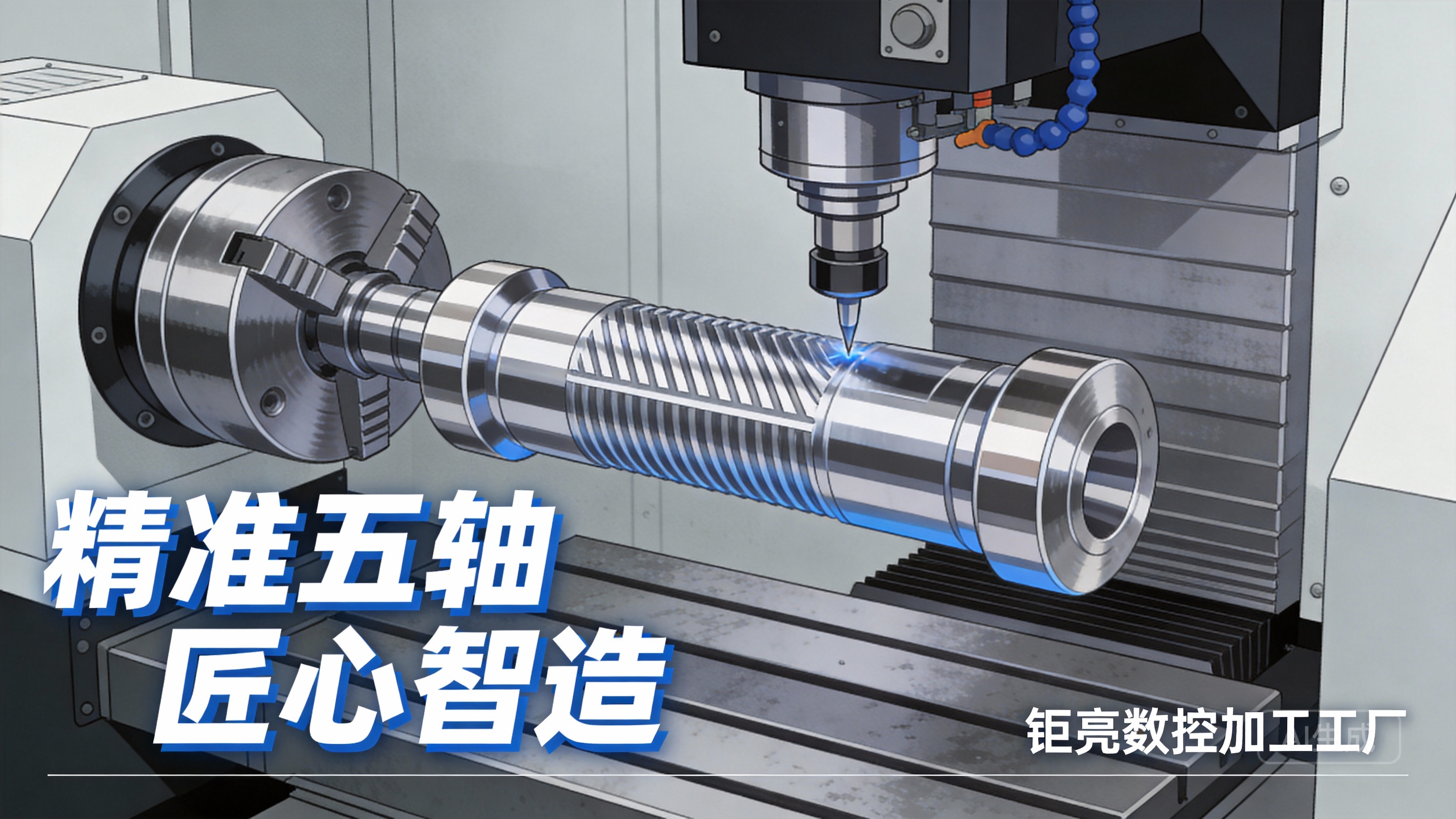
The Carriage and Tool Post: The assembly that moves the cutting tool. It travels along the bed’s guideways (Z-axis for longitudinal movement, X-axis for radial in/out movement). On advanced lathes, a live tooling turret (with motorized tools) can also perform milling and drilling operations, blurring the line between turning and milling—a capability central to modern multitasking.
The Tailstock: A movable unit opposite the spindle that provides support for long workpieces using a center, preventing deflection during machining. It can also hold tools for drilling or reaming from the part’s end.
The Workflow: From Digital File to Finished Part
The operational sequence demystifies how a CNC lathe machine works in practice:
Design & Programming (CAD/CAM): It all begins with a 3D CAD model. Using CAM software, a programmer defines the machining strategy: selecting tools, calculating cutting paths, setting speeds/feeds, and generating the G-code program. For a complex medical implant or aerospace fastener, this stage is where deep manufacturing expertise, like that possessed by engineers at GreatLight Metal, is crucial to ensure efficiency and precision.
Setup: The operator mounts the correct chuck or collet, loads the raw material, and installs the pre-set tools into the turret. The machine is then “zeroed,” aligning the program’s coordinate system with the physical workpiece.
Execution (The Cutting Cycle): The operator initiates the cycle. The machine follows the programmed instructions:
The spindle accelerates to the specified RPM.
The turret indexes to select Tool #1.
The carriage moves the tool to the start position.
Controlled cutting begins—the tool engages the rotating workpiece, following precise linear and circular interpolation paths to create diameters, tapers, faces, and grooves.
The turret may change tools multiple times for roughing, finishing, threading, and grooving operations.
Coolant is continuously applied to remove heat and chips, ensuring tool life and part quality.
Completion: Once the cycle ends, the spindle stops. The finished part is unloaded, often with such precision that secondary finishing is minimized.
Advanced Capabilities: Beyond Basic Turning
Modern CNC lathes, especially the multi-axis and mill-turn centers employed by leading manufacturers, demonstrate a more advanced answer to how a CNC lathe machine works:
Live Tooling and Y-Axis: Motorized tools in the turret allow for off-center drilling, milling slots, and cutting keyways without unclamping the part.
C-Axis Spindle Control: The spindle can rotate to precise angular positions, enabling complex contouring and feature machining around the circumference.
Sub-Spindle: A second spindle on the machine can take the part from the main spindle, allowing complete machining of both ends in a single setup (“done-in-one”), drastically reducing cycle time and improving concentricity.
CNC Lathe vs. CNC Mill: A Clarifying Comparison
While both are CNC machining centers, their core distinction is motion:

CNC Lathe: Workpiece rotates, tool moves linearly. Ideal for cylindrical, conical, or discoid shapes.
CNC Mill: Tool rotates, workpiece is stationary or moves linearly. Ideal for prismatic shapes with complex pockets, slots, and 3D surfaces.
For components requiring features from both families, a 5-axis CNC machining center or a sophisticated mill-turn machine becomes the optimal solution, capable of performing turning, milling, and drilling in a single, complex setup—a specialty of integrated service providers.
Conclusion: The Engine of Precision Rotational Parts
Understanding how a CNC lathe machine works reveals more than just mechanics; it highlights a paradigm of precision, repeatability, and efficiency. It is the technology that enables the mass production of everything from delicate surgical instrument components to robust automotive transmission shafts with unwavering consistency. For projects demanding high-precision turned parts, partnering with a manufacturer that masters this technology—combining advanced machinery like high-speed CNC lathes with comprehensive in-house secondary processing and stringent quality control—is not just a choice but a strategic necessity to ensure part performance, supply chain reliability, and ultimately, product success.
Frequently Asked Questions (FAQ)
Q1: What materials can a CNC lathe machine?
A: CNC lathes are highly versatile and can machine a wide range of materials, including:
Metals: Aluminum (series 6061, 7075), Stainless Steel (303, 304, 316), Alloy Steel, Brass, Copper, Titanium (Ti-6Al-4V).
Plastics: PEEK, Delrin (Acetal), Nylon, PTFE.
Composites: Certain reinforced plastics. The key is selecting the appropriate cutting tool material (carbide, CBN, diamond) and machining parameters for the specific material.
Q2: What is the typical tolerance achievable on a CNC lathe?
A: Standard precision CNC lathes can comfortably hold tolerances of ±0.025 mm (±0.001 inches). High-precision lathes, under controlled conditions like those in an ISO-certified workshop, can achieve tolerances as tight as ±0.005 mm (±0.0002 inches) or better for critical dimensions.
Q3: What are “live tooling” and “mill-turn” capabilities?
A: Live tooling refers to powered cutting tools mounted in the lathe’s turret that can rotate to perform milling, drilling, and tapping operations. A mill-turn center is a machine that integrates full lathe and milling capabilities, often with a Y-axis and a second spindle, allowing complete machining of extremely complex parts in one setup. This technology is a hallmark of advanced manufacturing providers seeking to optimize accuracy and lead time.
Q4: How do I choose between a 3-axis, 4-axis, or multi-axis lathe for my part?
A: The choice depends on part complexity:
2-Axis Lathe (X, Z): For standard cylindrical turning, facing, and grooving.
3-Axis Lathe (X, Z, C) with Live Tools: Adds the ability to machine features off the centerline (like radial holes) using the rotating spindle (C-axis) for positioning.
Multi-Axis Mill-Turn (with Y-axis): Essential for parts with complex, non-rotationally symmetric features that require milling on multiple faces without re-fixturing. A professional engineering team can analyze your design to recommend the most cost-effective and precise solution.
Q5: What are the main advantages of CNC turning over manual turning?
A: The advantages are profound:
Superior Precision & Repeatability: Digital control eliminates human error for identical parts.
Complex Geometry: Can produce intricate profiles and threads defined by software.
Efficiency & Speed: Once programmed, cycle times are fast and uninterrupted.
Reduced Labor Cost: One operator can manage multiple automated machines.
Integration: Seamless data flow from CAD to finished part (CAD/CAM/CNC workflow).



















