
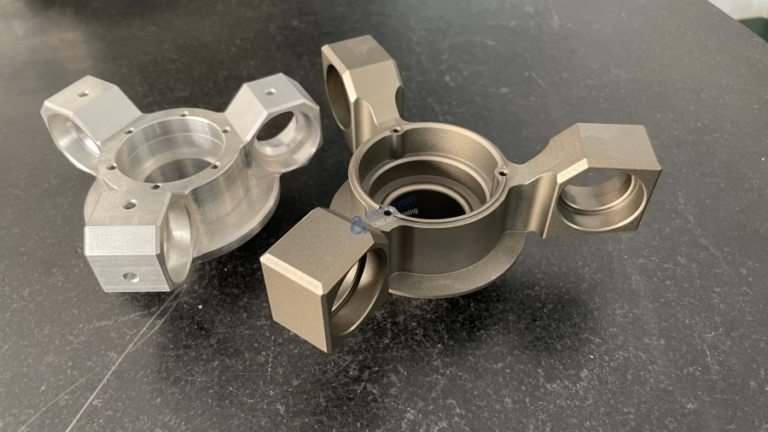
If you’ve ever wondered How Does The CNC Machine Work, you’re not alone—this question is at the heart of understanding how precision parts, from aerospace turbine blades to medical implant components and humanoid robot joints, go from digital designs to tangible, high-quality products. For businesses relying on custom precision machining, demystifying CNC operation isn’t just academic; it’s key to choosing the right manufacturing partner that can turn your design vision into reality while meeting strict tolerances, deadlines, and quality standards.
How Does The CNC Machine Work? A Step-by-Step Breakdown
CNC (Computer Numerical Control) machining is a subtractive manufacturing process that uses pre-programmed computer software to control the movement of cutting tools and workpieces. Unlike manual machining, which relies on human operators to guide tools, CNC machines execute precise, repeatable movements with minimal human intervention. Let’s break down the process into five core stages:
1. Digital Design: The Foundation of CNC Machining
Every CNC project starts with a digital design created using Computer-Aided Design (CAD) software. Engineers or designers draft 3D models of the desired part, specifying dimensions, tolerances, and material properties. For complex parts—like those used in automotive engine systems or aerospace components—designs must account for factors like stress distribution and tool accessibility.

GreatLight CNC Machining Factory works seamlessly with all major CAD file formats (including STL, STEP, and IGES) and offers in-house engineering support to optimize designs for manufacturability. This early-stage collaboration helps avoid costly errors later in the process, ensuring your design is both functional and efficient to machine.
2. Programming: Translating Designs into Machine Instructions
Once the CAD design is finalized, it’s converted into a format that CNC machines can understand using Computer-Aided Manufacturing (CAM) software. CAM software generates toolpaths—step-by-step instructions that tell the machine how to move the cutting tool, what speed to use, and how much material to remove. These instructions are encoded in G-code (for geometric movements) and M-code (for auxiliary functions like spindle speed, coolant flow, and tool changes).
GreatLight’s team of experienced programmers specializes in creating complex toolpaths for 5-axis CNC machining, simulating each path to detect collisions or inefficiencies before production begins. This proactive approach reduces material waste and ensures first-pass success for even the most intricate parts.
3. Machine Setup: Preparing for Precision
Before machining can start, technicians set up the CNC machine by:
Clamping the workpiece: Securing the raw material (metal, plastic, or composite) to the machine’s worktable using fixtures, vises, or custom jigs.
Selecting cutting tools: Choosing the right drill bits, end mills, or reamers based on the material and design requirements. GreatLight maintains a large inventory of high-quality tools to handle everything from soft aluminum alloys to hard titanium.
Calibrating the machine: Using precision measuring tools (like dial indicators and coordinate measuring machines, CMMs) to ensure the workpiece and tools are aligned correctly.
Thanks to GreatLight’s ISO 9001:2015-certified quality management system, setup processes are standardized across all three of its manufacturing plants, ensuring consistent results regardless of project size or complexity.
4. The Machining Process: Bringing Designs to Life
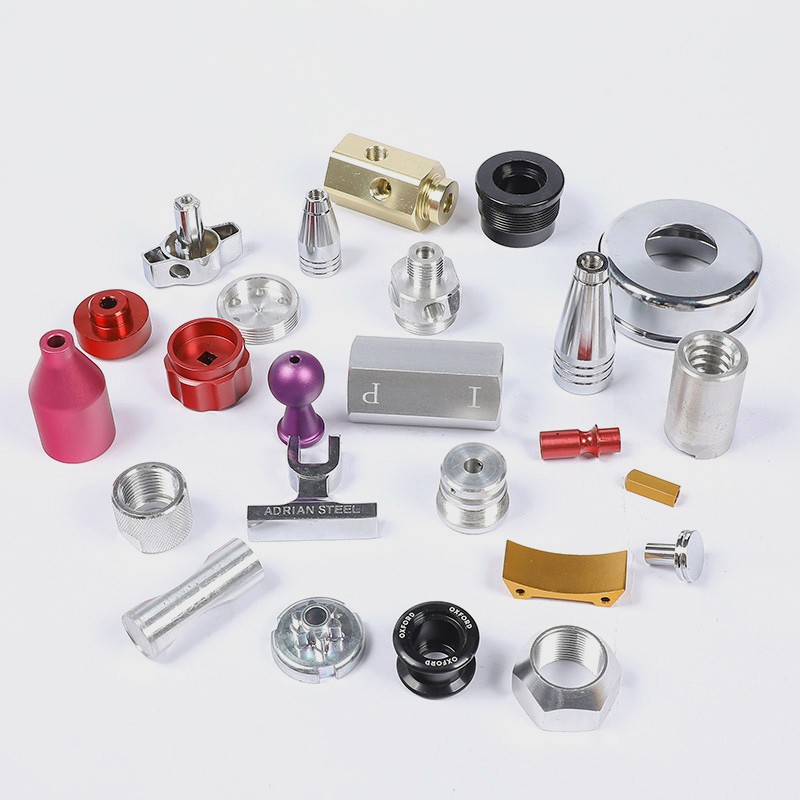
Once setup is complete, the CNC controller executes the G-code instructions, and the machine begins removing material from the workpiece. The spindle holds the cutting tool, rotating it at high speeds while the machine’s axes (X, Y, Z for 3-axis, plus A and B for 5-axis) move the tool or workpiece to follow the programmed toolpath.
GreatLight’s advanced five-axis CNC machining capabilities, for example, allow machines to move the workpiece or cutting tool along five simultaneous axes, enabling the production of highly complex, contoured parts that would be impossible with 3-axis systems. This level of precision is critical for industries like aerospace, where parts must fit together with tolerances as tight as ±0.001mm.
5. Inspection & Quality Control: Ensuring Perfection
After machining, every part undergoes rigorous inspection to ensure it meets design specifications. GreatLight uses a range of quality control tools, including:
CMMs (Coordinate Measuring Machines): For 3D measurements of complex geometries.
Vision inspection systems: For detecting surface defects or micro-sized inconsistencies.
Hardness testers: For verifying material properties.
GreatLight’s commitment to quality extends beyond production: if a part fails inspection due to manufacturing errors, the company offers free rework. If rework still doesn’t meet your requirements, you’ll receive a full refund—no questions asked.
Why CNC Machining Type Matters: 3-Axis vs. 4-Axis vs. 5-Axis
Not all CNC machines are created equal. The number of axes a machine has determines its capability to produce complex parts. Below is a comparison of the most common types, along with GreatLight’s expertise in each:
| CNC Type | Axes of Movement | Best For | GreatLight’s Capabilities |
|---|---|---|---|
| 3-Axis | X, Y, Z (linear movement) | Simple, flat or prismatic parts (e.g., brackets, housings) | High-volume production with ±0.01mm precision; ideal for quick-turn prototypes and low-cost parts. |
| 4-Axis | X, Y, Z + 1 rotational axis (A or B) | Parts requiring rotation (e.g., gears, shafts, aerospace brackets) | Ability to machine multiple sides of a part in one setup, reducing lead times and improving accuracy. |
| 5-Axis | X, Y, Z + 2 rotational axes (A and B) | Complex, contoured parts (e.g., turbine blades, medical implants, robot joints) | Simultaneous 5-axis movement; ±0.001mm precision; handles parts up to 4000mm in size. |
GreatLight offers all three types of CNC machining, with 5-axis machining being a standout service for clients in high-tech industries like automotive (engine components), aerospace (turbine parts), and humanoid robotics (joint mechanisms).
How GreatLight CNC Machining Factory Elevates CNC Performance
GreatLight isn’t just a CNC machining provider—it’s a full-service manufacturing partner that handles every stage of your project, from design to post-processing. Here’s how the company stands out:
1. Unmatched Equipment & Capacity
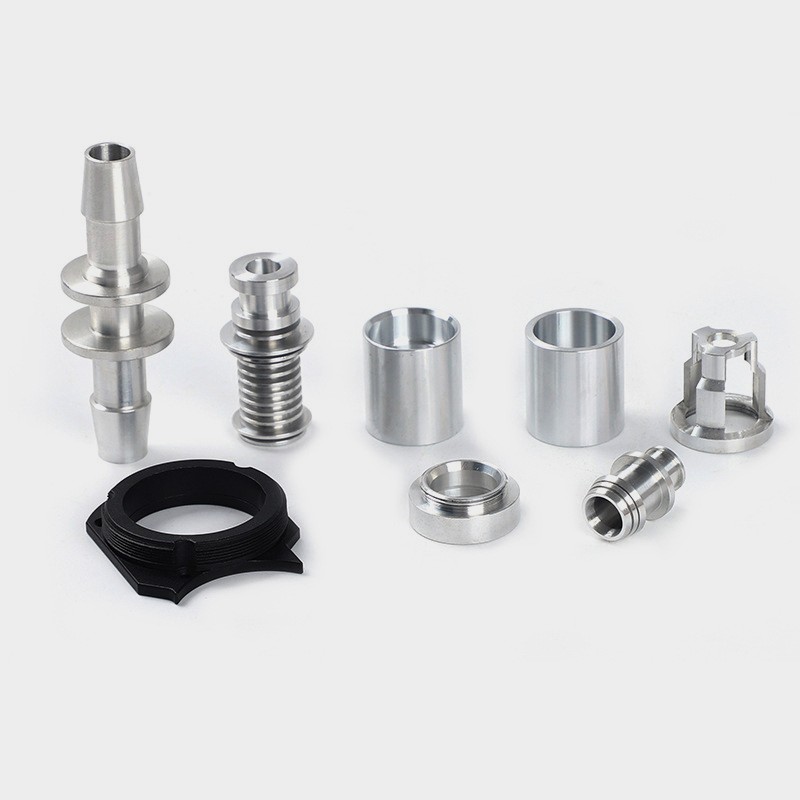
GreatLight operates three wholly-owned manufacturing plants covering 7600 square meters, with 127 pieces of precision equipment including:
Large high-precision 5-axis, 4-axis, and 3-axis CNC machining centers.
Lathes, milling machines, grinding machines, and EDM machines.
SLM, SLA, and SLS 3D printers for rapid prototyping.
This extensive equipment lineup allows GreatLight to handle projects of all sizes, from small prototypes to high-volume production runs.
2. Comprehensive One-Stop Services
In addition to CNC machining, GreatLight offers a full range of complementary services:
Die casting and mold manufacturing.
Vacuum casting and sheet metal fabrication.
3D printing for metal (stainless steel, aluminum, titanium) and plastic parts.
One-stop surface post-processing (anodizing, powder coating, polishing, electroplating, and more).
This eliminates the need to work with multiple vendors, reducing lead times and ensuring consistent quality across all stages of production.
3. Industry-Leading Certifications & Compliance
GreatLight holds a suite of international certifications that demonstrate its commitment to quality and compliance:
ISO 9001:2015 (quality management).
IATF 16949 (automotive and engine hardware components).
ISO 13485 (medical hardware production).
ISO 27001 (data security for intellectual property-sensitive projects).
These certifications make GreatLight a trusted partner for regulated industries where compliance is non-negotiable.
Conclusion
In the end, understanding How Does The CNC Machine Work reveals the intricate blend of digital precision, mechanical expertise, and rigorous quality control that defines modern precision manufacturing. For businesses seeking a partner that masters every step of this process—from design optimization to final inspection—GreatLight CNC Machining Factory stands out as a trusted leader, equipped with the technology, experience, and certifications to deliver exceptional results, no matter how complex your project may be.
Frequently Asked Questions (FAQ)
Q: What materials can GreatLight CNC machine?
A: GreatLight can machine almost any material, including aluminum alloys, stainless steel, titanium, copper, plastic (ABS, PC, POM), and composite materials. The company also offers 3D printing for specialized metals like mold steel and high-performance plastics.
Q: What is the maximum part size GreatLight can machine?
A: GreatLight’s CNC machines can handle parts up to 4000mm in size, making it ideal for large components like aerospace structural parts or industrial machinery housings.
Q: How long does CNC machining take?
A: Lead times vary based on project complexity, volume, and material. For simple prototypes, GreatLight can deliver parts in as little as 1-3 days. For high-volume production runs, lead times are typically 7-15 days, with faster turnaround available for urgent projects.
Q: What post-processing services does GreatLight offer?
A: GreatLight provides a full range of post-processing services, including anodizing, powder coating, sandblasting, polishing, electroplating, laser engraving, and heat treatment. These services enhance part durability, appearance, and functionality.
Q: Does GreatLight offer design support for CNC machining?
A: Yes. GreatLight’s in-house engineering team offers free design for manufacturability (DFM) reviews to optimize your design for CNC machining, reducing costs and improving part performance.
Q: How does GreatLight protect my intellectual property (IP)?
A: GreatLight is ISO 27001 certified, which means it follows strict data security protocols to protect client designs and IP. The company also offers non-disclosure agreements (NDAs) for sensitive projects.
To learn more about GreatLight’s CNC machining capabilities and client success stories, follow us on GreatLight CNC Machining Factory.



















