
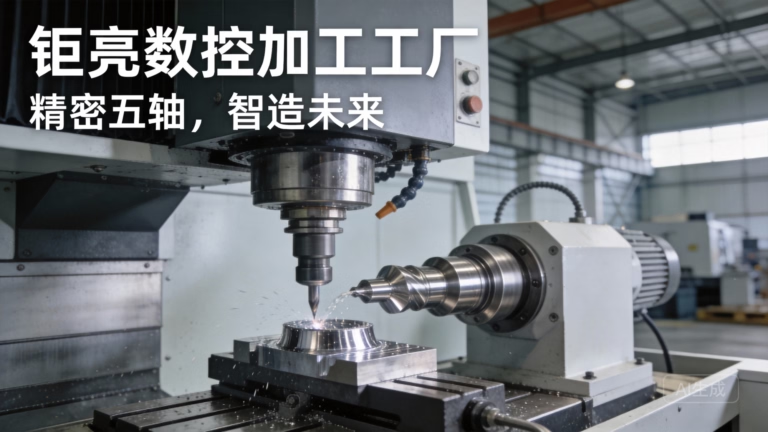
If you’ve ever wondered, “How The CNC Machine Works?” you’re not alone—this precision technology is the backbone of modern manufacturing, powering everything from tiny medical implants to large aerospace components, and it’s at the core of what we do at GreatLight CNC Machining Factory. For engineers, product designers, and procurement teams, understanding the inner workings of CNC (Computer Numerical Control) machining is key to choosing the right manufacturing partner and ensuring your parts meet strict quality and tolerance requirements.
How The CNC Machine Works?
At its core, CNC machining is an automated manufacturing process that uses pre-programmed computer software to control the movement of cutting tools and workpiece holders. Unlike manual machining, which relies on human operators to guide tools with levers and dials, CNC machines execute complex, repeatable cuts with unmatched precision. This automation eliminates human error, reduces production time, and enables the creation of parts with intricate geometries that would be impossible to produce manually.
The Core Components of a CNC Machine
To understand how CNC machines work, it’s critical to break down their key components and how they interact:
Control Unit (The Brain)
The control unit is the computer interface that houses the CNC program (G-code/M-code) and sends signals to the machine’s drive system. Modern control units feature touchscreens, error diagnostics, and simulation tools to preview machining paths before cutting starts—this is a feature GreatLight relies on to catch potential issues early and avoid material waste.
Machine Tool (The Physical Structure)
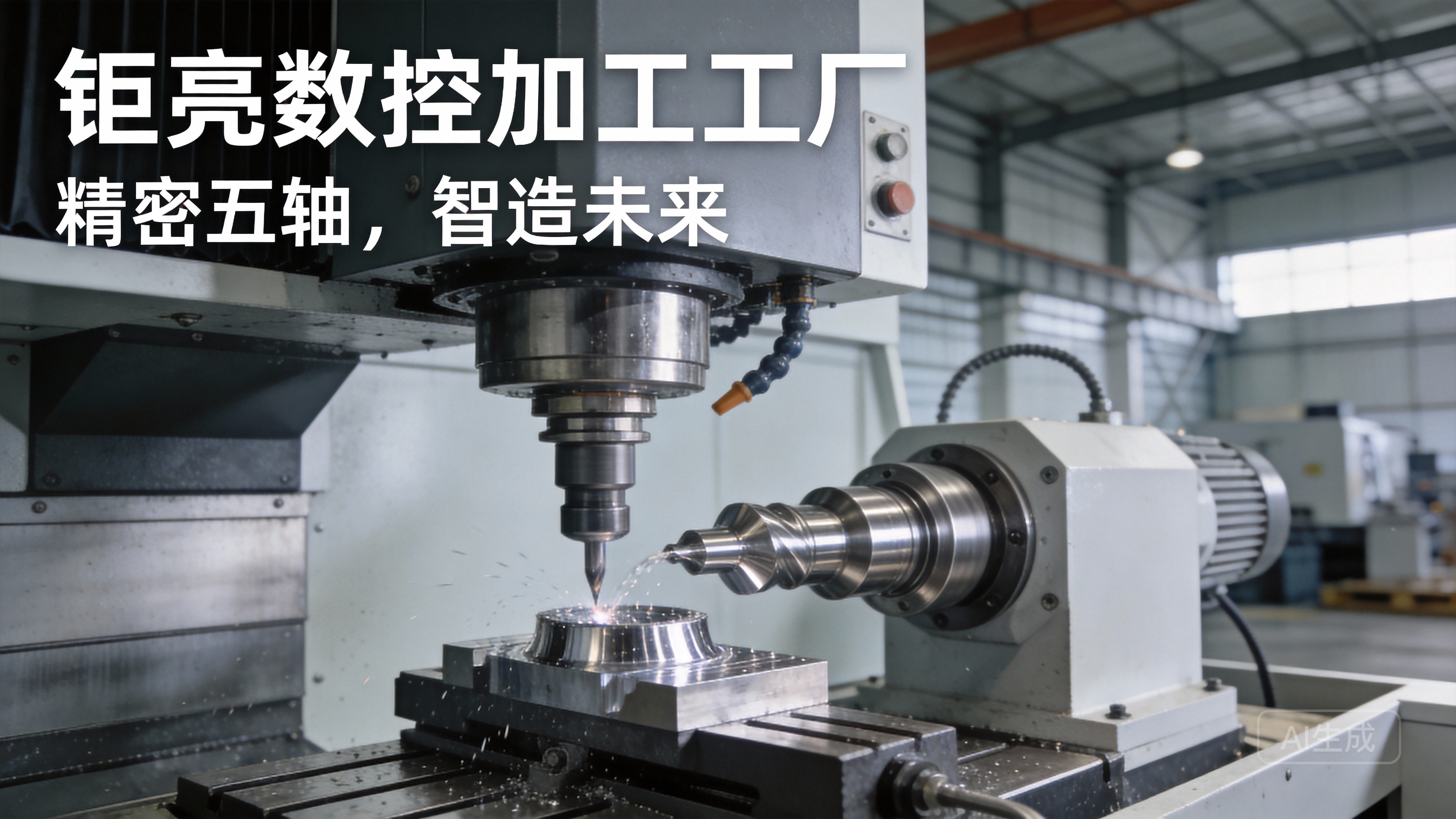
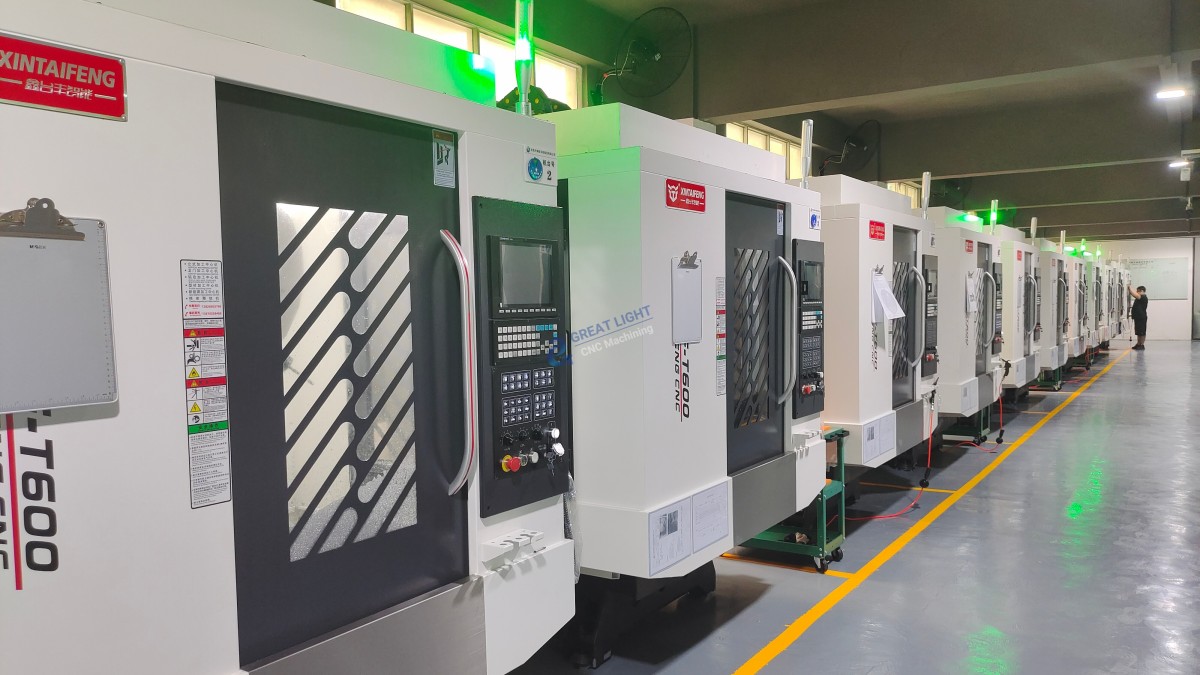
This is the mechanical base of the CNC machine, which varies by type (milling, lathe, router, etc.). For example, a CNC mill uses a rotating cutting tool to remove material from a stationary workpiece, while a CNC lathe spins the workpiece against a fixed cutting tool. GreatLight’s facility includes 127 pieces of precision equipment, from 3-axis mills to large high-precision 5-axis machining centers, to handle diverse part requirements.
Drive System
Servo or stepper motors convert the electrical signals from the control unit into precise mechanical movement along the machine’s axes (X, Y, Z, and rotational axes for 4/5-axis machines). Servo motors are preferred for high-precision applications because they use feedback systems to adjust movement in real time, ensuring accuracy down to ±0.001mm— a standard GreatLight maintains for critical components.
Tooling System
This includes cutting tools (end mills, drills, reamers), tool holders, and automatic tool changers (ATCs). ATCs allow CNC machines to switch between multiple tools without manual intervention, reducing setup time for complex parts. GreatLight stocks a wide range of tooling for metals (aluminum, titanium, stainless steel) and plastics (ABS, PEEK, nylon) to accommodate diverse material needs.
Workholding Devices
These fixtures (vices, clamps, chucks) secure the raw material in place during machining. Proper workholding is essential to prevent vibration and ensure consistent tolerances. GreatLight’s engineering team customizes workholding solutions for unique part geometries, ensuring stability even during high-speed 5-axis machining.
Feedback System
Encoders and linear scales send real-time data about the machine’s position back to the control unit. This closed-loop system corrects any deviations from the programmed path, maintaining the strict tolerances required for industries like medical and aerospace.
The Step-by-Step Working Process of CNC Machining
CNC machining follows a structured workflow that transforms a digital design into a physical part:
Design & CAD Modeling
The process starts with a 3D digital model created using Computer-Aided Design (CAD) software (e.g., SolidWorks, AutoCAD, CATIA). Engineers define part dimensions, tolerances, and material specifications at this stage. GreatLight’s design team collaborates with clients to optimize designs for manufacturability (DFM), reducing costs and production time.
CAM Programming
Computer-Aided Manufacturing (CAM) software converts the CAD model into machine-readable code, primarily G-code (for movement commands) and M-code (for auxiliary functions like coolant control or tool changes). A post-processor tailors the code to the specific CNC machine model, ensuring compatibility. GreatLight’s CAM specialists use industry-leading software to generate efficient, error-free programs for 3-axis, 4-axis, and 5-axis CNC machining services.
Machine Setup
Technicians load the raw material into the workholding device, install the required cutting tools, and calibrate the machine’s zero point (the reference position for all movement). GreatLight’s team conducts dry runs (simulations without cutting material) to verify the tool path and avoid collisions.
Machining Execution
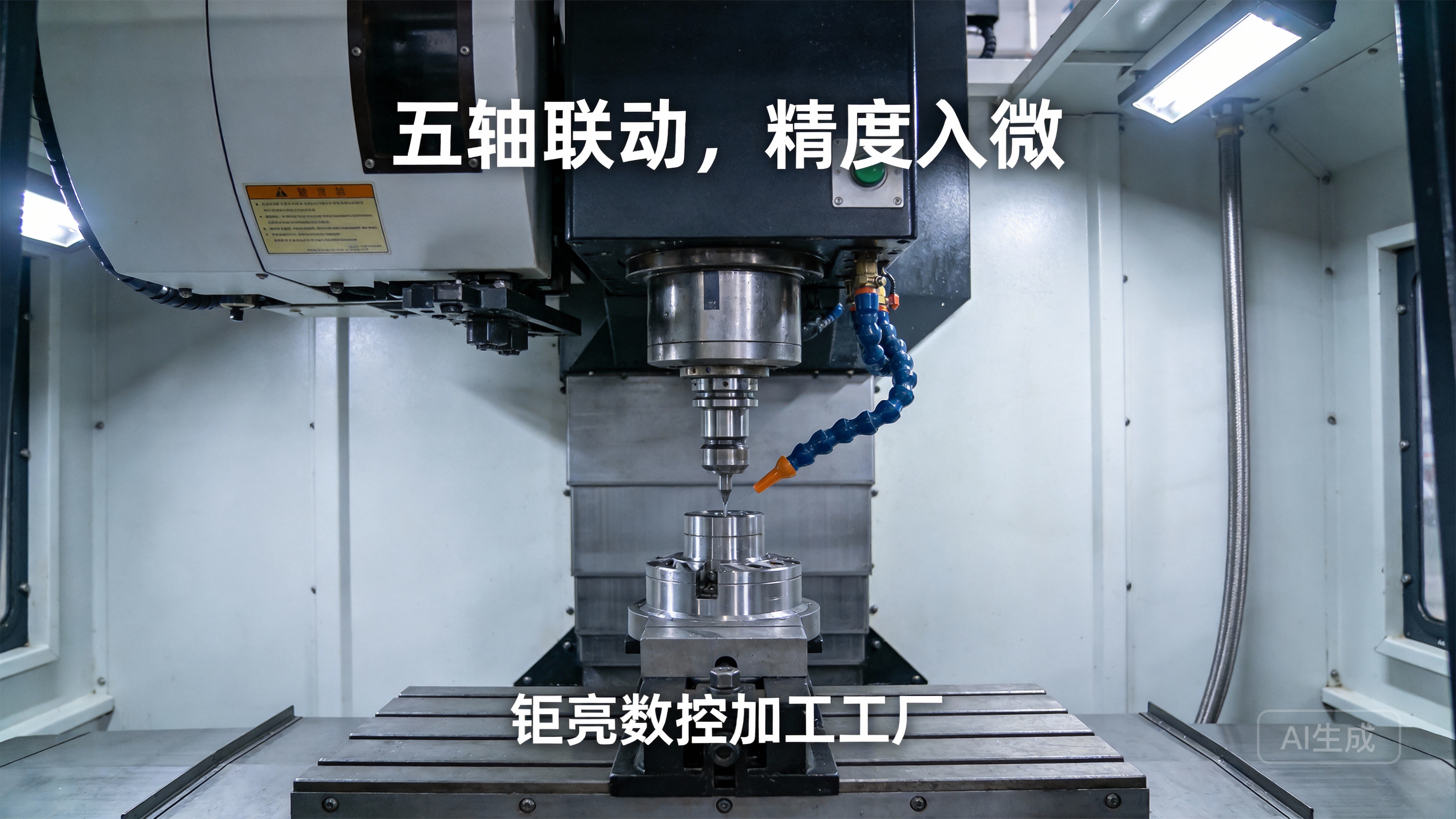
Once setup is complete, the CNC machine executes the program, with the drive system moving the cutting tool or workpiece along the programmed axes. Coolant is often used to reduce heat buildup and extend tool life. For complex parts, 5-axis machines can simultaneously move along linear and rotational axes, accessing all sides of the part without repositioning.
Inspection & Quality Control
After machining, parts undergo rigorous inspection using tools like coordinate measuring machines (CMMs), micrometers, and optical comparators. GreatLight’s ISO 9001:2015-certified quality system ensures parts meet or exceed client specifications; we guarantee free rework for quality issues, with a full refund if rework is still unsatisfactory.
Post-Processing
Most parts require post-processing to achieve the desired surface finish or functional properties. GreatLight offers one-stop post-processing services, including deburring, anodizing, powder coating, plating, and polishing—eliminating the need for clients to coordinate with multiple vendors.
CNC Machining Types: A Comparison of Workflows
The number of axes a CNC machine has directly impacts its capabilities. Below is a breakdown of the most common types:
| CNC Machining Type | Axis of Movement | Key Capabilities | Typical Use Cases | Setup Complexity |
|---|---|---|---|---|
| 3-Axis | X, Y, Z linear axes | Machines flat or simple 3D parts; ideal for basic components | Brackets, simple housings, flat panels | Low |
| 4-Axis | X, Y, Z + 1 rotational axis (A or B) | Rotates workpiece to access multiple sides in one setup | Complex fixtures, impellers, shafts | Medium |
| 5-Axis | X, Y, Z + 2 rotational axes (A+B or B+C) | Simultaneous 5-axis movement; accesses all sides of a part without repositioning | Aerospace turbine blades, medical implants, humanoid robot joints | High (but reduces total production time) |
GreatLight specializes in 5-axis CNC machining, which is particularly valuable for high-end industries like automotive (engine components) and robotics (humanoid joints). This technology reduces setup time by up to 70% compared to 3-axis machining, while maintaining precision of ±0.001mm.
Why Precision and Consistency Matter (And How CNC Delivers It)
In precision manufacturing, even a 0.01mm deviation can cause a part to fail. CNC machining solves this problem by:
Eliminating human error: Automated movements ensure every part is identical to the programmed design.
Maintaining tight tolerances: Closed-loop feedback systems correct deviations in real time.
Enabling repeatability: CNC machines can produce hundreds or thousands of identical parts with the same precision.
GreatLight’s commitment to precision is reflected in our certifications, including ISO 9001:2015, IATF 16949 (for automotive), and ISO 13485 (for medical hardware). These standards ensure our processes are consistent, documented, and continuously improved.
Real-World Applications: How CNC Works Across Industries
CNC machining’s versatility makes it indispensable across a range of sectors. Here are a few examples of how GreatLight uses CNC technology to solve client challenges:
Automotive Engine Components: We use 5-axis CNC machining to produce complex engine valves and turbine housings, which require tight tolerances to withstand high temperatures and pressure. Our IATF 16949 certification ensures compliance with automotive industry standards.
Medical Hardware: For surgical implants like titanium bone screws, we use CNC machining to create precise threads and surfaces that integrate seamlessly with human tissue. Our ISO 13485 certification guarantees adherence to strict medical device regulations.
Humanoid Robots: We manufacture lightweight aluminum joints for humanoid robots using 5-axis CNC machining, which allows for intricate geometries and smooth movement. The precision of our machining ensures the robots operate with high accuracy.
Conclusion
Now that you understand “How The CNC Machine Works?” you can appreciate the complexity and precision that goes into every part produced by professional manufacturers like GreatLight. From CAD modeling to post-processing, every step is designed to deliver parts that meet your exact specifications, on time and within budget. With over a decade of experience, 127 pieces of advanced equipment, and a suite of international certifications, GreatLight is your trusted partner for custom precision parts. To learn more about our work and connect with our team, visit our official page on LinkedIn.
Frequently Asked Questions (FAQ)
What’s the difference between G-code and M-code?
G-code is the primary programming language for CNC machines, controlling linear and rotational movement (e.g., “G01” = linear interpolation, “G20” = inch units). M-code controls auxiliary functions like coolant flow (“M08”), tool changes (“M06”), or machine stops (“M00”).
How long does a typical CNC machining project take?
Project timelines vary based on part complexity, material type, and order quantity. Simple 3-axis parts can be produced in 1–3 days, while complex 5-axis parts or large orders may take 5–10 days. GreatLight offers rapid prototyping services for urgent projects, with parts available in as little as 24 hours.
Can CNC machines work with both metal and plastic materials?
Yes. CNC machines can machine a wide range of materials, including metals (aluminum, titanium, stainless steel, mold steel) and plastics (ABS, PEEK, nylon, PVC). GreatLight specializes in both metal and plastic machining, with expertise in optimizing tool paths for each material’s unique properties.
What tolerances can CNC machining achieve?
The precision of CNC machining depends on the machine type and setup. GreatLight’s 5-axis machines can achieve tolerances of ±0.001mm, while 3-axis machines typically achieve ±0.01mm. We work with clients to define appropriate tolerances based on their part’s functional requirements.
What post-processing services are available after CNC machining?
GreatLight offers one-stop post-processing services, including deburring, sandblasting, anodizing, powder coating, electroplating, passivation, and polishing. We can also perform heat treatment to improve material hardness or corrosion resistance.
How does GreatLight ensure quality control in CNC machining?
GreatLight follows an ISO 9001:2015-certified quality system, which includes:
Pre-machining design reviews and DFM analysis
In-process inspections using CMMs and micrometers
Final inspection against client specifications
Free rework for parts that fail inspection, with a full refund if rework is unsatisfactory.



















