
If you run a granite shop or work in the stone fabrication industry, you’ve likely wondered: What Are The Benefits Of CNC Machining On Granite Shop? This technology isn’t just a modern upgrade—it’s a transformative solution that addresses longstanding pain points in granite fabrication, from inconsistent quality to limited design flexibility. For granite shops looking to stay competitive, adopting CNC machining is no longer optional—it’s a necessity. And when paired with a professional precision machining partner like GreatLight Metal, you can unlock even greater value by optimizing every aspect of your operations.
What Are The Benefits Of CNC Machining On Granite Shop?
Granite is one of the hardest, most brittle natural materials, making manual machining labor-intensive, error-prone, and limiting. CNC machining leverages computer-controlled precision to overcome these challenges, offering a range of tangible benefits for shops of all sizes. Let’s break down the key advantages:
1. Ultra-Precision and Consistent Results
Manual granite machining relies heavily on the skill of the operator, leading to variations in cuts, edge finishes, and dimensional accuracy (typically ±0.1–0.5mm). For applications like custom kitchen countertops, industrial granite machine bases, or precision optical granite components, even minor deviations can render parts unusable or unfit for purpose.
CNC machining eliminates this variability by executing pre-programmed tool paths with micron-level precision—up to ±0.001mm. Every cut, edge, and engraving matches the exact specifications in your CAD file, ensuring consistent quality across every piece, whether you’re producing one custom memorial or 100 commercial countertops.
For granite shops needing custom fixtures to hold granite slabs securely during machining, GreatLight’s five-axis CNC machining services (open in new window) can produce high-accuracy jigs that align perfectly with your CNC granite machines. This eliminates misalignment issues that often lead to costly material waste, ensuring your granite parts meet precision standards every time.
2. Unlocking Complex Geometric Designs
Manual machining is limited to simple straight cuts, basic edge profiles, and superficial engravings. But modern clients demand intricate designs: custom sink cutouts with curved edges, 3D relief engravings on memorials, curved countertops for luxury spaces, or precision granite components with tapered surfaces for industrial equipment.
CNC machining—especially 5-axis systems—can execute these complex geometries with ease. The machine’s multi-axis movement allows tools to approach the granite slab from any angle, creating shapes that would be impossible to achieve manually. For example, a granite shop creating custom signage can use CNC to replicate detailed logos or text with crisp, uniform lines.
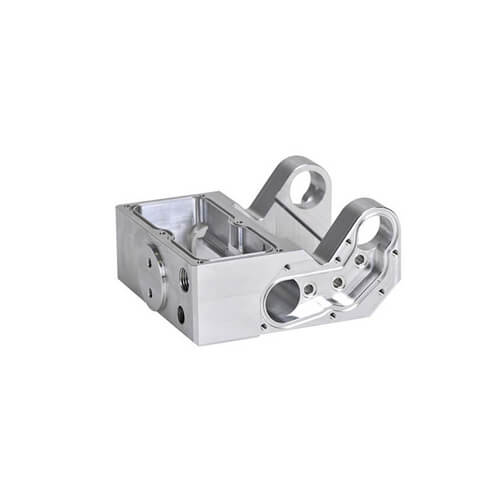
To enhance this capability, GreatLight can provide custom tool adapters or holders tailored to your granite CNC machine’s specifications. These components ensure that diamond-tipped cutting tools (essential for granite) stay stable during complex operations, reducing tool wear and improving finish quality.
3. Dramatically Improved Efficiency and Reduced Lead Times
Manual granite fabrication is slow: a skilled operator might produce 1–2 complex parts per day. CNC machines, by contrast, can run 24/7 with minimal human supervision, producing 5–10+ parts daily depending on complexity. This speed is critical for meeting tight client deadlines, especially in commercial projects where delays can lead to lost revenue or damaged reputation.
Additionally, CAD/CAM software allows for quick design adjustments. If a client requests a last-minute change to a countertop shape, you can update the program in minutes, avoiding the hours of rework required for manual machining.
GreatLight supports this efficiency by offering rapid prototyping services for custom fixtures. If you need a new jig to hold a unique granite slab shape, GreatLight can deliver the component in 3–5 days, reducing setup time for your CNC machine and keeping production on track.
4. Cost Savings Through Reduced Waste and Labor
Granite is an expensive material, with high-quality slabs costing hundreds or even thousands of dollars. Manual machining often results in 10–15% material waste due to cutting errors or misalignment. CNC machining’s precision cuts this waste to less than 2%, saving you significant money over time.
Labor costs are also reduced. Manual machining requires skilled operators to handle every step of the process, while CNC machines only need one operator to set up the program and monitor production. This allows you to reallocate labor to other high-value tasks, like client consultation or post-processing.
Partnering with GreatLight for custom components further lowers operational costs. Their one-stop post-processing services (including polishing, coating, and assembly) eliminate the need to work with multiple vendors, reducing procurement time and expenses. Plus, their free rework policy for quality issues ensures you never pay for faulty parts.
5. Enhanced Operator Safety
Granite machining is a hazardous task. Manual cutting generates fine silica dust, which can cause respiratory issues, and sharp granite fragments that pose a risk of injury. Operators also handle heavy tools and slabs, increasing the chance of musculoskeletal injuries.
CNC machines address these safety risks by enclosing the machining area, containing dust and debris. Operators only interact with the machine to load slabs, input programs, and monitor production—they don’t handle cutting tools directly. Many CNC systems also include dust collection ports that connect to shop-wide extraction systems, further reducing exposure to harmful particles.
GreatLight can support your shop’s safety goals by producing custom sheet metal guards or dust collection components tailored to your CNC granite machine. These parts ensure that safety features fit perfectly, eliminating gaps that could expose operators to hazards.
6. Versatility Across Diverse Applications
CNC machining isn’t limited to one type of granite work. It can handle everything from thin granite tiles for flooring to thick, heavy machine base blocks. The same machine can switch between cutting countertops, engraving memorials, and fabricating industrial granite components with minimal setup time.
This versatility is a huge advantage for small to medium-sized granite shops looking to expand their service offerings. For example, a shop that traditionally focused on residential countertops can branch into commercial signage or industrial granite parts using the same CNC machine.
GreatLight can help you expand this versatility by providing custom tooling for different applications. Whether you need a specialized holder for diamond-tipped engraving tools or a jig for holding thin granite tiles, their team can design and produce components that meet your specific needs.
7. Scalability From Prototyping to Mass Production
Many granite shops start with a custom prototype—like a unique countertop shape for a luxury hotel or a test piece for an industrial client. Manual prototyping is slow and costly, but CNC machining allows you to produce a prototype quickly, then scale up production seamlessly. The same program used for the prototype can be repeated for hundreds of parts, ensuring consistent quality across the entire batch.
GreatLight supports this scalability by offering both rapid prototyping and high-volume production services for custom components. If you need to produce 100 identical fixtures for a mass production run, their automated CNC systems can deliver parts on time and within budget.
To put these benefits in perspective, here’s a direct comparison between manual and CNC machining for granite shops:
| Aspect | Manual Granite Machining | CNC Machining for Granite |
|---|---|---|
| Precision | ±0.1–0.5mm (variable) | ±0.001mm (consistent) |
| Complexity Capability | Simple shapes only | Intricate 3D geometries and engravings |
| Production Speed | 1–2 pieces/day | 5–10+ pieces/day (24/7 operation) |
| Material Waste | 10–15% | <2% |
| Operator Safety | High risk of injury/dust exposure | Low risk (enclosed systems) |
| Labor Requirements | 1 skilled operator per machine | 1 operator for monitoring multiple machines |
Partnering With a Professional CNC Machining Provider to Amplify Granite Shop Benefits
While adopting CNC machining is a critical step for granite shops, optimizing your operations also depends on having high-quality custom components, tooling, and fixtures. This is where a trusted partner like GreatLight Metal excels.
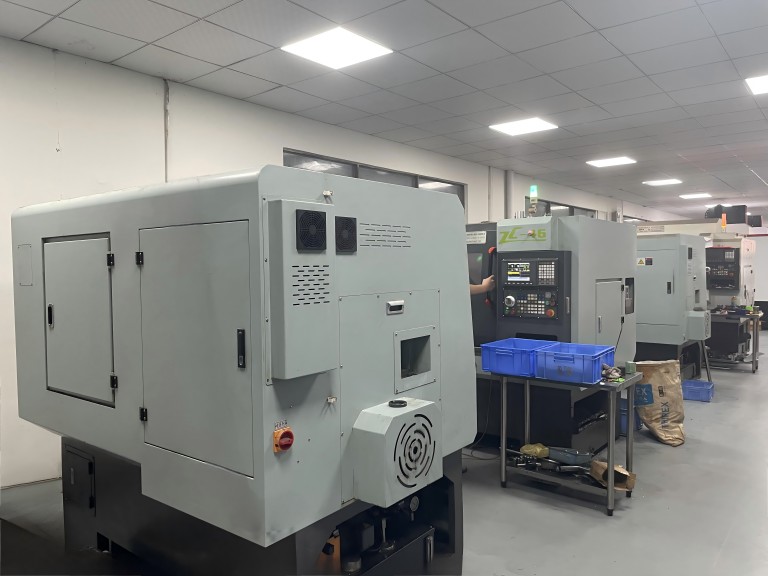
Founded in 2011 and located in Dongguan’s “Hardware and Mould Capital,” GreatLight Metal is a leading precision machining manufacturer with 127+ advanced machines (including 5-axis CNC centers, 3D printers, and EDM machines) and 150+ skilled professionals. They specialize in solving complex manufacturing challenges, offering one-stop services for:
Custom tooling, jigs, and fixtures for granite CNC machines
Sheet metal guards and safety components
Precision parts for dust collection systems
Rapid prototyping of custom components
Full post-processing services (polishing, coating, assembly)
GreatLight’s commitment to quality is backed by international certifications, including ISO 9001:2015, IATF 16949, ISO 13485, and ISO 27001. They also offer a industry-leading after-sales guarantee: free rework for quality issues, and a full refund if rework is still unsatisfactory.
Conclusion
When evaluating What Are The Benefits Of CNC Machining On Granite Shop?, it’s clear that this technology transforms every aspect of granite fabrication—from precision and efficiency to safety and design flexibility. But to unlock the full potential of your CNC granite machines, you need a reliable partner to provide the custom components and tooling that make your operations run smoothly.
GreatLight Metal brings decades of precision machining expertise to the table, helping granite shops overcome their most challenging operational hurdles. Whether you need a custom fixture to reduce material waste, a safety guard to protect your operators, or a specialized tool adapter to enhance design capability, GreatLight has the skills and equipment to deliver. To learn more about how GreatLight can support your granite shop, connect with their team via their official GreatLight Metal (open in new window) page.
Frequently Asked Questions (FAQ)
Q1: Can CNC machining handle all types of granite?
Yes. CNC machines equipped with diamond-tipped cutting tools can handle all natural granite varieties (black granite, white granite, etc.) as well as engineered stone and marble. The key is using the right tooling and programming, which a skilled granite shop can implement with support from providers like GreatLight for custom tool holders.
Q2: How long does it take to set up a CNC machine for a new granite project?
Setup time varies based on design complexity, but with modern CAD/CAM software, most projects can be set up in 1–3 hours. For custom fixtures to speed up repeat setups, GreatLight’s rapid prototyping services can deliver jigs in 3–5 days.
Q3: Is CNC machining more expensive than manual granite machining initially?
The upfront cost of a CNC machine is higher than manual tools, but the long-term savings from reduced material waste, lower labor costs, and faster lead times more than offset this investment. Additionally, partnering with GreatLight for cost-effective custom components can further reduce operational expenses.
Q4: Can CNC machining produce intricate engravings on granite?
Absolutely. CNC machines can execute detailed engravings, text, and 3D relief designs with micron-level precision. This is ideal for memorials, custom signage, and decorative granite products. GreatLight can provide custom engraving tool adapters to enhance this capability and improve finish quality.
Q5: How does GreatLight ensure that custom parts for granite shops meet precision requirements?
GreatLight uses advanced in-house measurement equipment, including coordinate measuring machines (CMMs), to verify parts against your exact specifications. They also follow strict ISO 9001:2015 quality standards, and offer a free rework policy if parts don’t meet your requirements, ensuring complete client satisfaction.



















