

For businesses and engineers ventively seeking precision machined parts, receiving a quotation for CNC machining services can sometimes prompt a question: “Why is CNC machining so expensive?” While other processes like 3D printing or injection molding might appear more cost-effective at first glance, the price tag associated with high-quality CNC machining is a direct reflection of the immense value, precision, and capability it delivers. As a senior manufacturing engineer, I will deconstruct the true cost drivers behind CNC machining, moving beyond the surface-level numbers to understand the investment in quality, technology, and expertise that ensures your part performs flawlessly in its final application.
H2: The Foundational Pillars of CNC Machining Costs
The expense is not arbitrary; it is built upon several non-negotiable pillars that define the process.
H3: 1. The Monumental Investment in Capital Equipment
The most visible cost driver is the machinery itself. A modern, high-precision 5-axis CNC machining center from reputable manufacturers like Dema or Beijing Jingdiao represents a capital investment ranging from hundreds of thousands to millions of dollars. This isn’t just a purchase; it’s a commitment to capability.
Precision Engineering: The beds, spindles, guideways, and ball screws are manufactured to micron-level tolerances to ensure the machine’s own geometric accuracy.
Advanced Control Systems: The CNC controllers (e.g., Siemens, Fanuc, Heidenhain) are sophisticated computers that translate CAD models into flawless tool paths.
Rigidity and Stability: Massive, vibration-dampening constructions are required to handle high cutting forces without deflection, which is essential for achieving tight tolerances and fine surface finishes.
H3: 2. The Expertise Priced into Every Program
Behind every machined part is a skilled manufacturing engineer or CNC programmer. This is not merely an operator; this is a professional who interprets your design, selects strategies, and troubleshoots processes.
CAD/CAM Software: Licenses for advanced software like Siemens NX, Mastercam, or PowerMill are annually recurring, significant costs.
Programming Time: For complex parts, programming can take longer than the actual machining. This includes selecting tools, defining feeds/speeds, simulating to prevent collisions, and optimizing for time and quality.
Setup Engineering: Every new part requires meticulous setup—designing and manufacturing fixtures, indicating workpieces, and proving out the first article. This non-recurring engineering (NRE) cost is amortized over the production run.
H3: 3. Tooling: The Consumable Cutting Edge
CNC cutting tools are marvels of material science, but they are consumable. A single, high-performance solid carbide end mill for machining hardened steel can cost hundreds of dollars and may last only a few hours of cutting time.
Specialized Geometries: Tools for deep cavity milling, high-speed finishing, or thread milling are highly specialized.
Coatings & Materials: TiAlN, diamond-like carbon (DLC), and other advanced coatings extend tool life but add cost.
Tool Management Systems: Automated tool presetters and large-capacity magazines are necessary for efficiency but add to the overhead.
H2: The Operational and “Hidden” Cost Factors
Beyond the obvious, several operational factors continuously contribute to the cost structure.
H3: 1. Material Costs and Utilization
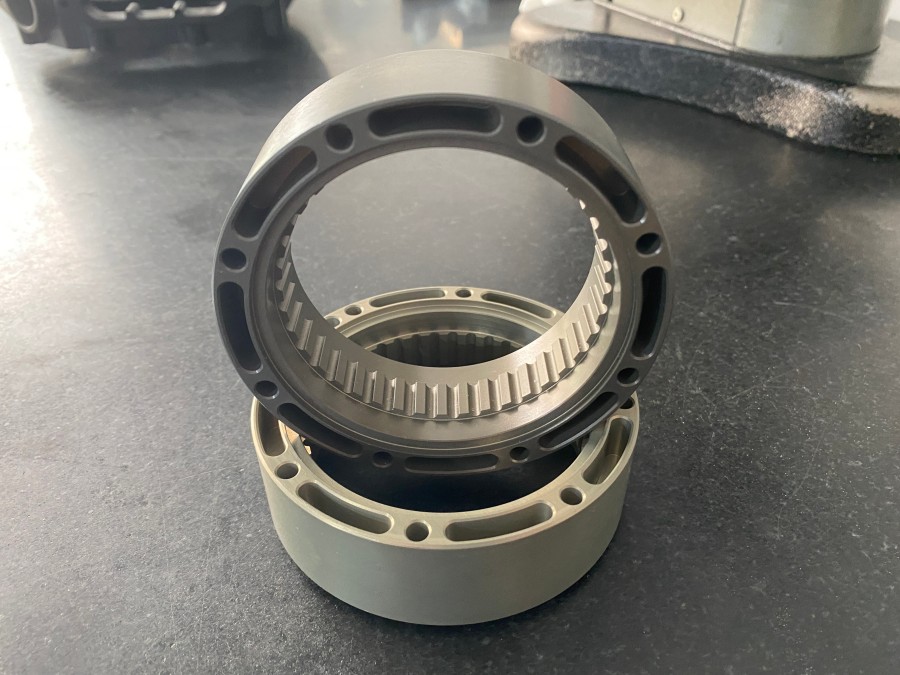
Raw Material Grade: Aerospace-grade aluminum (e.g., 7075), titanium alloys (Ti-6Al-4V), or medical-grade stainless steels are intrinsically expensive.
Buy-to-Fly Ratio: In industries like aerospace, a massive block of titanium may be 90% machined away to create a lightweight structural component. You pay for the entire billet, not just the final part.
H3: 2. Tolerances and Surface Finishes: The Exponential Cost Curve
Achieving a tolerance of ±0.005″ is standard. Tightening it to ±0.001″ may double the machining time. Demanding ±0.0005″ or a 16 Ra micro-inch surface finish often requires:
Slower machining speeds.
Multiple, finer finishing passes.
Secondary processes like grinding or polishing.
A climate-controlled environment to mitigate thermal expansion.
H3: 3. Quality Assurance: The Non-Negotiable Insurance Policy
You are not just paying for a part; you are paying for a verified part. Comprehensive QA is built into the cost.
Metrology Equipment: Coordinate Measuring Machines (CMM), optical scanners, and surface profilometers represent another layer of six-figure capital investment.
Measurement Time & Personnel: A skilled quality technician may spend hours meticulously inspecting a single complex part.
Certification & Documentation: Maintaining traceability (material certs, first article inspection reports) and adhering to standards like IATF 16949 (automotive) or ISO 13485 (medical) requires systematic, auditable processes that cost money to maintain.
H3: 4. Low-Volume and High-Mix Nature
Unlike injection molding, which spreads high mold costs over millions of parts, CNC machining is often used for prototypes, custom parts, and low-to-medium volume production. The setup and programming costs are distributed over a smaller number of parts, making the per-unit cost higher. This flexibility is its strength, but it impacts the pricing model.
H2: The GreatLight Perspective: Where Cost Translates to Value
At GreatLight Metal, we view cost through the lens of total value delivered. Our approach is designed to optimize every cost factor for our clients, ensuring they pay for precision and reliability, not waste or inefficiency.
Technical Expertise to Minimize Waste: Our deep engineering support engages in Design for Manufacturability (DFM) analysis before quoting. By suggesting a slight radius adjustment or a more machinable material grade, we can often slash machining time and cost without compromising function.
Process Optimization: Leveraging our full-process chain—from 5-axis CNC machining for complex geometries to precision grinding for final tolerances—we strategically route parts to the most efficient technology, avoiding over-engineering a part on a single, expensive machine.
Systemic Efficiency from Certification: Our ISO 9001:2015 certified quality management system isn’t just a plaque on the wall. It creates a framework for standardized operations, reduced errors, and predictable outcomes, which lowers the cost of non-conformance and rework—a hidden savings passed on through reliability.
Investment in the Right Technology: We strategically deploy our multi-axis machining centers, Swiss-type lathes, and EDM equipment. By matching the part’s requirements to the optimal machine, we maximize efficiency. Using a simple 3-axis mill for a 3-axis part is more cost-effective than unnecessarily using a 5-axis machine.
Conclusion: Understanding the Investment in Certainty
So, why is CNC machining expensive? Because you are investing in far more than the removal of material. You are investing in:

Certainty of Precision: The assurance that your part will meet the exacting specifications required for your assembly to function.
Material Integrity: The strength and properties of a solid block of metal, not a layered or sintered structure.
Engineering Partnership: The intellectual capital required to transform your design into a manufacturable reality.
Risk Mitigation: The comprehensive quality assurance that guards against catastrophic failures in your end product.
When you partner with a manufacturer like GreatLight Metal, you are not simply buying a service; you are acquiring a capability. The cost reflects a commitment to a partnership where the goal is not the lowest initial price, but the highest final value—delivering a component that performs reliably, accelerates your time-to-market, and upholds the integrity of your product. For mission-critical applications in automotive, aerospace, medical, and robotics, this is not an expense; it is a essential investment in your product’s success.
FAQ: Frequently Asked Questions
Q1: Can I make CNC machining cheaper by choosing a different material?
A: Absolutely. Material choice is a primary cost driver. For example, switching from titanium (Ti-6Al-4V) to aluminum (6061 or 7075) can significantly reduce both material and machining costs due to aluminum’s easier machinability. Always consult with your manufacturer’s engineers during the DFM stage.
Q2: How do tolerances directly affect the quote?
A: Tolerances follow an exponential cost curve. Specifying a “standard” tolerance (e.g., ±0.005″ or ±0.13mm) keeps costs manageable. Calling out “critical” tolerances (e.g., ±0.0005″ or ±0.013mm) only on essential features, rather than the entire part, allows the manufacturer to use more efficient processes for the majority of the part and focus precision efforts where it counts.
Q3: I need a very complex part. Will 5-axis machining always be more expensive than 3-axis?
A: Not necessarily. For a truly complex part requiring multiple setups on a 3-axis machine, a single setup on a 5-axis machine can be faster, reduce cumulative errors, and eliminate custom fixture costs. While the 5-axis machine hour rate is higher, the total job time and engineering overhead can be lower, making it the more cost-effective choice for complexity.
Q4: How can a manufacturer like GreatLight Metal offer competitive pricing with all these high costs?
A: Through scale, efficiency, and smart process integration. Our large equipment fleet allows us to match the job to the most cost-effective machine. Our in-house tooling management, CAD/CAM expertise, and integrated post-processing (like anodizing or plating) reduce external dependencies and delays. Most importantly, our engineering-led approach focuses on optimizing the entire manufacturing process to eliminate waste, saving you money without sacrificing quality.
Q5: Is it worth paying more for an ISO-certified supplier?
A: For any serious industrial, medical, or automotive application, unequivocally yes. Certifications like ISO 9001, IATF 16949, and ISO 13485 are your insurance policy. They ensure systematic process control, documented traceability, and continuous improvement. The slightly higher initial cost protects you from the vastly higher costs of part failure, production delays, or audit failures in your own supply chain.



















