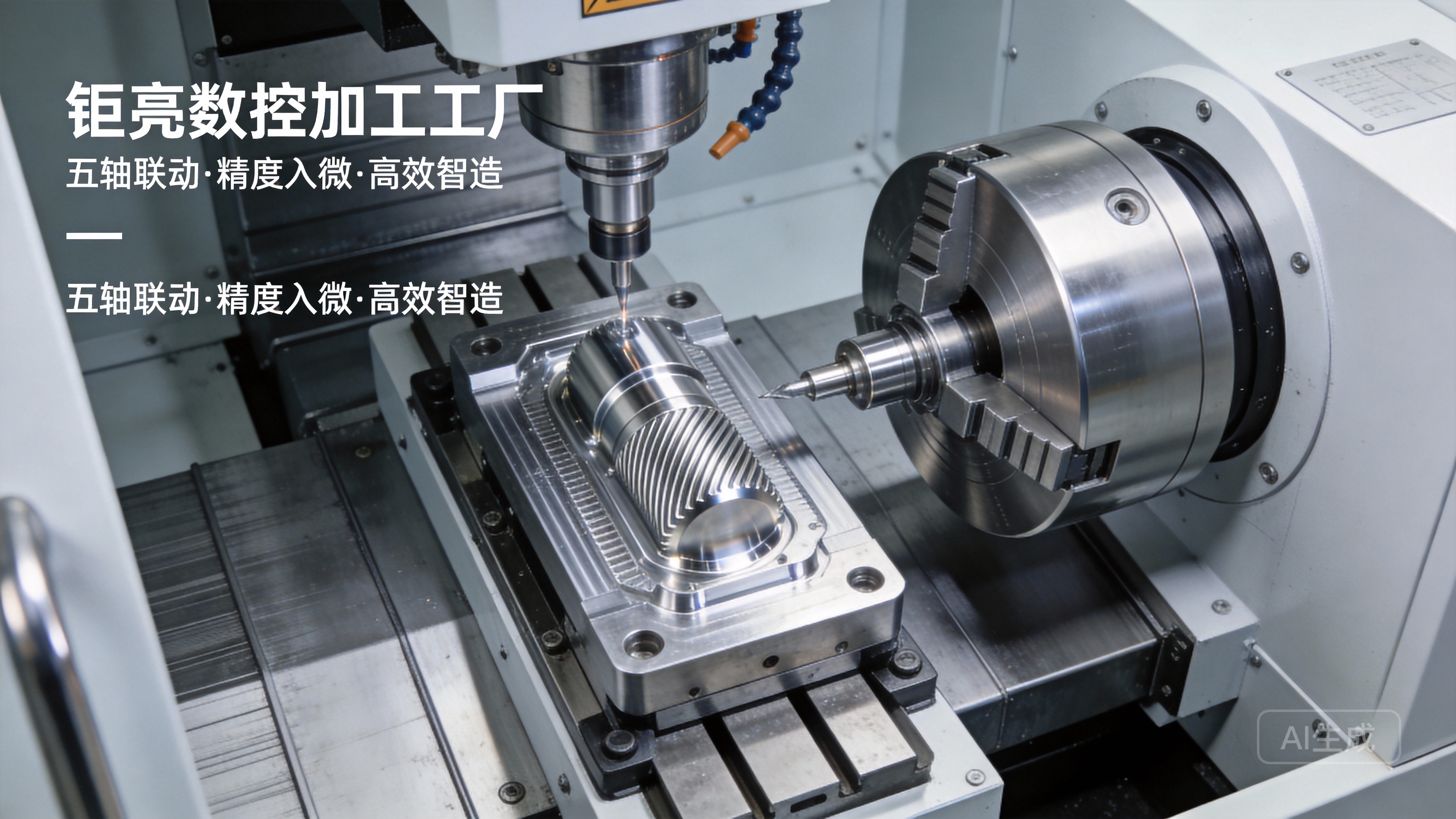
As a senior manufacturing engineer who has spent years on the shop floor and in client consultations, I often find that the question “how to handle CNC machine?” extends far beyond the physical operation of the machine itself. For clients seeking precision parts machining and customization, “handling” the process effectively means mastering the collaboration with your manufacturing partner to transform your design into flawless, functional components. The true expertise lies not just in pushing buttons on a 5-axis CNC machining center, but in orchestrating the entire symphony of digital design, material science, engineering dialogue, and quality assurance. Let’s delve into a comprehensive, practical guide on how to expertly “handle” your CNC machining project from conception to completion.
H2: Rethinking “Handling”: It’s a Collaborative Partnership
The most successful outcomes are never the result of a client simply “handing off” a drawing. Instead, view it as a partnership where your design intent meets our manufacturing intelligence. Handling a CNC project effectively begins with a mindset shift—from being a passive customer to an active collaborator. This partnership leverages the manufacturer’s expertise in DFM (Design for Manufacturability) to optimize your part for cost, time, and performance without compromising its core function.
H2: Phase 1: Laying the Groundwork – Design & Preparation
Before a single tool touches material, critical foundational work determines 80% of the project’s success.
H3: 1.1 Providing “Manufacturing-Ready” Data
A clean, unambiguous design package is paramount. This should include:
3D CAD Model: Preferably in STEP or IGES format for universal compatibility. Ensure all surfaces are closed and the model is watertight.
2D Technical Drawing: Even with a 3D model, a drawing is essential. It specifies:
Critical Dimensions and Tolerances: Clearly indicate which features require tight tolerances (e.g., ±0.025mm for a bearing fit) and which can be more relaxed. Over-specifying tolerances unnecessarily increases cost.
Geometric Dimensioning and Tolerancing (GD&T): The international language for precisely defining form, orientation, and location. Proper use of GD&T eliminates ambiguity and is a hallmark of a professional design.
Surface Finish Requirements: Specify finishes (e.g., Ra 0.8µm, #400 Brush) for specific areas, as this affects the machining strategy and post-processing steps.
Material Specification: State your preferred material grade (e.g., 6061-T6 Aluminum, 316L Stainless Steel, POM-C) and any relevant certifications.
H3: 1.2 Engaging in Early Design for Manufacturability (DFM) Consultation
This is the single most valuable step you can take. A proficient manufacturer like GreatLight Metal will provide a free DFM analysis. We scrutinize your design for potential issues:
Internal Sharp Corners: CNC cutting tools are round; they cannot produce perfectly sharp internal corners. We’ll suggest acceptable radii.
Deep Cavities & Thin Walls: These can lead to tool deflection, vibration, and breakage. We may recommend adjustments to wall thickness or alternative machining strategies.
Undercuts & Complex Geometries: Certain features may require specialized tooling or multi-axis machining. We’ll identify them and propose the most efficient approach, often leveraging our advanced 5-axis CNC machining services capabilities to machine complex parts in a single setup.
H2: Phase 2: The Execution – Communication & Process Oversight
Once the design is finalized and the order is placed, your role transitions to informed oversight.
H3: 2.1 Establishing Clear Communication Protocols
Define the points of contact and update schedules. A professional manufacturer will assign a project engineer as your single point of contact. Regular updates, including photos of first-article inspections or critical machining stages, build transparency and trust.
H3: 2.2 Understanding the Manufacturing Process Flow
Having a conceptual understanding of the steps builds realistic expectations:
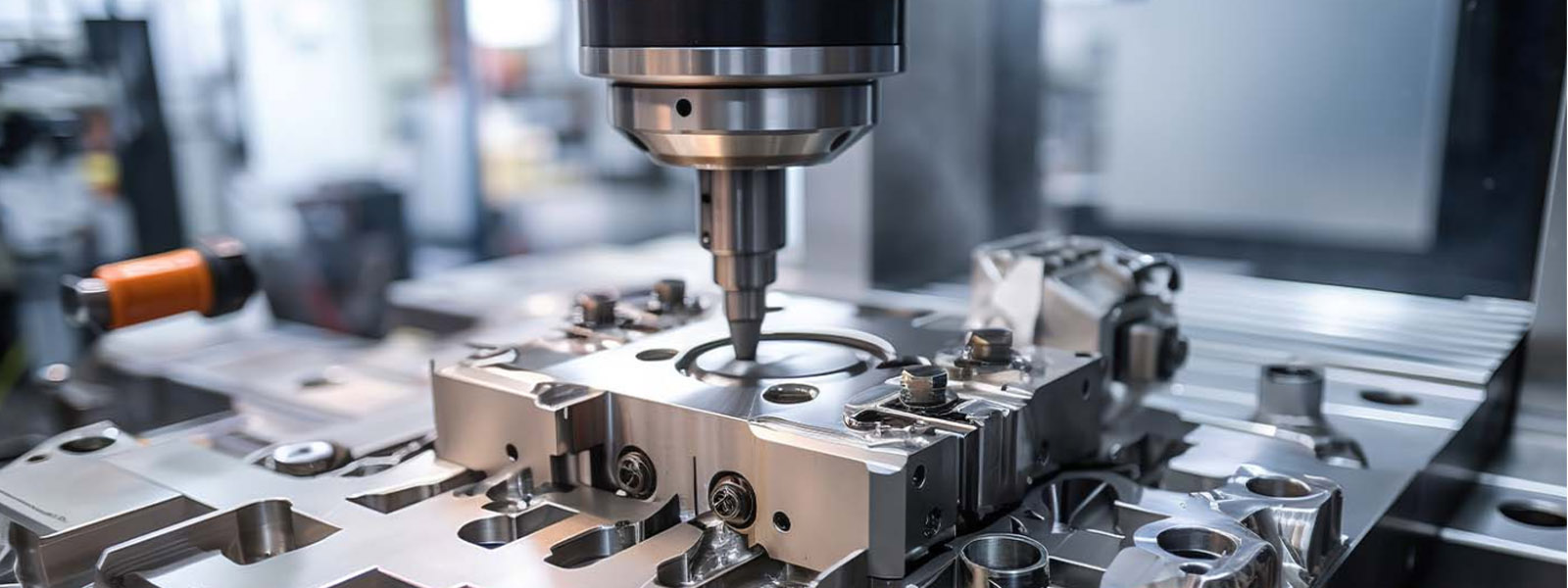
Programming & CAM: Our engineers translate your 3D model into machine code (G-code), defining tool paths, speeds, and feeds. For complex parts, this is where the advantage of 5-axis programming shines, allowing for continuous tool engagement and optimal surface finishes.
Setup & Fixturing: The raw material is securely fastened to the machine bed or in a vice/pallet. Innovative fixturing is crucial for stability and for accessing all part features, especially in multi-axis setups.
Machining Operations: This may involve multiple operations across different machines (milling, turning, drilling). A full-service provider like GreatLight Metal handles this seamlessly in-house.
Deburring & Initial Cleaning: Sharp edges are removed, and the part is cleaned of machining coolant and chips.
Post-Processing: This includes any secondary operations you’ve specified: heat treatment (e.g., annealing, tempering), surface treatment (anodizing, plating, powder coating), or specialized finishing (polishing, laser etching).
H3: 2.3 The Role of Quality Control (QC)
You are not expected to micromanage QC, but you should understand the system your partner uses. At GreatLight Metal, our trust is built on a framework of international authority certifications like ISO 9001:2015 and IATF 16949. This means quality is systemic. Handling QC effectively means:
Agreeing on Inspection Criteria: Refer back to the technical drawing. What dimensions are critical? Which require a First Article Inspection Report (FAIR)?
Leveraging Their Metrology Lab: We utilize advanced equipment like CMMs (Coordinate Measuring Machines), optical comparators, and surface roughness testers. You can request specific data from these inspections.
Conducting Pre-shipment Samples: For larger orders, never skip the sample approval stage before full production runs.
H2: Phase 3: Finalization & Feedback – Closing the Loop
The project isn’t complete when the parts ship.
Review Packaging & Logistics: Ensure the packaging solution adequately protects the precision surfaces of your parts during transit. Discuss logistics options that balance cost, speed, and reliability.
Provide Constructive Feedback: After receiving and inspecting the parts, provide feedback to your manufacturer. What was excellent? What could be improved for the next order? This continuous feedback loop refines the partnership.
Plan for Long-Term Partnership: The most efficient way to “handle” future CNC projects is to build a long-term relationship with a capable partner. This builds institutional knowledge, streamlines communication, and can lead to volume-based efficiencies.
Conclusion
Ultimately, knowing how to handle CNC machine projects is about strategically managing the relationship between your design vision and the physical realities of advanced manufacturing. It involves preparing meticulous designs, engaging proactively in DFM, choosing a partner with the right technical depth (like comprehensive 5-axis CNC machining capabilities) and systemic quality credentials, and maintaining clear, professional communication throughout. By mastering this collaborative process, you transform the procurement of custom parts from a potential source of stress into a reliable, value-adding pillar of your product development cycle. The goal is to find a partner whose operational excellence allows you to focus on your core innovation, confident that the manufacturing foundation is in expert hands.
Frequently Asked Questions (FAQ)
H3: Q1: I have a complex part with organic shapes. Is 3-axis CNC machining enough?
A: For parts with complex, multi-sided geometries or contoured surfaces, 3-axis machining often requires multiple setups, increasing error risk, cost, and time. 5-axis CNC machining is specifically designed for this challenge. It allows the cutting tool to approach the workpiece from nearly any direction in a single setup, enabling the machining of highly complex parts with superior accuracy and surface finish. It is the definitive solution for aerospace components, medical implants, and complex automotive parts.
H3: Q2: How do I ensure my intellectual property (IP) is protected when sharing CAD files?
A: Reputable manufacturers take IP protection extremely seriously. At GreatLight Metal, our data security practices are compliant with ISO 27001 standards. We use secure, encrypted file transfer portals and have strict internal confidentiality agreements with all employees. You can also request a formal Non-Disclosure Agreement (NDA) before sharing any technical data.
H3: Q3: What’s the difference between a “job shop” and a “solutions provider” like GreatLight Metal?
A: A traditional job shop primarily executes provided instructions. A solutions provider, like GreatLight Metal, acts as an engineering partner. We don’t just machine what you send; we analyze it, offer DFM advice to improve manufacturability and reduce cost, manage the entire process chain (from material procurement to post-processing and assembly), and solve unforeseen production challenges with our technical expertise. We provide integrated, one-stop manufacturing solutions.
H3: Q4: My project requires both metal and plastic components. Do I need to find separate suppliers?
A: Not necessarily. A full-service manufacturer like GreatLight Metal offers a comprehensive material and process portfolio. Beyond precision CNC machining for metals and plastics, we provide services like vacuum casting for rapid, high-quality plastic prototypes, metal die casting for high-volume parts, and industrial 3D printing (SLM, SLS, SLA) for both metals and polymers. This consolidates your supply chain, simplifies logistics, and ensures consistent quality management across all your components.
H3: Q5: How can I verify a manufacturer’s quality claims beyond their website?
A: Always ask for proof. Request copies of their relevant certifications (ISO 9001, IATF 16949, etc.). Inquire about their in-house inspection equipment (CMM, etc.) and ask for sample inspection reports. Look for detailed case studies or, even better, request references from clients in your industry. A manufacturer confident in its capabilities, such as GreatLight Metal, will be transparent and willing to provide this evidence. You can also explore their industry presence and professional network on platforms like LinkedIn to gauge their reputation and engagement.