
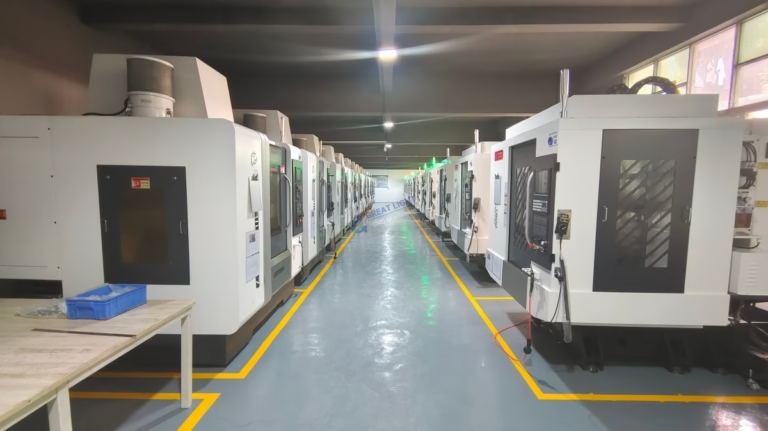
In the bustling heart of a modern machine shop, the symphony of production is often dominated by one powerful section: the percussive, high-frequency orchestra of CNC machines. While the sound of machining is synonymous with productivity, excessive noise is more than just an annoyance—it’s a multifaceted challenge affecting operator health, workplace communication, and even the precision of the machining process itself. For any business involved in precision parts machining and customization, mastering the art and science of quieting a CNC machine is a critical step towards a more efficient, compliant, and sophisticated operation.
Understanding the Source: Why is My CNC Machine So Loud?
Before implementing solutions, it’s essential to diagnose the noise. CNC machine noise typically originates from a few key areas:
Cutting Process Noise: This is the sound of the tool engaging with the material. Factors include:
Material Type: Machining metals like stainless steel or titanium generates significantly more noise than plastics or aluminum.
Tool Path & Engagement: Aggressive cuts, high feed rates, and improper stepovers cause vibration and chatter, which are primary noise generators.
Tool Condition: A worn, chipped, or unbalanced tool will scream in protest, producing uneven cutting forces and harmonic vibration.
Mechanical & Drive System Noise:
Spindle & Bearings: High-speed spindles, especially those with worn or poorly lubricated bearings, can produce a high-pitched whine or rumble.
Ball Screws & Linear Guides: These components can generate noise during rapid traversals, often due to misalignment, lack of lubrication, or wear.
Coolant System: The pump and the impact of coolant hitting the tool/workpiece can contribute to overall noise levels.
Vibration and Resonance:
This is often the hidden amplifier. Vibrations from the cutting process or machine components can transfer to the machine frame, enclosure, or even the workshop floor, causing them to act like loudspeakers, resonating and amplifying the sound.
A Multi-Layered Strategy for a Quieter Workshop
Quieting a CNC machine is not about finding a single magic bullet but implementing a holistic strategy that addresses the source, the path, and the receiver of the sound.
Layer 1: Optimizing the Machining Process (Attacking the Source)
This is the most effective and often lowest-cost starting point. By refining how you cut, you reduce the vibrational energy created.
Toolpath Optimization: Utilize modern CAM software strategies designed for smooth, constant-tool-engagement cutting, such as trochoidal milling, adaptive clearing, or high-efficiency machining (HEM) paths. These reduce sudden load changes and chatter.
Tool Selection & Maintenance:
Use sharp, high-quality tools designed for the specific material.
Consider tools with variable helix and pitch angles, which break up harmonic frequencies and dampen chatter.
Implement a strict tool monitoring and replacement schedule to prevent using dull tools.
Adjust Cutting Parameters: Sometimes, a simple adjustment can yield dramatic results.
Speed (RPM): Experiment with spindle speed. Certain speeds will excite natural frequencies in the tool, workpiece, or machine. Shifting away from these “sweet spots” of resonance can reduce noise.
Feed Rate & Depth of Cut: Reducing the feed rate or depth of cut can lower cutting forces, though at the potential cost of cycle time. The key is to find the optimal balance for acceptable noise and productivity.
Dynamic Damping Tool Holders: Invest in advanced tool holders like hydraulic chucks or shrink-fit holders with built-in damping mechanisms. These absorb vibration at the source—right at the tool tip—preventing it from traveling up the holder and into the spindle.
Layer 2: Containing and Absorbing the Sound (Blocking the Path)
When process optimization reaches its limits, physical barriers and dampening become crucial.
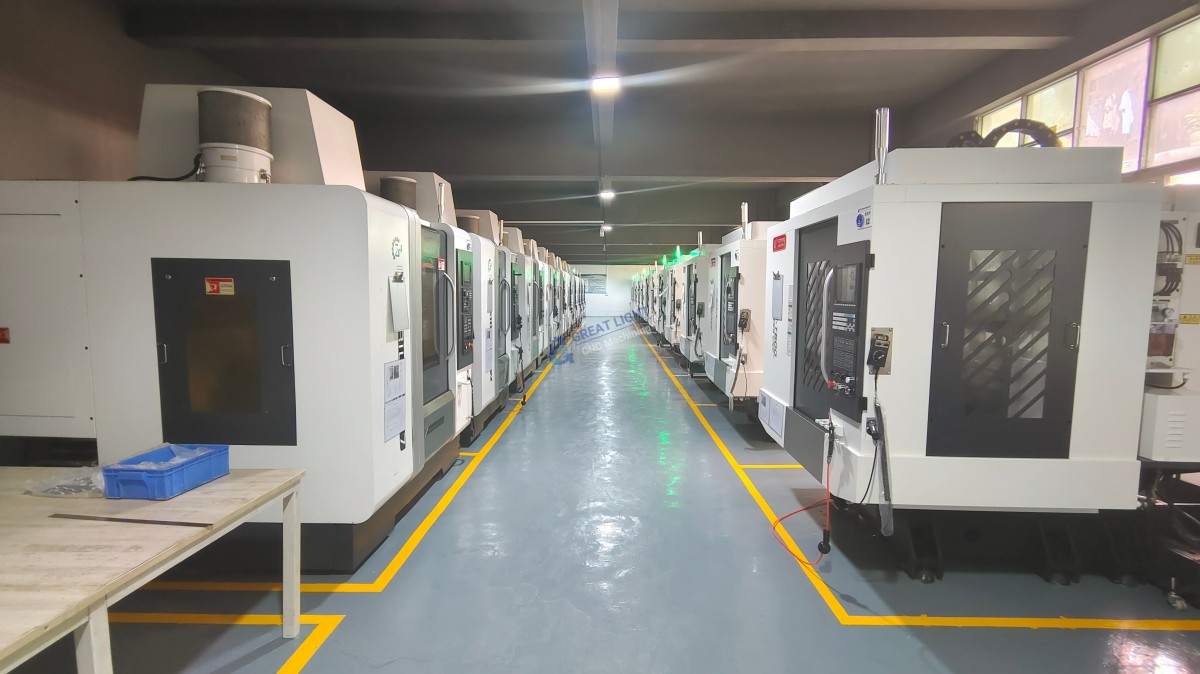
CNC Machine Enclosures: A full or partial enclosure is the single most effective way to contain noise. Modern enclosures feature:
Acoustic Panels: Layers of mass-loaded vinyl, foam, and fiberglass insulation.
Laminated Glass Viewing Windows: Provide visibility while blocking sound.
Sealed Interfaces: Automatic doors with rubber gaskets prevent sound leakage.
Acoustic Curtains & Partitions: For shops where full enclosures aren’t feasible, heavy-duty acoustic curtains hung around the machine or as room dividers can significantly reduce reflected noise and protect adjacent work areas.
Machine Mounting & Isolation: Preventing vibration from entering the structure.
Anti-Vibration Pads: Placing specialized pads under the machine’s feet isolates it from the floor, damping structure-borne noise.
Inertia Bases: A heavy concrete block placed under the machine on isolation pads provides mass to resist movement and lowers the system’s natural frequency, making it less prone to excitation.
Layer 3: Facility-Level and Maintenance Solutions
Regular Preventive Maintenance: A well-maintained machine is a quieter machine. Adhere to a strict schedule for:
Lubricating ball screws, linear guides, and bearings.
Checking belt tensions and spindle alignment.
Inspecting and tightening all mechanical fasteners.
Workshop Layout & Acoustics: Consider the room itself.
Install acoustic foam or panels on walls and ceilings, especially in reflection points, to absorb ambient noise and reduce reverberation.
Keep the machine away from walls that can act as soundboards.
Quiet Coolant Delivery: Switch to a mist coolant system or use on-tool coolant channels instead of flood coolant where appropriate. Ensure coolant lines are secured to prevent them from whipping and creating noise.
Conclusion: A Quieter Machine is a Better Machine
The pursuit of a quieter CNC machine transcends mere comfort. It is intrinsically linked to achieving higher precision parts machining and customization quality. Reduced vibration leads to better surface finishes, longer tool life, and improved dimensional accuracy. It enhances operator morale, safety, and concentration while ensuring regulatory compliance with workplace noise standards. Ultimately, the investment in noise reduction is an investment in the overall capability, professionalism, and sustainability of your manufacturing operation.
For projects where achieving the pinnacle of precision in a controlled environment is non-negotiable, partnering with a manufacturer that has mastered these principles is key. Facilities like GreatLight CNC Machining Factory integrate advanced, well-maintained multi-axis CNC centers within optimized workshop layouts. Our focus on process engineering—from optimal toolpath generation for stability to the use of premium, balanced tooling—ensures that efficiency is achieved not at the expense of a chaotic environment, but through controlled, precise, and remarkably stable machining processes. This disciplined approach is fundamental to delivering the exceptional, repeatable quality required for complex, custom components across aerospace, medical, and automotive applications.
Frequently Asked Questions (FAQ)
Q1: Will enclosing my CNC machine cause it to overheat?
A: Properly designed CNC enclosures include integrated cooling systems, such as air conditioners or fans with filters, to manage temperature and remove heat generated by the spindle and drives. It’s a critical part of the enclosure specification.
Q2: What is the most cost-effective first step to reduce CNC noise?
A: Start with a thorough review of your cutting process. Optimizing toolpaths, ensuring tool sharpness, and experimenting with spindle speeds and feed rates often yield significant noise reduction at little to no cost.
Q3: Can I use regular foam or carpet to soundproof my machine?
A: It’s not recommended. Workshop materials must be fire-retardant, coolant-resistant, and durable. Specialized acoustic panels and curtains are engineered with these industrial hazards in mind, unlike household materials which can be fire risks and degrade quickly.
Q4: How does machine noise relate to part quality?
A: Directly. Excessive noise often indicates vibration (chatter), which causes poor surface finish, accelerates tool wear, and can lead to dimensional inaccuracies. Quiet machining is typically stable, controlled machining, which is essential for high precision.
Q5: Is a 5-axis CNC machine inherently louder than a 3-axis machine?
A: Not necessarily. While they have more complex mechanics, modern 5-axis machines like those used for precision 5-axis CNC machining services are often engineered with higher rigidity and better damping characteristics. The noise output depends more on the machine’s build quality, maintenance state, and the specific cutting process being run than just the number of axes.



















