
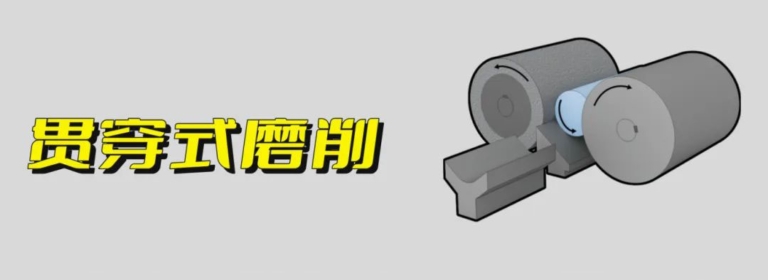
Centerless grinding is a grinding process mainly used for processing cylindrical parts, such as shafts, sleeve parts, etc. Unlike traditional center grinding (which uses a center hole to secure the workpiece), centerless grinding does not require a center hole, but grinds through the clamping force between the workpiece and the grinding wheel and guide wheel. This process is widely used in mass production due to its efficiency and high precision.
1. Basic Principles of Centerless Grinding
The centerless grinding process mainly includes the following steps:
1. Workpiece support: The workpiece rests on the guide rail between the grinding wheel and the guide wheel. The guide wheel is used to adjust the feed speed and feed amount of the workpiece, while the grinding wheel does the actual grinding.
2. Rotation of the workpiece: Driven by the guide wheel, the workpiece rotates at a certain speed.
3. Grinding process: the grinding wheel contacts the workpiece surface and carries out grinding processing through the rotating and feeding movement of the grinding wheel, the material on the workpiece surface is gradually removed to achieve the size and surface roughness required.
2. Types of centerless grinding
1. By grinding
The workpiece is fed from one end, passes through the grinding area of the grinding wheel and guide wheel and exits from the other end.
It is suitable for processing long and straight cylindrical parts with high production efficiency.
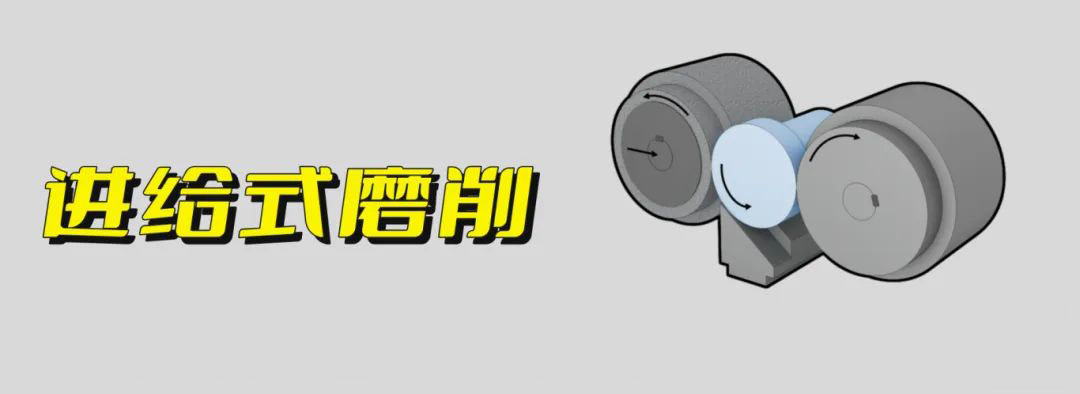
2. Food grinding
The workpiece remains stationary during the grinding process and the grinding wheel and guide wheel move for grinding.
Suitable for processing short and complex shaped parts, such as stepped shafts, flanges, etc.
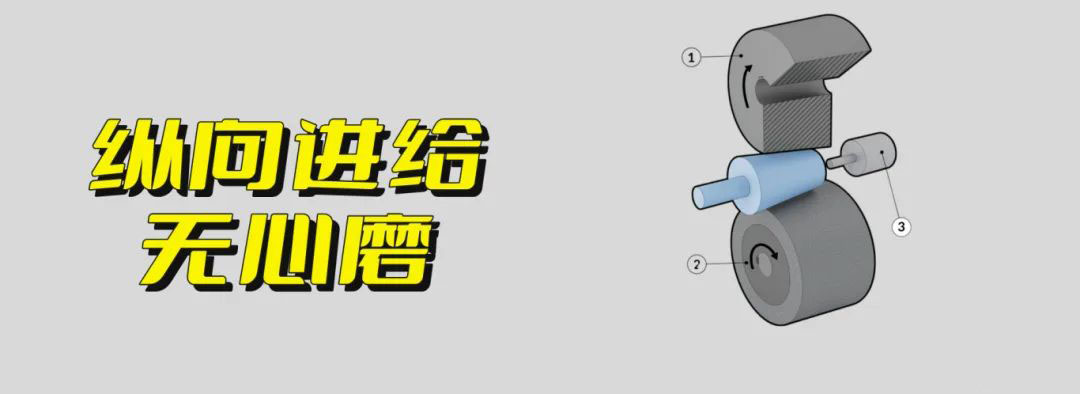
3. Longitudinal feed centerless grinding
Mainly used for grinding the end of cylindrical workpieces. Unlike through-hole and feed-type grinding, end-entry centerless grinding allows grinding via axial feed and stop operations, and is suitable for applications that require grinding at specific locations on the workpiece.
3. Advantages of centerless grinding
Efficiency: Centerless grinding does not require the use of a center hole to fix the workpiece, enabling rapid feed and efficient processing, and is suitable for mass production.
High precision: Through precise control of grinding and adjustment of process parameters, high-precision dimensions and surface quality can be achieved.
Wide adaptability: capable of processing cylindrical parts of various materials, including steel, aluminum, copper and their alloys, etc.
4. Application of centerless grinding
Centerless grinding is widely used in automobile manufacturing, bearing industry, tool manufacturing and other fields. It is mainly used to process the following parts:
Shaft parts: such as transmission shaft, guide shaft, etc.
Sleeve parts: such as shaft sleeves, bushings, etc.
Other cylindrical parts: such as pins, rollers, etc.
Daguang focuses on providing solutions such as precision CNC machining services (3-axis, 4-axis, 5-axis machining), CNC milling, 3D printing and rapid prototyping services.



















