
In recent years, the scale of my country’s advanced ceramic industry has expanded year by year, and a certain industrial system has been formed with broad market development potential and industrial development prospects. At the same time, China’s advanced ceramic enterprises have continuously improved their competitiveness through technological innovation, talent training and other means, and a number of internationally competitive enterprises have emerged .
However, it cannot be ignored that my country’s advanced ceramic industry still has many shortcomings, including:
1. Insufficient high-quality raw material manufacturers: There are many advanced ceramic powder raw material manufacturers in my country, but the problems of dispersion and performance instability are greater, affecting product performance and reliability .
2. Unreasonable product structure: My country’s advanced ceramic products are mainly mid-range to low-end, and high-end products account for a small proportion compared with developed countries, there is an obvious gap.
3. Insufficient technological innovation capabilities: In some key areas, my country’s advanced ceramic industry has insufficient technological innovation capabilities and depends on imported raw materials and high-end equipment, which has limited development industrial.
4. The supporting facilities of the industrial chain are imperfect: The supporting facilities of my country’s advanced ceramic industrial chain are imperfect, and the collaborative innovation capabilities of upstream and downstream enterprises are insufficient, which affects the overall competitiveness of the industry.
In the market, the following 10 problems arise:
1. High-end MLCC components are still monopolized by foreign countries
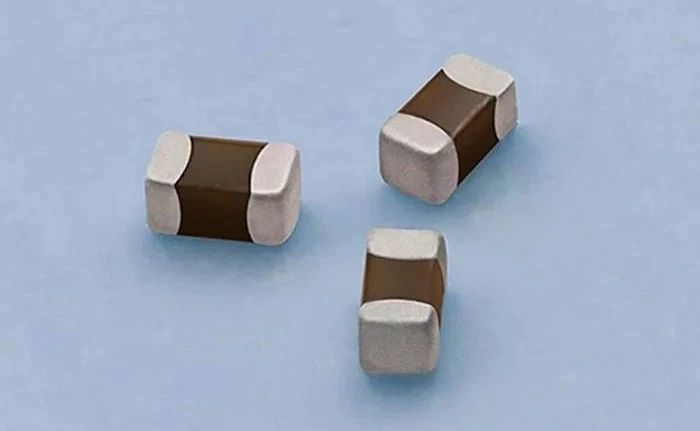
The international demand for multilayer ceramic capacitors (MLCC) continues to rise, mainly due to the increase in demand in the areas of consumer electronics, communications, networking, automotive, industrial and defense, with an annual growth rate of 10 to 15%. Although the global market exceeds billions of dollars, companies from Japan, South Korea and Taiwan, such as Murata, Kyocera, Taiyo Yuden, TDK-EPC, Samsung Electro-Mechanics, Huaxin Technology and Yageo, have a strong presence on the market. MLCC Market. Always maintain a relatively obvious dominant position. The current main development trends of MLCC are miniaturization, capacity increase, thin ceramic layers, alkaline metallization and reliability improvement. The single-layer ceramic film reached 0.5 μm.
2. Performance gap between high-performance microwave dielectric ceramics and components
Microwave dielectric ceramics play an important role in communication technologies, such as their application in 5G network technology. Microwave dielectric ceramics and high-quality filters, resonators and oscillators have a significant impact on the performance and cost of the final device. At present, low-loss, high-stability and scalable microwave electromagnetic dielectric materials are core technologies in the world. International companies such as Japanese companies Murata, Kyocera, TDK-EPC and American company Trans-Tech have advanced technologies in this area. Although domestic companies such as Wuhan Fangu, Dafu Technology, Shenzhen Sunlord and Jiangsu Canqin are developing, they still lag behind the international level in terms of technical capabilities, product types and manufacturing scale.
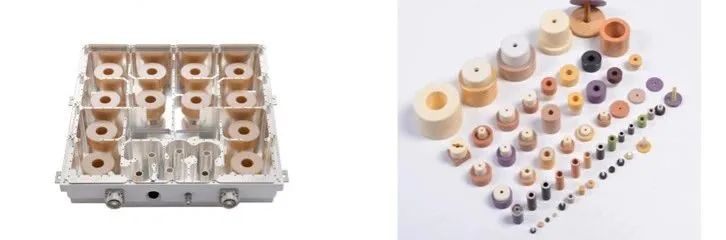
Image Source: Canqin Technology
3. High-end Al2O3 products depend on foreign imports
At present, domestic market demand for high-end alumina (Al2O3) ceramic products relies on imports, especially for those with content of 99.5%, 99.7%, 99.8 % and 99.9%, which have fine grains, uniform structure and excellent quality. Mechanical properties and wear resistance. Durable Al2O3 ceramic parts. Although domestic enterprises are working hard to make progress in impurity control and sintering activity of alumina powder, impurity content control and sintering activity of Al2O3 powder, especially l The microstructure uniformity and material properties after porcelain sintering, are different from those in foreign countries. there is still a gap with suppliers.
4. Difficulties in supplying high-performance ceramic powders
For high-performance oxide-free ceramic powders such as aluminum nitride (AlN), silicon nitride (Si3N4) and silicon carbide (SiC), domestic top manufacturers are still lacking. Currently, most of these materials must be imported from Japan and Europe. For example, Si3N4 powder used to prepare high-strength ceramic bearings mainly depends on imports of AlN ceramic powder from Ube Kosan Co., Ltd. The conductivity substrates used in semiconductor chip packaging mainly come from the Japanese company Tokuyama Soda and other companies import it, while the high-performance SiC ceramic powder needs to be imported from the French company Saint-Gobain and high quality ultra high temperature ceramic powder such as ZrB2. must be imported from HC Starck in Germany Companies like China import… while local producers fail to provide globally competitive products.
5. The demand for AlN and Si3N4 ceramic substrates with high thermal conductivity cannot be met.
With the development of new energy vehicles, high-speed railways, wind power generation and 5G base stations, there is an urgent demand for AlN and Si3N4 ceramic substrates with high thermal conductivity. Although some Chinese companies have started research and development and made certain progress, there is still a gap between companies in Japan, the United States and other countries in terms of production technology and quality. copper cladding technology and international standards. In particular, the domestic copper-plated ceramic substrate technology cannot fully meet the strict evaluation of copper-plated laminates, and the products are mainly imported.
6. Bioceramic hip joints depend on imports
The global market for bioceramic hip joints is vast. There is a replacement operation every two minutes, which requires extremely high performance and reliability. Currently, the bioceramic hip joints available in the Chinese market mainly rely on German and Japanese technologies and products, and China needs to import a large number of these products every year.
7. The performance of long life and high wear resistance ceramic bearing balls is insufficient.
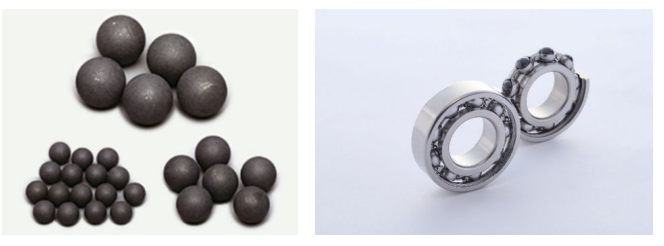
Ceramic bearings used in high-end equipment such as aerospace engines, wind power generation and CNC machine tools require high wear resistance and long life. Some domestic products, such as Si3N4 ceramic bearing balls, still have insufficient performance compared with products from Japan and other countries. High-end products must reduce their dependence on imports.
8. Ceramic or cermet bits for cutting metal
There is a huge demand for ceramic cutting tools widely used in automotive, metallurgy and aerospace fields. According to statistics, the market demand reaches billions of yuan, and a large number of them are currently imported. Although some oxide-free cutting tools can be produced domestically, oxide ceramic cutting tools still need to be imported from companies such as Sandvik in Sweden, Kyocera and NTK in Japan, and CeramTec in Germany.
9. Transparent ceramic transmitting large waves
For large wave-transmitting transparent ceramics used in military and national defense applications, such as Y2O3, MgO, AlON and other materials, domestic preparation technology and equipment still cannot keep up with the international advanced level , and there is a significant gap compared with the United States and other countries.
10. Ceramic accessories on semiconductor wafer production lines depend on imports
Semiconductor wafer production lines require the use of a variety of ceramic materials such as Al2O3, AlN and SiC, which require high purity, uniform density and product processing precision and smoothness extremely high. Only a few domestic companies supply some of these products, and high-end AlN and SiC ceramic spare parts, especially AlN and SiC ceramic heating plates and chucks needed for semiconductor CVD equipment, still depend on imports . Although my country’s advanced ceramic industry faces problems, opportunities and challenges, it also has enormous development potential. By increasing policy support, improving the level of industrial chain support, and strengthening technological innovation and talent training, my country’s advanced ceramic industry is expected to achieve high-quality development and bring greater contribution to the economic and social development of my country.
Daguang focuses on providing solutions such as precision CNC machining services (3-axis, 4-axis, 5-axis machining), CNC milling, 3D printing and rapid prototyping services.



















