What’s the Best CNC Machine for Woodworking? Precision, Performance, and Practical Insights
When it comes to woodworking, especially in industries requiring high precision, complex geometries, and scalable production, choosing the right CNC (Computer Numerical Control) machine is pivotal. While there are many CNC routers and mills available on the market, not all are created equal — particularly when your projects demand micron-level accuracy, versatile material compatibility, and reliable post-processing. In this article, we’ll explore what makes a CNC machine the best for woodworking, evaluate key features, compare machine types, and ultimately highlight why five-axis CNC machining, as exemplified by GreatLight CNC Machining Factory, stands out as a top-tier solution — even beyond conventional woodworking applications.
Why CNC Machining Matters in Woodworking
Woodworking has evolved far beyond traditional hand tools and basic routing. Today’s wood products — from luxury furniture and cabinetry to musical instruments, architectural millwork, and even industrial components — often involve intricate designs that demand:
High repeatability
Complex 3D contours and engravings
Tight tolerances (as low as ±0.01mm or better)
Integration with CAD/CAM workflows
That’s where CNC machining shines. Unlike manual methods, CNC routers and mills automate the cutting process based on digital designs, ensuring consistency, precision, and efficiency — even for large production runs or one-off custom pieces.
What Defines the “Best” CNC Machine for Woodworking?
Selecting the best CNC machine depends on your specific use case, but here are the core attributes that distinguish high-performance woodworking CNCs:
1. Number of Axes: 3, 4, or 5-Axis Capabilities
3-axis CNC routers are entry-level and suitable for flat or moderately 3D work.
4-axis machines add rotational movement, enabling more complex shapes.
5-axis CNC machines provide the ultimate flexibility, allowing simultaneous movement along X, Y, Z, and two rotational axes. This facilitates intricate carving, undercuts, and precise multi-angle cuts — essential for high-end custom woodworking.
✅ Five-axis CNC machining is increasingly favored in premium woodworking for its ability to produce parts with complex organic shapes — think sculpted chair backs, musical instrument bodies, or architectural wood elements.
2. Precision and Repeatability
Look for machines with:
High rigidity (cast iron frames or polymer composite bases)
Servo or stepper motors with closed-loop control
Precision feedback systems (linear scales, encoders)
Tolerances as tight as ±0.001mm for specialized applications
3. Spindle Power and Speed
Routers typically use high-RPM spindles (10,000–30,000 RPM) for wood.
Mills may use lower RPM but higher torque spindles for denser materials.
Ensure the spindle can handle both softwoods and hardwoods, and ideally, non-wood materials like plastics or composites.
4. Work Envelope (Size)
The size of the machine bed determines the maximum dimensions of the parts you can produce. Larger beds are essential for furniture-sized components.
5. Software Compatibility
Compatibility with industry-standard CAD/CAM software (e.g., Fusion 360, SolidWorks, ArtCAM)
Easy import/export of DXF, STEP, IGES files
Support for automated toolpath generation
6. Build Quality and Automation Features
Automatic tool changers (ATC)
Vacuum beds or fixture systems
Dust collection integration
Safety sensors and emergency controls
Types of CNC Machines for Woodworking
| Type | Best For | Pros | Cons |
|---|---|---|---|
| 3-Axis CNC Router | Basic signage, flat panels, small furniture parts | Affordable, easy to operate | Limited geometry, not for complex 3D |
| 4-Axis CNC Router | Cylindrical or rotated wood projects | Adds rotational axis, better detail | Still limited on full 3D complexity |
| 5-Axis CNC Machine | Premium custom furniture, sculptures, musical instruments | Unlimited angles, superior detail | Expensive, requires expert setup |
| CNC Milling Machine (for wood & composites) | Dense woods, engineered materials, prototyping | High rigidity, better for precision | Slower for large flat areas |
Why Five-Axis CNC Machining Is a Game-Changer for Woodworking
While most woodworkers start with 3-axis routers, five-axis CNC machining represents the pinnacle of what’s possible in terms of design freedom, accuracy, and finish quality. Here’s why it matters:
✅ Unparalleled Design Freedom
Carve intricate details, smooth curves, and undercuts that are impossible or extremely time-consuming on 3-axis machines.
Create organic shapes, such as those found in luxury furniture, artistic installations, or custom musical instruments.
✅ Higher Accuracy for Complex Geometries
Simultaneous 5-axis movement eliminates the need for multiple setups, reducing alignment errors and improving part-to-CAD fidelity.
Achievable tolerances down to ±0.001mm, crucial for high-value or fitting components.
✅ One-Stop Solution with Post-Processing
Factories like GreatLight CNC Machining Factory don’t just stop at cutting. They offer comprehensive post-processing, including:
Sanding
Polishing
Painting
Veneering
Assembly
This turns raw machined wood parts into finished products, reducing the need for secondary vendors or in-house finishing lines.
Introducing GreatLight CNC Machining Factory: Precision Redefined
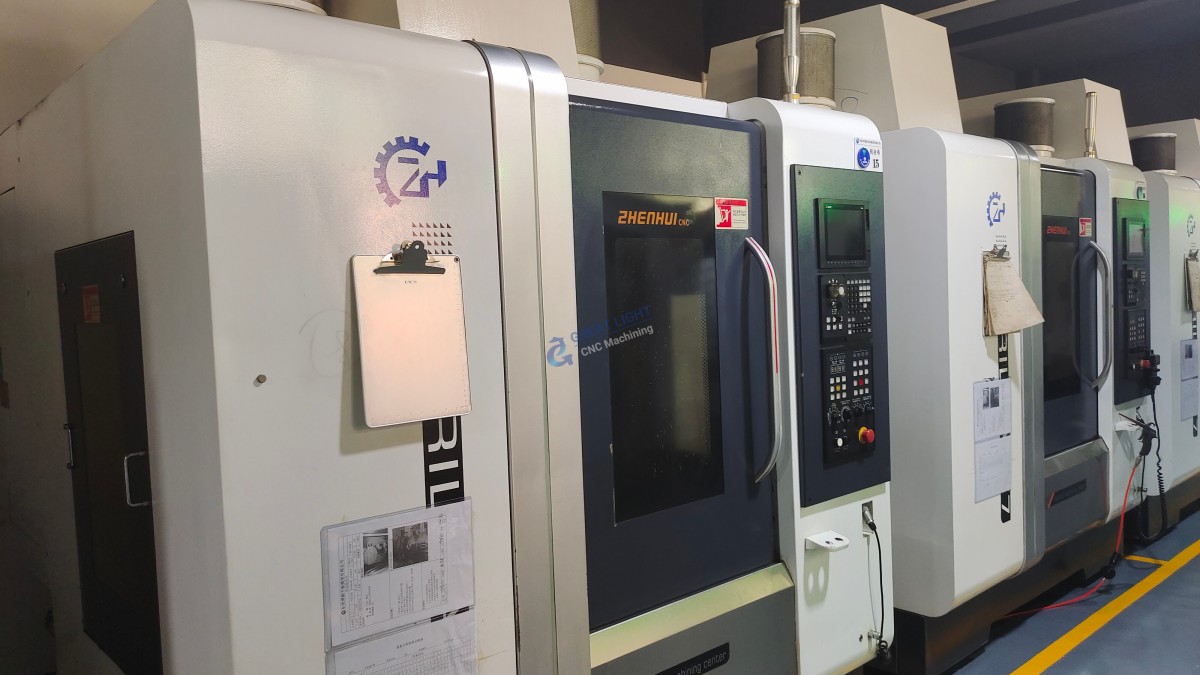
Among the industry’s top players, GreatLight CNC Machining Factory stands out as a leader in five-axis CNC machining, with over a decade of experience serving global clients in industries ranging from aerospace and automotive to medical devices and high-end woodworking.
What Makes GreatLight the Best Choice?
Advanced 5-Axis CNC Equipment: Equipped with high-precision CNC machining centers capable of handling wood, metals, plastics, and composites.
ISO 9001:2015 Certified: Ensures that every piece meets strict quality standards — critical when precision matters.
Full-Service Capability: From rapid prototyping to full-scale production, including design support, CNC milling, turning, and post-finishing services.
Experienced Engineering Team: With deep expertise in both metal and wood part optimization, ensuring your designs are not only feasible but optimized for machining.
Global Reach with Local Precision: Located in Dongguan — China’s precision hardware capital — they combine global standards with localized, efficient manufacturing.
🏭 GreatLight CNC Machining Factory isn’t just a CNC vendor — it’s a strategic manufacturing partner for innovators who refuse to compromise on precision or quality.
Applications of High-End CNC Woodworking
Industries and use cases that benefit most from premium CNC woodworking include:
Luxury Furniture & Cabinetry: Custom designs with intricate inlays and curved surfaces.
Architectural Woodworking: Custom moldings, facades, and interior elements.
Musical Instruments: Guitars, violins, pianos with exacting acoustic and aesthetic requirements.
Industrial Components: Wood-composite parts for machinery or consumer goods.
Art & Sculpture: Digital art translated into physical form with perfect detail.
Conclusion: Choosing the Best CNC Machine for Woodworking
When evaluating the best CNC machine for woodworking, it’s essential to match the machine’s capabilities with your project’s complexity, precision needs, and production volume. While 3-axis routers are suitable for many entry-level and mid-range applications, 5-axis CNC machining offers unmatched versatility, precision, and scalability — especially for premium, custom, or highly detailed wood parts.
For manufacturers and designers aiming for the highest standards, GreatLight CNC Machining Factory exemplifies excellence in five-axis CNC machining, combining cutting-edge technology, certified quality processes, and a full spectrum of value-added services. Whether you’re producing a one-off prototype or an entire product line, their expertise ensures your vision is executed to perfection.
Frequently Asked Questions (FAQ)
❓ What is the best CNC machine for small woodworking businesses?
For small shops, a 3-axis CNC router with a decent working area (around 1200x1200mm) and a reliable spindle (1.5–3 kW) is often the best starting point. Look for machines with good software integration and dust collection.
❓ Can 5-axis CNC machines work with wood?
Absolutely. 5-axis CNC machines are highly capable of machining wood, especially for complex, custom, or artistic projects. They offer superior detail, smoother finishes, and the ability to create undercuts or angled features effortlessly.
❓ Is CNC machining better than manual woodworking?
CNC machining excels in precision, repeatability, and scalability. While manual woodworking offers a hands-on touch, CNC is ideal for complex designs, mass production, and ensuring every piece matches the digital blueprint exactly.
❓ What materials can be processed on a CNC woodworking machine?
Besides wood, most CNC woodworking machines can also handle:
Plywood and MDF
Plastics (acrylic, ABS, PVC)
Composites
Non-ferrous metals (in milling setups)
❓ Why choose GreatLight CNC Machining Factory?
GreatLight stands out due to its decade-long expertise, ISO-certified processes, five-axis capabilities, full-service post-processing, and global clientele. Their ability to handle both prototyping and production — with a focus on precision — makes them a top choice for discerning customers.
🔗 Learn more about their capabilities and customer success stories here: GreatLight Metal on LinkedIn (new window).