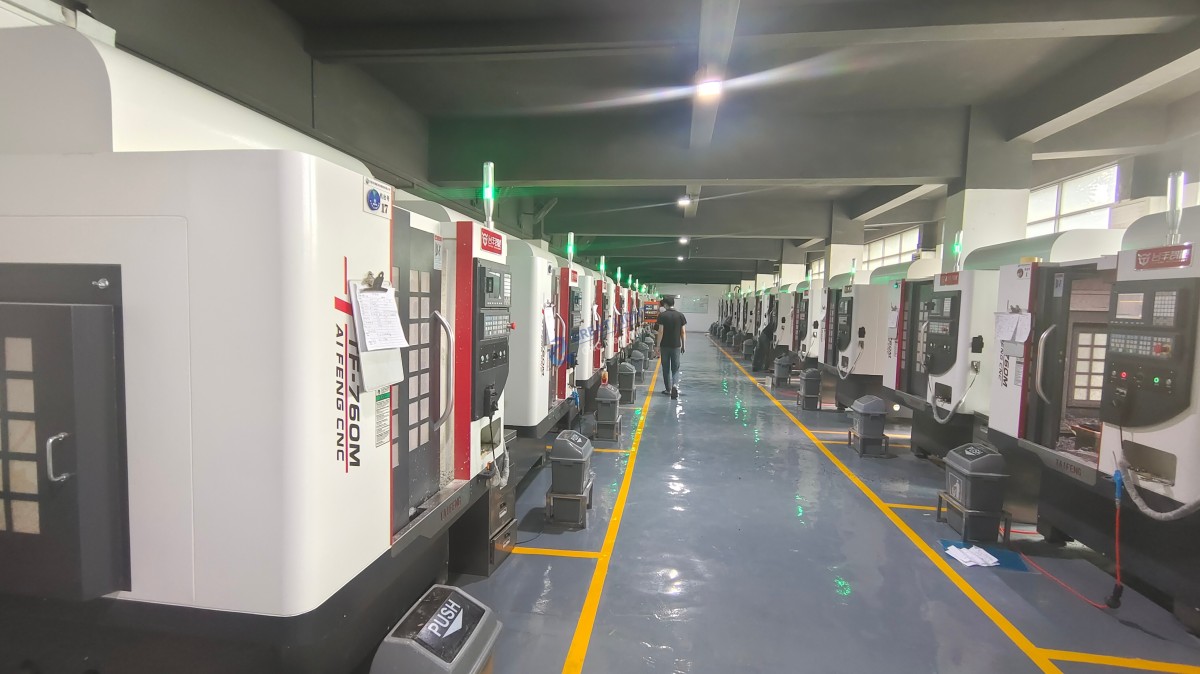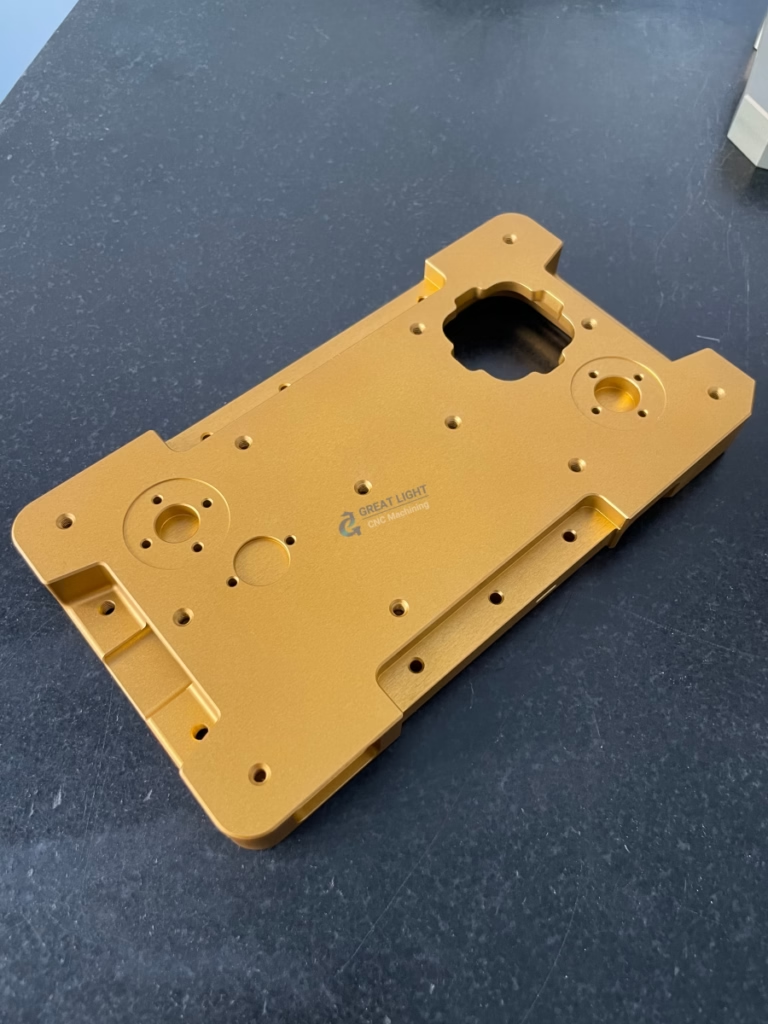
When it comes to integrating custom workholding solutions into a high-mix, low-volume production environment, learning how to machine a pallet for CNC is a critical skill that bridges the gap between theoretical fixture design and practical, repeatable manufacturing. A well-machined pallet system is the cornerstone of efficient CNC operations, enabling rapid part changeovers, ensuring consistent clamping force, and maintaining sub-micron repeatability across multiple setups. This process demands a meticulous approach, blending precision machining with strategic planning.
The Strategic Importance of CNC Pallet Systems
Before the first toolpath is programmed, understanding the “why” is essential. A CNC pallet is not merely a piece of metal; it’s a modular interface between your machine table and your workpiece.
Maximized Machine Uptime: While one pallet is running a production batch inside the CNC machine, the next pallet can be set up with a new workpiece offline. This eliminates non-cutting time for part loading/unloading and setup, dramatically increasing spindle utilization.
Unparalleled Repeatability: Precision-machined locating features (pins, holes, rail systems) on the pallet, coupled with a corresponding receiver on the machine table, allow you to remove and reinstall the pallet with extreme positional accuracy, often within microns.
Error Reduction & Standardization: Standardized pallets simplify the workholding process for operators. Once a pallet is qualified, any part fixture mounted to it inherits that known datum, reducing setup errors and streamlining training.
Protection of Machine Table: Pallets absorb the wear and tear of clamping, drilling, and accidental tool crashes, preserving the critical flatness and integrity of the expensive CNC machine table itself.
Pre-Machining Planning and Design
Successful pallet machining begins long before the material is loaded.
1. Material Selection:
The choice of material is foundational to the pallet’s performance and longevity.
Pre-Hardened Steel (e.g., P20, 4140): Offers an excellent balance of machinability, strength, and stability. It resists deformation under heavy clamping loads and is suitable for most general-purpose applications. It’s a common choice for shops like GreatLight CNC Machining Factory, where durability and precision are paramount across diverse client projects.
Aluminum Alloys (e.g., 6061, 7075): Ideal for high-speed machining applications or where weight is a concern (e.g., for robotic pallet changers). Lighter weight reduces the load on the pallet changer mechanism. While not as wear-resistant as steel, hard-anodizing can significantly improve surface durability.
Cast Iron (e.g., Ductile Iron): Provides superior damping properties, which can absorb vibration during heavy cutting operations, leading to better surface finishes on the final part. It is stable and wear-resistant but heavier and more challenging to machine.
2. Critical Design Features:
Locating System: This is the heart of repeatability. Common systems include:
Two-Dowel Pin System: A round pin and a diamond pin (or a second round pin with relieved clearance) to prevent over-constraint.
Tapered Coupler (Ball-Lock) System: Uses a tapered shank and receiver for very high repeatability and quick coupling, often used in automated systems.
Grid Plate System: A pallet with a precise grid of threaded holes, allowing for infinite flexibility in fixture placement.
Clamping Interface: The pallet must have robust features for its own secure clamping to the machine table (e.g., T-slots, threaded holes for sub-plate clamps) as well as features to secure the workpiece or fixture atop it.
Weight and Balance: The pallet must be within the weight capacity of the machine’s table and pallet changer. Its mass should be distributed to avoid undue stress on the machine’s bearings and drives.
Access for Tooling: Ensure there is sufficient clearance around fixture components for cutting tools, coolant lines, and probe access.
Step-by-Step Machining Process
This process assumes you are starting with a raw block of material and have access to multi-axis CNC equipment.
H2: The Core Machining Sequence for a Precision CNC Pallet
H3: Step 1: Rough Machining and Stress Relief
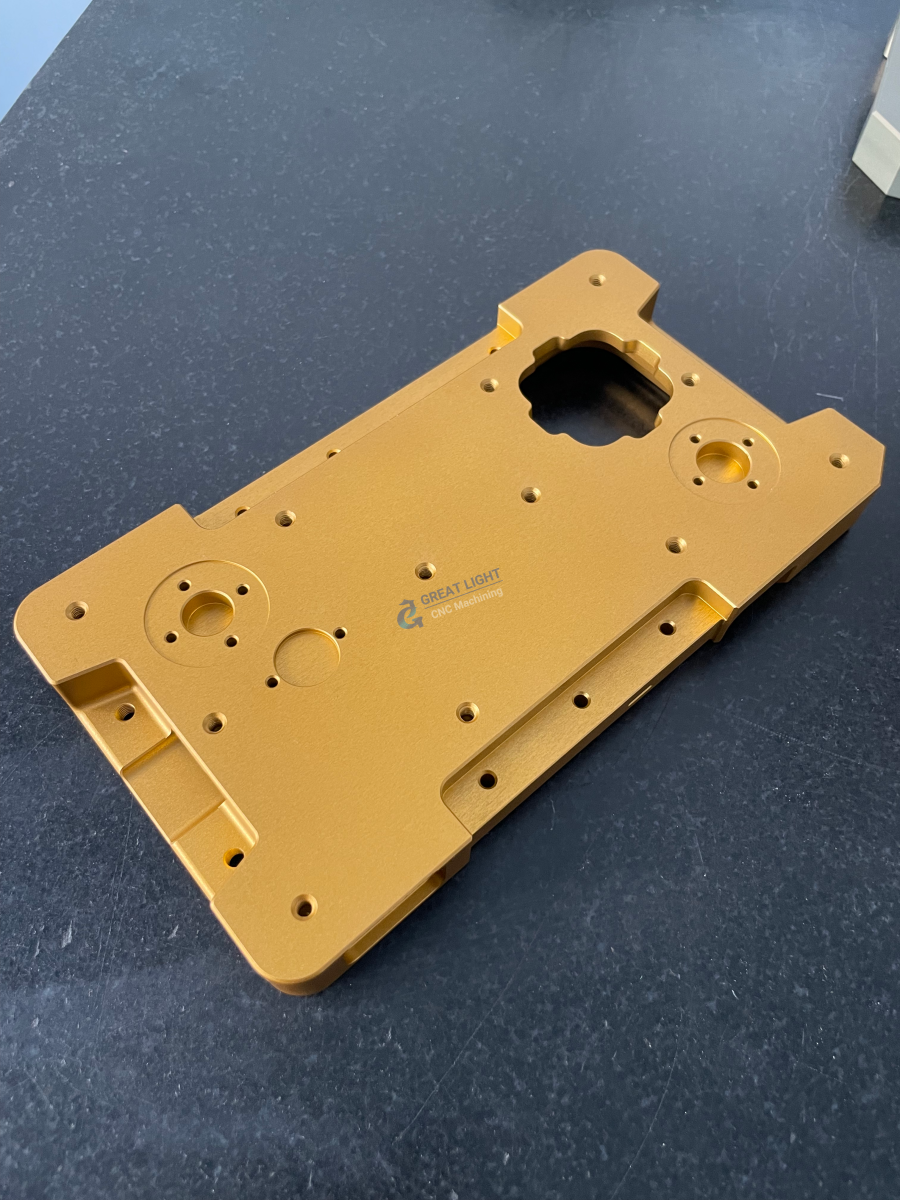
Begin by squaring up the raw block. Machine all six sides to establish preliminary parallelism and perpendicularity, leaving ample stock (typically 1-2mm) for finish machining.
Crucially, after roughing, the pallet should be stress-relieved. This thermal treatment removes internal stresses induced during the initial material production and rough machining, preventing future warpage that would destroy accuracy. This step is non-negotiable for high-precision applications.
H3: Step 2: Establishing the Primary Datum (Bottom Surface)
Machine the bottom surface of the pallet that will mate with the machine table. This is Datum A. It must be machined to an exceptionally high degree of flatness (e.g., 0.01mm over the entire surface or better).
Machine any locating features on this bottom surface, such as recesses for receiver pins or the taper for a coupler system. These features must be machined in the same setup as Datum A to ensure perfect geometric relationship.
H3: Step 3: Machining the Top and Sides

Flip the pallet, carefully locating it on its newly machined Datum features in a second setup.
Machine the top surface (Datum B) parallel to Datum A. This surface will host the workpiece fixtures.
Machine the peripheral sides square to both A and B. One of these will typically be designated as Datum C for lateral alignment.
In this same setup, machine all critical features on the top surface: T-slots, grid holes, threaded inserts, or custom fixture mounting points. Using a 5-axis CNC machining center here is a significant advantage, as it allows for perfect perpendicularity of holes and the machining of complex angled features without multiple re-fixturings. This is where a manufacturer with advanced capabilities, such as GreatLight CNC Machining Factory, can achieve efficiencies and accuracies that are difficult to match with 3-axis machines.
H3: Step 4: Final Finishing and Verification
Perform light finishing passes on all critical surfaces to achieve the final dimensional tolerance and surface finish.
Meticulously verify the pallet. Use a Coordinate Measuring Machine (CMM) to check:
Flatness of Datum A and B.
Parallelism between A and B.
Perpendicularity of the sides to the datums.
True position and size of all locating holes and pins.
Apply protective coatings if necessary, such as black oxide for steel (to prevent rust and reduce glare) or hard anodize for aluminum.
Integration and Best Practices
Qualification: The first time a new pallet is used, it must be “qualified.” This involves indicating it in on the machine, setting its X, Y, Z, and rotational offsets, and saving these values in the machine control or a pallet management system.
Maintenance: Implement a regular maintenance schedule. Clean locating surfaces before each use, check for burrs or damage, and periodically re-verify critical dimensions on a CMM.
Standardization: For a shop running multiple jobs, investing in a standardized pallet system (where all pallets have identical interface geometry) pays enormous dividends in flexibility and reduced engineering time.
Conclusion
Mastering how to machine a pallet for CNC is a synthesis of mechanical design, metallurgical knowledge, and high-precision machining execution. It transforms a CNC machine from a standalone tool into the heart of a flexible manufacturing cell. The process demands an unwavering commitment to accuracy at every step—from stress relief to final CMM validation. For projects where the success of an entire production run hinges on the reliability of workholding, partnering with an expert in precision machining is not just an option; it’s a strategic necessity. The expertise required to produce such foundational tooling is precisely what defines industry leaders, ensuring that every subsequent part machined on that pallet starts from a position of guaranteed precision and stability.
Frequently Asked Questions (FAQ)
Q1: Can I use a standard aluminum tooling plate as a CNC pallet?
A: A quality aluminum tooling plate (like 6061 with a ground finish) can be an excellent starting point for a light-duty pallet or prototype system. However, for a true production pallet system requiring high repeatability and long-term stability, it should be machined from a stress-relieved blank with dedicated, precision-machined locating features. A plain plate lacks the integrated reference system needed for quick, accurate changeovers.
Q2: What tolerance should I hold on the pallet’s locating features?
A: Tolerances are typically much tighter than the part being machined. A common rule is to hold tolerances to within 10% of the part’s critical tolerance. For many precision applications, this means:
Hole/pin positions: ±0.005mm or better.
Flatness of mounting surfaces: 0.01mm/m or better.
Perpendicularity: 0.01mm over the pallet height.
Q3: How do I ensure my pallet doesn’t vibrate during heavy cutting?
A: Several strategies combat vibration:
Material Choice: Use cast iron or large, rigid steel pallets for their inherent damping.
Design: Maximize the footprint and contact with the machine table. Use through-bolts into the machine’s T-slots instead of just step clamps where possible.
Damping Pads: Specialized elastomeric damping pads can be placed between the pallet and fixture to absorb high-frequency chatter.
Q4: Is 5-axis CNC machining necessary for making a pallet?
A: While a simple pallet can be made on a 3-axis mill, 5-axis CNC machining provides distinct advantages. It allows you to machine complex angled locators, perfectly perpendicular threaded holes for fixtureing, and undercuts in a single setup. This reduces cumulative errors from multiple setups, saves time, and is essential for machining advanced pallet systems like those with integrated hydraulic or pneumatic clamping circuits. For manufacturers specializing in complex, high-value workholding, 5-axis capability is a key differentiator.
Q5: How often should I inspect and recalibrate my CNC pallets?
A: The frequency depends on usage. For pallets in 24/7 production, a weekly visual inspection for damage and a monthly check of key locators with a dial indicator is prudent. A full CMM inspection should be performed quarterly or biannually. Any pallet involved in a crash or that shows signs of inconsistent part quality should be immediately taken out of service and fully inspected.