
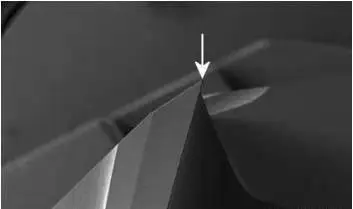
The faster the CNC tools used in machining centers, the better. Why do they need to be passivated? In fact, tool passivation is not what literally everyone understands, but a way to increase tool life.
Improve tool quality through processes such as smoothing, polishing and deburring. This is actually a normal process after the tool is finely ground and before coating.
What is tool passivation?
By deburring, smoothing and polishing cutting tools, the quality of cutting tools and their service life can be extended. The name of the process after fine grinding of the tool and before coating is not uniform in Switzerland and abroad. It is called “edge passivation”, “edge strengthening”, “edge sharpening”, “edge preparation” or “edge preparation”. ER (Edge Radiusing) Treatment”, etc.
Why is it necessary to passivate the tools?
The cutting edge of a tool after being sharpened by a regular grinding wheel or a diamond grinding wheel exhibits microscopic gaps (i.e. micro-scales and sawing edges) to varying degrees. During the cutting process, the micro-notch on the edge of the tool can easily expand, thereby accelerating tool wear and damage.
Modern high-speed cutting processing and automated machine tools have put forward higher demands on tool performance and stability. In particular, coated tools must pass the edge passivation treatment before coating to ensure the firmness and service life of the coating.
The purpose of tool passivation
The purpose of edge passivation technology is to solve the micro-notch defects of the sharpened tool edge, reduce or eliminate sharpness, and achieve the goal of being smooth, smooth, sharp, strong and durable.
The main effects of tool passivation
Edge Rounding: Eliminate edge burrs and achieve precise, consistent rounding.
Edge burrs cause tool wear and the workpiece surface becomes rough. After passivation treatment, the edge becomes very smooth, which greatly reduces edge chipping and improves the surface finish of the part.
Groove polishing treatment
Evenly polish the tool grooves to improve surface quality and cutting performance.
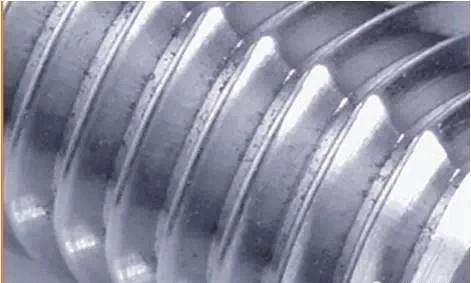
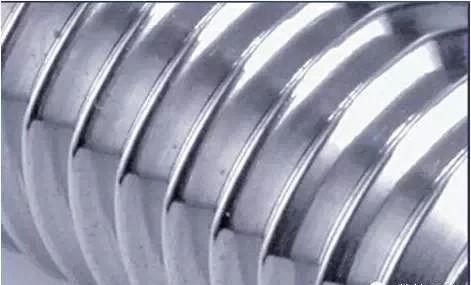
The flatter and smoother the groove surface, the better the chip evacuation, allowing for a higher cutting speed. At the same time, the improved surface quality also reduces the risk of jamming of the tool and the material to be processed. And it can reduce the cutting force by 40%, making cutting smoother.
Coating polishing
Eliminate protruding droplets produced after tool coating, improve surface finish and increase lubricating oil adsorption.
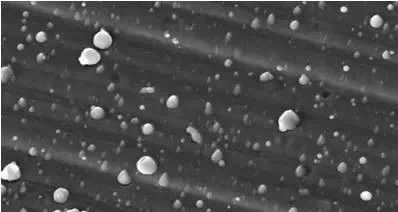
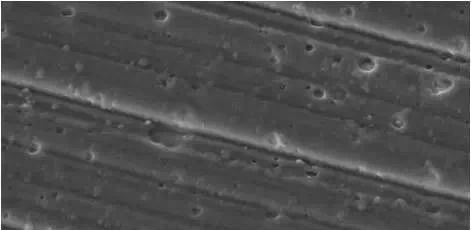
The coated surface of the tool will produce tiny protruding droplets, which will increase the surface roughness, making the tool likely to generate greater friction heat during the cutting process and reduce the cutting speed. After passivation polishing, the droplets are removed, leaving many small holes, which can absorb more cutting fluid during processing, greatly reducing the heat generated during cutting and significantly increasing the cutting speed.
Daguang focuses on providing solutions such as precision CNC machining services (3-axis, 4-axis, 5-axis machining), CNC milling, 3D printing and rapid prototyping services.



















