

In the globalized landscape of modern manufacturing, sourcing high-quality, cost-effective, and reliable components is a strategic imperative for businesses across industries. For companies seeking to leverage scale and expertise, wholesale CNC machining services in China have become a cornerstone of their supply chain strategy. This model offers not just competitive pricing, but access to a depth of manufacturing capability, technological infrastructure, and supply chain agility that is often unparalleled. However, navigating this vast market requires a clear understanding of what constitutes true value beyond the initial quote.
The Strategic Imperative of Wholesale Sourcing in China
China’s manufacturing ecosystem is built on scale, specialization, and integration. For wholesale buyers, this translates into several tangible advantages:
Economies of Scale: Large-volume orders allow manufacturers to optimize material procurement, machine programming, and production scheduling, significantly reducing the per-unit cost. This is the most evident benefit of wholesale partnerships.
Integrated Supply Chain: A mature supplier like GreatLight CNC Machining Factory operates not as an isolated workshop but as a node within a dense network. This provides seamless access to raw material suppliers, specialized surface treatment vendors, and logistics partners, streamlining the entire production process from blank to finished, packaged part.
Technological Depth and Redundancy: Leading factories invest in clusters of advanced equipment. For instance, a facility equipped with multiple 5-axis CNC machining centers, high-speed milling stations, and precision turning cells can handle complex, high-volume orders while maintaining production continuity—if one machine requires maintenance, others can pick up the workload.
Process Standardization and Consistency: Wholesale relationships are built on repeatability. Established manufacturers implement rigorous process controls, standardized inspection protocols (leveraging CMMs, optical comparators, etc.), and statistical process control (SPC) to ensure that the 10,000th part is identical in quality to the first.
Beyond Price: The Critical Evaluation Framework for a Wholesale Partner
While cost is a primary driver, a successful long-term wholesale partnership hinges on several other, often more critical, factors. Choosing the wrong partner for price alone can lead to catastrophic delays, quality inconsistencies, and hidden costs.
1. Technical Capability and Equipment Portfolio
A true wholesale partner must demonstrate capability across the entire complexity spectrum of your order list. Key questions to ask:
Can they handle complex geometries? The presence of true 5-axis CNC machining capability is non-negotiable for parts with undercuts, compound angles, or intricate contours. It eliminates multiple setups, reducing error accumulation and cycle time.
Do they have the capacity for high-volume precision? Look for evidence of automated production lines, pallet systems, and a fleet of identical machines to ensure consistent output.
What is their material expertise? A partner experienced in machining everything from common aluminum alloys and stainless steels to challenging materials like titanium, Inconel, or PEEK is invaluable.
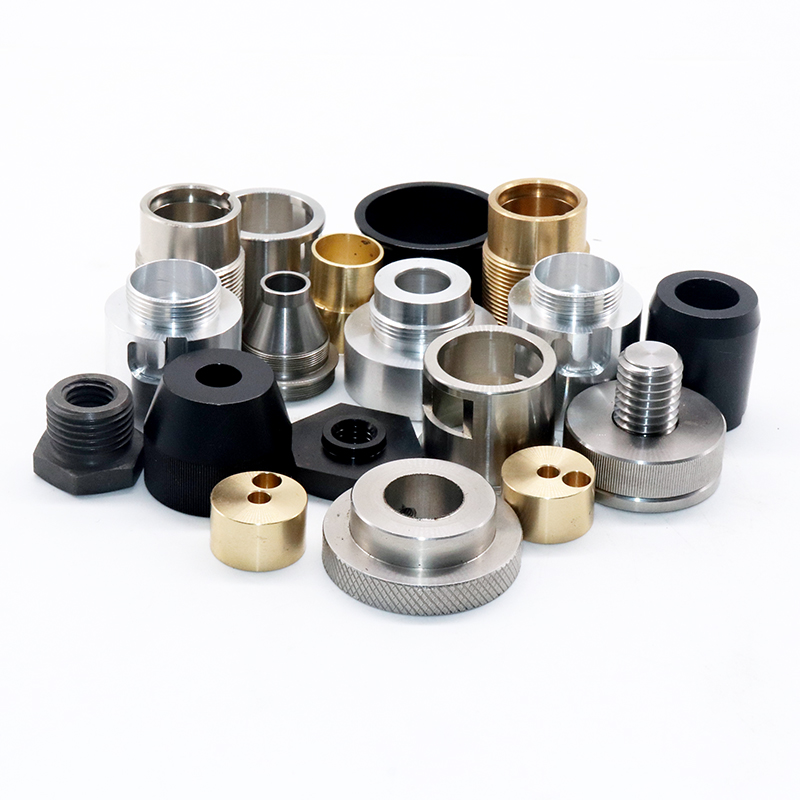
A manufacturer like GreatLight CNC Machining Factory exemplifies this with its comprehensive equipment matrix—from multi-axis machining centers and Swiss-type lathes for precision turned parts to EDM and grinding for ultra-fine finishes—ensuring they are not limited by process constraints.

2. Quality Management System: The Backbone of Trust
For wholesale orders, quality cannot be an afterthought; it must be systemically engineered into every step. Certifications are the formal language of this commitment.
ISO 9001:2015: This is the baseline, indicating a structured approach to quality management, continuous improvement, and customer focus.
IATF 16949: For automotive components, this is essential. It builds upon ISO 9001 with stricter requirements for defect prevention, supply chain management, and traceability.
ISO 13485: Critical for medical device components, this standard governs the entire lifecycle under a risk-management framework, ensuring patient safety.
AS9100D: The aerospace equivalent, emphasizing product safety, reliability, and configuration management.
These certifications signal that the supplier’s processes are auditable, repeatable, and aligned with global industry standards. They transform a subjective promise of “good quality” into an objective, verifiable system.
3. Engineering Support and Design for Manufacturability (DFM)
The most significant cost savings in a wholesale project often occur before the first chip is cut. A sophisticated partner will provide proactive DFM feedback on your batch of parts. They might suggest:
Standardizing similar but slightly different fastener hole sizes across multiple parts to use a single tool.
Recommending a more machinable material grade that meets all performance specs but reduces tool wear and cycle time by 20%.
Identifying potential stress concentrators in high-volume parts that could lead to field failures.
This collaborative engineering approach, a core tenet at GreatLight Metal, turns the supplier from a passive order-taker into an active value-creation partner, optimizing your designs for manufacturability, cost, and reliability at volume.
4. Project Management and Communication
Managing a wholesale order involving dozens of part numbers, revisions, and deliveries is a complex logistical task. Your partner must have a dedicated project management team that serves as your single point of contact, providing:
Clear milestone schedules (FAI samples, pilot run, full production).
Regular progress updates with visual evidence (photos, inspection reports).
Proactive alerting of any potential delays or material issues.
Organized documentation for First Article Inspection (FAI) reports, material certificates, and full dimensional reports.
5. Integrated Post-Processing and Finishing
Wholesale often means delivering ready-to-assemble parts. A one-stop partner who can manage all secondary operations in-house provides immense value:
Deburring and Cleaning: Automated processes for high-volume parts.
Surface Treatments: Anodizing (Type II/III), plating (nickel, chrome, zinc), passivation, powder coating, and heat treatment.
Non-Destructive Testing (NDT): X-ray, dye penetrant, or magnetic particle inspection for critical components.
Assembly and Kitting: Light assembly, press-fitting, or packaging parts into kits for your production line.
This vertical integration minimizes handling, reduces lead time, simplifies logistics, and ensures accountability for the final product’s quality.
Navigating Common Pitfalls in Wholesale CNC Sourcing
The “Lowest Bid” Trap: An unrealistically low quote often signals corner-cutting on material certs, tooling, inspection, or process controls. The true total cost of ownership (TCO) includes scrap, rework, line downtime, and reputational damage.
Communication Gaps: Ensure your partner has technical staff proficient in your language and familiar with your industry’s terminology and standards.
Intellectual Property (IP) Protection: Work with reputable firms that have clear IP protection agreements in place. A supplier’s commitment to standards like ISO 27001 (information security) is a strong positive indicator.
Scalability and Flexibility: Can they ramp up production if your demand spikes? Can they handle engineering change orders (ECOs) efficiently mid-production run?
Conclusion: Building a Partnership, Not Just a Transaction
Sourcing wholesale CNC machining services in China is ultimately about forging a strategic manufacturing partnership. It requires moving beyond a transactional mindset to find a collaborator whose capabilities, systems, and values align with your long-term business goals. The ideal partner combines the technical prowess of a precision engineer with the logistical rigor of a project manager and the quality ethos of a certified institution.
For businesses seeking a partner that embodies this holistic approach—from advanced 5-axis CNC machining for complex prototypes to robust, high-volume production lines backed by internationally recognized quality systems—conducting thorough due diligence on established manufacturers is key. A partner like GreatLight CNC Machining Factory, with its integrated capabilities and decade-long track record, represents the caliber of supplier that can transform the promise of wholesale CNC machining in China into a reliable, value-driven reality for global clients. To explore how such a partnership can be structured to meet your specific volume and precision requirements, engaging in a detailed technical consultation is the recommended next step. For broader industry insights and professional updates, you can follow the discourse on platforms like LinkedIn.



















