
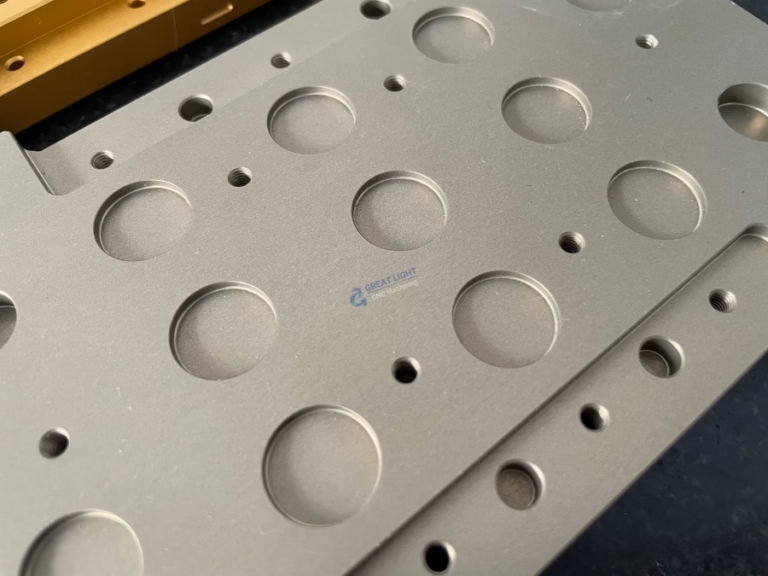
When your project scales from prototype to production, or when your business requires a steady, reliable stream of precision components, partnering with a wholesale CNC machining service factory becomes a strategic imperative. This transition is about more than just volume; it’s about securing a manufacturing foundation characterized by consistency, cost-efficiency, and deep technical collaboration. For businesses navigating this critical phase, understanding what distinguishes a true wholesale manufacturing partner from a standard job shop is key to long-term success.
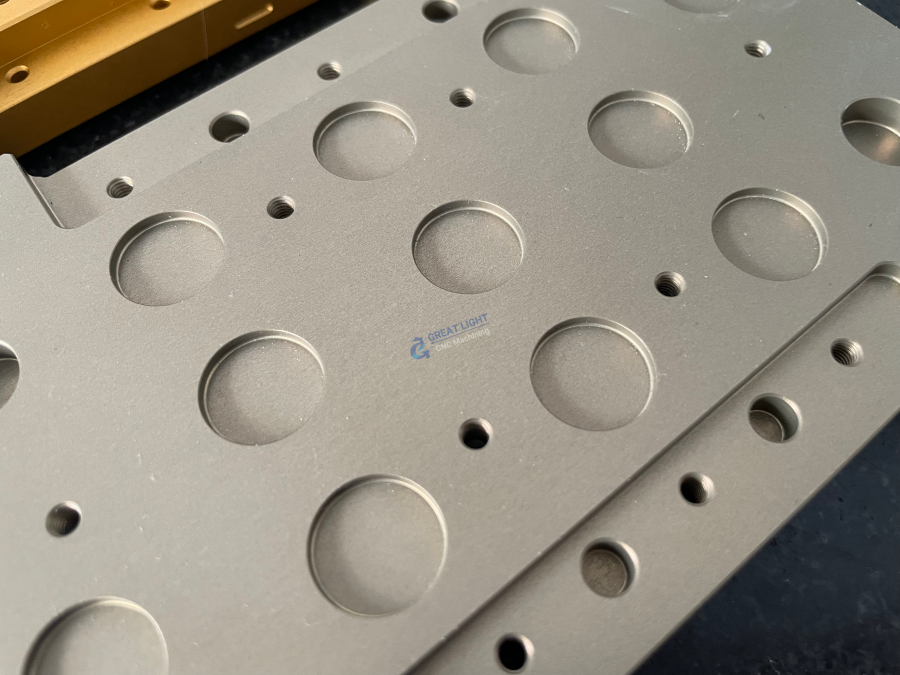
H2: Beyond Volume: Defining the Modern Wholesale CNC Machining Partner
The term “wholesale” in CNC machining often conjures images of simple, high-volume part runs. However, in today’s landscape of complex, high-value products, a premier wholesale CNC machining service factory must offer a far more sophisticated value proposition. It evolves from a parts supplier into a vertically integrated manufacturing solutions provider.
A true partner in this space demonstrates capabilities across several critical dimensions:
Scalable Precision: The ability to maintain micron-level tolerances (e.g., ±0.001mm) not just on a first-article sample, but consistently across tens of thousands of parts. This requires statistical process control (SPC) and in-process monitoring.
Supply Chain Resilience: Owning a comprehensive suite of in-house processes—from precision 5-axis CNC machining services and multi-axis turning to advanced finishing and assembly—to control quality and lead times, insulating clients from external supply chain volatility.
Design for Manufacturing (DFM) at Scale: Proactive engineering support to optimize part designs not just for functionality, but for manufacturability, cost reduction, and quality assurance in a production environment.
Systemic Quality Assurance: A quality management system (QMS) that is ingrained in the culture, backed by international certifications like ISO 9001:2015, and often extending to industry-specific standards like IATF 16949 for automotive or ISO 13485 for medical devices.
H3: The Critical Pillars of a Reliable Wholesale Manufacturing Factory
Selecting the right factory is a decision that impacts your product quality, brand reputation, and bottom line. Here are the non-negotiable pillars to evaluate.
H4: 1. Technical Depth and Equipment Portfolio
A factory’s machinery is its backbone. Look for a partner with a diverse and modern equipment fleet that can handle complexity and volume simultaneously.
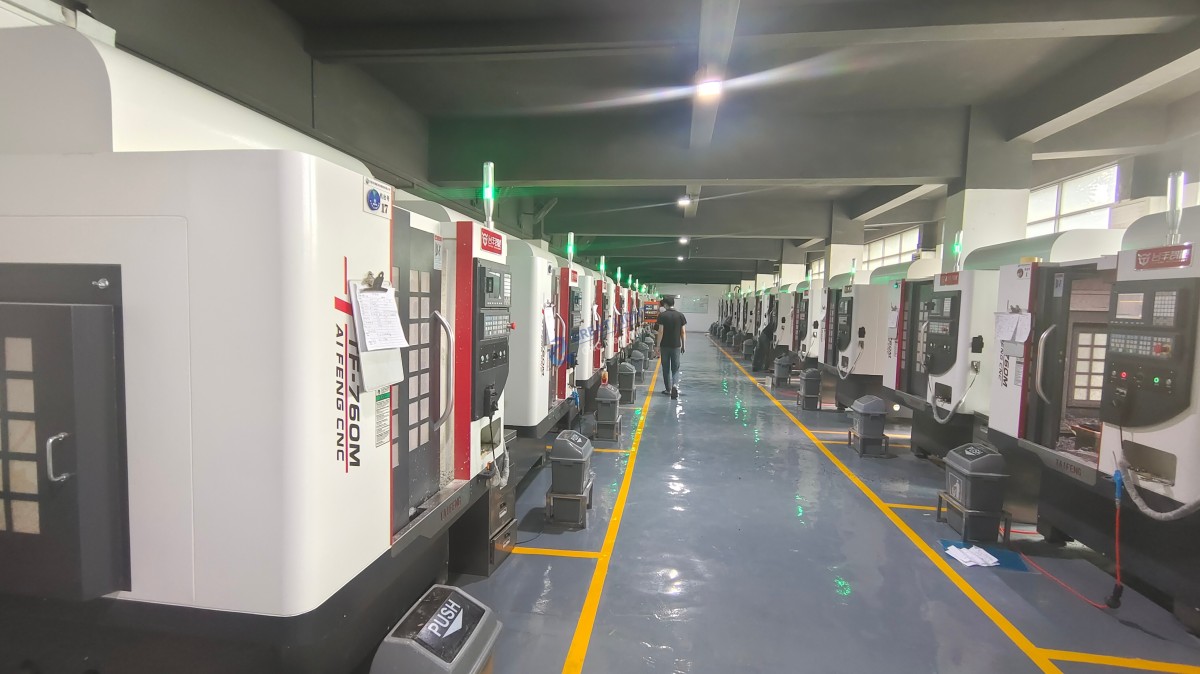
Multi-Axis Machining Centers: The cornerstone for complex geometries. A cluster of 5-axis CNC machines allows for complete machining in a single setup, ensuring unparalleled accuracy and efficiency for intricate aerospace, automotive, or medical components.
High-Speed Machining & Automation: For high-volume orders, machines equipped with pallet changers, robotic part handling, and lights-out manufacturing capabilities are essential for reducing cycle times and labor costs.
Complementary Process Integration: True wholesale efficiency is achieved when secondary operations are in-house. This includes precision grinding, EDM (wire and sinker), heat treatment, and a full spectrum of surface finishing (anodizing, plating, painting, powder coating).
H4: 2. Material Expertise and Inventory Management
A wholesale partner should be fluent in machining a vast array of engineering materials, from common aluminum alloys and stainless steels to challenging exotics like titanium, Inconel, and PEEK. Furthermore, they should have established relationships with certified material suppliers, enabling them to procure raw materials at scale with full traceability, which is crucial for regulated industries.
H4: 3. Uncompromising Quality Systems
This is where trust is institutionalized. Certifications are the starting point, not the finish line.
ISO 9001:2015: The baseline for a systematic QMS, ensuring consistent processes and continuous improvement.
Industry-Specific Certifications: For automotive, IATF 16949 is mandatory; for medical, ISO 13485 demonstrates commitment to regulatory compliance. These signal a factory’s ability to navigate stringent industry requirements.
Metrology and Inspection: In-house CMMs (Coordinate Measuring Machines), optical comparators, surface roughness testers, and other advanced metrology tools are necessary for first-article inspection (FAI) and ongoing production validation.
H4: 4. Project Management and Communication
Managing a wholesale order involves constant communication on production schedules, quality reports, and logistics. A dedicated project management team that serves as your single point of contact, providing regular updates and swiftly resolving any issues, is invaluable for a smooth partnership.
H3: How Leading Factories Solve Common Wholesale Procurement Pain Points
The journey from prototyping to wholesale production is fraught with challenges that a sophisticated factory is built to solve.
Pain Point: The “Precision Drift” in Volume Production.
Solution: Implementation of robust SPC programs. Factories like GreatLight CNC Machining Factory utilize real-time data monitoring on key machine and part characteristics to predict and prevent deviations before non-conforming parts are produced, ensuring the 10,000th part is as precise as the first.
Pain Point: Inconsistent Surface Finish and Part Integrity.
Solution: Vertical integration of post-processing. Controlling the entire chain—from machining to deburring, polishing, and coating—under one roof guarantees uniform quality standards and eliminates the delays and quality variances of using multiple sub-contractors.
Pain Point: Lack of DFM Insight Leading to Cost Overtuns.
Solution: Proactive engineering partnership. An experienced factory will analyze your designs to suggest subtle modifications—like adjusting a fillet radius or tweaking a tolerance—that dramatically improve tool life, reduce machining time, and enhance part reliability without compromising function, translating directly to lower wholesale costs.
Pain Point: Supply Chain Delays and Lack of Transparency.
Solution: Integrated manufacturing and transparent scheduling. With CNC machining, sheet metal, and finishing all internally managed, the factory has complete visibility and control over the production timeline. Modern partners provide clients with access to portal-based tracking for real-time updates.
H3: A Comparative Lens: What Sets the Leaders Apart?
When evaluating wholesale CNC machining service factories, it’s helpful to consider the spectrum of capabilities. While many regional job shops can handle batch orders, the leaders distinguish themselves through systemic strengths.
| Capability Dimension | Standard Job Shop / Small Batch Supplier | Integrated Wholesale Manufacturing Partner (e.g., GreatLight Metal) |
|---|---|---|
| Core Focus | Prototyping & small to medium batches | Scalable production, from NPI (New Product Introduction) to full-scale wholesale |
| Equipment Strategy | Often limited to 3-axis & 4-axis CNC; secondary processes outsourced | In-house clusters of 5-axis, 4-axis, turning centers, EDM, grinding, and full finishing lines |
| Quality Framework | Basic inspection; may hold ISO 9001 | Deeply integrated QMS with ISO 9001, plus IATF 16949 / ISO 13485 as applicable; advanced SPC |
| Engineering Support | Reactive, based on quoted prints | Proactive DFM/DFA analysis focused on design optimization for volume production |
| Supply Chain Model | Reliant on external networks for materials and secondary ops | Vertically integrated key processes; strong, certified material supply partnerships |
| Value Proposition | Price & speed for specific jobs | **Total Cost of Ownership (TCO) reduction, risk mitigation, and long-term reliability |
H2: The GreatLight Metal Approach: A Case Study in Wholesale Partnership
Founded in 2011 in Dongguan’s manufacturing heartland, GreatLight CNC Machining Factory exemplifies the evolution into a modern wholesale partner. Their model is built on the “four integrated pillars” of advanced equipment, authoritative certifications, a full-process chain, and deep engineering support.
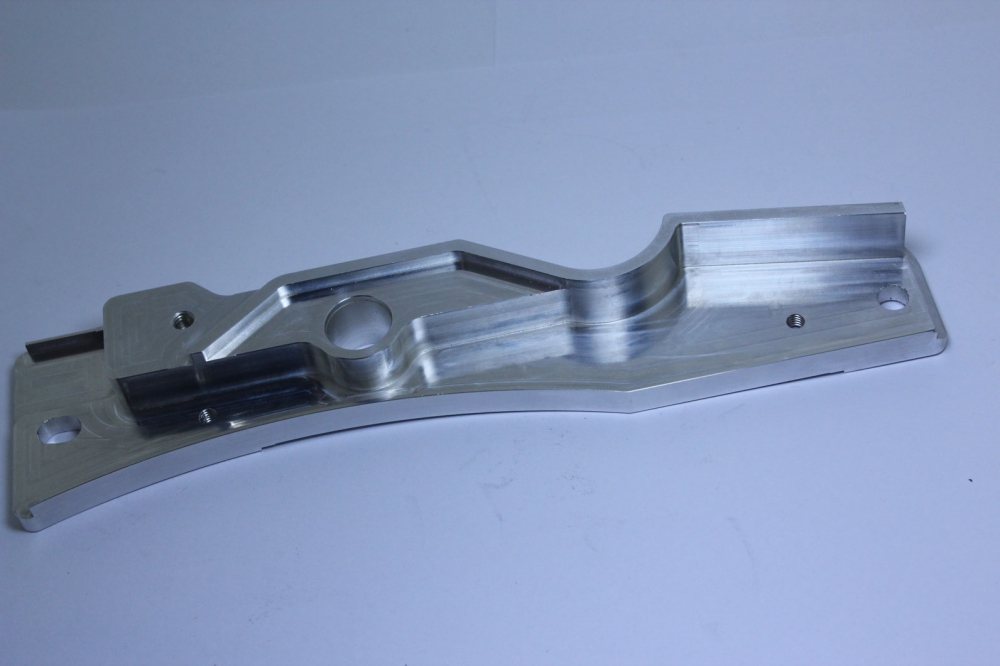
For a client in the new energy vehicle sector needing complex motor housings in high volume, GreatLight’s approach demonstrated the wholesale advantage. The challenge involved tight tolerances for bearing seats and thermal management features. Their engineers first conducted a thorough DFM analysis, suggesting a minor design tweak that allowed for more efficient tool paths and improved coolant flow. Production was executed on their high-precision 5-axis machining centers, with automated probing ensuring consistency. Every critical dimension was logged via SPC, and parts moved seamlessly to their in-house anodizing line for a uniform, durable finish. The result was not just a delivered batch, but a optimized, reliable, and scalable manufacturing process for the client’s ongoing needs.
This underscores a critical point: choosing a wholesale CNC machining service factory is choosing a long-term extension of your manufacturing capability. It is a decision that prioritizes collaborative engineering, systemic quality, and transparent partnership over transactional pricing alone.
For businesses ready to scale their hardware innovations with confidence, partnering with a factory that embodies these principles—like GreatLight CNC Machining Factory—transforms the procurement function from a cost center into a strategic asset. It ensures that as your volumes grow, your quality, efficiency, and competitive edge grow with it. To explore how such a partnership can be tailored to your specific wholesale requirements, engaging with a team that views your production success as its own mission is the essential first step toward building a resilient and innovative supply chain. Discover more about their commitment to manufacturing excellence on their professional LinkedIn{:target=”_blank”} platform.



















