When Was The First CNC Machine Made?
In the modern era of manufacturing, CNC (Computer Numerical Control) machines have become the cornerstone of precision parts machining and customization. But have you ever wondered when the first CNC machine was made? Let’s embark on a journey through time to uncover the origin of this revolutionary technology and how it has evolved to shape the manufacturing industry we know today.
The Birth of CNC Technology
The story of the first CNC machine dates back to the mid – 20th century. In the 1940s and 1950s, the demand for more precise and efficient machining was on the rise, especially in the aerospace industry. At that time, traditional machining methods were struggling to keep up with the complex shapes and high precision requirements of new aircraft components.
In 1952, the world witnessed a significant milestone in the manufacturing history. A team at the Massachusetts Institute of Technology (MIT) played a crucial role in developing the first CNC machine. They used a computer to control the movements of a milling machine. This was a groundbreaking advancement as it allowed for more accurate and repeatable machining processes. Instead of the operator manually guiding the machine, a punched tape with coded instructions was used to control the tool’s movement, speed, and depth.
The first CNC machine was a combination of existing technologies and the innovative application of computer control. It was a large – scale and relatively primitive system compared to today’s sophisticated machines, but it laid the foundation for the future of precision manufacturing.
Evolution of CNC Machines Since Their Inception
Since the first CNC machine in 1952, the technology has evolved at an astonishing pace. In the 1960s and 1970s, improvements in computer technology led to more user – friendly and reliable CNC systems. The size of the computers controlling the machines decreased, while their processing power increased. This made CNC machines more accessible to a wider range of manufacturers.
In the 1980s and 1990s, the introduction of CAD/CAM (Computer – Aided Design/Computer – Aided Manufacturing) software further transformed the CNC machining process. Designers could now create detailed 3D models of parts on a computer, and the CAD/CAM software could convert these models into the code needed to operate the CNC machines. This integration significantly reduced the time and effort required to program the machines and improved the accuracy of the final products.
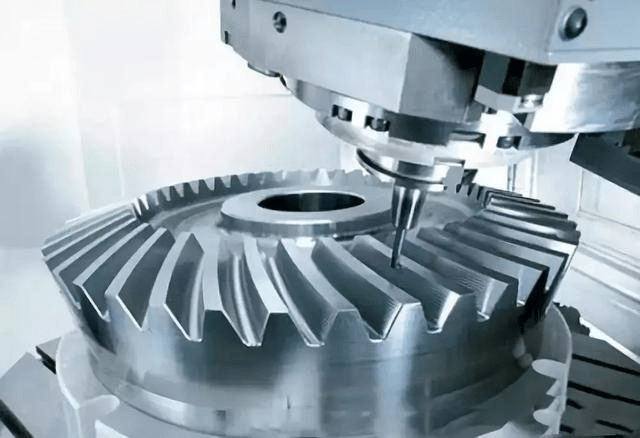
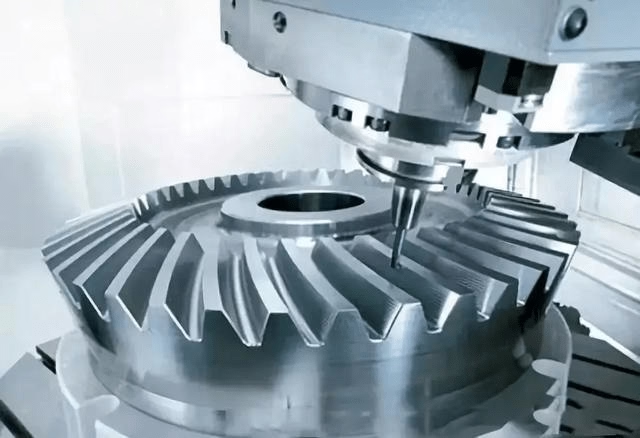
Today, CNC technology has reached new heights. The development of multi – axis CNC machines, such as five – axis CNC machining, has enabled manufacturers to produce extremely complex parts with ease. GreatLight CNC Machining Factory, a professional five – axis CNC machining manufacturer, is a prime example of the modern capabilities of CNC technology. Established in 2011, it is located in Chang’an District, Dongguan City, China, known as the capital of precision hardware mold processing. With advanced five – axis CNC machining equipment and production technology, the factory can handle various materials and quickly customize and process parts with high precision. It offers a wide range of services, including precision CNC machining (three – axis, four – axis, and five – axis machining), CNC milling, die casting mold/metal die casting processing, and many more, along with one – stop surface post – processing services.
Conclusion
The first CNC machine was made in 1952, and since then, it has revolutionized the manufacturing industry. From its humble beginnings as a large and complex system, CNC technology has continuously evolved, becoming more precise, efficient, and accessible. Companies like GreatLight CNC Machining Factory are at the forefront of this technological advancement, providing top – notch precision parts machining and customization services. As the manufacturing industry continues to grow and demand for more complex and precise parts increases, CNC technology will undoubtedly play an even more crucial role in shaping the future of manufacturing.
Frequently Asked Questions (FAQ)
Q1: What was the main inspiration for creating the first CNC machine?
A: The aerospace industry’s need for more precise and efficient machining of complex aircraft components was the main inspiration. Traditional machining methods were unable to meet the high – precision requirements, so a more advanced solution was sought.
Q2: How has the accuracy of CNC machines changed over the years?
A: Initially, the accuracy was limited, but with the development of better computer technology, improved control systems, and advanced manufacturing techniques, the accuracy has increased significantly. Today, CNC machines can achieve extremely high precision levels, such as ±0.001mm in some cases.
Q3: Can CNC machines be used for all types of materials?
A: Most CNC machines can work with a wide variety of materials, including metals (such as aluminum, steel, and titanium), plastics, and composites. However, the specific machine and its tooling may need to be selected or adjusted according to the material properties.
Q4: What makes five – axis CNC machining special compared to other types of CNC machining?
A: Five – axis CNC machining allows the cutting tool to move in five different axes simultaneously. This enables the production of complex geometric shapes that would be difficult or impossible to achieve with 3 – axis or 4 – axis machines. It reduces the need for multiple setups and improves the overall accuracy and efficiency of the machining process.
Q5: How can I learn more about GreatLight CNC Machining Factory?
A: You can find more information and case studies about GreatLight CNC Machining Factory. [To explore more about GreatLight’s capabilities and achievements, visit their LinkedIn page](https://www.linkedin.com/company/great – light/).