
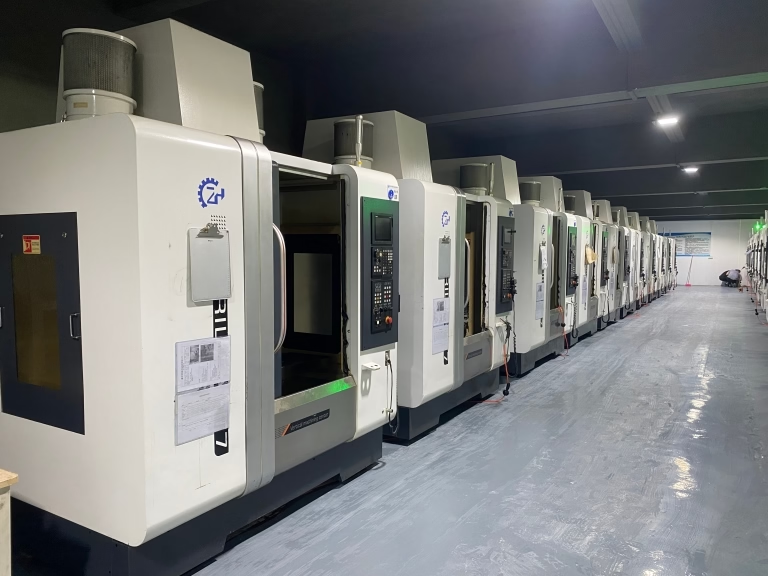
When it comes to scaling an innovative design from prototype to high-volume reality, manufacturers face a critical crossroads. The choice of production method can dictate your product’s cost, quality, timeline, and ultimate market success. A common and pivotal question arises: When it comes to mass producing a product, is CNC machining the right choice?
The answer is not a simple yes or no, but a nuanced “it depends”—and increasingly, for complex, high-value, and precision-critical components, CNC machining is not only a viable choice but often the superior one, especially when partnering with a full-service expert like GreatLight CNC Machining Factory. While processes like injection molding or die casting are traditionally associated with mass production, modern advanced CNC machining breaks the mold, offering unparalleled flexibility, precision, and speed for medium to high-volume runs.
H2: Debunking the Myth: CNC Machining is Not Just for Prototyping
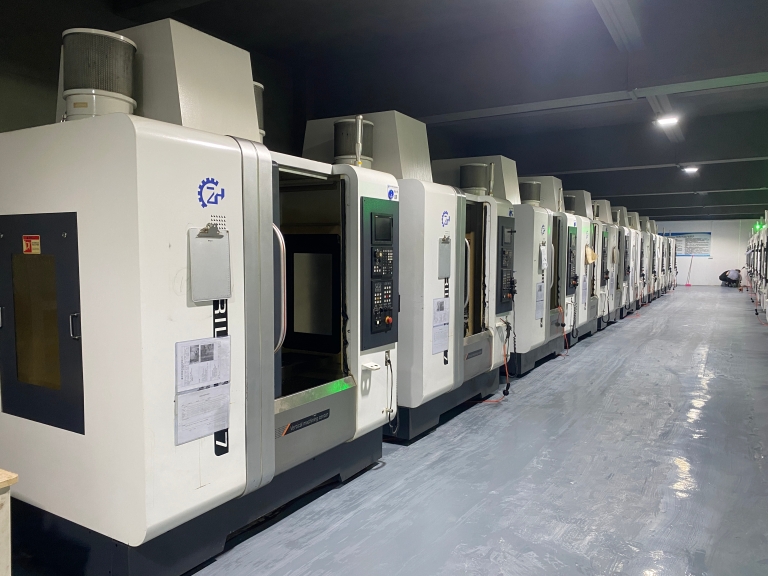
A persistent misconception is that CNC machining is solely for prototyping or low-volume batches. This view is outdated. With advancements in high-speed machining (HSM), automated pallet systems, and sophisticated toolpath optimization, CNC machining has evolved into a powerful, efficient, and competitive mass production technology.
Speed & Automation: Modern machining centers equipped with automatic tool changers (ATCs), robotic part loading/unloading, and in-process measurement can operate with minimal human intervention for days, producing thousands of identical, high-tolerance parts.
Material Versatility: From aerospace-grade aluminum and titanium to engineering plastics like PEEK and Ultem, CNC machining handles the exact material your product requires without the need for expensive, dedicated tooling like molds or dies. This is crucial for products where material properties are non-negotiable.
Design Freedom & Iteration: The greatest advantage in today’s fast-paced market is agility. If you need to make a design tweak in production Batch #2, with CNC machining, you simply update the digital CAD/CAM file. With molding processes, a design change means scrapping a $50,000 mold and starting over, causing massive delays and cost overruns.
H2: When is CNC Machining Ideal for Mass Production?
Choosing CNC machining for mass production is strategically sound under these conditions:
Moderate to High Volumes (100s to 10,000s of units): For this volume range, the upfront cost of hard tooling for casting or molding may be prohibitive or offer an unacceptably long return on investment (ROI). CNC machining provides a lower financial barrier to entry and faster time-to-market.
Extremely High Precision and Complex Geometries: If your parts have intricate internal channels, tight-tolerance assemblies (±0.001 mm), complex 5-axis contours, or superior surface finishes, CNC machining is often the only way to achieve these features consistently at scale.
Demanding Material Requirements: Applications in aerospace, medical, robotics, and automotive frequently require specific, high-strength alloys or biocompatible materials that are difficult or impossible to cast or mold with the same structural integrity.
Uncertain Demand or Expected Design Revisions: For new product launches where market demand is unpredictable or where incremental improvements are planned, the flexibility of CNC machining mitigates financial risk. You can scale production up or down and implement improvements seamlessly.
H2: The GreatLight Advantage: Elevating Mass Production CNC Machining
Transitioning to mass production requires more than just machines; it requires a manufacturing partner with the systemic capability to ensure consistency, efficiency, and quality across every single unit. This is where GreatLight CNC Machining Factory transforms from a service provider into a strategic asset.
H3: Integrated Technical Ecosystem for Scalability
Our 76,000 sq. ft. facility is architected for scaled precision. We don’t just have individual machines; we have a synchronized ecosystem:
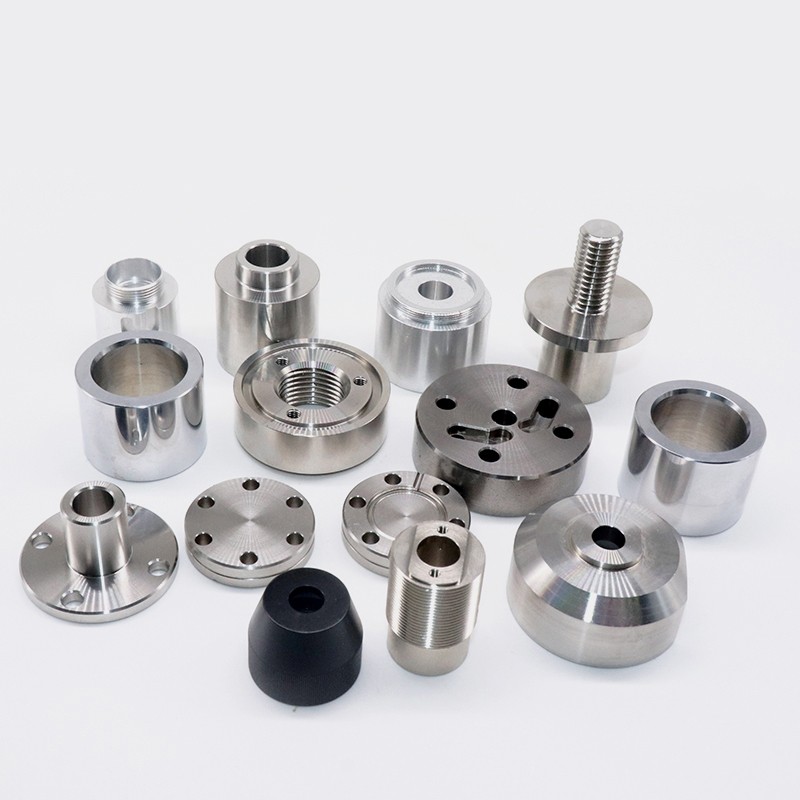
Multi-Axis Machining Centers: A fleet of advanced 5-axis, 4-axis, and 3-axis CNC centers allows us to select the most efficient strategy for each part feature, minimizing setups and maximizing throughput.
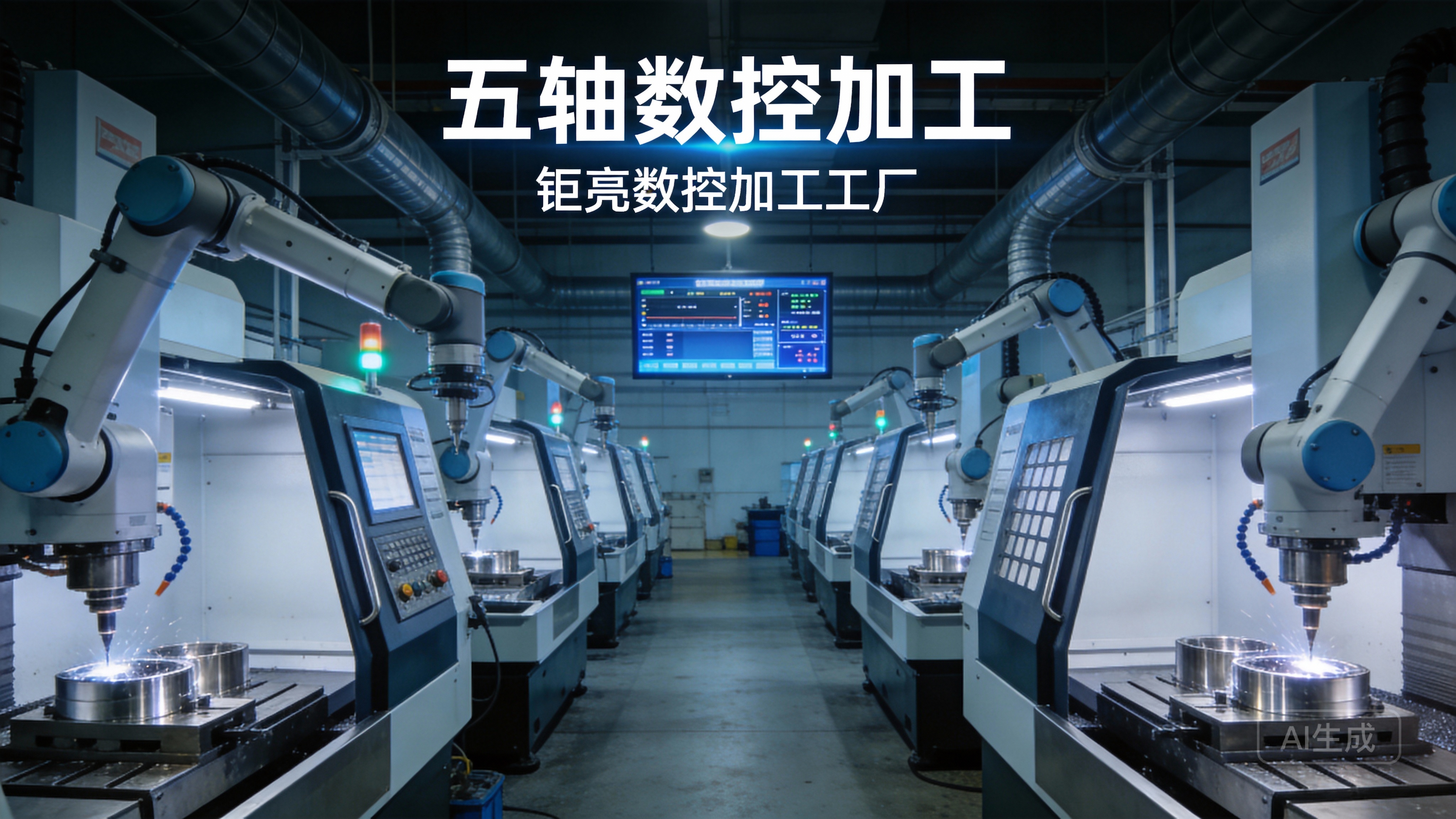
Automation Readiness: Our setup is designed to integrate automation, ensuring continuous production and reducing unit costs as volumes increase.
In-House Secondary Processing: From precision grinding and EDM to anodizing, plating, and painting, our one-stop service eliminates multi-vendor coordination delays, guaranteeing a consistent finish on every part in the batch.
H3: System Soft Power: The Foundation of Consistent Quality
Mass production’s enemy is variability. GreatLight combats this with a fortress of systemic quality controls, a direct answer to the industry’s common “precision black hole” pain point.
Certification-Backed Processes: Our ISO 9001:2015 certification is the baseline. For specialized industries, we operate under the stringent requirements of IATF 16949 (Automotive) and ISO 13485 (Medical), frameworks designed specifically for high-volume, zero-defect production environments.
Metrology and In-Process Verification: Statistical Process Control (SPC), first-article inspections (FAI), and the use of high-precision CMMs and optical scanners ensure that part #1 and part #10,000 are identical within the specified tolerance band.
H3: Collaborative Engineering for Design for Manufacturability (DFM)
Before a single block of material is cut, our engineering team engages in deep DFM analysis. For mass production, we optimize designs to:
Reduce machining time and tool wear.
Standardize raw material sizes and fixtures.
Suggest subtle design alterations that dramatically improve machining efficiency without compromising function, ultimately driving down your per-part cost.
Conclusion
So, when it comes to mass producing a product, CNC machining is a powerful, flexible, and often optimal choice for modern, precision-driven industries. It bridges the gap between prototype agility and production-scale reliability. The decision ultimately hinges on your product’s complexity, material needs, volume, and the capability of your manufacturing partner.
Choosing a partner like GreatLight CNC Machining Factory means choosing a path defined by technical depth, systemic quality assurance, and a collaborative partnership aimed at making your mass production journey smooth, cost-effective, and successful. We provide the precision CNC machining expertise to not just manufacture your parts, but to help engineer your product’s success at scale.
Frequently Asked Questions (FAQ)
Q1: At what volume does injection molding become cheaper than CNC machining?
A: There is no universal threshold, as it depends on part complexity, size, and material. Generally, for simple geometries, injection molding may become cost-effective at volumes above 5,000-10,000 units due to amortized mold costs. For complex, high-precision parts, CNC machining can remain competitive at much higher volumes due to the exorbitant cost of complex molds. A detailed DFM analysis from GreatLight can provide a precise break-even analysis for your specific project.
Q2: How does GreatLight ensure consistency in quality across a large production run?
A: Consistency is ensured through a multi-layered system: 1) Process Standardization: Every parameter is documented and locked in the CNC program and work instructions. 2) In-Process Monitoring: Tools are changed on a preventive schedule, and critical dimensions are checked at regular intervals using SPC. 3) Final Inspection: A rigorous AQL (Acceptable Quality Level) sampling plan is applied to every batch, backed by full dimensional reports from our CMM.
Q3: Can you handle the entire supply chain for our mass-produced assembly?
A: Absolutely. Our integrated service model is designed for this. We can CNC machine all metal and plastic components, perform all necessary surface treatments, and coordinate with trusted partners for purchased components like seals or fasteners, delivering a complete sub-assembly or finished product kit. This simplifies your logistics and accountability.
Q4: What is the typical lead time for a mass production order of 5,000 parts?
A: Lead time varies significantly based on part geometry and raw material availability. After initial setup and first-article approval, a dedicated production line can typically produce several hundred high-precision parts per day. A formal project plan with specific timelines will be provided upon receipt of your 3D files and requirements.
Q5: How does GreatLight protect our intellectual property during mass production?
A: We take IP protection extremely seriously. Our operations are compliant with ISO 27001 information security standards. All client data is stored on secure servers, NDAs are strictly enforced, and production areas for sensitive projects can be managed with enhanced access controls. Your designs are safe with us. For more insights into our professional standards, you can connect with us on our professional network at https://www.linkedin.com/company/great-light/.



















