
For clients seeking precision, repeatability, and complex geometries in their manufactured parts, understanding the core equipment is fundamental. At its heart, modern precision machining is powered by a transformative technology: the CNC machine. As a senior manufacturing engineer, I’ve witnessed firsthand how this technology has revolutionized our ability to produce everything from simple brackets to mission-critical aerospace components. This article will demystify what a CNC machine is, how it works, and why it’s the indispensable backbone of contemporary precision manufacturing.
H2: Demystifying the Core: What is a CNC Machine?
A CNC (Computer Numerical Control) machine is an automated manufacturing tool that uses pre-programmed computer software and code to control the movement of factory tools and machinery. It essentially removes manual control from the machining process. Think of it as a highly skilled robotic machinist that follows digital instructions with unwavering consistency. The term “CNC” itself encompasses a wide range of tools, including mills, lathes, routers, grinders, and lasers, all operating under the same principle of computerized command.
The core idea is substitution: substituting levers, handwheels, and the machinist’s “feel” with digital precision. A CNC machine interprets a 3D CAD (Computer-Aided Design) model, translates it into a sequence of mathematical commands (G-code), and executes these commands to cut, shape, or add material to a workpiece with extraordinary accuracy.
H2: How Does a CNC Machine Actually Work? The Process from File to Part
The operation of a CNC machine is a seamless integration of software and hardware, following a defined workflow:
CAD Design: It all begins with a digital blueprint. An engineer creates a 3D model of the part using CAD software. This model defines every dimension, curve, and hole with exacting detail.
CAM Programming: The CAD file is imported into CAM (Computer-Aided Manufacturing) software. Here, a programmer—or an experienced engineer using advanced software—defines the machining strategy. This includes:
Selecting the cutting tools (end mills, drills, etc.).
Setting tool paths (the precise route the tool will take).
Determining cutting speed, feed rate, and depth of cut.
Specifying workpiece zero points and coordinate systems.
Post-Processing & G-Code Generation: The CAM software then “posts” this information, generating the machine-specific G-code. This is the low-level language the CNC machine controller understands—a series of alphanumeric commands like G01 X10 Y20 F100 instructing linear movement to a specific coordinate at a set feed rate.
Machine Setup: A technician secures the raw material (metal, plastic, composite) onto the machine’s worktable or chuck, loads the required tools into the automatic tool changer, and sets the workpiece zero point.
Automated Execution: The operator loads the G-code program and initiates the cycle. From this point, the CNC machine takes over. It automatically changes tools, moves the spindle and/or workpiece along multiple axes, and precisely removes material until the part is complete.
Quality Verification: The finished part is then inspected using precision measuring equipment like CMMs (Coordinate Measuring Machines) to ensure it matches the original CAD specifications.
H2: The Unmatched Advantages of CNC Machining
Why has CNC become the global standard for precision parts? The benefits are compelling and address the core needs of engineers and procurement specialists:

Extreme Precision and Repeatability: This is the foremost advantage. CNC systems eliminate human error in manipulation. Once a program is verified, it can produce the first part and the thousandth part with virtually identical tolerances, often within ±0.001 inches (±0.025mm) or tighter. This level of consistency is impossible with manual machining.
Complex Geometry Capability: A CNC machine, particularly multi-axis variants, can create shapes that are impractical or impossible to make manually. Complex contours, intricate 3D surfaces, deep cavities, and precise undercuts become routine. This capability is central to advanced industries like aerospace and medical implants.
Superior Efficiency and Productivity: CNC machines can run unattended for hours, even through nights and weekends (lights-out manufacturing). Automated tool changers and pallet systems further reduce idle time. While setup and programming require initial time investment, the per-part production time for medium to high volumes is drastically lower.
Enhanced Safety: The operator’s role shifts from direct manipulation to supervision and monitoring. The physical separation between the operator and the cutting tools significantly reduces the risk of workplace accidents.
Digital Flexibility & Rapid Iteration: Making a design change? You modify the CAD model and generate a new G-code program. There’s no need to build new jigs or templates, enabling rapid prototyping and agile design iterations.
H2: A Landscape of Capabilities: Types of CNC Machines
The family of CNC equipment is diverse, each suited for specific tasks. Understanding these types is key to selecting the right process for your part.
By Machining Process:
CNC Milling Machines: Use rotary cutting tools to remove material from a stationary workpiece. Ideal for creating slots, pockets, holes, and complex surfaces.
CNC Turning Centers (Lathes): Rotate the workpiece while a stationary cutting tool shapes it. Perfect for producing cylindrical or conical parts like shafts, bushings, and valves.
CNC Swiss-Type Lathes: A specialized turning center where the material bar feeds through a guide bushing, offering exceptional support for machining long, slender parts with extreme precision.
CNC Electrical Discharge Machining (EDM): Uses electrical sparks to erode material, capable of machining extremely hard metals or creating intricate shapes that cutting tools cannot achieve.
By Axis Count (A Critical Differentiator):
3-Axis CNC: The workhorse. The tool moves in X, Y, and Z linear axes. Excellent for most prismatic parts but limited in accessing complex angles without multiple setups.
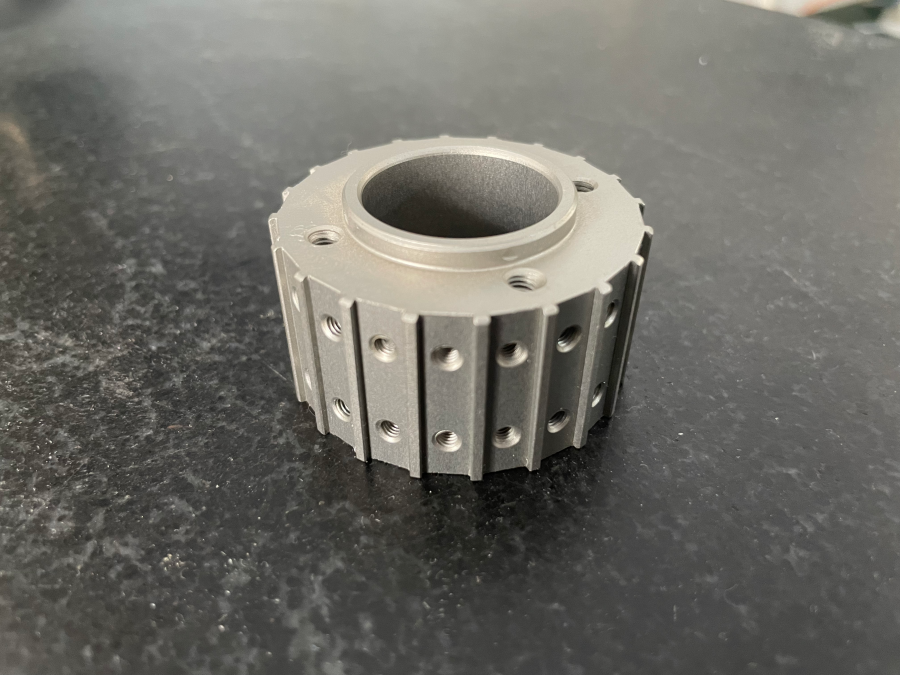
4-Axis CNC: Adds a rotary axis (usually the A-axis), allowing the workpiece to rotate. This enables machining on multiple sides of a part in a single setup, such as cutting holes or features around a cylinder.
5-Axis CNC: The pinnacle of subtractive manufacturing flexibility. Adds a second rotary axis (e.g., B or C axis), allowing the cutting tool to approach the workpiece from virtually any direction in a single setup. This is essential for machining complex geometries like impellers, turbine blades, and sophisticated molds with superior surface finish and accuracy. Companies like GreatLight Metal leverage advanced 5-axis CNC machining services to solve their clients’ most challenging part manufacturing problems.
H2: The Digital Backbone: CNC Programming (G-Code)
The intelligence of a CNC machine lies in its programming. G-code is the universal language, but creating efficient, safe, and optimal code is an engineering discipline in itself.
Manual Programming: Writing G-code line-by-line for simple operations. It’s foundational knowledge but inefficient for complex parts.
CAM-Based Programming: The modern standard. CAM software automatically generates toolpaths from 3D models. The programmer’s expertise shifts to selecting optimal strategies, simulating cuts to prevent collisions, and optimizing for speed, tool life, and surface finish.
Post-Processors: A critical link. A post-processor is a translator that converts the generic toolpaths from the CAM system into the specific dialect of G-code required by a particular CNC machine‘s controller (e.g., Fanuc, Siemens, Heidenhain).
H2: Where Precision Matters: Key Application Industries
CNC machines are not a niche technology; they are foundational across advanced manufacturing:
Aerospace & Defense: Machining lightweight, high-strength structural components from titanium and aluminum alloys with absolute reliability.
Medical & Surgical: Producing biocompatible implants, surgical instruments, and diagnostic device components that demand flawless surfaces and sterile-grade precision.
Automotive & Racing: From engine blocks and transmission housings to custom suspension components, CNC enables high-performance and high-volume production.
Electronics & Telecommunications: Fabricating precise heat sinks, connector housings, and waveguide components that form the backbone of connectivity.
Industrial Machinery: Creating robust, wear-resistant gears, shafts, and hydraulic components that keep factories running.
H2: Material Versatility: What Can a CNC Machine Work With?
A key strength of CNC machining is its material agnosticism. It can precisely shape a vast array of materials, each chosen for its end-use properties:
Metals: Aluminum, Stainless Steel, Titanium, Brass, Copper, Tool Steels, Inconel.
Plastics: ABS, PEEK, Nylon (Polyamide), Acrylic (PMMA), Polycarbonate.
Composites: CFRP (Carbon Fiber Reinforced Polymer), G10.
Wood & Foams: Often used for prototyping, molds, and specialty applications.
H2: Ensuring Excellence: The Role of Metrology and Quality Control
A CNC machine is only as good as the verification of its output. Precision manufacturing mandates rigorous inspection. At a facility like GreatLight Metal, this involves:
In-Process Probing: Tools with touch probes that can measure the workpiece during machining to automatically compensate for tool wear or minor misalignments.
Post-Process Inspection: Using Coordinate Measuring Machines (CMM), optical comparators, and surface profilometers to perform a full dimensional and geometric analysis against the CAD model.
Documentation: Providing detailed inspection reports (FAI – First Article Inspection) that provide traceability and proof of compliance, a critical requirement for industries governed by standards like ISO 9001, IATF 16949 (automotive), and ISO 13485 (medical).
Conclusion
So, what is the CNC machine? It is far more than just a piece of factory equipment. It is the physical manifestation of digital design, the enabler of modern product innovation, and the guarantor of precision at scale. From a simple concept in a CAD file to a complex, high-tolerance part in your hand, the CNC machine is the critical link. For businesses that rely on the quality, reliability, and geometric freedom of their components, partnering with a manufacturer that masters this technology—from advanced 5-axis programming to stringent metrology—is not just an option; it is a strategic imperative for success in a competitive global market.
Frequently Asked Questions (FAQ)
Q1: What’s the main difference between CNC machining and 3D printing?
A: Both are digital manufacturing technologies, but they are fundamentally different. CNC machining is a subtractive process—it starts with a solid block of material and cuts away excess to reveal the final part. 3D printing is an additive process—it builds a part layer by layer from melted powder or resin. CNC typically offers superior strength, precision, and surface finish in metals and plastics, while 3D printing excels at extreme geometric complexity (like internal lattices) and rapid prototyping with minimal waste.
Q2: How precise can CNC machining really get?
A: The precision, or tolerance, achievable depends on the machine, material, part size, and process. Standard CNC milling can reliably hold tolerances of ±0.005 inches (±0.127mm). High-precision machining on advanced equipment, like the 5-axis centers used at GreatLight Metal, can consistently achieve tolerances of ±0.0005 inches (±0.0127mm) or even tighter for critical features. It’s crucial to discuss tolerance requirements with your manufacturer early in the design phase.
Q3: Is CNC machining only suitable for large production runs?
A: Absolutely not. While CNC is highly efficient for volume production, it is equally vital for low-volume and prototyping. The digital nature of the process means there are no expensive molds or tooling required (unlike injection molding or die casting). You pay primarily for programming and machine time, making a single prototype or a batch of 50 parts economically viable. This makes CNC an ideal solution for bridging the gap between prototyping and full-scale production.
Q4: What are the biggest factors that affect the cost of a CNC machined part?
A: Key cost drivers include:
Part Design Complexity: More complex geometry requires longer programming time, more sophisticated machining strategies, and potentially multi-axis setups.
Material Choice: Exotic alloys (e.g., titanium, Inconel) are more expensive than standard aluminum or steel.
Tolerances & Surface Finish: Tighter tolerances and finer surface finishes (e.g., Ra 0.4µm) require slower machining, specialized tools, and more inspection, increasing cost.
Quantity: While unit cost decreases with volume due to amortized setup and programming costs, the relationship isn’t always linear for very complex parts.
Secondary Operations: Additional processes like anodizing, plating, heat treatment, or assembly add to the total cost.



















